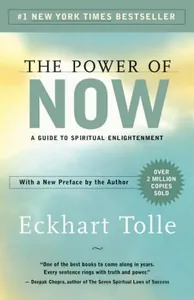
The Power of Now

 73
73

The Power of Now
Eckhart Tolle's The Power of Now presents a compelling argument for the liberation found in present-moment awareness. Its strength lies in its direct, almost urgent, call to disengage from the incessant mental narratives that fuel suffering. Tolle's concept of the "Pain-Body" is particularly potent, offering a framework to understand how past emotional wounds can hijack present experience. However, the book's relentless focus on transcending thought can, paradoxically, become a form of mental exertion for some readers, requiring a significant surrender of ingrained cognitive habits. The repetitive nature of its core message, while intended for reinforcement, occasionally borders on the dogmatic. Nevertheless, the central thesis—that peace is accessible by anchoring oneself in the Now—remains a powerful and practical antidote to modern existential anxieties.
📝 Description
73
### What It Is
The Power of Now is a spiritual guide by Eckhart Tolle, first published in 2001. It presents a philosophy for living in the present moment, asserting that the "Now" is the only reality. The book argues that most human suffering stems from identification with the mind, particularly the ego, which constantly revisits the past or anticipates the future.
### Who It's For
This work is intended for individuals grappling with anxiety, depression, or a general sense of unease about their lives. It appeals to those seeking an escape from the constant internal chatter of the mind and a pathway to inner peace. Readers interested in self-help, spiritual development, and mindfulness practices will find its principles applicable.
### Historical Context
Published at the cusp of the 21st century, The Power of Now emerged during a period of growing interest in Eastern spiritual traditions and mindfulness in Western culture. Its accessibility and clear articulation of concepts, often found in more complex Buddhist or Advaita Vedanta texts, contributed to its widespread appeal. The book's success coincided with figures like Oprah Winfrey championing similar themes.
### Key Concepts
The core of Tolle's teaching revolves around recognizing the "Pain-Body," a term for accumulated past emotional pain that can take over an individual. He also emphasizes "Presence," the state of alert, non-judgmental awareness of the Now. The "Ego" is presented as a false sense of self constructed by thought and memory, which the book aims to transcend.
💡 Why Read This Book?
• You will learn to identify and disidentify from your "Pain-Body," understanding how past emotional trauma influences your present reactions, a concept central to Tolle's 2001 work. • You will gain practical techniques for accessing "Presence," the state of alert awareness, allowing you to reduce the power of your ego and find inner stillness. • You will explore the concept of the "Now" as the only true reality, moving beyond the mental constructs of past regret and future anxiety, a core tenet discussed throughout the book.
⭐ Reader Reviews
Honest opinions from readers who have explored this book.
❓ Frequently Asked Questions
What is the "Pain-Body" according to Eckhart Tolle?
The "Pain-Body" is a term Eckhart Tolle uses in The Power of Now to describe the accumulated emotional pain from past experiences that resides within individuals. It can be triggered, becoming active and influencing present thoughts and behaviors.
How does The Power of Now suggest overcoming the ego?
The book proposes that overcoming the ego involves recognizing its illusory nature and the suffering it perpetuates. This is achieved by cultivating present-moment awareness, disidentifying from compulsive thinking, and observing the ego's patterns without judgment.
When was Eckhart Tolle's The Power of Now first published?
The Power of Now by Eckhart Tolle was first published in 2001, becoming a significant spiritual text in the early 21st century.
What is the significance of "Presence" in the book?
Presence, as defined in The Power of Now, is the state of alert, conscious awareness of the Now. It is presented as the key to transcending the mind's incessant chatter and accessing a state of inner peace and clarity.
Does The Power of Now offer practical exercises?
Yes, the book includes practical exercises and meditations designed to help readers cultivate present-moment awareness, disidentify from their thoughts, and connect with the deeper sense of Being beyond the thinking mind.
Who is Eckhart Tolle and what is his background?
Eckhart Tolle is a spiritual teacher and author, best known for The Power of Now. He experienced a profound spiritual transformation in 1977 at the age of 29, which he describes as a dissolution of his old self and the emergence of a new state of consciousness.
🔮 Key Themes & Symbolism
The Illusion of the Ego
Tolle posits that the ego is a false sense of self constructed from thought, memory, and identification with possessions or roles. This construct creates a constant need for validation and fuels suffering by fixating on past grievances and future anxieties. The book argues that recognizing the ego's mechanisms is the first step toward transcending its limitations and realizing one's true Being, which exists independently of mental constructs.
The Tyranny of Time
The work argues that the concept of psychological time—the mind's tendency to dwell on the past or project into the future—is the primary source of human suffering. By contrast, "Now" is presented not merely as a point in time, but as the only reality. Tolle encourages readers to disengage from rumination and anticipation, grounding themselves in the present moment as the gateway to liberation and spiritual awakening.
Embracing the Pain-Body
The "Pain-Body" is defined as a reservoir of past emotional pain, both personal and collective, that can become activated and take over an individual's consciousness. Instead of resisting or suppressing this pain, Tolle advises acknowledging its presence with non-judgmental awareness. This act of conscious observation is presented as the means to transform and ultimately dissolve the Pain-Body, preventing it from dictating one's present experience.
The Power of Presence
Presence is the state of alert, conscious awareness, free from the distortions of the ego and the tyranny of psychological time. Tolle emphasizes that cultivating this state is the essence of spiritual practice. By focusing attention on the Now, individuals can access a deeper dimension of Being, experience inner stillness, and find profound peace that is not dependent on external circumstances.
💬 Memorable Quotes
“The moment you realize you are not in the Now, you are back in the Now.”
— This paradoxical statement highlights the nature of awareness. The very act of recognizing you have strayed from the present moment is, in itself, an act of returning to it. It underscores that the present is always accessible, requiring only a shift in attention.
“The ego is not real. It is a product of thought. You are not your thoughts.”
— This assertion challenges the reader's identification with their internal monologue. Tolle suggests that the 'self' we perceive through constant thinking is a construct, not our fundamental essence. True identity lies beyond the ceaseless stream of mental activity.
“All you can ever have in the Now is what you have now.”
— This phrase emphasizes the fundamental truth of existence: reality is confined to the present moment. It serves as a reminder to accept and engage with current circumstances rather than lamenting the past or wishing for a different future.
“The Pain-Body wants to be recognized, but not judged.”
— This concept suggests that the accumulated emotional suffering within us seeks acknowledgment rather than condemnation. By observing the Pain-Body with impartial awareness, we can prevent it from controlling our actions and begin its process of healing.
“Real joy, deep and abiding, comes only from the Now.”
— Tolle contrasts fleeting pleasures derived from external conditions or future hopes with the profound, stable joy found in present-moment awareness. This enduring happiness is not dependent on circumstances but is an intrinsic quality of Being.
🌙 Esoteric Significance
Tradition
The Power of Now draws heavily from the non-dualistic traditions, particularly Advaita Vedanta, and echoes themes found in Zen Buddhism and certain strains of mystical Christianity. While not adhering strictly to any single lineage, it functions as a modern interpretation of ancient wisdom emphasizing the illusory nature of the phenomenal world and the underlying unity of Being. It departs from many esoteric traditions by downplaying ritual, specific deities, or complex cosmologies in favor of a direct, experiential path accessible through consciousness.
Symbolism
While The Power of Now is largely conceptual, the "Now" itself functions as a potent symbol for the divine presence or ultimate reality, stripped of conceptualization. The "Pain-Body" can be seen as a symbol for the shadow self or the accumulated psychic residue that obscures our true nature. The "Ego," often symbolized by the incessant voice of the mind, represents the false self, a construct that must be seen through to reveal the formless "I Am" or Being.
Modern Relevance
Tolle's work has become foundational for many contemporary mindfulness movements, secular meditation apps, and therapeutic approaches focused on cognitive behavioral therapy and acceptance and commitment therapy. Thinkers and practitioners in fields ranging from positive psychology to consciousness studies frequently reference his core concepts. His emphasis on presence and disidentification from thought directly influences modern wellness culture and the growing interest in non-dual awareness practices.
👥 Who Should Read This Book
• Individuals experiencing chronic anxiety, stress, or dissatisfaction: They will find practical guidance on how to disengage from the mental patterns that perpetuate suffering, learning to anchor themselves in the present moment. • Seekers of spiritual awakening interested in non-dual philosophies: Readers exploring traditions like Advaita Vedanta or Zen Buddhism will appreciate Tolle's accessible articulation of core principles like ego transcendence and the nature of consciousness. • Therapists and coaches incorporating mindfulness: Professionals looking to deepen their understanding of present-moment awareness and its transformative potential will gain valuable insights and techniques applicable to client work.
📜 Historical Context
Published in 2001, Eckhart Tolle's *The Power of Now* arrived during a burgeoning interest in Eastern philosophies and mindfulness practices within Western self-help and spiritual circles. It tapped into a cultural zeitgeist seeking alternatives to materialistic and secular worldviews, offering accessible concepts drawn from Advaita Vedanta and Buddhist thought without explicit religious dogma. While scholars like Daniel Goleman were popularizing emotional intelligence, Tolle's work focused on a more direct path to inner peace by transcending thought itself. The book's rapid ascent to bestseller status, significantly boosted by endorsements from figures like Oprah Winfrey, marked a shift in popular spirituality, making concepts like "presence" and "ego transcendence" mainstream topics. Its success demonstrated a significant public appetite for practical methods to alleviate existential anxiety and find meaning beyond conventional frameworks.
📔 Journal Prompts
The concept of the Pain-Body: when have you observed it activating in your own life?
Beyond the constant stream of thought: what remains when the ego's narratives cease?
The limitations of psychological time: how does focusing solely on the Now alter your perception of challenges?
The nature of Presence: identify a simple, everyday activity you can perform with complete present-moment awareness.
Your "Is-ness": reflect on the feeling of Being that underlies your thoughts and emotions.
🗂️ Glossary
The Now
The only true reality, the present moment. It is not a point in time but the timeless dimension of Being, accessible through conscious awareness.
Ego
The false sense of self constructed by the mind, based on identification with thought, possessions, and past experiences. It is the source of much psychological suffering.
Pain-Body
An accumulation of past emotional pain, both personal and collective, that resides within individuals. It can become activated and temporarily take over consciousness.
Presence
The state of alert, conscious awareness of the Now. It is the gateway to spiritual awakening and inner peace, characterized by clarity and stillness.
Psychological Time
The mind's tendency to dwell on the past (memory, regret) or anticipate the future (anxiety, planning), as opposed to the actual present moment.
Being
The underlying, formless consciousness or essence that is the source of all life. It is the state of "I Am" that exists prior to and beyond thought.
Form
The manifested world of appearances, including physical objects, thoughts, emotions, and the egoic self. It is seen as ultimately transient and illusory from the perspective of Being.