The Party
 80
80

The Party
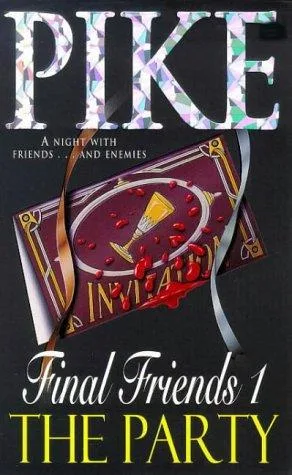
Christopher Pike's The Party, from 1988, is less a straightforward horror novel and more a carefully constructed exercise in escalating dread. The strength of the work lies in its meticulous pacing, allowing a sense of unease to permeate the narrative before any overt supernatural elements manifest. Pike masterfully uses the social dynamics of a high school party as a fertile ground for psychological terror. However, the book's primary limitation is its sometimes vague resolution; the ambiguity, while intentional, might leave some readers desiring a more concrete explanation for the unfolding events. A particularly effective passage involves the subtle shift in atmosphere as the party progresses, where the mundane becomes menacing through understated description. The Party ultimately succeeds as a mood piece, though its narrative payoff is deliberately understated.
📝 Description
80
### What It Is The Party, first published in 1988 by Christopher Pike, presents a narrative that operates on multiple levels, blurring the lines between adolescent social dynamics and darker, supernatural undercurrents. It centers on a group of high school students and a clandestine party, a seemingly typical setting that quickly becomes a crucible for escalating fear and unexplained phenomena. The story eschews simple genre classification, instead building suspense through psychological tension and subtle hints of the uncanny.
### Who It's For This novel is best suited for readers who appreciate suspenseful narratives with a psychological edge, particularly those interested in how authorial intent can manipulate reader expectations. It will appeal to those who enjoy stories where the environment and social interactions contribute significantly to the overall mood and plot progression. Readers looking for straightforward horror might find its approach more nuanced, while those who enjoy exploring the darker aspects of human interaction within a suspenseful framework will find much to consider.
### Historical Context Published in 1988, The Party emerged during a period when young adult fiction was increasingly exploring more mature and complex themes. Christopher Pike, alongside contemporaries like R.L. Stine, contributed to a wave of popular horror and suspense novels aimed at a teenage audience. The late 1980s saw a growing interest in psychological thrillers and supernatural elements within popular culture, a trend reflected in Pike's work. This era also marked a rise in discussions around censorship in literature, though The Party itself did not become a focal point of such debates as some other popular YA works of the time.
### Key Concepts The narrative hinges on the concept of isolation, both physical and psychological, experienced by the characters. The party setting, intended for social connection, paradoxically becomes a space of extreme separation. Another key concept is the unreliable perception of reality; characters struggle to discern what is real from what might be a product of fear or external manipulation. The story also touches upon themes of consequence, suggesting that actions, even those seemingly minor within a social gathering, can lead to significant and unforeseen repercussions.
💡 Why Read This Book?
• You will experience how a familiar social setting, like a high school party, can be transformed into a locus of psychological dread, a technique explored with particular effectiveness in the early chapters of The Party. • You will learn to recognize the subtle ways authors build suspense through atmosphere and character interaction, a hallmark of Christopher Pike's writing style exemplified in this 1988 novel. • You will feel the impact of narrative ambiguity and its role in creating lasting unease, a thematic element central to the unresolved nature of the events depicted in The Party.
⭐ Reader Reviews
Honest opinions from readers who have explored this book.
❓ Frequently Asked Questions
What is the main setting of Christopher Pike's The Party?
The primary setting for The Party is a clandestine high school party, a seemingly typical adolescent gathering that becomes the backdrop for escalating suspense and supernatural occurrences.
When was Christopher Pike's novel The Party first published?
The Party by Christopher Pike was first published in 1988, placing it within the boom of young adult suspense and horror literature of that era.
Does The Party feature overt supernatural creatures or more psychological horror?
The Party leans more towards psychological horror and suspense, with supernatural elements often implied or ambiguously presented rather than explicitly detailed.
Who are the primary characters in The Party?
The novel focuses on a group of high school students attending the party, whose interactions and experiences drive the narrative forward.
What themes are explored in The Party?
The Party explores themes of isolation, unreliable perception of reality, social dynamics, and the unexpected consequences of actions within a social gathering.
Is The Party considered a typical horror novel for its time?
While part of the 1988 YA suspense boom, The Party is noted for its psychological depth and atmospheric dread rather than graphic horror, setting it apart from some contemporaries.
🔮 Key Themes & Symbolism
Social Isolation Amidst Gathering
The Party masterfully uses the setting of a party, ostensibly a place of social connection, to explore profound themes of isolation. Characters find themselves increasingly disconnected from one another, even when in close proximity. This paradox highlights how social environments can sometimes amplify feelings of loneliness and alienation, a concept explored through the characters' subjective experiences as the night unfolds.
Perception vs. Reality
A central pillar of The Party is the blurring line between what is real and what is perceived. As strange events occur, the characters grapple with their own senses and sanity. The narrative deliberately plays with the reader's perception, mirroring the characters' confusion and doubt. This theme is crucial in building suspense, making the reader question the nature of the unfolding events alongside the protagonists.
Consequence and Causality
The novel subtly examines how actions, particularly within the charged atmosphere of a social event, can have unforeseen and significant repercussions. The narrative suggests a chain reaction where initial events, perhaps seemingly minor, lead to a cascade of increasingly dire outcomes. This exploration of causality adds a layer of psychological depth, prompting reflection on responsibility and the often-unseen impact of individual choices.
Atmospheric Dread
Christopher Pike excels at cultivating an atmosphere of pervasive dread. The Party is less about jump scares and more about a creeping sense of unease that permeates the story from its early stages. This is achieved through careful description, pacing, and the manipulation of ordinary settings into sources of fear, making the environment itself a character that contributes to the overall tension.
💬 Memorable Quotes
“The music was loud, but it wasn't drowning out the silence.”
— This line captures the paradoxical feeling of being surrounded by people and activity, yet experiencing profound internal emptiness or disconnection. It highlights the theme of isolation within a social setting.
“She couldn't tell if she was seeing things or if things were happening.”
— This quote directly addresses the theme of unreliable perception. It encapsulates the confusion and uncertainty the characters face as they question the reality of their experiences.
“The night seemed to stretch on, each minute longer than the last.”
— This expresses the subjective experience of time during moments of intense fear or anticipation. It emphasizes how psychological states can dramatically alter our perception of temporal progression.
“He felt a chill that had nothing to do with the temperature.”
— This suggests an internal, emotional, or supernatural source of fear, distinct from physical cold. It points towards the psychological and potentially uncanny nature of the events unfolding.
“The party was supposed to be fun, but it felt wrong.”
— This simple statement sets the tone of unease early in the narrative. It contrasts expectation with reality, signaling that the event will deviate from its intended purpose into something darker.
🌙 Esoteric Significance
Tradition
While not explicitly tied to a single established esoteric tradition like Hermeticism or Gnosticism, *The Party* operates within a broader modern occult sensibility that explores the power of consciousness and the potential for collective psychological states to manifest tangible effects. It touches upon themes often found in psychological astrology or modern witchcraft, where intention, atmosphere, and group dynamics are seen as potent forces capable of shaping reality.
Symbolism
The party itself can be viewed as a symbolic representation of the collective unconscious or a liminal space where normal rules are suspended. Shadows frequently appear as motifs, symbolizing hidden fears, repressed desires, or the unknown forces at play. The concept of isolation within a crowd is also symbolic, representing the individual's struggle for authentic connection in a superficial world, and the potential for deep psychological divides even among peers.
Modern Relevance
Contemporary explorations of psychological horror and the impact of social dynamics on mental states in fiction and film often echo the atmospheric dread and thematic ambiguity found in *The Party*. Thinkers and practitioners in fields like collective trauma studies or those interested in the power of intention in group settings might find parallels in the novel's depiction of how shared psychological states can influence events, even without explicit supernatural intervention.
👥 Who Should Read This Book
• Young adult readers aged 13-17 interested in suspenseful narratives that focus on psychological tension rather than graphic horror, particularly those who enjoy stories set in familiar school or party environments. • Adult readers nostalgic for 1980s young adult literature who appreciate atmospheric storytelling and character-driven plots that explore darker adolescent themes. • Aspiring writers looking to study pacing, mood-building, and the creation of suspense through subtle suggestion and the manipulation of social dynamics within a confined setting.
📜 Historical Context
Published in 1988, Christopher Pike’s *The Party* arrived during a vibrant period for young adult literature, particularly in the suspense and horror genres. Authors like R.L. Stine and others were gaining significant traction, exploring darker themes with teenage protagonists. Pike himself was a prolific contributor to this trend, known for his ability to weave psychological tension into accessible narratives. The late 1980s saw a cultural landscape where supernatural and thriller elements were increasingly popular across media, from film to television. While *The Party* did not face the same level of censorship debates as some other YA novels of the era that dealt with more explicit social issues, its thematic explorations of adolescent anxiety and fear contributed to the evolving maturity of the genre. Contemporaries like Ann M. Martin, though writing in a different vein with *The Baby-Sitters Club*, also captured the zeitgeist of adolescent life, showcasing the diverse range of popular fiction for young readers at the time.
📔 Journal Prompts
The atmosphere of the party, how did it shift?
Characters' perceptions of reality, what was unreliable?
The concept of isolation, how did it manifest in the crowd?
Consequences of actions at the party, which felt most significant?
The ending's ambiguity, what does it suggest about the events?
🗂️ Glossary
Clandestine Party
A secret gathering, often held without adult supervision or permission, typical of adolescent social events in fiction that allows for heightened drama and reduced oversight.
Psychological Dread
A feeling of fear or anxiety that stems from the mind's anticipation of danger or misfortune, often built through atmosphere and suggestion rather than overt threats.
Unreliable Perception
The state where a character's (or narrator's) understanding of events is flawed, mistaken, or deliberately misleading, causing uncertainty for both the character and the reader.
Liminal Space
A transitional or in-between state or place, often characterized by ambiguity and a suspension of normal rules or identities, such as a party occurring late at night.
Atmospheric Pacing
The deliberate control of narrative speed and descriptive detail to build a specific mood or feeling, in this case, suspense and unease.
Narrative Ambiguity
The intentional use of unclear or open-ended elements in a story, leaving certain aspects unresolved or open to multiple interpretations by the reader.
Adolescent Anxiety
The range of emotional and psychological concerns commonly experienced by teenagers, including social pressures, identity formation, and fear of the unknown.