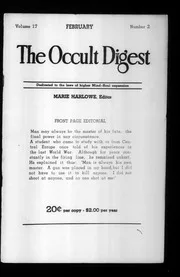
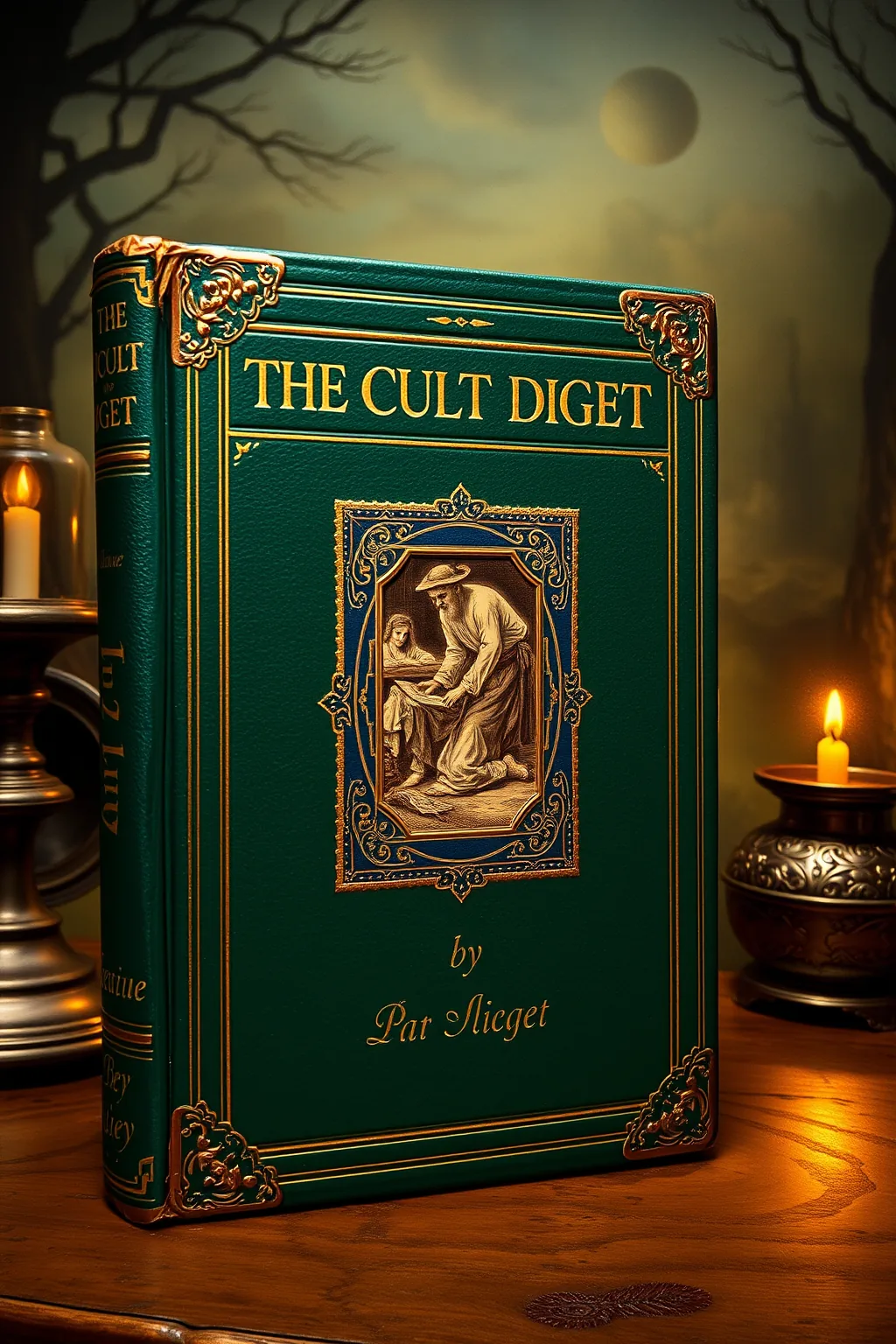
The Occult Digest 1972: Vol 2 Iss 6
 80
80

The Occult Digest 1972: Vol 2 Iss 6



Marcus Thorne (Esoteric Sciences Reviewer) — 'The Occult Digest 1972: Vol 2, Iss 6' is a remarkable window into a pivotal era for occult scholarship. This issue's strength lies in its diverse exploration of esoteric themes, presenting a rich tapestry of philosophical inquiry and practical arcane knowledge. The anonymous contributors offer insightful perspectives on topics that continue to resonate today. It's a valuable resource for those seeking to understand the historical trajectory of metaphysical thought and discover forgotten gems of occult wisdom. Highly recommended for serious students of the hidden arts and historical researchers.
📝 Description
80
Step into the veiled world of 1972 with 'The Occult Digest: Vol 2, Iss 6', a rare portal into the esoteric currents of the late 20th century. This issue delves deep into the forgotten lore, arcane philosophies, and hidden symbolism that underpin mystical traditions. Uncover essays that explore ancient wisdom, hermetic principles, and the subtle energies that shape reality. Designed for the earnest seeker and the seasoned scholar alike, this digest offers a glimpse into a time when the occult was meticulously documented and disseminated, inviting readers to question the mundane and embrace the profound. It serves as a vital artifact for understanding the evolution of occult thought, bridging historical inquiry with immediate philosophical resonance. Each page is a whisper from the past, urging you to unlock the secrets that lie just beyond the veil of ordinary perception, fostering a deeper connection to the universe's underlying mysteries. This compilation is an essential addition to any library dedicated to the exploration of the hidden.
💡 Why Read This Book?
Unearth rare occult knowledge from 1972. This issue is a treasure trove for seekers of hidden wisdom, offering insights into arcane philosophies and forgotten symbolism. Ideal for students of occult history, practitioners, and anyone curious about the mystical undercurrents of the past. Dive into a curated collection of esoteric thought that continues to inspire.
⭐ Reader Reviews
Honest opinions from readers who have explored this book.
❓ Frequently Asked Questions
What is 'The Occult Digest'?
'The Occult Digest' was a periodical published in the mid-20th century, dedicated to exploring a wide range of occult, mystical, and metaphysical subjects from historical and philosophical perspectives.
Who was the author of this issue?
The author is listed as 'Unknown,' which is common for collections of essays and articles from various contributors within such periodicals.
What kind of topics are covered?
Topics typically include alchemy, astrology, hermeticism, Kabbalah, parapsychology, magic, and the history of occult movements, presented through essays and analyses.
Is this issue suitable for beginners?
While some articles may be advanced, the digest often provides foundational explanations, making it accessible to both seasoned practitioners and curious newcomers to occult studies.
What is the historical significance of this issue?
Published in 1972, this issue captures the esoteric zeitgeist of the era, reflecting the interests and research prevalent during a resurgence of occult interest. It serves as a historical document of evolving metaphysical thought.
🔮 Key Themes & Symbolism
Hermetic Philosophy and Ancient Wisdom
This issue likely delves into the foundational principles of Hermeticism, exploring its ancient roots and enduring influence on Western esoteric traditions. Expect discussions on the Emerald Tablet, the concept of 'As Above, So Below,' and the interconnectedness of the microcosm and macrocosm. It aims to illuminate the seeker's path through understanding these universal laws, offering keys to unlocking deeper realities and personal transformation. The articles encourage an intellectual and spiritual engagement with these timeless teachings.
Symbolism and Archetypal Imagery
A significant focus is placed on the power of symbolism, dissecting the meanings embedded within ancient myths, alchemical diagrams, and magical sigils. Readers will find explorations into how these symbols act as a universal language, communicating profound truths about the human psyche and the cosmos. The issue encourages a symbolic interpretation of reality, revealing the hidden patterns and archetypes that govern existence and consciousness. This theme serves to equip the reader with tools for deciphering the deeper messages woven into the fabric of life.
The Evolution of Occult Thought
This volume captures a snapshot of how occult and metaphysical ideas were being discussed and interpreted in the early 1970s. It provides context for the ongoing dialogue between historical occultism and contemporary philosophical inquiry. Readers can trace the lineage of certain concepts and observe how they were adapted or re-examined during this period. The digest acts as a valuable historical record, illustrating the dynamic nature of esoteric knowledge and its continuous reinterpretation across generations.
💬 Memorable Quotes
“The veil is thin for those who seek.”
— This quote suggests that the hidden realms and esoteric truths are accessible, but require dedicated effort and spiritual intention to perceive.
“Symbolism is the language of the soul.”
— This highlights the idea that symbols bypass the rational mind to communicate directly with our deeper consciousness and intuitive understanding.
“To know the universe is to know thyself.”
— This encapsulates the Hermetic principle of correspondence, emphasizing that self-knowledge is intrinsically linked to understanding the greater cosmic order.
“Alchemy is the art of transformation, both inner and outer.”
— This points to the dual nature of alchemy, not merely a physical process but a profound metaphor for spiritual and psychological purification and evolution.
“Seek not the answer, but the question.”
— This encourages a contemplative approach, suggesting that the process of inquiry and the formulation of insightful questions are more valuable than immediate, definitive answers.
🌙 Esoteric Significance
Tradition
This issue is deeply rooted in Western Esoteric Traditions, drawing heavily from Hermeticism, Alchemy, Kabbalah, and Gnosticism. It represents an effort to synthesize and explore these interconnected lineages, offering a holistic view of mystical philosophy and its practical applications. The content likely bridges ancient teachings with modern interpretations, making these profound systems accessible to a contemporary audience.
Symbolism
The volume's core lies in its exploration of esoteric symbolism. It likely dissects the rich visual and conceptual language of occultism, from alchemical emblems to astrological glyphs and mythological archetypes. Understanding this symbolism is presented as a key to unlocking hidden meanings, accessing subconscious realms, and comprehending the underlying order of the universe. These symbols are not mere decorations but potent keys to gnosis.
Modern Relevance
Despite its 1972 publication date, 'The Occult Digest' remains remarkably relevant. The timeless principles of self-transformation, the exploration of consciousness, and the search for deeper meaning continue to resonate. The issue provides a historical perspective on enduring questions about reality, spirituality, and the human condition, offering valuable insights for contemporary seekers, scholars, and practitioners navigating their own paths of discovery.
👥 Who Should Read This Book
This digest is a treasure for the dedicated seeker of esoteric knowledge, the meticulous scholar of occult history, and the curious practitioner. Beginners will find accessible introductions to complex metaphysical concepts, while seasoned practitioners can rediscover foundational wisdom and gain historical context. Those fascinated by the evolution of spiritual thought and the hidden currents of human consciousness will find this issue particularly rewarding. It caters to individuals seeking a deeper understanding of themselves and the universe beyond conventional paradigms.
📜 Historical Context
Published in 1972, 'The Occult Digest: Vol 2, Iss 6' emerges from a period of significant resurgence in occult and metaphysical interests. The late 1960s and early 1970s saw a cultural shift, with a growing disillusionment with established norms leading many to explore alternative spiritualities, Eastern philosophies, and historical esoteric traditions. This era was characterized by a renewed fascination with ancient wisdom, parapsychology, and the works of figures like Aleister Crowley, Helena Blavatsky, and Carl Jung. 'The Occult Digest' served as a vital conduit for disseminating these ideas, bridging academic inquiry with burgeoning practitioner communities. Its existence reflects a desire to catalogue, analyze, and preserve occult knowledge, often presented in academic or historical contexts, making it a valuable artifact for understanding the intellectual landscape of occultism during this dynamic decade.
📔 Journal Prompts
Reflect on a personal symbol that holds deep meaning for you. What does it represent, and how does it influence your perception?
Consider the concept of 'As Above, So Below.' How does this principle manifest in your daily life and your understanding of the world?
What is one hidden truth or belief you have uncovered recently? How did this discovery change your perspective?
Explore the idea of personal transformation. What aspects of yourself do you feel are ready for alchemical change, and what might that process entail?
How can understanding esoteric symbolism enhance your interpretation of everyday experiences and dreams?
🗂️ Glossary
Hermeticism
A philosophical and religious tradition based on the purported teachings of Hermes Trismegistus, emphasizing universal laws, correspondence between the macrocosm and microcosm, and spiritual transformation.
Alchemy
An ancient practice that sought to purify, mature, and perfect certain materials, often interpreted as a metaphor for spiritual and psychological purification and enlightenment.
Gnosticism
A diverse set of religious ideas and systems, typically emphasizing knowledge (gnosis) of the divine and the spiritual realm as the means of salvation.
Macrocosm
The universe considered as a vast and complex whole, often contrasted with the microcosm (the human being or a smaller part of the universe).
Microcosm
The human being or a smaller part of the universe, seen as a reflection or miniature of the macrocosm, embodying universal principles.