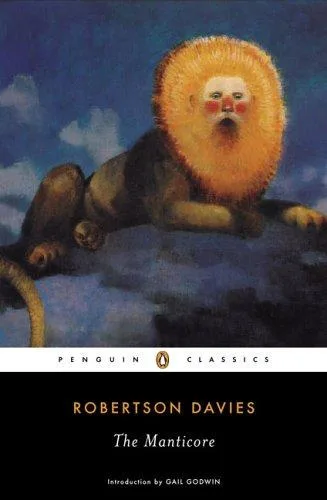
The Manticore
 84
84

The Manticore
Robertson Davies, in "The Manticore," presents a compelling, if occasionally dense, study of artistic ambition and psychological reckoning. The novel’s strength lies in its meticulous construction of David Staunton's internal world, particularly his obsessive quest to understand Magnus Eisengrim. Davies masterfully employs Jungian concepts not as mere decoration but as integral to Staunton's unfolding drama. However, the narrative's deliberate pacing and focus on internal monologue can sometimes feel laborious, particularly for readers less invested in detailed psychological dissection. A particularly striking passage involves Staunton's wrestling with the symbolic weight of the manticore itself, a creature representing the terrifying amalgamation of instinct and intellect. Davies’s exploration of the artist’s psyche, the blurred lines between performer and person, and the destructive potential of obsession marks this as a significant work of psychological fiction. "The Manticore" offers a rich, albeit demanding, examination of self-discovery through confronting the 'monstrous' within.
📝 Description
84
### What It Is Robertson Davies's "The Manticore," first published in 1972, is the second installment in his celebrated Deptford Trilogy. This novel is not a straightforward fantasy but a psychological exploration framed by Jungian archetypes and hermetic philosophy. It centers on David Staunton, a young musicologist grappling with his past and the enigmatic legacy of the magician Magnus Eisengrim, whom Staunton believes is responsible for his father's death. The narrative unfolds as Staunton investigates Eisengrim, encountering characters and situations that blur the lines between reality, myth, and the unconscious.
### Who It's For This work appeals to readers interested in the intersection of psychology, literature, and the occult. It is particularly suited for those who appreciate character-driven narratives with complex moral ambiguities and a deep dive into symbolic language. Readers familiar with Carl Jung's theories on archetypes and the collective unconscious will find fertile ground for analysis. Those seeking a conventional plot might find its introspective nature challenging, but those drawn to symbolic resonance and the exploration of the human psyche will be rewarded.
### Historical Context "The Manticore" emerged in 1972, a period where literary fiction was increasingly engaging with psychological depth and symbolic frameworks, influenced by thinkers like Carl Jung. The novel's exploration of magic, performance, and hidden truths places it within a broader post-war literary trend that sought to understand the darker, more complex aspects of human motivation and societal structures. Davies's own background and interest in Jungian psychology heavily informed the novel's thematic concerns, offering a counterpoint to more purely rationalist literary approaches of the time.
### Key Concepts The novel delves into concepts of the anima and animus, the shadow self, and the process of individuation, all drawn from Jungian psychology. The manticore itself, a mythical creature with the body of a lion, human head, and scorpion's tail, serves as a potent symbol of hybridity, danger, and the monstrous feminine or masculine aspect within the psyche. Davies also explores the nature of illusion versus reality, particularly through the lens of Magnus Eisengrim's theatrical magic and the public's perception of him. The Jungian concept of the Self and the journey toward wholeness are central.
💡 Why Read This Book?
• Gain insight into Jungian archetypes like the shadow and anima, as explored through David Staunton's quest to understand Magnus Eisengrim, offering a framework for self-analysis. • Understand the symbolic power of the manticore, a creature representing the complex, often terrifying, fusion of human and bestial instincts, as depicted in the novel's narrative. • Explore the nature of artistic creation and performance versus authentic selfhood, prompted by the portrayal of Magnus Eisengrim's public persona and private life.
⭐ Reader Reviews
Honest opinions from readers who have explored this book.
❓ Frequently Asked Questions
What is the significance of the manticore in Robertson Davies's novel?
The manticore, a mythical beast with a lion's body, human head, and scorpion's tail, symbolizes the dangerous, hybrid nature of the psyche. It represents repressed desires, primal instincts, and the complex integration of human and animalistic traits within the individual, particularly concerning David Staunton's internal struggles.
How does "The Manticore" relate to Jungian psychology?
The novel is deeply infused with Carl Jung's theories. It explores concepts such as archetypes, the shadow self, individuation, and the anima/animus. David Staunton's journey is a clear example of the individuation process, confronting his own psychological shadows and integrating disparate parts of his personality.
Who is Magnus Eisengrim and what is his role?
Magnus Eisengrim is a famous magician and performer, a central enigmatic figure in "The Manticore." David Staunton believes Eisengrim is responsible for his father's death and seeks to uncover the truth, making Eisengrim a catalyst for Staunton's psychological exploration and quest for understanding.
What is the historical publication year of "The Manticore"?
"The Manticore" was first published in 1972, making it the second novel in Robertson Davies's renowned Deptford Trilogy.
Is "The Manticore" a fantasy novel?
While "The Manticore" contains elements of mystery and deals with a magician, it is primarily a psychological novel. It uses symbolic and archetypal frameworks, heavily influenced by Jungian psychology, rather than traditional fantasy world-building or magical systems.
What is the central conflict for the protagonist, David Staunton?
David Staunton's central conflict is his obsessive quest to understand and potentially confront Magnus Eisengrim, whom he blames for his father's death. This external investigation becomes a profound internal journey of self-discovery and grappling with his own psyche.
🔮 Key Themes & Symbolism
Jungian Psychology and Archetypes
The novel is steeped in Jungian theory, particularly archetypes like the shadow, the persona, and the anima. David Staunton's journey represents the individuation process, where he must confront his shadow self—represented by his obsession with Magnus Eisengrim and the perceived monstrosity of his father's death. The manticore itself serves as a potent archetype, embodying the complex, often terrifying, integration of disparate psychic elements. Davies uses these concepts to explore the hidden depths of human consciousness and the universal patterns of psychological development.
The Nature of Magic and Illusion
Magnus Eisengrim, the magician, is central to the theme of magic and illusion. His stagecraft blurs the lines between genuine enchantment and theatrical trickery, forcing readers and characters to question what is real. This exploration extends to the illusions people construct about themselves and others. Eisengrim’s profession highlights the esoteric concept of 'as above, so below,' where the manipulation of symbols and perception on stage mirrors deeper psychological transformations or deceptions within the human mind.
Art, Performance, and Identity
Davies probes the relationship between an artist's public persona and their private identity. Magnus Eisengrim’s life is a performance, raising questions about authenticity and the sacrifices made in the pursuit of artistic expression or mastery. David Staunton, a musicologist, is also involved in interpreting and presenting art, making his own identity intertwined with his professional life. The novel suggests that the act of creation and performance can both conceal and reveal the true self, reflecting the Hermetic idea that outward manifestations are reflections of inner states.
The Quest for Truth and Reconciliation
At its core, "The Manticore" is a quest narrative. David Staunton is driven by a need to uncover the truth about his father and confront Magnus Eisengrim. This pursuit is not merely for external facts but for internal reconciliation. The novel suggests that true understanding comes from facing uncomfortable truths about oneself and one's past, a process that often involves symbolic encounters and the integration of difficult psychological material, echoing alchemical processes of transformation.
💬 Memorable Quotes
“The manticore is a creature of paradox, part human, part beast, embodying the wildness and the intellect.”
— This interpretation captures the symbolic essence of the manticore as a representation of the complex, often conflicting, aspects of the human psyche that David Staunton must confront.
“Magic is the art of making the impossible seem plausible, and the plausible seem impossible.”
— This highlights the theme of illusion versus reality, central to Magnus Eisengrim's character and the novel's exploration of perception and deception.
“A man's life is shaped by the stories he believes about himself and others.”
— This paraphrase emphasizes the narrative's focus on how personal myths and narratives, particularly those involving figures like Eisengrim, dictate an individual's psychological trajectory.
“The unconscious mind holds secrets that the rational mind cannot easily access.”
— This reflects the Jungian underpinnings of the novel, where David Staunton's journey is an attempt to excavate and understand the hidden depths of his own psyche.
“Art and performance can be both a mask and a mirror to the soul.”
— This interpretation speaks to the duality of artistic expression as depicted through Magnus Eisengrim, serving to both conceal and reveal aspects of identity.
🌙 Esoteric Significance
Tradition
The novel draws heavily from the Western Esoteric tradition, specifically Jungian psychology, which itself has roots in Hermeticism and Gnosticism through its focus on the psyche's inner landscapes and symbolic language. Davies integrates archetypal psychology, particularly Jung's concepts of individuation and the collective unconscious, presenting them not as abstract theories but as lived experiences within the narrative. It departs from purely dogmatic traditions by focusing on the psychological manifestation of esoteric principles rather than a strict adherence to ritual or cosmology.
Symbolism
The manticore is the primary symbol, representing the integration of the human and bestial, the conscious and unconscious, and the monstrous aspects of the psyche that must be confronted for individuation. Magnus Eisengrim, the magician, symbolizes the archetype of the trickster and the sorcerer, embodying both creative power and potential danger. His theatrical magic reflects the Hermetic principle of "as above, so below," where manipulation of appearances can lead to inner transformation or deception.
Modern Relevance
Contemporary thinkers in depth psychology and literary criticism continue to analyze "The Manticore" for its sophisticated use of Jungian archetypes. Its exploration of the artist's psyche, the nature of performance, and the quest for self-knowledge resonates with modern discussions on identity, authenticity, and the impact of symbolic narratives. Practitioners of Jungian analysis and students of comparative literature find it a valuable case study in the fictional application of psychological and mythological concepts.
👥 Who Should Read This Book
• Students of Jungian psychology: Those seeking to understand archetypes, the shadow, and the individuation process through a fictional lens will find "The Manticore" a rich case study. • Readers interested in literary symbolism: Individuals who appreciate novels where characters, plot, and imagery serve deeper symbolic meanings will be drawn to Davies's intricate construction. • Aspiring magicians and performers: Those curious about the psychological underpinnings of performance, illusion, and the esoteric aspects of stage magic will find the character of Magnus Eisengrim particularly compelling.
📜 Historical Context
Published in 1972, "The Manticore" emerged during a period when literary fiction was increasingly interested in psychological depth, influenced by figures like Carl Jung. The novel's engagement with magic, mythology, and the subconscious placed it within a broader intellectual milieu that also saw explorations of the occult and the esoteric in art and literature. While not overtly controversial, its psychological themes and symbolic complexity distinguished it from more socially-realist narratives. Davies's work can be seen as a literary counterpart to the burgeoning interest in Jungian analysis and comparative mythology, engaging with ideas that were also being explored by scholars and popular writers alike, offering a nuanced fictional examination of these concepts.
📔 Journal Prompts
David Staunton's obsession with Magnus Eisengrim: Explore the symbolic roots of this fixation.
The manticore as an archetype: What aspects of its hybrid nature reflect your own internal conflicts?
Magnus Eisengrim's performances: Analyze the interplay between illusion and truth in his art.
The concept of individuation: How does Staunton's journey mirror the process of self-discovery?
The father-son dynamic: Reflect on the psychological weight of this relationship as depicted in the novel.
🗂️ Glossary
Manticore
A mythical creature, often depicted with the body of a lion, a human head, and a scorpion's tail. In the novel, it symbolizes the complex, hybrid nature of the psyche, embodying both intellect and primal instinct.
Jungian Psychology
A school of analytical psychology founded by Carl Jung, focusing on archetypes, the collective unconscious, the shadow, and the process of individuation (the integration of the conscious and unconscious aspects of the personality).
Archetype
In Jungian psychology, a universal, archaic pattern and image that derives from the collective unconscious and is the psychic counterpart of an instinct. Examples include the Hero, the Mother, the Shadow, and the Trickster.
Individuation
The lifelong psychological process of differentiation of the self, by which an individual becomes an individual, or whole. It involves integrating conscious and unconscious aspects of the personality.
Shadow Self
In Jungian psychology, the 'shadow' is the unconscious or repressed aspects of the personality, often perceived as negative or undesirable, but essential for wholeness when integrated.
Anima/Animus
The unconscious feminine aspect in the male psyche (anima) and the unconscious masculine aspect in the female psyche (animus). These archetypes influence relationships and perceptions.
Deptford Trilogy
A series of three novels by Robertson Davies: 'Fifth Business' (1970), 'The Manticore' (1972), and 'World of Wonders' (1975). They explore themes of magic, destiny, and the human psyche.