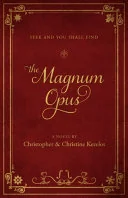
The Magnum Opus
 74
74

The Magnum Opus
The Kezelos' "The Magnum Opus" attempts to translate the stark, cyclical allegory of their celebrated short film into a textual format. The book excels in articulating the core visual metaphor: the solitary Maker’s laborious process of crafting its successor, followed by its absorption into a communal existence. This central image is powerful, evoking a sense of both profound duty and existential isolation. However, the transition from a visually driven narrative to prose reveals some limitations. While the synopsis hints at deeper thematic explorations, the text sometimes struggles to imbue the Maker's actions with the emotional weight present in the film's stark visuals. A particularly effective passage describes the 'whisking away' of the completed creator, a moment that starkly contrasts the solitary labor with the promised communal rest. Despite this, the narrative feels slightly more explanatory than revelatory, lacking the visual impact that made "The Maker" so compelling. It is a competent expansion, but one that doesn't entirely escape the shadow of its cinematic progenitor.
📝 Description
74
### What It Is The Magnum Opus is a narrative work inspired by Christopher and Christine Kezelos's award-winning short film, "The Maker." It expands upon the film's premise, detailing a cyclical existence in a forgotten world where a solitary creator, the 'Maker,' meticulously crafts its successor. Upon completion, the creator is absorbed into a collective, leaving the new Maker to perpetuate the process. This edition, first published in 2016, offers a deeper exploration of this unique cosmology, presenting a parable of creation, duty, and the eternal recurrence of existence.
### Who It's For This book is suited for readers intrigued by allegorical storytelling and philosophical narratives. Those interested in exploring themes of existential purpose, the nature of consciousness, and the mechanics of creation will find material for contemplation. It appeals to individuals who appreciate art that originates from visual mediums, seeking to understand the narrative underpinnings of a successful short film and its expansion into written form.
### Historical Context While the book itself was published in 2016, its genesis lies in the short film "The Maker," which garnered significant attention in filmmaking circles. The film's aesthetic and conceptual success provided the foundation for this literary expansion. The narrative echoes philosophical inquiries prevalent throughout the 20th century, particularly in existentialism and absurdist literature, which grappled with meaning in seemingly predetermined cycles. The Kezelos siblings' work can be seen as a contemporary artistic response to these perennial questions, utilizing a mythic framework.
### Key Concepts The central concept is the 'Maker' and its lineage, representing a perpetual cycle of creation and replacement. The 'enchanted workshop' serves as the locus of this cosmic mechanism. The 'Maker community' signifies a state of completion or transcendence, distinct from the solitary labor of creation. The narrative explores the concept of an 'endless cycle,' questioning agency and purpose within such a system. The work implies a form of teleology, where existence is defined by the act of creating the next iteration.
💡 Why Read This Book?
• Understand the philosophical underpinnings of the "The Maker" short film, exploring the concept of an eternal cycle of creation and creator replacement, as depicted in the enchanted workshop. • Engage with the narrative's exploration of purpose and duty within a predetermined existence, a central theme presented through the Maker's solitary labor. • Appreciate how the Kezelos siblings translate visual storytelling into text, offering a unique perspective on the creation of a cyclical mythology first conceived in 2016.
⭐ Reader Reviews
Honest opinions from readers who have explored this book.
❓ Frequently Asked Questions
What is the connection between "The Magnum Opus" book and "The Maker" short film?
The book "The Magnum Opus" is a literary expansion and exploration of the concepts presented in the multi-award-winning short film "The Maker," created by Christopher and Christine Kezelos.
When was "The Magnum Opus" book first published?
The book "The Magnum Opus" by Christopher Kezelos and Christine Kezelos was first published on December 13, 2016.
What is the central premise of the story?
The story revolves around a 'Maker,' a magical creature in an enchanted workshop, who creates its successor. Upon completion, the creator joins a community, leaving the progeny to continue the cycle.
What are the main themes explored in the book?
The book explores themes of creation, cyclical existence, purpose, duty, and the nature of individuality versus community within a perpetual cycle.
Where can I watch the short film "The Maker"?
The short film "The Maker" can be watched online via the link provided in the book's original blurb, typically found at http://bit.ly/WatchTheMaker.
Is "The Magnum Opus" a philosophical text or a fictional story?
It is primarily a fictional narrative that uses allegorical storytelling to explore philosophical concepts related to creation and existential cycles.
🔮 Key Themes & Symbolism
The Cycle of Creation
The narrative's core revolves around an unbroken, eternal cycle of creation. A solitary 'Maker' crafts its replacement, and upon completion, is absorbed into a collective. This perpetual process raises questions about purpose, free will, and the nature of existence itself within a system that seemingly dictates every action. The work presents this cycle not as a beginning or end, but as an ongoing mechanism that defines reality in its forgotten world.
The Solitary Creator
The 'Maker' operates in isolation within an enchanted workshop, bearing the immense responsibility of birthing the next iteration. This solitude emphasizes the burden of creation and the singular focus required. The contrast between this lonely act and the subsequent integration into a community highlights the tension between individual labor and collective belonging, suggesting that true completion involves both.
Transcendence and Community
Upon completing their task, the creators are 'whisked away' to join a 'Maker community.' This suggests a form of transcendence or apotheosis, a reward for fulfilling their designated role. The community represents a state of being beyond the cycle of labor, a collective existence achieved after individual creation. This aspect explores the ultimate fate or purpose beyond the immediate act of making.
The Nature of the Maker
The identity and essence of the 'Maker' are central. Is it a singular consciousness, a role, or a biological imperative? The work implies a lineage where each Maker is both a product of the past and the progenitor of the future. This cyclical lineage questions individuality, suggesting that identity might be subsumed by the overarching process of perpetuation. The 'Maker' embodies the principle of eternal recurrence.
💬 Memorable Quotes
“A magical creature called a 'Maker' busily created the next of his kin.”
— This line succinctly captures the essence of the book's central figure and its primary function. It establishes the perpetual, almost ritualistic nature of creation as the defining characteristic of the Maker's existence within its specific world.
“Upon completion, the creator was whisked away to join the rest of the Maker community.”
— This describes the transition from solitary labor to communal existence, suggesting a form of apotheosis or reward. It highlights the cyclical nature where one's task leads to integration, paving the way for the next generation's solitary work.
“Their progeny was left alone to create the next Maker in a never-ending cycle of creation.”
— This emphasizes the relentless, unending aspect of the creative process. It underscores the theme of eternal recurrence and the individual's solitary role within this grand, perpetual mechanism.
“In a time and world long ago forgotten, there existed an enchanted workshop.”
— This sets a mythic and ancient tone, immediately immersing the reader in a realm separate from conventional time and space, establishing the stage for a narrative steeped in allegory and forgotten lore.
“That was, unti”
— This truncated phrase, likely from the original blurb's unfinished sentence, powerfully suggests an interruption or a point of change within the established order. It hints that the 'never-ending cycle' might not be as immutable as it seems.
🌙 Esoteric Significance
Tradition
The work aligns with a broadly Gnostic or Hermetic sensibility, focusing on a cyclical cosmology and the nature of creation. It presents a mythos where existence is defined by a perpetual act of making, reminiscent of discussions on divine emanation or the Demiurge's role in creating the material world. While not explicitly referencing Kabbalah or Theosophy, its exploration of creation, lineage, and a transcendent community touches upon universal esoteric concepts of spiritual progression and cosmic order.
Symbolism
The 'enchanted workshop' symbolizes the crucible of creation, a sacred space where fundamental reality is forged. The 'Maker' itself serves as a potent symbol of the divine or primal creative force, burdened by the necessity of perpetual renewal. The 'Maker community' represents a state of achieved perfection or spiritual integration, a collective consciousness attained after the fulfillment of individual creative duty within the cycle.
Modern Relevance
Contemporary creators and thinkers exploring AI consciousness, digital existence, and the ethics of artificial life find resonance in "The Magnum Opus." Its depiction of a programmed, cyclical existence and the solitary creator's role speaks to modern anxieties about automation, destiny, and the search for meaning in technologically mediated realities. The work serves as a parable for understanding iterative design and self-replicating systems in digital and biological contexts.
👥 Who Should Read This Book
• Aspiring filmmakers and narrative artists seeking inspiration on expanding short film concepts into longer forms, particularly those interested in allegorical storytelling. • Readers interested in philosophical fiction and existential parables, especially those who appreciate narratives exploring the nature of creation and purpose. • Fans of "The Maker" short film looking to deepen their understanding of its world and underlying themes through a textual medium.
📜 Historical Context
Published in 2016, "The Magnum Opus" by Christopher and Christine Kezelos emerged in a cultural landscape increasingly interested in the intersection of visual art, film, and narrative expansion. Its direct inspiration, the 2013 short film "The Maker," had already garnered significant awards and critical acclaim, demonstrating a strong audience appetite for its unique, allegorical premise. The book's narrative, focusing on a cyclical creation myth, taps into perennial philosophical inquiries about purpose and existence, echoing themes explored in 20th-century existentialist thought, particularly by figures like Albert Camus who pondered the absurd. While not directly engaging with a specific esoteric tradition, its themes of creation and cyclical repetition align with certain Gnostic and Hermetic concepts of emanation and cosmic cycles. The Kezelos' work stands as a contemporary artistic interpretation rather than a scholarly treatise, offering a visualizable mythos for modern audiences grappling with questions of meaning and manufactured purpose.
📔 Journal Prompts
The Maker's solitary labor: Reflect on the emotional weight of singular responsibility.
The transition to the Maker community: Consider the meaning of collective existence after individual creation.
The enchanted workshop as a symbol: Explore what this space represents in your own creative process.
The endless cycle: Analyze the implications of perpetual, predetermined creation on agency.
The progeny's isolation: Contemplate the experience of being left to create anew.
🗂️ Glossary
Maker
A central figure in the narrative, a magical creature tasked with creating its successor in a perpetual cycle of creation. It represents the primal creative force or an archetype of the solitary creator.
Enchanted Workshop
The setting where the Maker performs its creative acts. It symbolizes a sacred space, a crucible of existence, or a locus of divine/cosmic power where reality is shaped.
Maker Community
A collective of creators who have completed their task and been 'whisked away.' It represents a state of transcendence, completion, or communal existence beyond the cycle of labor.
Progeny
The offspring or successor created by the Maker. It is left alone to continue the cycle, highlighting the theme of inheritance and perpetual recurrence.
Endless Cycle of Creation
The fundamental operating principle of the world depicted. It signifies a continuous, unending process of making and replacement, raising questions about purpose and determinism.
Creator
Synonymous with 'Maker,' referring to the entity responsible for bringing forth the next generation within the narrative's cyclical structure.
Time and world long ago forgotten
Establishes the narrative's setting as mythic, ancient, and detached from conventional history, allowing for allegorical and symbolic interpretation.