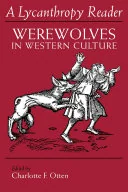
The Lycanthropy Reader
 74
74

The Lycanthropy Reader
Charlotte F. Otten’s *The Lycanthropy Reader* undertakes a necessary, if somewhat dry, excavation of a topic perpetually mired in B-movie sensationalism. Otten rightly identifies the modern cultural baggage that distorts our understanding of historical werewolf beliefs. The strength of this collection lies in its commitment to primary source material, offering readers unvarnished glimpses into historical accounts, such as the detailed case studies of alleged lycanthropes examined in 17th-century Europe. A notable limitation, however, is the academic tone, which, while precise, can make the material less accessible to those without a background in folklore studies. The section detailing the legal proceedings against alleged werewolves in the French provinces during the 16th century provides a stark illustration of how deeply these beliefs were embedded in the justice system. Otten’s *Reader* succeeds in providing historical grounding, but its presentation may deter the uninitiated seeker of werewolf lore.
📝 Description
74
Charlotte F. Otten's The Lycanthropy Reader compiles primary sources on shapeshifting beliefs from antiquity to the early modern period.
This compilation focuses on lycanthropy as a historical and cultural phenomenon, moving past modern horror depictions to examine its diverse manifestations across eras and societies. It offers direct access to historical accounts and interpretations of shapeshifting beliefs through primary source materials. The work provides crucial historical context, illuminating how beliefs in human-wolf transformation were understood and documented in pre-modern societies. It grounds the study in factual reporting and historical interpretation, not speculative fiction.
The book deconstructs modern werewolf imagery to reveal older, more varied beliefs. It examines etiological narratives, ritualistic associations, and legal accusations related to lycanthropy throughout history. The work also considers the psychological and social factors that may have contributed to the persistence and transformation of these beliefs over centuries. This volume is intended for scholars and serious students of folklore, anthropology, history, and religious studies.
Within esoteric traditions, beliefs in human-animal transformation, or therianthropy, often intersect with shamanic practices, witchcraft accusations, and folklore. This book, by compiling historical accounts, allows for an examination of how such beliefs were recorded and understood in different cultural and religious contexts. It situates the historical understanding of lycanthropy within broader patterns of altered states of consciousness, folk magic, and the demonization or spiritual interpretation of extraordinary human experiences.
💡 Why Read This Book?
• Understand lycanthropy as a historical belief system, moving beyond modern horror tropes, by examining primary source documents cited from periods like the 17th century. • Gain insight into the social and legal ramifications of werewolf accusations through specific case studies, such as those detailed from 16th-century French legal records. • Appreciate the evolution of shapeshifting narratives by comparing historical accounts with contemporary interpretations, facilitated by the book's contextualization of pre-modern beliefs.
⭐ Reader Reviews
Honest opinions from readers who have explored this book.
❓ Frequently Asked Questions
What primary sources does The Lycanthropy Reader utilize?
The book draws upon a range of primary sources, including historical chronicles, legal testimonies, and theological treatises from various periods, offering direct access to historical accounts of lycanthropy beliefs.
Does The Lycanthropy Reader discuss modern werewolf fiction?
No, the primary focus is on historical and cultural understandings of lycanthropy, deliberately moving away from contemporary portrayals found in modern horror films and gothic fiction.
Who is Charlotte F. Otten?
Charlotte F. Otten is the editor of The Lycanthropy Reader, a work compiled and published in 2024. Her academic background is in folklore and historical studies, evident in the book's scholarly approach.
What distinguishes this book from typical werewolf stories?
This reader distinguishes itself by providing historical and anthropological context, analyzing lycanthropy as a belief system rather than a supernatural creature feature, using primary source evidence from historical periods.
What historical periods are covered in The Lycanthropy Reader?
The reader covers a broad historical scope, examining accounts and beliefs about lycanthropy from medieval times through to the early modern period, with specific references to the 16th and 17th centuries.
Is The Lycanthropy Reader suitable for someone new to the topic?
While comprehensive, the book is written from a scholarly perspective. It is best suited for individuals with a serious interest in history, folklore, or anthropology, rather than casual readers seeking sensational tales.
🔮 Key Themes & Symbolism
Historical Belief Systems
This reader reconstructs lycanthropy as a significant historical belief, distinct from modern fiction. It analyzes how communities understood and documented supposed human-wolf transformations across centuries, referencing specific legal records and anecdotal accounts. The work emphasizes the socio-cultural context, exploring how these beliefs functioned within different societies, often intertwined with notions of witchcraft, demonic influence, or psychological distress, providing a factual basis for understanding a phenomenon often relegated to myth.
Primary Source Analysis
A core element is the direct engagement with primary source materials. The Lycanthropy Reader presents excerpts from historical texts, legal documents, and personal testimonies, allowing readers to confront the raw data of historical werewolf beliefs. This approach avoids anachronistic interpretations and highlights the specific language and concerns of past eras, offering a scholarly foundation for understanding the phenomenon's historical trajectory and diverse manifestations.
Deconstruction of Modern Tropes
The book actively works to dismantle the contemporary, often sensationalized, image of the werewolf derived from horror films and gothic literature. By focusing on historical context and primary evidence, Otten’s compilation seeks to replace speculative fiction with a grounded understanding of what lycanthropy meant to people in earlier times. It questions the evolution of the myth and its persistent presence in human culture through analytical rather than narrative means.
Folklore and Anthropology
The Lycanthropy Reader situates werewolf beliefs within broader fields of folklore and anthropology. It examines the universal human fascination with transformation and the monstrous, exploring how these themes manifest in the specific cultural context of lycanthropy. The work considers the psychological underpinnings of such beliefs and their role in social anxieties, ritual practices, and the construction of identity within historical communities.
💬 Memorable Quotes
“The study of werewolves can appear to be a wayward pursuit of the perversely irrational and the sensational.”
— This statement highlights the challenge of studying lycanthropy, acknowledging its popular association with irrationality and sensationalism, which the book aims to correct by providing historical context.
“No rational person today believes that a human being can literally be metamorphosed into a wolf.”
— This observation underscores the shift in societal understanding, framing the book's purpose as bridging the gap between modern skepticism and historical beliefs through scholarly inquiry.
“This Reader provides the historical context.”
— A direct declaration of the book's central aim: to anchor the study of lycanthropy in factual historical evidence and documented beliefs, moving away from speculative interpretations.
“Drawing on primary sources, it is a comprehensive...”
— This phrase emphasizes the book's methodological approach, relying on original documents to build a thorough and evidence-based understanding of lycanthropy throughout history.
“Our understanding of lycanthropy is limited by our association of it with contemporary portrayals...”
— This opening concept from the original blurb sets the stage for the book's critical re-evaluation, arguing that modern perceptions obscure the historical reality of lycanthropic beliefs.
🌙 Esoteric Significance
Tradition
While not explicitly tied to a single esoteric lineage like Hermeticism or Gnosticism, *The Lycanthropy Reader* engages with themes relevant to Western esotericism through its exploration of belief, transformation, and the human psyche's darker potentials. It touches upon the historical overlap between folk magic, demonology, and marginalized spiritual beliefs, areas often explored in occult traditions. The work provides a historical counterpoint to esoteric interpretations of shapeshifting, grounding them in documented societal beliefs and anxieties rather than purely symbolic or initiatory frameworks.
Symbolism
The primary symbol is the wolf itself, representing primal instincts, the untamed wild, and the 'other'. Within historical belief systems discussed, the wolf-form often symbolized a loss of human control, a pact with dark forces, or a regression to a bestial state. The transformation motif, central to lycanthropy, symbolizes profound change, forbidden knowledge, or the shattering of perceived reality, themes resonant in various mystical and alchemical traditions that explore metamorphosis.
Modern Relevance
Contemporary scholars and practitioners in fields like folklore studies, comparative religion, and certain branches of depth psychology continue to draw on historical accounts of lycanthropy. The work's meticulous sourcing provides a foundation for analyzing the persistence of primal archetypes in the human psyche and the cultural mechanisms for processing fear and the 'outsider' archetype. It informs discussions on how collective anxieties manifest in myth and legend, relevant to modern mythopoetic movements and the study of cultural pathology.
👥 Who Should Read This Book
['• Folklore and Mythology Enthusiasts: Individuals seeking to understand werewolf legends beyond modern fiction, interested in the historical context and anthropological roots of shapeshifting beliefs.', '• Academic Researchers: Students and scholars of history, anthropology, religious studies, and cultural history who require primary source material and scholarly analysis of historical belief systems.', '• Esoteric and Occult Students: Those exploring the historical manifestations of belief in transformation, pacts, and the darker aspects of the human psyche as documented in historical records.']
📜 Historical Context
The Lycanthropy Reader emerges from a scholarly milieu concerned with the historical reality of folklore and belief systems, particularly active in the mid-to-late 20th century. While published in 2024, its content engages with materials and analyses relevant to the study of historical witchcraft and diabolism, fields that saw significant academic attention following the work of scholars like Jeffrey Burton Russell and Norman Cohn. The Reader's emphasis on primary source documentation is crucial, as it directly counters the speculative romanticism that often permeated earlier, less rigorous accounts of lycanthropy. By focusing on documented accusations and confessions, particularly from the 16th and 17th centuries in regions like France, the book aligns with historical methodology that prioritizes empirical evidence over mythic interpretation. This approach was a reaction against more generalized theories of mass delusion or purely symbolic readings, seeking instead to understand the lived experience and legal ramifications of such beliefs in their specific historical moments.
📔 Journal Prompts
The historical perception of human-wolf metamorphosis and its societal impact.
Primary source accounts of alleged lycanthropy and their implications.
The divergence between historical lycanthropic beliefs and modern werewolf fiction.
Analysis of legal or theological justifications for prosecuting alleged lycanthropes.
The wolf as a symbol in historical belief systems versus contemporary interpretations.
🗂️ Glossary
Lycanthropy
The belief or phenomenon of human beings transforming into wolves, or being possessed by the spirit of a wolf. Historically, this ranged from literal transformation to perceived spiritual or psychological states.
Metamorphosis
A change of the form or nature of a person or thing. In the context of lycanthropy, it refers to the supposed transformation of a human into a wolf.
Primary Source
An original document or artifact from the time period being studied. For lycanthropy, this includes historical chronicles, legal records, personal testimonies, and theological writings.
Folklore
The traditional beliefs, customs, and stories of a community, passed through the generations by word of mouth. Lycanthropy is a significant subject within folklore studies.
Anthropology
The study of human societies and cultures and their development. Anthropological perspectives help analyze the social and cultural functions of lycanthropy beliefs.
Etiological Narrative
A story that explains the origin of a custom, belief, or natural phenomenon. Such narratives often feature in folklore and mythology related to transformations.
Demonology
The study of demons or beliefs about demons. In historical contexts, lycanthropy was often explained through demonological frameworks.