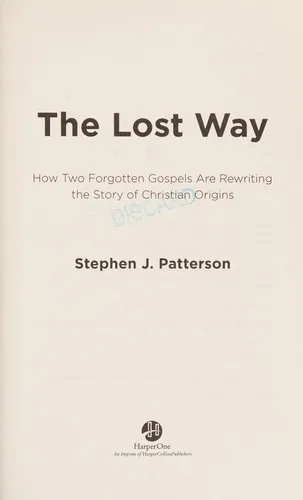
The lost way
 73
73

The lost way
Stephen J. Patterson's "The Lost Way" attempts to chart a course through the labyrinthine pathways of esoteric thought, a commendable if occasionally uneven endeavor. The work distinguishes itself by focusing on the *process* of spiritual inquiry rather than cataloging specific traditions. Patterson’s critique of rote memorization in spiritual practice, particularly in his discussion of the limitations of purely intellectual approaches to gnosis, is sharp and well-articulated. However, the book sometimes suffers from a lack of concrete examples; while it discusses the importance of symbols, it rarely elaborates on specific ones with the depth one might expect. The chapter on the "Inner Citadel" offers a compelling framework for understanding self-discipline, but the theoretical discussions that precede it could benefit from more illustrative case studies. Despite these limitations, "The Lost Way" provides a valuable perspective for those seeking to integrate esoteric knowledge into their lives.
📝 Description
73
### What It Is The Lost Way presents a unique examination of esoteric traditions, moving beyond surface-level descriptions to engage with the practical and philosophical underpinnings of spiritual paths. It is not a historical survey in the conventional sense, but rather an exploration of the principles that animate various mystical disciplines.
### Who It's For This work is suited for individuals seeking a deeper understanding of symbolic language and the underlying currents of Western esotericism. It appeals to those who approach spiritual study with a critical mind, desiring to connect theoretical concepts with lived experience.
### Historical Context Published in 2014, The Lost Way emerged during a period of renewed interest in esoteric studies, coinciding with a wider academic and popular engagement with subjects previously confined to fringe circles. The work implicitly engages with ongoing discourse surrounding the historical accuracy and practical efficacy of rediscovered spiritual systems.
### Key Concepts The book dissects concepts such as the nature of initiation, the role of archetypes in spiritual development, and the perennial philosophical questions regarding consciousness and reality. It emphasizes the experiential aspect of gnosis, moving the reader toward an understanding of these ideas as living principles rather than abstract doctrines.
💡 Why Read This Book?
• You will learn to identify the difference between academic study and experiential understanding of esoteric traditions, as discussed in the book's analysis of initiation. • You will gain practical methods for recognizing and working with archetypal forces in your personal development, a concept elaborated upon in the book's examination of spiritual paths. • You will develop a critical framework for evaluating spiritual teachings, focusing on their practical application rather than mere historical or doctrinal claims, as suggested by the book's emphasis on gnosis.
⭐ Reader Reviews
Honest opinions from readers who have explored this book.
❓ Frequently Asked Questions
What specific esoteric traditions does "The Lost Way" reference?
While "The Lost Way" does not focus on cataloging specific traditions, it references concepts found in Hermeticism, Gnosticism, and various schools of Western esotericism. The book prioritizes underlying principles over denominational specifics.
Is "The Lost Way" suitable for beginners in esoteric studies?
Yes, the book is accessible to beginners willing to engage with abstract concepts. It introduces fundamental ideas about spiritual development and symbolic language, offering a solid foundation for further exploration.
What is the author's stance on traditional religious dogma?
Stephen J. Patterson's work suggests that traditional dogma can sometimes obscure direct spiritual experience. He emphasizes personal gnosis and the practical application of esoteric principles over adherence to rigid doctrines.
Does the book offer practical exercises for spiritual development?
The book emphasizes the practical application of esoteric principles and discusses the importance of experiential learning. While it doesn't provide step-by-step exercises, it outlines frameworks for personal inquiry and self-discipline.
When was "The Lost Way" first published?
"The Lost Way" by Stephen J. Patterson was first published in 2014, placing it within a contemporary resurgence of interest in esoteric literature.
What does the author mean by 'gnosis' in the context of the book?
In "The Lost Way," gnosis refers to direct, intuitive knowledge and experiential understanding of spiritual realities, as opposed to purely intellectual or faith-based belief.
🔮 Key Themes & Symbolism
Experiential Gnosis
The work strongly advocates for gnosis as direct, lived knowledge, contrasting it with purely academic or dogmatic understanding. Patterson argues that true spiritual realization stems from personal engagement with esoteric principles rather than passive acceptance of doctrine. The book guides readers toward recognizing and cultivating this inner knowing, emphasizing that the "lost way" is one of direct experience rediscovered.
The Inner Citadel
This theme explores the concept of an internal fortress of self-discipline and mental fortitude essential for navigating spiritual challenges. Patterson posits that the development of this 'Inner Citadel' is paramount for sustaining progress on esoteric paths. It involves cultivating awareness, mastering impulses, and maintaining focus amidst external distractions and internal resistance, forming a crucial aspect of spiritual integrity.
Archetypal Dynamics
The book examines the pervasive influence of archetypes in shaping human consciousness and spiritual perception. It suggests that understanding these universal patterns allows individuals to engage more effectively with the symbolic language of traditions and the deeper currents of the psyche. Recognizing archetypes provides a framework for interpreting experiences and accelerating personal transformation.
The Nature of Initiation
Patterson frames initiation not merely as a ritualistic event but as a continuous process of psychological and spiritual unfolding. The work explores the transformative stages involved in spiritual growth, emphasizing the internal shifts required to integrate new levels of awareness. This perspective moves beyond external ceremonies to focus on the internal alchemy of the practitioner.
💬 Memorable Quotes
“Dogma often serves as a shield against direct experience.”
— This statement suggests that rigid adherence to established beliefs can prevent individuals from engaging with the reality of their spiritual path. It highlights the potential for doctrines to become barriers rather than guides.
“The path is rediscovered within, not merely mapped from without.”
— This captures the essence of the book's focus on inner exploration. It implies that true spiritual understanding comes from internal realization and self-discovery, rather than relying solely on external teachings or authorities.
“Archetypes are the silent architects of our inner world.”
— This metaphor emphasizes the profound and often unconscious influence of archetypal patterns on human thought, emotion, and behavior. It suggests that understanding these fundamental structures is key to self-awareness.
“True initiation is a metamorphosis, not a mere ceremony.”
— This interpretation distinguishes between superficial rites of passage and the deep, internal transformation that characterizes genuine spiritual development. It highlights the ongoing nature of personal growth.
“The Inner Citadel requires constant vigilance and inner work.”
— This points to the active and sustained effort needed to build and maintain psychological resilience and spiritual discipline. It underscores that the 'Inner Citadel' is not a passive state but an ongoing practice.
🌙 Esoteric Significance
Tradition
The work draws heavily from the Western Esoteric Tradition, particularly Hermeticism and Gnosticism, emphasizing the importance of direct, inner knowledge (gnosis). It aligns with traditions that prioritize the individual's journey toward self-realization and understanding of cosmic principles, rather than solely relying on external revelation or institutional authority. Patterson’s approach echoes the alchemical principle of internal transformation.
Symbolism
Key symbols explored, implicitly or explicitly, include the 'Inner Citadel' representing psychological fortitude and the 'labyrinth' symbolizing the complex journey of spiritual discovery. The concept of gnosis itself functions as a symbolic goal – the direct apprehension of truth, distinct from intellectual understanding. These motifs underscore the internal, transformative nature of the esoteric path.
Modern Relevance
Contemporary practitioners of Western esotericism, particularly those engaged with Hermeticism, ceremonial magic, and psychological approaches to spirituality, find resonance in Patterson's emphasis on inner work and direct experience. His critique of dogma and focus on archetypal dynamics align with modern psychological frameworks and the ongoing search for authentic spiritual paths outside mainstream religious structures.
👥 Who Should Read This Book
• Seekers interested in the philosophical underpinnings of Western esoteric traditions, who wish to understand concepts like gnosis beyond academic definitions. • Individuals engaged in personal spiritual development who are looking for frameworks to deepen their self-awareness and internal discipline, particularly through the concept of the 'Inner Citadel'. • Students of comparative religion and mysticism who want to explore the experiential dimension of spiritual paths, moving beyond historical accounts to understand the practitioner's perspective.
📜 Historical Context
Published in 2014, "The Lost Way" emerged into a landscape where esoteric subjects, once relegated to obscurity, were experiencing a notable resurgence in both academic and popular spheres. This period saw a growing interest in figures like Aleister Crowley and movements such as Thelema, alongside a more critical academic engagement with Hermeticism and Gnosticism, partly fueled by scholars like Wouter Hanegraaff. Patterson's work implicitly engages with this environment by focusing on the internal processes of spiritual seeking, moving beyond the historical cataloging of occult orders or the biographical accounts of practitioners that characterized some earlier literature. It reflects a contemporary trend towards seeking practical application and personal meaning within these traditions, distinguishing itself from the more purely historical or ritualistic approaches that might have dominated in earlier decades. The reception of such works often reflects a tension between those seeking historical accuracy and those prioritizing experiential relevance.
📔 Journal Prompts
The nature of initiation as a process of unfolding.
Reflecting on personal archetypal influences.
Identifying barriers to direct spiritual experience.
Cultivating the Inner Citadel through daily practice.
The difference between intellectual knowledge and gnosis.
🗂️ Glossary
Gnosis
Direct, intuitive knowledge or spiritual insight, often understood as an experiential apprehension of truth rather than purely intellectual comprehension. It is a central concept in Gnosticism and related esoteric traditions.
Inner Citadel
A metaphorical inner sanctuary of psychological strength, self-discipline, and mental fortitude. Developing the Inner Citadel is presented as crucial for navigating spiritual challenges and maintaining inner stability.
Archetype
Universal, archaic patterns and images that derive from the collective unconscious and are the psychic inheritance of mankind. They influence thought, emotion, and behavior, playing a significant role in spiritual symbolism.
Initiation
A process of transformation and spiritual awakening, often viewed not just as a single ritual but as a gradual unfolding of consciousness and integration of deeper knowledge.
Hermeticism
A religious, philosophical, and esoteric tradition based on writings attributed to Hermes Trismegistus. It emphasizes the unity of all things and the potential for human spiritual ascent.
Dogma
A principle or set of principles laid down by an authority as incontrovertibly true. In spiritual contexts, it can sometimes represent a barrier to direct experience.
Metamorphosis
A profound transformation or change, particularly in a spiritual or psychological context, signifying a fundamental shift in being or understanding.