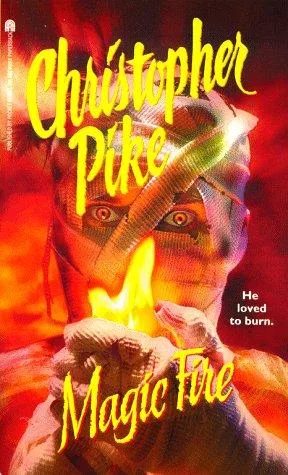
The lost mind

 81
81

The lost mind
Christopher Pike’s The Lost Mind attempts a bold foray into the fractured psyche, a subject he seems particularly drawn to. The premise, that parts of the mind can detach and gain independent existence, is certainly fertile ground for speculative fiction. Pike’s strength lies in his ability to craft narratives that, while often venturing into the supernatural, tap into anxieties about control and selfhood. The exploration of how these 'lost minds' might interact, forming internal ecosystems or even external influences, is where the book finds its most intriguing moments. However, the execution sometimes falters; the narrative can become convoluted, and the underlying psychological theories, while imaginative, lack rigorous development, occasionally feeling more like plot devices than cohesive frameworks. One memorable concept involves the idea of a 'psychic echo' left behind by intense emotional events, which then influences subsequent inhabitants of a space. Despite its occasional narrative tangles, The Lost Mind offers a unique, if sometimes unsettling, perspective on the self.
It is a speculative exploration of consciousness that, despite its unevenness, provokes thought.
📝 Description
81
### What It Is
The Lost Mind presents an exploration into the nature of consciousness and its potential fragmentation. Christopher Pike, writing in the mid-1990s, posits theories that challenge conventional understandings of the self, suggesting that mental states can become detached entities. The work examines how these disassociated parts of the psyche might interact with the individual and with external forces.
### Who It's For
This book is suited for readers interested in psychological mysteries and speculative thought concerning the mind's architecture. It will appeal to those who question the solidity of personal identity and are curious about theories that posit a more fluid or divisible consciousness. Individuals drawn to introspective narratives and the exploration of internal landscapes will find material for contemplation.
### Historical Context
Published in 1995, The Lost Mind emerged during a period where popular interest in psychology, New Age thought, and paranormal phenomena was significant. It followed a decade that saw increased public discourse on dissociation, memory, and the subconscious, influenced by fields ranging from depth psychology to early explorations of fragmented identity in popular culture. The work can be seen as part of a broader cultural conversation about the internal world.
### Key Concepts
The central tenet revolves around the idea of "lost minds" or fragmented consciousnesses that operate independently. Pike explores concepts like psychic residue, the possibility of consciousness transfer, and the mind's capacity to create internal structures or entities. The narrative often touches upon themes of memory recall, the influence of past traumas on present mental states, and the potential for external entities to interact with or influence human thought.
💡 Why Read This Book?
• Gain insight into Christopher Pike's unique perspective on fragmented consciousness, a concept explored in his 1995 work, which deviates from traditional psychological models. • Understand the speculative notion of "lost minds" acting independently, offering a framework for contemplating the boundaries of personal identity and awareness. • Explore narratives that delve into the potential for psychic residue and the influence of past mental states on present environments and individuals.
⭐ Reader Reviews
Honest opinions from readers who have explored this book.
❓ Frequently Asked Questions
What is the central premise of Christopher Pike's 'The Lost Mind'?
The core idea is that aspects of a person's mind can become detached and gain a form of independent existence, referred to as 'lost minds'. This work speculates on how these fragmented consciousnesses might operate and interact.
When was 'The Lost Mind' first published?
'The Lost Mind' was first published in 1995, placing it within a period of heightened interest in speculative psychology and New Age philosophies.
Does the book explore paranormal themes?
Yes, the book ventures into themes that touch upon the paranormal, particularly concerning the nature of consciousness, psychic phenomena, and the potential for non-physical entities or states to influence the material world.
What kind of reader would appreciate 'The Lost Mind'?
Readers interested in psychological thrillers, speculative fiction about consciousness, and those who enjoy exploring unconventional theories about the mind and identity will likely find this book engaging.
Are there specific psychological concepts discussed?
While not a formal psychological text, the book discusses concepts akin to dissociation, psychic echoes, and the idea of consciousness fragments, which resonate with certain psychological discussions but are presented through a fictional lens.
Is 'The Lost Mind' a horror novel?
While it contains suspenseful and sometimes unsettling elements related to the mind's fragmentation and potential external influences, it is more accurately categorized as speculative fiction with psychological thriller undertones rather than outright horror.
🔮 Key Themes & Symbolism
Fragmented Consciousness
The central theme is the concept of 'lost minds' – parts of consciousness that detach from the individual and exist independently. This challenges the notion of a singular, unified self, suggesting that our mental landscape might be more complex and divisible than commonly believed. Pike explores how these fragments might retain memories, emotions, or even a will of their own, leading to internal conflicts or external manifestations within the narrative's world.
Psychic Echoes and Influence
The work delves into the idea that intense emotional or mental events can leave behind residual psychic energy, or 'echoes,' in a location or object. These echoes are not merely passive imprints but can actively influence the thoughts and feelings of those who encounter them. This concept extends the notion of consciousness beyond the individual, suggesting it can permeate and affect the environment in tangible, albeit often subtle, ways.
Identity and Selfhood
At its core, 'The Lost Mind' interrogates the nature of identity. If parts of the mind can become separate entities, what does that mean for the definition of the 'self'? The book prompts readers to consider whether identity is fixed or fluid, and how external or internal fragmentation impacts our understanding of who we are. It questions the stability and integrity of the personal narrative we construct.
The Unseen Mind
This theme focuses on the hidden dimensions of the human psyche and its potential interactions with forces not readily perceived by conventional senses. Pike suggests that there are layers of mental activity and potential entities that exist beyond our everyday awareness, capable of influencing our reality. This opens avenues for exploring the boundaries between the psychological and the potentially supernatural.
💬 Memorable Quotes
“A mind can break off, and then it just goes on living.”
— This statement encapsulates the core speculative premise of the book: that consciousness is not necessarily confined to a single, integrated individual but can fragment and persist as an independent entity.
“Sometimes the thoughts you think aren't really yours.”
— This paraphrase highlights the idea that external influences or detached mental fragments can infiltrate an individual's consciousness, blurring the lines of original thought and personal agency.
“Places remember things.”
— This concept relates to the idea of psychic echoes, suggesting that environments can retain impressions of past events or emotions, which can then subtly affect present occupants.
“We are not just one person, but many.”
— This interpretation speaks to the theme of fragmented identity, proposing that the self is a composite of various mental states or entities, rather than a singular, monolithic consciousness.
“The lost parts of us can still be alive.”
— This paraphrased concept reinforces the central idea that severed pieces of a psyche retain a form of vitality and can continue to exist or operate independently from their original source.
🌙 Esoteric Significance
Tradition
While not strictly adhering to a single esoteric lineage, 'The Lost Mind' draws inspiration from psychological and Gnostic concepts of the fragmented self and the potential for consciousness to exist beyond the physical form. It touches upon ideas reminiscent of Jungian psychology's exploration of archetypes and the shadow self, but presents them through a more direct, narrative-driven speculative fiction approach rather than a purely theoretical framework.
Symbolism
The concept of 'lost minds' itself functions as a potent symbol for suppressed aspects of the psyche, unresolved traumas, or unacknowledged desires that continue to exert influence. 'Psychic echoes' symbolize the lingering energetic imprint of past experiences, suggesting that consciousness can leave a tangible trace in the environment, much like a spiritual or energetic residue.
Modern Relevance
Contemporary discussions in transpersonal psychology, consciousness studies, and even certain branches of modern occultism that explore the nature of thought-forms and psychic energy can find resonance with Pike's speculative ideas. Thinkers interested in the malleability of identity and the potential for consciousness to operate in non-localized ways might draw parallels to the book's themes.
👥 Who Should Read This Book
• Individuals fascinated by psychological thrillers that explore the darker aspects of the human mind and the concept of self. • Readers interested in speculative fiction that questions the nature of consciousness, identity, and reality, particularly Pike's unique approach to fragmented minds. • Those curious about fictional explorations of psychic phenomena, such as lingering emotional energy in places and the potential for detached thoughts.
📜 Historical Context
Christopher Pike's 'The Lost Mind,' published in 1995, emerged in a cultural landscape increasingly fascinated by the inner workings of the human mind, often through a speculative or New Age lens. This era saw a surge in popular interest in topics like dissociation, repressed memories, and alternative states of consciousness, partly fueled by psychological thrillers and self-help movements. Pike's work fits within this milieu, offering a fictional exploration of psychological fragmentation. Contemporaries like Dean Koontz were also exploring darker psychological themes in fiction, while in non-fiction, figures like Shirley MacLaine popularized ideas about past lives and spiritual consciousness. The book's exploration of psychic phenomena and detached consciousness aligns with broader trends in metaphysical literature of the 1990s, which often blended psychological concepts with spiritual or paranormal speculation, eschewing the more rigid structures of earlier esoteric traditions.
📔 Journal Prompts
The concept of 'lost minds' and their independent existence.
Reflect on the idea of 'psychic echoes' in familiar places.
Consider the implications of 'thoughts that aren't really yours' for personal agency.
Analyze the stability of your own identity in light of mental fragmentation.
Explore the boundaries between the psychological and the potentially supernatural in your experiences.
🗂️ Glossary
Lost Mind
A concept within the book referring to a fragment of consciousness that has detached from its original owner and exists with a degree of independent volition or awareness.
Psychic Echo
The residual energetic or emotional imprint left behind in a place or on an object by intense past events or consciousness, which can influence present individuals.
Fragmented Consciousness
The state or theory wherein a person's overall consciousness is not a single, unified entity but is composed of multiple, potentially separable parts.
Detached Thought
An idea or mental process that has become independent of the individual who originally conceived it, potentially influencing others.
Mental Fragmentation
The process or condition of the mind breaking into separate components or entities, a key theme explored in the narrative.
Self-Perception
How an individual understands and views their own identity, which the book challenges by proposing multiple concurrent or fragmented selves.
External Influence
The idea that forces or entities outside of an individual's unified consciousness can impact their thoughts, emotions, or actions.