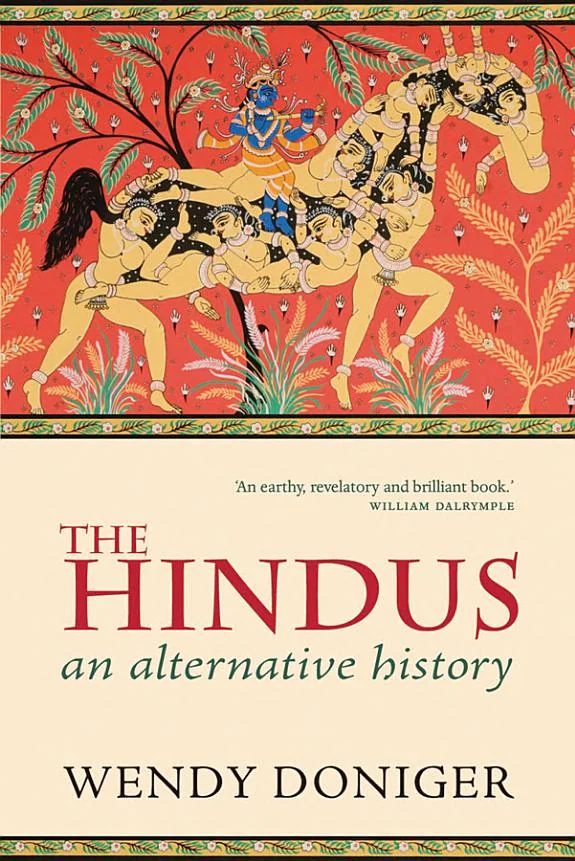
The Hindus
 71
71

The Hindus
Wendy Doniger's "The Hindus" presents a formidable distillation of a religious tradition often misunderstood in the West. The sheer breadth of material covered is impressive, offering insights into everything from Vedic hymns to contemporary practices. Doniger skillfully navigates the historical and textual layers, providing context for concepts that can appear opaque to outsiders. A particular strength lies in her ability to articulate the inherent fluidity and diversity within what is often presented as a monolithic faith. However, the book's academic rigor, while a virtue, can at times render its prose dense, requiring sustained attention from the reader. The section discussing the concept of *bhakti* (devotion) effectively illustrates the tradition's capacity for deeply personal religious experience, a passage that truly highlights the book's analytical depth. While comprehensive, the sheer volume of information means some areas receive less detailed attention than others. Ultimately, "The Hindus" serves as an authoritative, albeit demanding, scholarly overview.
📝 Description
71
Wendy Doniger's 2009 book, 'The Hindus,' examines the diverse traditions known as Hinduism.
Wendy Doniger's "The Hindus," published in 2009, provides a scholarly examination of the varied religious traditions that fall under the umbrella of Hinduism. The book aims to offer a detailed understanding of the beliefs, rituals, and philosophical ideas that have developed over many centuries. It moves beyond simple definitions to show the many devotional paths, theological ideas, and cultural expressions that make up this large religious field.
This work is for students of religion, comparative theology, and cultural history. It is suitable for those looking for an academic yet clear introduction to Hindu thought and practice. Readers who value detailed research, thoughtful arguments, and a critical look at religious traditions will find "The Hindus" especially valuable. It is also good for people with an existing interest in Indian culture or philosophy who want to learn more.
Published in 2009, Doniger's work engages with the long history of Indology, building on scholarship from figures like A.L. Basham. It entered academic discussions focused on social history, anthropological methods, and post-colonial perspectives in religious studies. The book offers a scholarly view on one of the world's oldest continuously practiced religions, at a time when global religious studies considered secularization, fundamentalism, and interfaith dialogue.
💡 Why Read This Book?
• Learn about the diverse devotional practices within Hinduism, such as the *bhakti* movement, and understand its historical roots, offering a counterpoint to simplistic views of religious adherence. • Grasp the philosophical underpinnings of concepts like dharma and karma, gaining insight into the ethical and existential frameworks that have shaped South Asian thought since ancient times. • Explore the significance of key textual traditions, including the Vedas and Puranas, and their enduring influence on Hindu cosmology and ritual, providing a foundation for deeper textual study.
⭐ Reader Reviews
Honest opinions from readers who have explored this book.
❓ Frequently Asked Questions
What is the primary focus of Wendy Doniger's "The Hindus"?
The book's primary focus is a comprehensive scholarly examination of the diverse religious traditions collectively known as Hinduism, covering its beliefs, practices, rituals, and philosophical evolution over millennia.
When was "The Hindus" by Wendy Doniger first published?
"The Hindus" by Wendy Doniger was first published in 2009.
Does the book discuss specific Hindu deities?
Yes, the work explores the significance of various Hindu deities, including prominent figures like Vishnu and Shiva, and examines their roles within different traditions and theological frameworks.
What are some of the key philosophical concepts discussed in the book?
Key philosophical concepts explored include dharma (righteousness/duty), karma (action and consequence), and moksha (liberation), alongside various schools of thought such as Vedanta.
Is "The Hindus" suitable for someone with no prior knowledge of Hinduism?
While academically rigorous, the book aims to be an accessible introduction for serious students of religion. However, readers with some foundational interest may find it more immediately rewarding due to its depth.
What is the significance of the term 'Indology' in relation to this book?
Indology refers to the academic study of the history, languages, literature, and philosophy of India. Doniger's work builds upon and engages with the long tradition of Indological scholarship.
🔮 Key Themes & Symbolism
Diversity of Practice
Doniger emphasizes that Hinduism is not a singular, monolithic religion but a vast constellation of traditions. The work illustrates this through detailed explorations of regional variations, differing sectarian loyalties (e.g., Vaishnavism, Shaivism), and the myriad ways rituals and beliefs are enacted across the subcontinent. It moves beyond a standardized presentation to reveal the dynamic and often contradictory expressions of faith, highlighting how practices evolved from ancient Vedic roots through to modern times, often influenced by local customs and historical developments.
Philosophical Systems
The book systematically examines the core philosophical concepts that underpin Hindu thought. It delves into the meaning and application of dharma, the cosmic law of righteousness and duty, and karma, the principle of cause and effect governing actions and their repercussions. Furthermore, it explores the ultimate goal of moksha, or liberation from the cycle of rebirth, and the diverse paths articulated by various schools of thought, particularly the Vedanta schools, to achieve this state.
Deity and Devotion
Central to the work is the exploration of the Hindu pantheon and the practice of devotion (*bhakti*). Doniger analyzes the roles and iconography of major deities like Vishnu, Shiva, and Devi, and discusses how they are worshipped and understood in different contexts. The book traces the development of devotional movements, emphasizing the intensely personal relationship between the devotee and the divine that characterizes much of Hindu practice, offering a nuanced perspective on the concept of monotheism and polytheism within the tradition.
Textual Authority
The influence and interpretation of sacred texts form a crucial theme. "The Hindus" discusses the foundational role of the Vedas and Upanishads, as well as the vast body of later literature including the Puranas, the epics (Mahabharata and Ramayana), and the teachings of various gurus and philosophical schools. Doniger highlights how these texts have been continuously interpreted and reinterpreted, shaping theological discourse, ritual practice, and cultural norms throughout Indian history.
💬 Memorable Quotes
“The work explores the fluidity of religious identity.”
— This highlights Doniger's argument that Hinduism is characterized by adaptability and a lack of rigid dogma, allowing individuals and communities to draw from diverse sources and evolve their practices over time.
“Dharma signifies the intricate web of duties and cosmic order.”
— This paraphrased concept captures the multifaceted nature of dharma, extending beyond simple 'duty' to encompass social obligations, cosmic principles, and the very fabric of righteous living within the Hindu worldview.
“The *bhakti* tradition emphasizes the direct, emotional connection to the divine.”
— This interpretation points to the central tenet of devotional Hinduism, where personal love and emotional engagement with a chosen deity are paramount, often overriding strict ritualism or complex philosophical understanding.
“Karma dictates the consequences of actions across lifetimes.”
— This concept defines the law of cause and effect as understood in Hinduism, where deeds in this life, and previous ones, shape future experiences and the cycle of rebirth (samsara).
“Moksha represents the ultimate goal of liberation from cyclical existence.”
— This encapsulates the Hindu aspiration for *moksha*, the release from the endless cycle of birth, death, and rebirth, achieved through various spiritual practices and understanding.
🌙 Esoteric Significance
Tradition
While not strictly an esoteric text in the vein of Hermeticism or Kabbalah, "The Hindus" engages with traditions that contain deeply esoteric dimensions. It explores practices and philosophies within Hinduism that, for centuries, were transmitted through initiatory lineages and concerned with profound spiritual realization and communion with the divine. The book situens the pursuit of *moksha* (liberation) and the various yogic and meditative practices aimed at achieving altered states of consciousness, which are central to many esoteric paths within the broader Hindu umbrella.
Symbolism
The work frequently addresses potent symbols within Hinduism. The lotus flower, for instance, is explored not just as a botanical element but as a symbol of purity, spiritual awakening, and creation, often associated with deities like Lakshmi and Brahma. The Om (Aum) symbol is examined as the primordial sound, representing the ultimate reality and the essence of consciousness, a fundamental mantra in meditation and spiritual practice. The cyclical nature of time, represented by vast cosmic ages (*yugas*), also functions symbolically, denoting the processes of creation, preservation, and destruction that are central to Hindu cosmology.
Modern Relevance
Contemporary thinkers and practitioners in fields ranging from comparative religion to spiritual wellness often draw upon the scholarship presented in "The Hindus." The book's nuanced exploration of yoga philosophy, meditation techniques, and concepts like karma and mindfulness informs modern spiritual seekers and therapists. Furthermore, its critical engagement with the history of religious scholarship helps shape ongoing academic discourse, influencing how scholars approach the study of diverse global religions in an interconnected world. The work remains a foundational text for understanding the historical and philosophical underpinnings of many modern spiritual movements.
👥 Who Should Read This Book
• Students of comparative religion and Indology seeking a detailed, scholarly overview of Hindu traditions and their historical development. • Individuals interested in the philosophical underpinnings of dharma, karma, and liberation, looking for a comprehensive academic text to deepen their understanding. • Comparative theology researchers and scholars of South Asian culture needing a reliable, well-researched resource on the vast spectrum of Hindu beliefs and practices.
📜 Historical Context
Wendy Doniger's "The Hindus," published in 2009, arrived at a pivotal moment in the academic study of religion. The field was increasingly engaging with post-colonial theory, challenging earlier Eurocentric interpretations of non-Western traditions. Indology, the study of Indian history and culture, had a long lineage, with scholars like A.L. Basham laying groundwork in the mid-20th century. Doniger's work builds on this foundation while incorporating contemporary critical methodologies. The book's comprehensive approach offered a counter-narrative to Orientalist stereotypes and simplistic understandings of Hinduism prevalent in some Western discourse. Its reception occurred within an academic landscape marked by debates on secularism, globalization, and the role of religion in public life, positioning it as a significant contribution to the ongoing scholarly conversation about one of the world's major religious traditions.
📔 Journal Prompts
The concept of dharma and its application in contemporary life.
Reflections on the *bhakti* movement and personal devotion.
The symbolic meanings of the Om (Aum) symbol.
The cyclical nature of time as presented in Hindu cosmology.
Personal understanding of karma and its implications.
🗂️ Glossary
Dharma
A central concept in Hinduism, encompassing duty, righteousness, law, moral order, and the inherent nature of things. It guides individual conduct and societal functioning.
Karma
The principle of cause and effect, where actions (karma) in this life and previous lives determine future consequences and influence the cycle of rebirth (samsara).
Moksha
The ultimate spiritual goal in Hinduism, signifying liberation from the cycle of birth, death, and rebirth (samsara). It represents spiritual freedom and union with the divine or ultimate reality.
Bhakti
A devotional path in Hinduism characterized by intense love and personal devotion to a chosen deity. It emphasizes emotional connection and surrender to the divine.
Vedas
The oldest and most authoritative scriptures in Hinduism, consisting of hymns, rituals, and philosophical teachings. They form the foundation of Vedic religion and later Hindu traditions.
Upanishads
Later Vedic texts that explore philosophical concepts such as Brahman (ultimate reality) and Atman (the self), forming the basis of Vedanta philosophy. They are considered the end of the Vedas.
Yuga
A cosmic age or epoch in Hindu cosmology, representing vast cycles of time. Hinduism recognizes four yugas (Satya, Treta, Dvapara, and Kali) that form a cycle of decline and renewal.