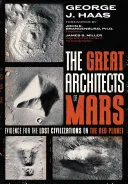
The Great Architects of Mars
 79
79

The Great Architects of Mars
George J. Haas's "The Great Architects of Mars" presents a compelling, albeit speculative, case for an ancient Martian civilization. The strength of the work lies in its detailed collation of visual evidence from Mars, particularly its focus on geometric and pictographic designs that defy easy geological explanation. Haas effectively draws connections between these alleged structures and ancient Earth myths, such as the Mayan Star War narratives and Sumerian Anunnaki accounts, adding a layer of comparative mythology to his analysis. However, the book's reliance on interpretation of photographic anomalies and ancient texts means its conclusions remain firmly in the realm of theory, lacking definitive proof. A passage discussing the Elysium pyramid, originally popularized by Carl Sagan, highlights both the allure and the interpretative leaps required. While the evidence presented is intriguing, it requires significant suspension of disbelief regarding the authenticity and intent of these Martian features. It offers a provocative perspective for enthusiasts of ancient astronaut theories.
📝 Description
79
### What It Is George J. Haas's "The Great Architects of Mars," first published in 2025, is an esoteric investigation into alleged artificial structures on the Martian surface. The work meticulously documents anomalies that exhibit clear geometric and pictographic patterns, moving beyond simple geological formations to suggest intelligent design. Haas compiles photographic evidence and analyses from various regions of Mars, focusing on areas that have previously captured public and scientific imagination.
### Who It's For This book is aimed at readers with a keen interest in ufology, ancient astronaut theories, and unconventional interpretations of planetary science and mythology. It will appeal to those who question mainstream explanations for planetary features and seek connections between ancient Earth cultures and potential extraterrestrial intelligences. Individuals familiar with the works of authors like Erich von Däniken or Zecharia Sitchin will find common ground here.
### Historical Context Haas's exploration of Martian anomalies is situated within a long tradition of speculating about life beyond Earth. The work implicitly engages with the scientific discourse surrounding Mars exploration, which gained significant momentum in the mid-20th century with early telescopic observations and later with robotic missions. The book draws parallels to historical myths and creation stories, particularly those involving celestial conflicts or divine beings descending from the stars, such as the Mayan Popol Vuh and the Sumerian Anunnaki narratives.
### Key Concepts The central thesis posits that observable, non-natural patterns on Mars are remnants of an advanced, ancient civilization. Haas examines specific sites like the "Elysium pyramid," a formation notably discussed by Carl Sagan, and alleged city complexes in regions such as Nepenthes Mensae and Atlantis Chaos. The book argues that these features, when cross-referenced with ancient terrestrial legends, offer compelling evidence for a historical Martian culture that may have interacted with early humanity.
💡 Why Read This Book?
• Understand the specific arguments for artificial structures on Mars, such as the Elysium pyramid, and how they are analyzed through geometric and pictographic lenses, offering a unique perspective beyond geological explanations. • Explore the alleged connections between Martian anomalies and ancient terrestrial creation myths, including Mayan stories of a Star War and Sumerian Anunnaki legends, providing a comparative mythological framework. • Gain insight into the hypothesis of a lost Martian civilization and its potential contact with early Earth cultures, challenging conventional views on planetary history and extraterrestrial intelligence.
⭐ Reader Reviews
Honest opinions from readers who have explored this book.
❓ Frequently Asked Questions
What specific Martian regions are analyzed in "The Great Architects of Mars"?
The book examines several key regions, including the famous "Elysium pyramid," as well as alleged city complexes located in the Nepenthes Mensae and Atlantis Chaos areas of Mars.
What ancient Earth myths does George J. Haas reference?
Haas draws parallels to Mayan creation stories, specifically mentioning a "Star War," and Sumerian myths concerning the Anunnaki, suggesting these narratives may hold evidence of Martian contact.
When was "The Great Architects of Mars" first published?
The book was first published on January 7, 2025.
Does the book provide definitive proof of a Martian civilization?
No, the book presents evidence and arguments for a lost Martian civilization based on interpretation of surface anomalies and ancient myths, rather than definitive scientific proof.
What is the core argument about Martian structures?
The core argument is that many anomalous structures on Mars display a high degree of geometric and pictographic design, suggesting they are artificial remnants of an advanced, ancient Martian culture.
Who is George J. Haas?
George J. Haas is the author of "The Great Architects of Mars," an esoteric researcher focused on extraterrestrial intelligence and ancient civilizations.
🔮 Key Themes & Symbolism
Artificial Martian Structures
The book's central focus is the examination of alleged artificial structures on Mars. Haas meticulously analyzes photographic evidence, highlighting formations that exhibit sophisticated geometric precision and pictographic designs. These are presented as anomalies that defy natural geological processes, suggesting intelligent, deliberate construction by a lost Martian civilization. The work details specific sites, including the renowned Elysium pyramid, proposing that these are not mere coincidences but remnants of an advanced society.
Ancient Mythological Parallels
Haas posits that ancient Earth mythologies serve as historical records of contact with extraterrestrial civilizations, particularly those from Mars. He draws explicit connections between the alleged Martian structures and narratives such as the Mayan creation stories involving a "Star War" and the Sumerian accounts of the Anunnaki. This comparative approach suggests that these ancient legends offer cultural echoes of a time when Martians may have influenced or interacted with early human societies.
Lost Martian Civilization
The overarching theme is the existence of a sophisticated, ancient civilization on Mars that has since vanished. Haas argues that the surface features, when interpreted through the lens of advanced design and ancient lore, provide compelling evidence for this lost culture. The book explores the implications of such a civilization, including its potential technological capabilities and its historical relationship with Earth, challenging conventional scientific understanding of planetary history.
Geometric and Pictographic Design
A critical element of Haas's argument is the presence of high degrees of geometric and pictographic design in Martian anomalies. These patterns are presented as hallmarks of intelligent, artificial creation, distinct from random natural formations. The book emphasizes how these designs, whether intentional symbols or architectural motifs, point towards a culture with advanced knowledge of mathematics, engineering, and possibly symbolic communication.
💬 Memorable Quotes
“Anomalous structures on Mars display a high degree of geometric and pictographic design.”
— This core assertion frames the book's thesis, suggesting that specific formations observed on the Martian surface are not natural but are instead intentional constructs bearing intelligent patterns.
“Mayan creation stories of a Star War provide ancient evidence for a Martian culture.”
— This interpretation links terrestrial mythology directly to extraterrestrial origins, positing that ancient human narratives contain verifiable accounts of celestial events and interactions with beings from Mars.
“Sumerian myths of the Anunnaki offer clues to a lost Martian civilization.”
— The work proposes that ancient Mesopotamian texts, particularly those concerning the Anunnaki, are not purely allegorical but contain historical references to an advanced Martian society and its influence on early Earth.
“Carl Sagan described the Elysium pyramid, a site examined for artificiality.”
— This highlights a specific, recognizable Martian feature that the author revisits, placing his esoteric analysis within the context of previous scientific and popular discussions about Mars.
“City complexes in Nepenthes Mensae and Atlantis Chaos regions suggest intelligent design.”
— The interpretation here is that vast, organized settlements, rather than random geological features, are indicative of a structured, intelligent presence on Mars in its ancient past.
🌙 Esoteric Significance
Tradition
This work aligns with the ancient astronaut and esoteric cosmology traditions, which propose that extraterrestrial intelligences have influenced human civilization and history. It departs from purely materialistic scientific frameworks by integrating mythological narratives and interpretations of visual data as evidence for intelligent design, echoing themes found in Theosophy and broader New Age thought concerning ancient, advanced non-terrestrial cultures.
Symbolism
The book highlights two key symbolic elements: geometric design and pictographic patterns. Geometric precision, such as the "Elysium pyramid," symbolizes advanced knowledge and intelligent creation, representing order and mathematical understanding. Pictographic designs are interpreted as a form of communication or cultural expression from a lost Martian civilization, potentially carrying symbolic meaning akin to hieroglyphs or ancient runes, intended to convey specific messages or spiritual concepts.
Modern Relevance
Contemporary thinkers and communities interested in ufology, ancient mysteries, and alternative history continue to draw upon the arguments presented in works like Haas's. It informs discussions within online forums, speculative research groups, and among authors who explore the intersection of mythology, archaeology, and the possibility of extraterrestrial contact. The book's approach fuels ongoing debates about the interpretation of planetary imagery and the potential for non-human intelligence influencing Earth's past.
👥 Who Should Read This Book
• Students of ancient astronaut theories and proponents of extraterrestrial influence on early human development, seeking detailed analyses of alleged Martian evidence. • Comparative mythology enthusiasts interested in exploring potential links between ancient Earth creation stories, such as Mayan and Sumerian myths, and speculative extraterrestrial origins. • Readers of esoteric literature and speculative science fiction who enjoy challenging conventional narratives about planetary history and the search for life beyond Earth.
📜 Historical Context
Published in 2025, George J. Haas's "The Great Architects of Mars" enters a continuing discourse on extraterrestrial life and ancient civilizations, a field invigorated by mid-20th-century developments in space exploration and popularized by figures like Erich von Däniken. The book builds upon a legacy of speculative works that interpret planetary anomalies and ancient texts as evidence of non-human intelligence. While mainstream science, represented by figures like Carl Sagan who commented on Martian features, maintained a skeptical stance, Haas's work engages with a segment of the public and academic inquiry that seeks alternative explanations. This book emerged at a time when renewed interest in Mars, driven by ongoing robotic missions and a burgeoning field of astrobiology, provided a fertile ground for such theories. Unlike purely scientific endeavors, Haas’s approach integrates mythological studies, aligning with a tradition of esoteric thought that views ancient myths as literal historical accounts. The work implicitly addresses the philosophical implications of humanity's place in the cosmos, a theme explored by numerous thinkers throughout the 20th century.
📔 Journal Prompts
The Elysium pyramid's geometric design: consider its implications for intelligent construction.
Mayan Star War narratives: how might they relate to astronomical observations or celestial events?
Sumerian Anunnaki myths: what societal structures do they suggest for an ancient civilization?
Pictographic anomalies on Mars: what messages could they convey if intentionally created?
The concept of a lost Martian civilization: reflect on its potential impact on human history.
🗂️ Glossary
Elysium pyramid
A specific geological formation on Mars, located in the Elysium Planitia region, which the author and others have suggested exhibits artificial, pyramid-like geometric characteristics.
Geometric design
Refers to patterns and structures on Mars that exhibit precise mathematical shapes and angles, which the author argues are indicative of intelligent, artificial origin rather than natural processes.
Pictographic design
In the context of the book, this refers to surface markings or formations on Mars that resemble symbols or images, interpreted as a form of communication or artistic expression from an ancient civilization.
Mayan Star War
A reference to creation stories or mythological accounts from ancient Mayan culture that describe a conflict or significant event involving celestial bodies or beings from the stars.
Sumerian Anunnaki
Refers to the divine beings or deities mentioned in ancient Sumerian mythology, often interpreted in esoteric circles as extraterrestrial visitors who influenced early human civilization.
Nepenthes Mensae
A geographical region on Mars known for its mesas and complex terrain, examined in the book for alleged signs of ancient city complexes or artificial structures.
Atlantis Chaos
A region on Mars characterized by chaotic terrain, where the author suggests evidence of ancient Martian city complexes can be found, further supporting the theory of a lost civilization.