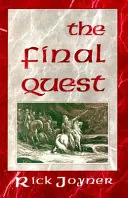
The Final Quest
 76
76

The Final Quest
Joyner’s "The Final Quest" operates with a relentless allegorical intensity, presenting a spiritual battlefield disguised as a literal journey. The strength of the work lies in its vivid, often disturbing, imagery that aims to shake the reader out of spiritual complacency. For instance, the depiction of the "beast" as a tangible, oppressive force seeks to make the spiritual struggle feel viscerally real. However, the narrative’s unyielding focus on conflict and its somewhat simplistic portrayal of good versus evil can feel repetitive. The allegorical framework, while potent, sometimes strains credulity, leaving the reader less with nuanced spiritual understanding and more with a sense of overwhelming, albeit divinely orchestrated, chaos. Ultimately, "The Final Quest" serves as a stark, if sometimes unsubtle, reminder of the perceived spiritual battles at play in the lives of believers.
📝 Description
76
Rick Joyner's 1996 book, The Final Quest, uses allegory to depict a spiritual journey.
The Final Quest presents a spiritual allegory first published in 1996. The book follows a group on a symbolic journey through difficult spiritual landscapes and challenges toward a final destination. Its structure relies on a series of visions and encounters that illustrate a path toward spiritual maturity and divine revelation.
Joyner's work appeals to readers interested in Christian esotericism and narratives of spiritual warfare. It is particularly suited for those who appreciate visionary literature and seek to grasp concepts of spiritual progression. The book addresses themes of overcoming demonic opposition and the eventual triumph of divine will, finding resonance with individuals involved in charismatic or prophetic Christian movements.
Published in 1996, The Final Quest appeared during a period of increased interest in prophetic literature within certain Christian circles. This era saw a rise in books examining spiritual warfare, angelic meetings, and end-times prophecy. Joyner's book joined a larger conversation alongside authors who popularized supernatural thriller elements within a religious context. The book's allegorical style also connected to earlier Christian allegory traditions, though it featured a distinct modern, intense visionary tone.
💡 Why Read This Book?
• Gain a visceral understanding of spiritual warfare concepts as depicted in the book's allegorical journey, illustrating the challenges faced on the path to divine fulfillment. • Explore the specific imagery of the "beast" and its oppressive manifestations, providing concrete examples of the spiritual adversaries described within the narrative. • Grasp the symbolic meaning of the perilous landscapes and divine encounters, offering insights into the trials and tribulations central to the "final quest" as a spiritual metaphor.
⭐ Reader Reviews
Honest opinions from readers who have explored this book.
❓ Frequently Asked Questions
When was Rick Joyner's "The Final Quest" originally published?
"The Final Quest" by Rick Joyner was first published in 1996, contributing to a wave of spiritual and prophetic literature in the late 20th century.
What is the primary genre of "The Final Quest"?
The book is best categorized as spiritual allegory or visionary literature, often drawing on Christian eschatological themes and imagery.
What is the central theme of "The Final Quest"?
The central theme is the spiritual journey, often depicted as a perilous quest, toward divine fulfillment and understanding, involving spiritual warfare and personal transformation.
Does "The Final Quest" contain actual historical accounts?
No, "The Final Quest" is primarily allegorical and visionary, not a historical account. It uses symbolic narratives to convey spiritual truths and theological concepts.
Who is Rick Joyner?
Rick Joyner is an American author known for his writings on Christian prophecy, spiritual warfare, and revival. He is the founder of The Morning Star Ministries.
What kind of symbolism is present in "The Final Quest"?
The book employs rich symbolism, including perilous landscapes representing spiritual states, angelic and demonic figures, and a final destination symbolizing ultimate spiritual attainment.
🔮 Key Themes & Symbolism
The Spiritual Journey
The narrative maps out a spiritual journey as an arduous quest, emphasizing that progress toward divine understanding is fraught with trials. Each stage represents a phase of spiritual development, from initial awakening to ultimate purification. The text highlights the necessity of faith and perseverance, portraying the journey not as a passive experience but an active engagement with spiritual realities and challenges.
Spiritual Warfare
A central theme is the pervasive nature of spiritual warfare. Joyner depicts the unseen battle between divine and demonic forces as intensely real and consequential for the individual's spiritual progress. Characters encounter various manifestations of evil, which serve as allegorical representations of internal struggles and external temptations designed to thwart the quest.
Divine Revelation and Guidance
The book underscores the role of divine revelation and guidance in navigating the spiritual path. Characters receive visions and supernatural assistance, illustrating the belief that God actively communicates with and guides those on the quest. This guidance is presented as crucial for discerning truth from deception and for overcoming obstacles presented by the spiritual enemy.
The Nature of the Church
Joyner explores the concept of the Church not just as an institution, but as a collective spiritual entity undergoing transformation. The "final quest" can be interpreted as the Church's ultimate spiritual maturation, moving toward a perfected state. The text often contrasts the true, spiritual Church with compromised or fallen religious systems.
💬 Memorable Quotes
“The path to the most wonderful places is always the most difficult.”
— This statement encapsulates the book's core premise: spiritual attainment and divine proximity are directly correlated with the severity of trials faced. It suggests that ease is antithetical to true spiritual growth.
“Darkness has no power except what we give it.”
— This aphorism points to the volitional aspect of spiritual warfare. It asserts that the efficacy of evil forces is dependent on the individual's consent or susceptibility, emphasizing personal responsibility in resisting spiritual opposition.
“The greatest victories are won in the unseen realm.”
— This highlights the book's focus on spiritual realities. It posits that the most significant battles and triumphs occur not in the physical world, but in the spiritual dimensions, influencing the material plane.
“True faith is not believing that God can, but that He will.”
— This quote distinguishes passive hope from active, assured faith. It suggests that genuine belief involves not just acknowledging God's power, but trusting in His specific promises and intended actions.
“The end of the journey is just the beginning of true service.”
— This implies that reaching a state of spiritual enlightenment or fulfillment is not an endpoint but a transition. The ultimate purpose of the quest is preparation for greater divine assignment or ministry.
🌙 Esoteric Significance
Tradition
While rooted in a Christian framework, "The Final Quest" draws on broader esoteric concepts of the spiritual journey and initiation. Its allegorical structure, depicting trials and symbolic encounters to achieve a higher state of consciousness, echoes Gnostic and Hermetic traditions of ascent. However, Joyner firmly anchors these themes within a specific evangelical theology, emphasizing divine grace and the person of Jesus Christ as central, differentiating it from purely mystical or philosophical esoteric paths.
Symbolism
The book utilizes potent symbols common in esoteric traditions, recontextualized within its Christian narrative. Perilous landscapes, such as treacherous mountains and dark forests, represent the challenges and chaotic states of the soul or the world. Encounters with demonic entities symbolize the internal struggles against base desires and external spiritual opposition, while angelic figures represent divine guidance and protection. The "final quest" itself symbolizes the ultimate goal of spiritual perfection or union with the divine.
Modern Relevance
Contemporary thinkers and practitioners in spiritual warfare ministries and prophetic circles continue to draw upon Joyner's work. His vivid descriptions of spiritual conflict and the pilgrim's progress remain influential in discipleship programs and teaching materials for churches focused on spiritual development. The book's allegorical style also resonates with a modern audience seeking accessible narratives to understand complex spiritual concepts, bridging the gap between traditional theology and experiential spirituality.
👥 Who Should Read This Book
• Believers interested in understanding spiritual warfare allegorically, who seek narratives illustrating the unseen battles described in Christian doctrine. • Students of Christian esotericism and visionary literature, looking to analyze how contemporary authors interpret spiritual journeys and divine encounters. • Individuals engaged with prophetic movements or charismatic Christianity who appreciate works that describe direct divine revelation and supernatural experiences.
📜 Historical Context
Rick Joyner's "The Final Quest" emerged in 1996, a period marked by burgeoning interest in prophetic and spiritual warfare literature within evangelical Christianity. This era saw authors like Frank Peretti achieving massive success with supernatural thrillers, creating a receptive audience for works exploring the unseen spiritual realm. Joyner's book tapped into this current, presenting a highly allegorical vision of spiritual maturation and conflict. It engaged with a broader cultural fascination with apocalyptic themes and the perceived resurgence of spiritualism, albeit from a distinctly Christian perspective. Unlike more academic theological works, Joyner's approach was visceral and narrative-driven, aiming for direct spiritual impact rather than intellectual debate. Its reception was largely within charismatic and prophetic Christian communities, reinforcing established beliefs about spiritual conflict and divine intervention.
📔 Journal Prompts
The symbolic meaning of the perilous landscapes encountered on the "final quest."
Reflect on the nature of spiritual warfare as depicted through the "beast" and its manifestations.
Consider the role of divine guidance versus personal will in navigating spiritual trials.
Analyze the concept of the "final quest" as a metaphor for personal spiritual maturation.
Examine the balance between faith and action when facing seemingly insurmountable spiritual obstacles.
🗂️ Glossary
The Final Quest
The central allegorical journey in the book, representing the ultimate spiritual path toward divine fulfillment, enlightenment, or the perfected Church.
Spiritual Warfare
The conflict between divine and demonic forces, believed to be actively occurring in the unseen realm and directly impacting human lives and spiritual progress.
Allegory
A literary device where characters, events, and settings represent abstract ideas or moral qualities, used extensively in "The Final Quest" to convey spiritual truths.
Visionary Literature
Writings that describe supernatural experiences, divine revelations, or prophetic insights, often featuring symbolic imagery and otherworldly encounters.
The Beast
In the context of the book, a symbolic representation of oppressive evil forces, antichristian powers, or spiritual deception that hinders the spiritual journey.
Divine Guidance
Supernatural direction or wisdom provided by God to individuals undertaking spiritual paths, often received through prayer, scripture, or direct revelation.
Spiritual Maturity
The state of advanced spiritual development characterized by wisdom, character, and effective engagement with spiritual realities, often depicted as the goal of the quest.