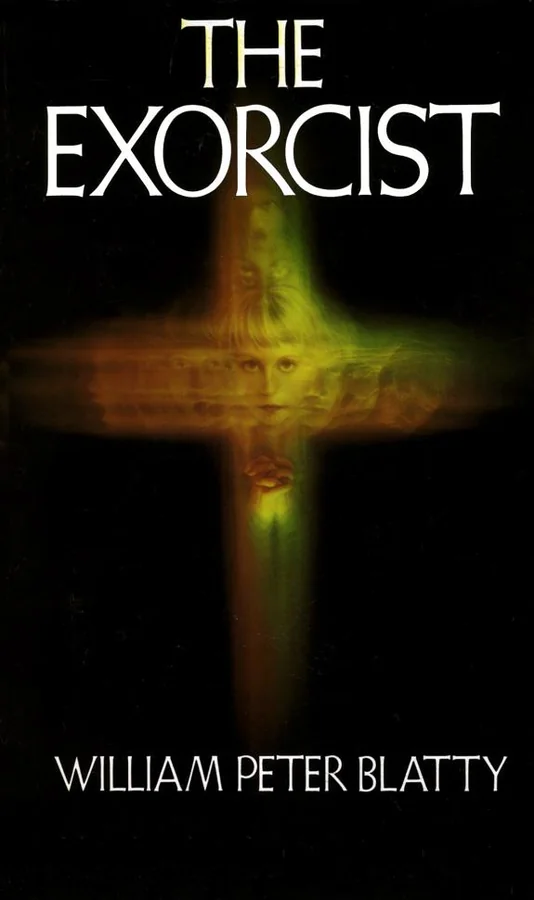
The Exorcist
 71
71

The Exorcist
William Peter Blatty’s The Exorcist is less a simple horror story and more a theological thriller that probes the very foundations of faith and the tangible presence of evil. The novel’s strength lies in its meticulous portrayal of psychological deterioration and spiritual crisis, particularly through Regan MacNeil’s descent and the desperate actions of her mother, Chris. Blatty, a convert to Catholicism, imbues the narrative with a palpable sense of religious conviction and dread, grounded in the rituals of the Catholic Church. However, the extensive theological exposition, while integral to the book's purpose, occasionally slows the narrative momentum. The depiction of Father Merrin's internal struggle and his past encounters with demonic influence, particularly the Pazuzu entity, offers a compelling counterpoint to the immediate horror. The Exorcist remains a potent exploration of the battle for the soul, presented with an earnestness that is rare in the genre.
📝 Description
71
### What It Is
The Exorcist, penned by William Peter Blatty and first published in 1971, is a novel that transcends typical horror to explore profound questions of faith, doubt, and the nature of evil. It chronicles the terrifying ordeal of Regan MacNeil, a young girl who exhibits disturbing and violent behavior, leading her mother to seek medical and eventually supernatural explanations. The narrative unfolds with a gripping intensity, focusing on the psychological and spiritual battles waged by those involved.
### Who It's For
This work is intended for readers interested in the intersection of psychology, theology, and the darker aspects of the human condition. It appeals to those who appreciate narrative tension rooted in character development and philosophical inquiry, rather than gratuitous shock value. Individuals exploring themes of spiritual warfare, the phenomenology of possession, or the limits of rational explanation in the face of inexplicable phenomena will find substantial material here.
### Historical Context
Published in 1971, The Exorcist emerged during a period of significant cultural and religious upheaval in the United States. The novel tapped into anxieties surrounding the perceived decline of traditional faith and the rise of counter-cultural movements. Its frank depiction of demonic possession and the Catholic Church's response sparked considerable debate and controversy, becoming a cultural touchstone that reflected and amplified societal unease about the unseen forces at play in the world.
### Key Concepts
The novel deeply engages with concepts of spiritual affliction, divine intervention, and the struggle between good and evil. It presents a detailed, albeit fictionalized, account of the Catholic rite of exorcism, exploring the theological underpinnings and the psychological toll on both the possessed and the exorcists. The work also touches upon the idea of faith as a weapon against malevolent forces, and the profound impact of doubt on spiritual resilience.
💡 Why Read This Book?
• Gain insight into the Catholic rite of exorcism as detailed in the novel, understanding its theological basis and practical application within the narrative, a core element of Blatty's research for the 1971 publication. • Explore the psychological impact of inexplicable events on families, witnessing how faith and desperation clash when confronted with phenomena challenging rational explanation, as seen in Chris MacNeil's journey. • Understand the novel's engagement with the concept of spiritual warfare and the nature of evil, drawing parallels to historical and theological discussions about possession that informed its 1971 release.
⭐ Reader Reviews
Honest opinions from readers who have explored this book.
❓ Frequently Asked Questions
Is The Exorcist based on a true story?
While William Peter Blatty stated he was inspired by a real exorcism case reported in The Washington Post in 1949, the novel is a fictionalized account and not a direct reportage of that event.
What year was The Exorcist first published?
The Exorcist was first published in 1971, becoming a major cultural phenomenon shortly thereafter.
What is the name of the demon in The Exorcist?
The primary demonic entity possessing Regan MacNeil is named Pazuzu, an ancient Mesopotamian demon.
Who are the main characters involved in the exorcism?
The central figures are Regan MacNeil, the possessed girl; her mother, Chris MacNeil; and the Catholic priests Father Damien Karras and Father Lankester Merrin.
What theological concepts does The Exorcist explore?
The novel delves into concepts of faith, doubt, divine protection, the nature of evil, spiritual warfare, and the efficacy of the Catholic rite of exorcism.
How did The Exorcist influence literature and film?
Its groundbreaking depiction of demonic possession and its intense psychological and theological themes set a new standard for horror, significantly influencing subsequent works in literature and film.
🔮 Key Themes & Symbolism
The Nature of Evil
The novel presents evil not merely as a psychological aberration but as an active, intelligent force, Pazuzu, capable of corrupting the innocent. This exploration goes beyond simple malevolence, positing evil as a fundamental aspect of existence that directly challenges divine order and human free will. The narrative examines how this force manifests through physical and psychological torment, seeking to break the spirit and sow despair. Blatty’s depiction suggests that confronting such evil requires not just human strength but divine intervention and unwavering faith.
Faith and Doubt
Central to the narrative is the tension between faith and doubt, particularly within the Catholic priests tasked with performing the exorcism. Father Karras grapples with his own wavering faith and personal crises, while Father Merrin’s long experience has tempered his conviction with a profound understanding of the spiritual battlefield. The work suggests that genuine faith is forged in the crucible of doubt and that the battle against demonic forces is as much an internal struggle as an external one. The very act of performing the rite is an assertion of faith against overwhelming skepticism.
Spiritual Warfare
The Exorcist frames the possession of Regan MacNeil as a manifestation of spiritual warfare, a cosmic struggle between divine power and demonic influence. The exorcism itself is depicted as a ritualized combat, employing prayer, scripture, and sacred objects as weapons against the invading entity. This perspective aligns with various esoteric traditions that view the material world as a plane where spiritual forces contend. The novel emphasizes that this conflict is not confined to the possessed individual but affects all involved, testing their spiritual fortitude.
The Limits of Science
The narrative starkly contrasts scientific and medical explanations with supernatural phenomena. Initially, Regan’s symptoms are treated as psychological or neurological disorders, with doctors and psychiatrists struggling to find a rational cause. It is only when these avenues are exhausted that the possibility of demonic possession is seriously considered. This juxtaposition highlights the novel's argument that certain realities exist beyond the purview of empirical science, particularly concerning the spiritual and the metaphysical, pushing the boundaries of understanding.
💬 Memorable Quotes
“‘Do you know what happened to the Roman Catholic Church in China?’”
— This quote, spoken by Father Merrin, alludes to the Church’s struggles and persecution in China, serving as a somber reminder of historical spiritual battles and the resilience required in the face of oppressive forces.
“‘It's not my son you're dealing with.’”
— This line, spoken by the possessed Regan, is a chilling assertion of the demonic entity's presence and power, deliberately attempting to sow fear and confusion by misrepresenting its identity.
“‘I think the church is the best place to kill the devil.’”
— This statement by Father Karras reflects his growing understanding and acceptance of the spiritual dimension of Regan's affliction, recognizing the power of faith and religious ritual in confronting evil.
“‘Perhaps the greatest evil is the absence of evil.’”
— This paraphrased concept suggests a philosophical exploration of evil, implying that a world devoid of the struggle against darkness might be one where good is not truly tested or appreciated.
“‘The devil doesn't come with a pitchfork and a red suit.’”
— This interpretation highlights the subtle and insidious nature of evil, suggesting it often masquerades as something ordinary or even beneficial, making it harder to recognize and combat.
🌙 Esoteric Significance
Tradition
The Exorcist draws heavily on Catholic demonology and liturgical practices, which themselves have roots in Gnostic and Neoplatonic ideas about dualism and the struggle between spiritual and material realms. While not a text of a specific esoteric lineage like Hermeticism or Kabbalah, it engages with universal themes of spiritual affliction and divine intervention that are central to many esoteric traditions. It presents a dramatized version of spiritual warfare, a concept found across diverse mystical paths that seek to understand and combat malevolent influences.
Symbolism
The novel employs several potent symbols. Regan herself becomes a symbol of corrupted innocence and the battleground for spiritual forces. The ancient Mesopotamian demon Pazuzu, invoked as the primary antagonist, represents primal chaos and destructive power, drawing from historical demonological lore. The Catholic rite of exorcism, with its prayers, holy water, and crucifix, symbolizes divine authority and the protective power of faith against malevolent entities, acting as a ritualistic barrier.
Modern Relevance
Contemporary interest in the paranormal, demonology, and comparative religion continues to draw attention to The Exorcist. Its exploration of possession and spiritual warfare resonates with modern occult practitioners and those interested in the psychological and spiritual dimensions of extreme experiences. Thinkers and groups exploring the boundaries between psychology and spirituality, or those examining historical religious practices in a modern context, often reference the novel as a significant cultural touchstone in these discussions.
👥 Who Should Read This Book
• Students of comparative religion and demonology, looking for a narrative that dramatizes Catholic exorcism rites and historical beliefs about demonic influence. • Readers interested in the psychological and spiritual impact of inexplicable events, particularly how faith and reason interact when confronted with the seemingly supernatural. • Fans of theological thrillers and dark fiction who appreciate narratives that blend intense suspense with profound questions about good, evil, and the human soul.
📜 Historical Context
William Peter Blatty's The Exorcist, published in 1971, arrived during a period of profound societal questioning in the United States. The 1960s had seen a questioning of traditional authority, including religious institutions, and the novel tapped into a zeitgeist of anxiety about unseen forces and the erosion of faith. Its frank depiction of demonic possession and the Catholic Church’s response, notably the rite of exorcism, polarized audiences and critics. The work engaged with contemporary debates about psychology versus spirituality, particularly as the self-help and human potential movements gained traction. While not directly engaging with a specific competing school of thought in its narrative, its success and the subsequent film adaptation by William Friedkin brought discussions of demonology and spiritual warfare into mainstream consciousness, sparking renewed interest in religious texts and practices. The novel’s reception was marked by both immense popularity and significant controversy, with some religious groups embracing it as a validation of spiritual reality and others condemning its graphic content.
📔 Journal Prompts
Regan MacNeil's possession as a manifestation of Pazuzu.
Father Karras's internal conflict between faith and science.
The symbolic significance of the ancient demon Pazuzu.
Chris MacNeil's desperate search for answers beyond medicine.
The ritualistic nature of the Catholic exorcism rite.
🗂️ Glossary
Pazuzu
An ancient Mesopotamian demon, depicted in the novel as the primary entity possessing Regan. Historically associated with wind and drought, it is re-contextualized as a powerful force of chaos and evil.
Exorcism
A religious ritual performed to expel a demon or malevolent spirit from a person or place. In the novel, it refers specifically to the Catholic rite, involving prayers, blessings, and commands to the entity.
Demonic Possession
The belief that an evil spirit or demon has taken control of a person's body and mind, influencing their thoughts, actions, and speech, often leading to extreme physical and psychological changes.
Faith
In the context of the novel, faith is presented as a crucial spiritual force, a belief in the divine that provides strength, guidance, and protection against malevolent spiritual influences.
Doubt
The novel explores doubt not just as a lack of belief, but as a vulnerability that can be exploited by spiritual adversaries. It is a significant theme, particularly for the characters undertaking the exorcism.
Spiritual Warfare
The concept that good and evil forces are in constant conflict, with human beings often caught in the middle. The exorcism is depicted as a direct engagement in this conflict.
Rite of Exorcism
The formal, prescribed set of prayers and actions used by the Catholic Church to perform an exorcism, detailed within the novel based on actual liturgical practices.