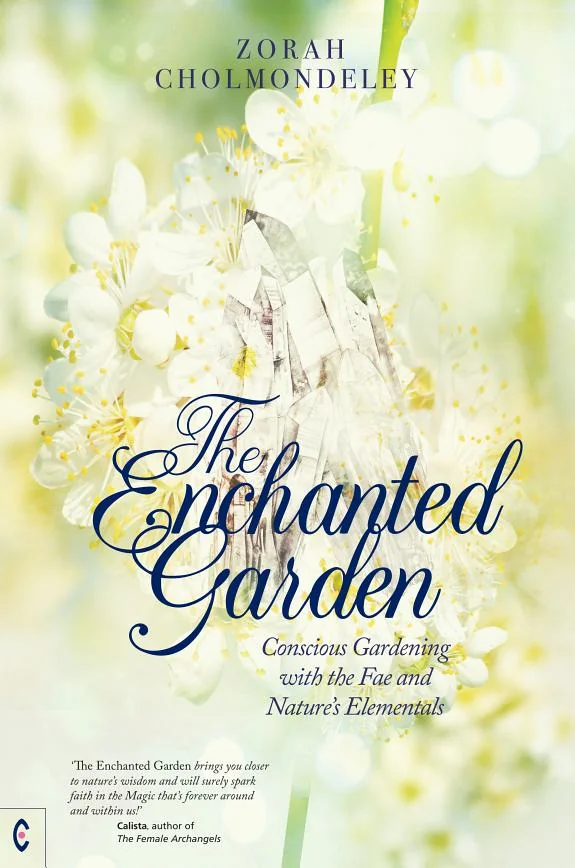
The Enchanted Garden
 75
75

The Enchanted Garden
Zorah Cholmondeley’s "The Enchanted Garden" offers a refreshing perspective, moving beyond the conventional gardener's manual to introduce a vibrant, populated cosmology. Her assertion that entities like gnomes and fae play active roles in planetary health is particularly compelling, challenging readers to reconsider their relationship with the earth. The book's strength lies in its earnest invitation to perceive the unseen, fostering a sense of wonder. However, the sheer breadth of entities mentioned—from dragons to Master Pan—can feel overwhelming, lacking the detailed exploration one might hope for in a more focused treatise. The passage discussing the energetic exchange between plant spirits and human intention, while evocative, could benefit from more concrete examples of practice. Nevertheless, it serves as an accessible entry point for contemplating the sentience of the natural world.
📝 Description
75
### What It Is
Zorah Cholmondeley's "The Enchanted Garden," first published in 2021, is an exploration of the unseen life teeming within our natural surroundings. Cholmondeley, identifying as a healer and a 'plant spirit whisperer,' posits a world where gardens are not mere botanical arrangements but vibrant ecosystems populated by diverse entities. The book introduces readers to the concept of faery realms and the myriad life-forms connected to the earth's vitality.
### Who It's For
This work is intended for individuals curious about the deeper, often overlooked, spiritual dimensions of nature. It speaks to those who feel a connection to the earth and seek to understand the energetic interplay between humans and the non-physical beings that inhabit the natural world. Gardeners, amateur naturalists, and those interested in animistic philosophies will find particular resonance.
### Historical Context
While "The Enchanted Garden" is a contemporary work, its themes echo earlier traditions that perceived nature as imbued with spirit. The book engages with ideas that have roots in folklore, pagan revivals, and certain branches of esoteric thought that predated the 20th-century rise of figures like Dion Fortune or the more academic approaches to comparative mythology. It offers a modern voice in a long-standing dialogue about nature's sentience.
### Key Concepts
The central thesis is that gardens and natural spaces are inhabited by a spectrum of entities, including fae, gnomes, dragons, and arch-entities like Master Pan. These beings are presented not as mere mythological figures but as active participants in the planet's ecological health and energetic balance. Cholmondeley emphasizes that becoming aware of these entities is crucial for fostering a reciprocal relationship with the natural world.
💡 Why Read This Book?
• Gain a new lens for understanding your garden, recognizing the presence of faery realms and specific earth-bound entities beyond mere flora. • Learn to perceive the energetic dynamics of the planet, as described by Cholmondeley, and how beings like gnomes and dragons contribute to its health. • Develop a more reciprocal relationship with nature by acknowledging the active participation of non-physical life-forms, as detailed in the book's introduction to these diverse entities.
⭐ Reader Reviews
Honest opinions from readers who have explored this book.
❓ Frequently Asked Questions
What is Zorah Cholmondeley's background in relation to "The Enchanted Garden"?
Zorah Cholmondeley identifies as a healer and a 'plant spirit whisperer,' bringing a personal and intuitive approach to her exploration of the natural world's spiritual dimensions in the book.
When was "The Enchanted Garden" first published?
The book was first published on June 4, 2021, positioning it as a contemporary work within esoteric literature.
What types of non-human entities does the book discuss?
The book discusses a variety of entities including fae, gnomes, dragons, and arch-entities such as Master Pan, describing their roles in the planet's ecological systems.
Is "The Enchanted Garden" a practical gardening guide?
While it encourages a new way of viewing gardens, it is primarily an esoteric exploration of the spiritual and energetic aspects of nature rather than a horticultural how-to.
What is the core message about human interaction with nature?
Cholmondeley's core message is that humans should become aware of the diverse life-forms connected to the earth and foster a reciprocal relationship with them for planetary well-being.
Who is Master Pan in the context of this book?
Master Pan is presented as a significant arch-entity playing a unique part in the dynamics and health of our planet, representing a higher order of natural intelligence.
🔮 Key Themes & Symbolism
The Sentience of Nature
Cholmondeley argues that gardens and the natural world are far from inert. She posits that they are teeming with a diverse array of life-forms, extending beyond the purely biological to encompass spiritual and energetic entities. This perspective reframes nature as a conscious, interactive realm, urging readers to recognize the presence of fae, gnomes, and other beings as integral components of the Earth's living systems. The book encourages a shift from dominion over nature to communion with it, emphasizing that these entities are active participants in ecological balance.
Interconnectedness with Earth Entities
A central theme is the profound interconnectedness between humanity and the various entities that inhabit the planet. The book introduces concepts of plant spirits and elemental beings, suggesting that they possess unique roles in maintaining the health and vitality of the Earth. Cholmondeley invites readers to acknowledge these beings, highlighting that their 'fondest wish' is for us to become aware of them. This awareness is presented as the first step towards a harmonious co-existence and a more balanced planetary dynamic.
The Faery Realms and Beyond
The work introduces the reader to the concept of faery realms as distinct dimensions of existence intertwined with our own. It details the tremendous variety and intricate interplay of life-forms connected to the earth, which include not only fae but also gnomes, dragons, and higher beings like Master Pan. This exploration suggests a layered reality where these entities actively influence the natural world, contributing to its health and energetic flow. Understanding their presence is key to appreciating the full scope of life.
Healing Through Nature Awareness
As a healer and 'plant spirit whisperer,' Cholmondeley links ecological awareness with personal well-being. The book implies that a deeper connection with the natural world, facilitated by recognizing its spiritual inhabitants, can be a source of healing. By understanding the dynamics and energetic contributions of beings like Master Pan and the plant spirits, readers can cultivate a more balanced and supportive relationship with their environment, which in turn can foster inner harmony. It’s about reciprocal energetic exchange.
💬 Memorable Quotes
“Introducing the faery realms, she invites us to witness the tremendous variety and interplay of life-forms connected to the earth.”
— This passage highlights the book's core purpose: to expand our perception of the natural world beyond the visible, suggesting a hidden dimension populated by diverse spiritual entities that actively influence Earth's systems.
“Beyond the fae, she speaks of gnomes, dragons, angels and entities such as the Master Pan, all of whom have a unique part to play in the dynamics and health of our planet.”
— This encapsulates the expansive scope of entities discussed, moving from common folkloric figures to powerful arch-entities, emphasizing their crucial, functional roles in Earth's energetic and ecological balance.
“And, it is their fondest wish that we should become aware of them!”
— This conveys the book's central plea for recognition and awareness, framing the entities not as passive myths but as sentient beings actively seeking connection and acknowledgment from humanity.
“Healer and ‘plant spirit whisperer’ Zorah Cholmondeley seeks to revolutionize the way we view our gardens and the natural world.”
— This introduces the author's unique perspective and ambitious goal: to fundamentally alter our perception of gardens and nature, moving from a utilitarian view to one of spiritual partnership.
“The tremendous variety and interplay of life-forms connected to the earth.”
— This phrase underscores the intricate and diverse nature of the non-physical world that Cholmondeley explores, suggesting a complex ecosystem of spiritual and energetic beings.
🌙 Esoteric Significance
Tradition
This work draws from animistic traditions and nature-based spirituality, particularly those influenced by folklore and elemental magic. It aligns with a broader esoteric current that perceives the natural world as alive with consciousness and agency, distinct from, yet complementary to, Hermetic or Kabbalistic frameworks. Cholmondeley's approach emphasizes direct experience and intuitive connection with nature spirits, rather than adherence to rigid doctrines or complex symbolic systems often found in more established esoteric lineages.
Symbolism
The garden itself serves as a primary symbol, representing a microcosm of the Earth where the interplay between the visible and invisible realms is most accessible. Plant spirits symbolize the inherent consciousness and vital force within all living things. Entities like gnomes and fae represent the elemental forces and guardians of the earth, while figures such as Master Pan embody ancient, archetypal energies tied to wildness, fertility, and the deep cycles of nature.
Modern Relevance
Cholmondeley's work resonates with contemporary movements focused on re-wilding, eco-spirituality, and animistic practices. Thinkers and practitioners exploring re-enchantment, deep ecology, and non-anthropocentric perspectives find value in her direct approach to communicating with nature spirits. It informs modern witchcraft traditions that emphasize elemental work and connection to the land, and appeals to individuals seeking to bridge the gap between mundane reality and the perceived spiritual dimensions of the natural world.
👥 Who Should Read This Book
['• Aspiring nature communicators and plant spirit allies seeking practical frameworks for perceiving and interacting with the unseen life in gardens and natural spaces.', '• Students of comparative mythology and folklore interested in contemporary interpretations of fae, gnomes, and other earth-bound entities beyond academic or historical analysis.', '• Individuals feeling a pull towards animistic philosophies and seeking accessible ways to deepen their spiritual connection to the planet and its inhabitants.']
📜 Historical Context
Published in 2021, "The Enchanted Garden" emerged in a cultural landscape increasingly interested in nature spirituality, animism, and eco-consciousness. It taps into a lineage of esoteric thought that personifies natural forces, reminiscent of Romantic-era nature poetry or the elemental theories found in Paracelsian alchemy. While contemporary figures like Gaia softening the edges of ecological discourse, Cholmondeley offers a more direct engagement with perceived non-human intelligences. This work contrasts with the rationalist dismissal of nature spirits prevalent in earlier scientific materialism. It also diverges from the more structured, hierarchical systems of Western Hermeticism, presenting a more fluid, diverse pantheon of earth-bound entities. Its reception reflects a growing, albeit niche, audience seeking to integrate spiritual perspectives with environmental concerns, moving beyond purely scientific or anthropocentric views.
📔 Journal Prompts
Your garden's elemental inhabitants: what energies do you sense?
The role of Master Pan in planetary health: what is your interpretation?
Reflect on the 'interplay of life-forms' Cholmondeley describes.
Awareness of fae: how might this change your perception of a forest walk?
The earth's vital dynamics: what unique part do gnomes play?
🗂️ Glossary
Plant spirit whisperer
An individual who claims to communicate directly with the consciousness or energetic essence of plants, often acting as an intermediary or interpreter.
Faery realms
Dimensions or planes of existence inhabited by fae or faeries, often depicted as closely connected to the natural world and possessing their own complex societies and energies.
Gnomes
In this context, elemental beings associated with the earth, often seen as guardians of the terrestrial realm and its hidden treasures, contributing to the planet's stability.
Dragons
Entities representing powerful, ancient forces of nature, often associated with earth energies, primal power, and significant planetary cycles or transformations.
Master Pan
An arch-entity, likely referencing the Greek god Pan, symbolizing the wild, untamed aspects of nature, fertility, and the vibrant, often ecstatic, life force of the planet.
Life-forms connected to the earth
A broad term encompassing not only biological organisms but also the diverse array of non-physical, energetic, and spiritual entities that Cholmondeley posits inhabit and influence the natural world.
Planetary health
The overall well-being and balanced functioning of the Earth's ecosystems and energetic systems, influenced by both physical and spiritual/non-physical factors.