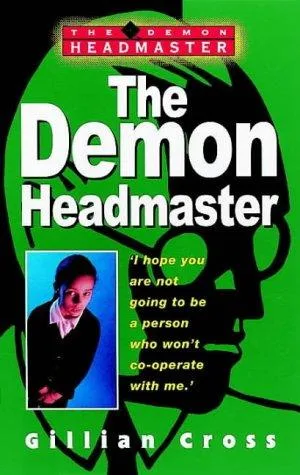
The Demon Headmaster (Demon Headmaster)
 81
81

The Demon Headmaster (Demon Headmaster)
Gillian Cross’s The Demon Headmaster, despite its 1984 publication date, retains a sharp, unsettling edge. The novel’s strength lies in its depiction of pervasive, insidious control. The Headmaster isn't a figure of brute force but a master manipulator, his authority seeping into the very minds of his students. This psychological aspect is more potent than any overt threat. The limitation, however, is that some of the narrative’s resolutions can feel a touch convenient, particularly as the students rally. A particularly effective passage details the subtle ways the Headmaster instills fear, making the ordinary feel menacing—a prime example being the chillingly calm way he dismisses any questioning of his methods. Cross’s exploration of how easily authority can be corrupted, even within the seemingly safe confines of a school, remains relevant. Ultimately, it's a compelling, if slightly dated, examination of resistance against overwhelming, unseen power.
📝 Description
81
### What It Is The Demon Headmaster, penned by Gillian Cross and first published in 1984, presents a chilling narrative centered on a figure of absolute authority who wields control over a school through manipulative and sinister means. The story unfolds within a seemingly ordinary educational setting, but beneath the surface lies a deep, psychological struggle for freedom and selfhood. The narrative focuses on a group of students who begin to question the Headmaster's pervasive influence and the strange occurrences that plague their institution.
### Who It's For This book offers a compelling read for young adult readers interested in themes of power, control, and resistance. It will appeal to those who enjoy suspenseful plots with a psychological edge, exploring the dynamics of authoritarianism in a microcosm. Readers who appreciate stories where characters must find inner strength to overcome oppressive forces will find much to engage with. It is also suitable for educators and parents interested in discussions about conformity and critical thinking.
### Historical Context Published in 1984, The Demon Headmaster emerged during a period when anxieties about surveillance, state control, and the erosion of individual liberty were prevalent in Western culture, amplified by media and political discourse. While not explicitly political, the novel taps into this zeitgeist, presenting a localized yet potent form of totalitarianism. Its themes of psychological manipulation and the suppression of dissent might have been seen as a counterpoint to the more overt political narratives of the era, offering a more internalized exploration of control. The literary landscape of the 1980s saw a rise in dystopian and speculative fiction for younger audiences, and Cross's work occupies a space within this trend.
### Key Concepts The narrative hinges on the concept of insidious control, where authority figures maintain power not through overt force, but through subtle manipulation of perception and emotion. The Headmaster's influence is depicted as a form of psychic or ideological dominance, creating a climate of fear and compliance. The story also explores the courage required to challenge established power structures, even when those structures appear unassailable. The students' journey involves uncovering the truth behind the Headmaster's abilities and awakening a collective will to resist his pervasive hold, highlighting the importance of critical awareness and unity against oppressive forces.
💡 Why Read This Book?
• Gain insight into the insidious nature of authoritarian control, as depicted through the Headmaster’s psychological manipulation, a concept explored extensively in the book's early chapters. • Understand the critical importance of questioning authority and seeking truth, exemplified by the student’s collective journey to expose the Headmaster’s methods in the latter half of the novel. • Experience a narrative that showcases the power of unity and critical thinking in overcoming oppressive systems, a theme central to the students' eventual triumph.
⭐ Reader Reviews
Honest opinions from readers who have explored this book.
❓ Frequently Asked Questions
When was The Demon Headmaster first published and by whom?
The Demon Headmaster was first published in 1984 by Gillian Cross. This initial release set the stage for a series that would explore the chilling power dynamics within the titular character's school.
What are the main themes explored in The Demon Headmaster?
The book primarily explores themes of control, manipulation, authority, resistance, and the importance of critical thinking. It examines how individuals can be subjugated by pervasive, psychological power structures.
Is The Demon Headmaster part of a series?
Yes, The Demon Headmaster is the first book in a series of the same name. The subsequent books continue to follow the characters and explore the ongoing conflict with the powerful Headmaster.
What kind of influence does the Headmaster exert over his students?
The Headmaster exerts a subtle yet powerful psychological influence. He manipulates his students' thoughts and emotions, fostering an environment of compliance and fear, rather than relying on overt physical force.
Does The Demon Headmaster contain any supernatural elements?
While the Headmaster's powers are not explicitly defined as supernatural, they operate in a way that transcends normal human influence, suggesting a psychic or deeply manipulative control that borders on the uncanny.
Who is the author, Gillian Cross?
Gillian Cross is a well-regarded British author known for her children's and young adult fiction. She often tackles complex social and psychological themes in her work, including issues of power and identity.
🔮 Key Themes & Symbolism
Psychological Domination
The core of the narrative revolves around the Headmaster's ability to exert control not through physical means, but through a profound psychological and perhaps even psychic influence. This domination is subtle, weaving into the fabric of the school environment and the minds of the students, making them compliant and fearful. The book illustrates how such insidious methods can be more effective and terrifying than overt oppression, creating an atmosphere where critical thought is systematically suppressed. The Headmaster's methods are designed to break down individual will, fostering a sense of helplessness and dependence.
Resistance and Awakening
Against the backdrop of overwhelming control, the theme of resistance emerges as a vital counterpoint. The students, initially subdued and unquestioning, gradually begin to recognize the unnaturalness of the Headmaster's influence. Their journey is one of awakening, where they must overcome their own fear and doubt to challenge the established order. This theme highlights the courage required to question authority, the importance of collective action, and the power of truth in dismantling oppressive systems. The narrative emphasizes that even in the face of seemingly insurmountable power, a spark of defiance can ignite change.
The Nature of Authority
The novel probes the darker aspects of authority, questioning what constitutes legitimate power versus tyrannical control. The Headmaster embodies a perversion of educational leadership, using his position to subjugate rather than nurture. The book serves as a cautionary tale, suggesting that unchecked power, particularly when wielded through manipulation, can corrupt absolutely. It prompts readers to consider the ethical responsibilities of those in positions of authority and the potential dangers when those responsibilities are neglected or deliberately subverted for personal gain or control.
Conformity vs. Individuality
The narrative starkly contrasts the Headmaster's desire for a perfectly conformist student body with the innate human need for individuality and self-expression. The students who begin to question are those who retain a flicker of their authentic selves, resisting the homogenizing force of the Headmaster's will. The struggle to maintain one's identity against pressures to conform is a central conflict, underscoring the value of independent thought and the dangers of a society that demands absolute adherence to a singular ideology or leader.
💬 Memorable Quotes
“The Headmaster’s control was like a fog, muffling thought and making dissent feel impossible.”
— This paraphrased concept captures the insidious nature of the Headmaster's power. It suggests his influence isn't about direct commands but about creating an atmosphere where challenging him is mentally and emotionally exhausting, akin to navigating through thick fog.
“Why should anyone question him? He was the Headmaster, after all.”
— This interpretation reflects the internalized obedience the Headmaster instills. It shows how his authority is presented as unquestionable, making students doubt their own perceptions if they sense something is wrong, reinforcing the theme of manipulated reality.
“A shared glance was enough; they understood without a word.”
— This captures the nascent solidarity among the students who begin to resist. It highlights their growing ability to communicate and connect outside the Headmaster's pervasive influence, signifying the beginning of collective defiance.
“The silence in the school felt heavier than any noise.”
— This highlights the oppressive atmosphere created by the Headmaster's rule. The silence isn't peaceful but pregnant with unspoken fear and suppressed thoughts, a tangible manifestation of the psychological control exerted.
“He made you feel like you were the only one thinking it, and that was the most frightening part.”
— This interpretation points to the Headmaster's technique of isolating individuals. By making dissent feel like a unique, dangerous anomaly, he prevents solidarity and makes resistance seem futile and personal, amplifying the psychological pressure.
🌙 Esoteric Significance
Tradition
While not overtly a work of esoteric philosophy, *The Demon Headmaster* can be interpreted through a lens influenced by Gnostic thought, particularly concerning the concept of a manipulative ruler or 'archon' who creates an illusory reality to control lesser beings. The Headmaster functions as a localized demiurge, imposing his will and distorted perception upon the students. This aligns with Gnostic concerns about escaping false realities and achieving gnosis (knowledge) to break free from oppressive systems, albeit presented in a secular, young adult fiction context.
Symbolism
The Headmaster himself serves as a potent symbol of corrupted authority and psychic dominance. The school, as his domain, represents a microcosm of a controlled society where individuality is suppressed. The 'fog' or pervasive atmosphere of control symbolizes the obscuring of truth and critical thought, a common motif in narratives about illusion and deception. The act of questioning and resistance, conversely, symbolizes the dawning of awareness and the pursuit of liberation from imposed limitations.
Modern Relevance
The novel's themes of psychological manipulation and the subversion of educational institutions by authoritarian figures remain highly relevant. Contemporary discussions around 'gaslighting,' cult dynamics, and the impact of misinformation echo the Headmaster's methods. Thinkers and practitioners interested in critical pedagogy, social psychology, and the study of power structures continue to find value in Cross's depiction of how easily trust can be exploited and how crucial critical awareness is in resisting unseen control.
👥 Who Should Read This Book
• Young adult readers interested in suspenseful narratives that explore themes of power dynamics and resistance against authority. • Students of literature examining critiques of totalitarianism and psychological manipulation within fictional settings. • Educators and parents seeking engaging material to spark discussions on critical thinking, conformity, and ethical leadership.
📜 Historical Context
Published in 1984, Gillian Cross's *The Demon Headmaster* arrived amidst a cultural climate attentive to themes of control and authoritarianism, partly fueled by the enduring impact of George Orwell’s *Nineteen Eighty-Four* (1949) and a general rise in dystopian narratives for young adults. While not explicitly aligned with any specific esoteric movement, the novel's exploration of psychological manipulation and pervasive control can be seen as a secularized echo of Gnostic ideas concerning illusory realities and manipulative demiurges. The reception of such works in the 1980s often focused on their relevance to contemporary anxieties about state power and technological surveillance. Cross's work stood alongside other speculative fiction authors like Robert Cormier, whose *The Chocolate War* (1974) also examined oppressive institutional power structures. Unlike overtly political tracts, Cross's approach offered a more internalized, character-driven critique of how power operates on the individual psyche, making its themes accessible and resonant without direct engagement with competing philosophical schools.
📔 Journal Prompts
The Headmaster's methods of control and their psychological impact.
The students' journey from fear to collective resistance.
Analyzing the symbolic representation of the school as a controlled environment.
The ethical implications of unchecked authority in educational settings.
Identifying moments where individual doubt transforms into unified action.
🗂️ Glossary
Headmaster
The principal authority figure in the school, who wields a pervasive and manipulative control over the students through psychological means rather than overt force.
Psychological Control
A form of influence where an individual or group manipulates the thoughts, emotions, and perceptions of others to achieve compliance and obedience, often without overt coercion.
Resistance
The act of opposing or fighting against an oppressive force or authority, in this context, the students' efforts to overcome the Headmaster's manipulative influence.
Awakening
The process by which characters begin to recognize the true nature of the control exerted over them and start to question the established order.
Conformity
The act of behaving in accordance with socially accepted rules, conventions, or laws, often enforced by the Headmaster to maintain his power.
Dissent
The expression of opinions or objections that are contrary to what is generally accepted or expected, a dangerous act within the Headmaster's domain.
Gnosis
While not explicit in the text, the concept of gaining true knowledge or insight to break free from illusion, akin to Gnostic thought, underlies the students' quest.