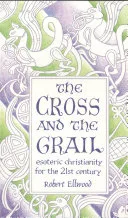
The Cross and the Grail
 71
71

The Cross and the Grail
Robert Ellwood’s *The Cross and the Grail* attempts to bridge the chasm between orthodox Christian practice and its more arcane, mystical underpinnings. The author’s assertion that the Cross represents the exoteric, public face of faith while the Grail embodies its hidden, esoteric heart is a compelling starting point. Ellwood’s strength lies in his ability to articulate how this duality manifests, offering a framework for understanding Christian belief beyond its conventional confines. He particularly shines when discussing the "feminine" aspect of the Grail mystery, contrasting it with the more "masculine" emphasis often found in patriarchal religious structures. However, the book occasionally feels more like a series of interconnected essays than a fully cohesive argument, and some readers might find the conceptual leaps between the Cross and the Grail somewhat under-explained. The practical advice for "asking the right questions" could also have been more concretely developed. Nevertheless, for those seeking a more esoteric understanding of Christian symbolism, Ellwood provides a valuable, if sometimes abstract, perspective.
📝 Description
71
### What It Is Robert Ellwood's *The Cross and the Grail*, first published in 2014, offers a comparative exploration of two foundational Christian symbols. It posits the Cross as the public, "masculine" face of Christianity and the Grail as its private, "feminine," esoteric dimension. The book functions as a guide for contemporary believers seeking to revitalize their faith by understanding these dual aspects.
### Who It's For This work is intended for individuals interested in the deeper, less conventional interpretations of Christian doctrine. It appeals to those who feel that mainstream Christianity may not fully address their spiritual inquiries or who are drawn to mystical traditions. Readers seeking to integrate their faith with modern life and explore its magical or Gnostic underpinnings will find value here.
### Historical Context Published in an era where interest in comparative religion and esoteric spirituality continued to grow, Ellwood's work engages with a long tradition of Gnostic and Hermetic interpretations of Christianity. It stands alongside the writings of scholars and mystics who sought to uncover hidden meanings within sacred texts, challenging purely orthodox interpretations that had dominated for centuries. The book reflects a broader cultural movement towards personal spiritual experience over institutional dogma.
### Key Concepts The central thesis revolves around the duality of the Cross (exoteric, public) and the Grail (esoteric, hidden). Ellwood examines how these symbols inform different approaches to faith, one focused on outward observance and the other on inner transformation and mystical attainment. The work explores the concept of "asking the right questions" as a prerequisite for spiritual discovery, particularly in relation to the Grail mystery.
💡 Why Read This Book?
• Gain a new perspective on Christian symbolism by understanding the distinct roles of the Cross (public, masculine) and the Grail (hidden, feminine) as presented by Ellwood. • Learn how to approach faith with "the right questions," a core concept Ellwood uses to unlock the esoteric dimension of Christian belief, particularly relevant since its 2014 publication. • Discover practical ways to revitalize your spiritual life by integrating the outward and inward faces of Christianity, as explored in the book's examination of contemporary faith.
⭐ Reader Reviews
Honest opinions from readers who have explored this book.
❓ Frequently Asked Questions
What is the primary difference between the Cross and the Grail according to Robert Ellwood?
Ellwood posits the Cross as the outward, public, and masculine aspect of Christianity, while the Grail represents its inward, hidden, and feminine esoteric dimension, sought by those asking deeper spiritual questions.
When was Robert Ellwood's 'The Cross and the Grail' first published?
The book was first published on January 29, 2014, reflecting a contemporary interest in reinterpreting established religious symbols.
Who is the intended audience for 'The Cross and the Grail'?
The book is aimed at individuals seeking a more mystical or esoteric understanding of Christian beliefs, those who feel traditional approaches are insufficient, or those interested in comparative spirituality.
What does Ellwood mean by the 'feminine' aspect of the Grail?
He associates the Grail with receptivity, mystery, intuition, and inner seeking—qualities often traditionally linked to the feminine principle, contrasting with the more assertive, public nature symbolized by the Cross.
Does the book offer practical advice for spiritual growth?
Yes, Ellwood emphasizes the importance of 'asking the right questions' as a method for engaging with the esoteric aspects of faith and achieving spiritual responsiveness to contemporary life.
What kind of esoteric traditions does Ellwood draw upon?
While rooted in Christian symbolism, Ellwood's work implicitly engages with Gnostic, Hermetic, and mystical traditions that seek hidden meanings within religious narratives and symbols.
🔮 Key Themes & Symbolism
Duality of Christian Symbols
The core of Ellwood's argument rests on the symbolic duality of the Cross and the Grail. He presents the Cross as the established, public, and historically 'masculine' aspect of Christianity, emphasizing its role in doctrine and outward observance. Conversely, the Grail is depicted as the secret, internal, and 'feminine' dimension—a locus of mystery, intuition, and personal seeking. This dichotomy allows for an exploration of how faith can be both outwardly expressed and inwardly experienced, catering to different spiritual needs and temperaments.
The Esoteric Path
Ellwood frames the Grail quest as an archetypal esoteric journey. It is not merely a historical artifact or legend but a symbol for the seeker's inner search for meaning and divine connection. The book suggests that access to this esoteric dimension requires a specific mode of inquiry—the ability 'to ask the right questions.' This implies a critical, introspective approach that moves beyond literal interpretations to uncover deeper spiritual truths, aligning with Gnostic and Hermetic traditions.
Revitalizing Contemporary Faith
A significant aim of *The Cross and the Grail* is to demonstrate how an understanding of its dual symbolism can make Christian belief more relevant and vibrant for modern individuals. Ellwood seeks to reconcile the perceived limitations of institutionalized religion with the innate human drive for mystical experience. By acknowledging and integrating the esoteric, 'feminine' aspect of the Grail, contemporary Christianity can become more responsive to personal spiritual needs and evolving worldviews.
The Grail Mystery
The Grail itself, as a symbol, is explored in its multifaceted nature—representing not just a physical object but a spiritual attainment or state of being. Ellwood connects the Grail mystery to concepts of divine feminine energy, hidden wisdom, and the challenges of accessing profound spiritual knowledge. The pursuit of the Grail becomes a metaphor for the dedicated spiritual aspirant who, through perseverance and the correct inner disposition, can uncover the profound secrets of existence.
💬 Memorable Quotes
“The Cross is its outward face -- masculine, public, exalted.”
— This highlights Ellwood's central thesis that the Cross symbolizes the established, overt, and often assertively 'masculine' structure and expression of Christianity, representing its societal and doctrinal presence.
“The Grail is its hidden or esoteric face -- magical, feminine, sought by many, but found only by those who are able to ask the right questions.”
— This encapsulates the book's core argument: the Grail represents the elusive, mystical, and 'feminine' aspect of Christian spirituality, accessible not through dogma but through insightful inquiry and inner receptivity.
“In this inspiring and practical book, Robert Ellwood examines ways of making Christian belief vital and responsive to contemporary life, now and for the future.”
— This statement frames the book's purpose: to offer a method for adapting and enriching Christian faith for modern times by understanding its symbolic duality and embracing its esoteric dimensions.
“The two symbols at the heart of Christian belief -- the Cross and the Grail -- represent the two faces of contemporary Christianity.”
— This foundational statement sets up the book's comparative approach, asserting that a complete understanding of Christianity requires acknowledging both its manifest (Cross) and hidden (Grail) dimensions.
“The Grail is its hidden or esoteric face -- magical, feminine, sought by many...”
— This phrase underscores the Grail's association with magic, intuition, and the divine feminine, suggesting it appeals to a deeper, often suppressed, spiritual longing within many individuals.
🌙 Esoteric Significance
Tradition
Ellwood's work is situated within the Western Esoteric Tradition, drawing particularly from Gnostic and Hermetic currents that emphasize inner knowledge and symbolic interpretation over orthodox dogma. It aligns with the Theosophical interest in uncovering universal spiritual truths underlying diverse religious forms. The book departs from purely historical or theological analyses by focusing on the psychological and mystical dimensions of Christian symbols, offering a path for personal spiritual realization.
Symbolism
The primary symbols explored are the Cross and the Grail. The Cross, in Ellwood's esoteric reading, signifies the structure of manifest reality and the path of conscious action, often associated with the 'masculine' principle. The Grail represents the hidden mysteries, the vessel of divine grace, intuition, and the 'feminine' principle of receptivity and inner transformation. Together, they symbolize the integration of outer form and inner essence required for spiritual wholeness.
Modern Relevance
Ellwood's approach to integrating esoteric Christian symbolism remains relevant for contemporary spiritual seekers and practitioners interested in Jungian psychology, mystical Christianity, and comparative mythology. Thinkers and groups exploring the divine feminine, the integration of shadow aspects within religious traditions, and personal gnosis find resonance in his work. His ideas can inform modern contemplative practices and dialogues within progressive Christian and interfaith spiritual communities.
👥 Who Should Read This Book
• Students of comparative religion seeking to understand esoteric interpretations of Christian symbols beyond orthodox theology. • Individuals interested in Gnostic and Hermetic traditions who wish to see how these concepts are applied to core Christian imagery. • Spiritual seekers feeling disconnected from conventional religious structures, looking for ways to revitalize their faith through mystical and symbolic exploration.
📜 Historical Context
Robert Ellwood published *The Cross and the Grail* in 2014, a period marked by sustained interest in comparative religion and esoteric spirituality, often as a counterpoint to perceived limitations of established religious institutions. His work emerged within a broader intellectual current that sought hidden meanings in Christian tradition, echoing figures like Helena Blavatsky and later proponents of Gnostic revivalism. While not directly engaging with contemporaries like Elaine Pagels, whose work on Gnosticism gained prominence decades earlier, Ellwood’s exploration of the 'feminine' and 'esoteric' faces of Christianity taps into similar scholarly and spiritual dialogues. The book’s reception, while not marked by significant public debate or controversy akin to earlier periods of religious censorship, contributes to the ongoing discourse on alternative spiritual paths within Western culture, offering a perspective that complements, rather than directly challenges, mainstream theological discourse.
📔 Journal Prompts
The duality of the Cross and the Grail: explore how these two symbols manifest in your own spiritual life.
Reflecting on the Grail as the 'hidden or esoteric face,' what questions are you currently asking about your faith?
Consider the 'masculine' and 'feminine' aspects of belief as described by Ellwood; how do these dynamics play out in your understanding of Christianity?
The concept of finding the Grail by 'asking the right questions' – identify one such question relevant to your spiritual journey.
Analyze the 'magical' dimension Ellwood attributes to the Grail; what does this suggest about the nature of spiritual power and attainment?
🗂️ Glossary
Exoteric
Relating to or denoting customs, viewpoints, or practices that are outward-facing and intended for public knowledge or general acceptance, as opposed to esoteric knowledge.
Esoteric
Intended for or likely to be understood by only a small number of people with a specialized knowledge or interest; relating to the inner, hidden, or mystical aspect of something.
The Cross
In Ellwood's context, symbolizes the outward, public, masculine, and doctrinal face of Christianity, representing established religious structures and beliefs.
The Grail
Represents the inward, hidden, feminine, and magical aspect of Christianity, symbolizing mystery, personal seeking, and esoteric knowledge.
Asking the right questions
A key concept Ellwood uses to describe the method of inquiry required to access the esoteric dimension of faith, implying a need for introspection and insightful questioning.
Feminine aspect
Refers to qualities associated with the Grail symbol, such as receptivity, intuition, mystery, and inner transformation, often contrasted with the more assertive, public nature of the 'masculine' Cross.
Contemporary Christianity
The subject of Ellwood's analysis, referring to the state and potential evolution of Christian belief and practice in the modern era, incorporating both its public and hidden dimensions.