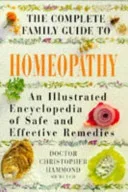
The Complete Family Guide to Homeopathy
 78
78

The Complete Family Guide to Homeopathy
Christopher Hammond’s *The Complete Family Guide to Homeopathy* presents a remarkably thorough introduction to a practice that demands both precise knowledge and intuitive application. The book’s strength lies undeniably in its visual presentation; the inclusion of over 500 color photographs and commissioned artwork transforms what could be dry materia medica into an engaging visual lexicon. This aids immeasurably in identifying remedies and understanding their context. However, the book’s comprehensive nature, while a virtue, can also present a hurdle for absolute beginners. The sheer volume of information, especially concerning the subtle distinctions between similar remedies, may feel overwhelming without prior grounding. A particularly effective section details the use of *Arnica montana* for trauma, clearly illustrating the potency and scope of homeopathic intervention for common injuries. Despite this slight density, the guide ultimately serves as a valuable, albeit intensive, resource for those dedicated to exploring natural healing modalities.
📝 Description
78
### What It Is This comprehensive guide to homeopathy, first published in 1995 by Christopher Hammond, offers an in-depth exploration of natural healing through medicinal preparations derived from plants, minerals, and animals. It serves as a practical manual for understanding and applying homeopathic principles in a domestic setting. The work is distinguished by its extensive use of over 500 full-color photographs and specially commissioned artwork, aiming to make complex information accessible and visually engaging.
### Who It's For This volume is curated for individuals committed to exploring safe, natural approaches to personal and family health. It is particularly suited for those interested in self-care and home remedies, offering detailed instructions on managing common ailments. Whether you are new to the practice or seeking to deepen your understanding, this guide provides the foundational knowledge and practical application necessary for effective use.
### Historical Context Published in 1995, *The Complete Family Guide to Homeopathy* emerged during a period of growing interest in alternative medicine and natural healing practices in Western countries. While conventional medicine remained dominant, movements advocating for holistic health and patient empowerment gained traction. Homeopathy, with its roots tracing back to the late 18th century and Samuel Hahnemann, presented a distinct therapeutic system based on the principle of "like cures like." Hammond's work contributed to this burgeoning field by offering a visually rich and accessible resource.
### Key Concepts The guide systematically introduces core homeopathic concepts, including the law of similars (similia similibus curentur), the importance of potentization (dilution and succussion), and the concept of individualization in remedy selection. It details how various substances, when prepared according to homeopathic principles, can stimulate the body's vital force to initiate healing. Specific sections are dedicated to understanding the materia medica, which describes the therapeutic properties of individual remedies, and the repertory, a tool used to match symptoms to the correct remedy.
💡 Why Read This Book?
• Learn to identify over 500 specific remedies through detailed, full-color photographic and artistic depictions, moving beyond generic descriptions to understand the visual characteristics of each substance. • Grasp the core principles of homeopathic potentization and individualization as outlined by Samuel Hahnemann, understanding how dilutions and succussion are central to remedy efficacy. • Discover practical applications for common ailments, drawing on the guide’s systematic approach to matching specific symptoms to appropriate remedies based on the materia medica.
⭐ Reader Reviews
Honest opinions from readers who have explored this book.
❓ Frequently Asked Questions
What is the historical origin of homeopathy discussed in the guide?
The guide references the origins of homeopathy with Samuel Hahnemann in the late 18th century, detailing his development of the principle of 'like cures like' and the process of potentization.
How does Christopher Hammond's guide differentiate itself from other homeopathy books?
Hammond's work stands out due to its extensive visual component, featuring over 500 full-color photographs and specially commissioned artwork, making the identification and understanding of remedies more accessible.
Can this book be used to treat serious medical conditions?
While the book focuses on common ailments treatable at home, it emphasizes safety and appropriate use. It is presented as a guide for natural healing, not a replacement for professional medical advice for severe conditions.
What does 'potentization' mean in the context of this homeopathy guide?
Potentization refers to the process of diluting a substance and vigorously shaking it (succussion) to create a homeopathic remedy. The guide explains how this process is believed to increase the remedy's energetic properties.
Is the information in 'The Complete Family Guide to Homeopathy' suitable for beginners?
Yes, the guide is designed to be practical and easy to use, detailing common ailments and appropriate remedies. Its comprehensive nature and visual aids aim to assist both newcomers and those with some familiarity with homeopathy.
When was 'The Complete Family Guide to Homeopathy' first published?
The book was first published in 1995, placing it within a period of increasing public interest in alternative and natural health practices in the late 20th century.
🔮 Key Themes & Symbolism
Materia Medica Visualization
The work's commitment to illustrating the materia medica with over 500 full-color photographs and commissioned artwork is central. This approach moves beyond text-based descriptions to offer visual cues for identifying and understanding the source substances of homeopathic remedies, connecting the physical appearance of plants and minerals to their therapeutic properties. This visual lexicon is crucial for practitioners seeking to accurately match remedies to symptoms.
Homeopathic Principles in Practice
Hammond details the foundational laws of homeopathy, notably the principle of 'like cures like' (similia similibus curentur) and the concept of potentization. The guide breaks down how dilutions and succussions are believed to activate the healing potential within substances, offering a clear explanation for those unfamiliar with these core tenets. It emphasizes the energetic nature of remedies.
Holistic Family Wellness
This guide positions homeopathy as an accessible tool for everyday health management within the family unit. It focuses on common ailments and provides practical, step-by-step instructions for remedy selection and application, promoting a proactive and natural approach to well-being. The emphasis is on empowering individuals to manage minor health concerns safely at home.
💬 Memorable Quotes
“The work describes the many common ailments that can be treated at home, and details all the appropriate remedies that can be used safely to effect a cure.”
— This passage highlights the book's practical intent: to empower readers with knowledge for self-care. It emphasizes the safe and effective application of specific homeopathic remedies for prevalent health issues encountered in a domestic environment.
“With over 500 full-color photographs and specially commissioned artwork, this lavishly produced, comprehensive and instructive guide is essential reading for everyone committed to safe, natural healing.”
— This quote underscores the guide's visual richness and its role as a foundational text for those interested in natural health. The high production value and extensive imagery aim to make the complex subject of homeopathy more approachable and engaging.
“Practical and easy to use, it describes the many common ailments that can be treated at home...”
— This excerpt points to the guide's user-friendly design, focusing on actionable information for everyday health concerns. The intent is to equip readers with the confidence and knowledge to manage common issues through homeopathic means.
“Christopher Hammond's guide offers an instructive overview of homeopathic principles.”
— This statement emphasizes the educational purpose of the book, positioning it as a clear and comprehensive resource for understanding the fundamental concepts and practices of homeopathy.
“The book details all the appropriate remedies that can be used safely to effect a cure.”
— This highlights the guide's focus on the specific therapeutic actions of remedies, reassuring readers about their safety and efficacy when applied correctly to address particular health conditions.
🌙 Esoteric Significance
Tradition
While not explicitly adhering to a single esoteric lineage, Hammond's work engages with the vitalistic principles underpinning many Western esoteric traditions. Homeopathy's emphasis on the 'vital force' or 'life energy' as the target of healing aligns with concepts found in Hermeticism and Theosophy, which explore the energetic and spiritual dimensions of health. The potentization process itself can be viewed through an esoteric lens as a method of energetic imprinting or amplification.
Symbolism
The book's rich visual content, featuring over 500 photographs and illustrations, serves as a form of symbolic language. For instance, the depiction of the *Belladonna* plant's vibrant, almost toxic beauty can symbolize its potent action on fever and delirium. Similarly, the mineralogical origins of remedies like *Silicea* might evoke symbols of structure, resilience, and slow growth, hinting at their therapeutic applications for conditions related to bone and tissue.
Modern Relevance
Contemporary practitioners of holistic health, integrative medicine, and natural wellness continue to draw upon the foundational knowledge presented in works like Hammond's. Its accessible approach to materia medica and remedy selection remains relevant for those exploring non-conventional therapeutic modalities. The book's emphasis on self-care and family health resonates with current trends toward patient empowerment and personalized wellness strategies.
👥 Who Should Read This Book
• Individuals new to natural healing seeking an accessible entry point into homeopathic principles and practical applications for common ailments. • Health-conscious families aiming to expand their home first-aid toolkit with safe, natural remedies and understand how to use them effectively. • Students of alternative medicine or comparative healing systems interested in a visually-rich guide that details homeopathic materia medica and its historical context.
📜 Historical Context
Christopher Hammond's *The Complete Family Guide to Homeopathy*, published in 1995, arrived as Western societies experienced a significant surge in interest in complementary and alternative medicine (CAM). This period saw a growing skepticism towards purely pharmaceutical approaches and a renewed embrace of holistic health philosophies. Homeopathy, formalized by Samuel Hahnemann in the late 18th and early 19th centuries, represented a distinct therapeutic system that contrasted sharply with the dominant allopathic model. While figures like Andrew Weil were popularizing integrative medicine, and theosophical societies had long promoted esoteric healing, Hammond's work contributed to making homeopathy accessible to a wider, non-specialist audience. Its publication coincided with a growing demand for practical, visually-supported guides, as evidenced by the book's extensive use of photographs and artwork, aiming to demystify complex homeopathic materia medica for home users.
📔 Journal Prompts
Homeopathic materia medica and its visual representation.
The principle of similia similibus curentur in practice.
Understanding the process of potentization.
Identifying safe remedies for common family ailments.
The role of the vital force in homeopathic healing.
🗂️ Glossary
Homeopathy
A system of alternative medicine based on the principle of 'like cures like,' using highly diluted substances that are believed to stimulate the body's healing response.
Materia Medica
A comprehensive text detailing the properties, preparation, and therapeutic uses of medicinal substances, particularly in homeopathy. Hammond's guide extensively illustrates this.
Potentization
The process of preparing homeopathic remedies through serial dilution and succussion (vigorous shaking), believed to increase the remedy's energetic properties.
Similia Similibus Curentur
Latin for 'like cures like,' the fundamental principle of homeopathy, suggesting that a substance causing symptoms in a healthy person can treat similar symptoms in a sick person.
Vital Force
A concept in vitalistic philosophy, including homeopathy, referring to an inherent life energy or animating principle that governs health and disease.
Repertory
An index or catalog of symptoms and their corresponding homeopathic remedies, used as a tool to find the most appropriate remedy for a patient's condition.
Ailment
A minor illness or disorder; the guide focuses on common ailments treatable at home.