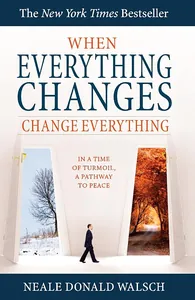
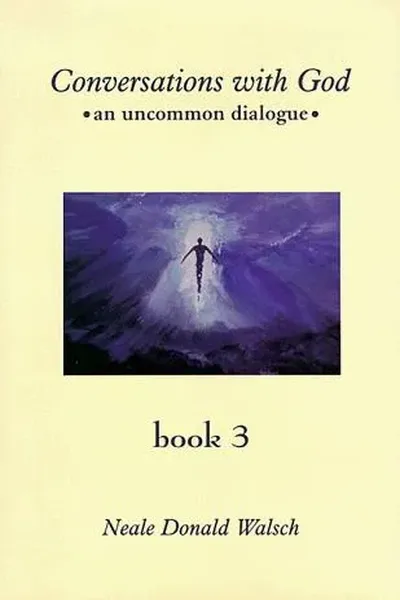
The complete conversations with God

 71
71

The complete conversations with God
Neale Donald Walsch’s "The Conversations with God" presents a bold, if familiar, premise: a direct Q&A with the Almighty. The book’s strength lies in its accessible, almost folksy, delivery of complex spiritual ideas, making them digestible for a broad audience. Walsch reframes God not as a punitive figure, but as an immanent, loving presence, a concept that has undoubtedly offered solace and a new perspective to many readers since its 1995 publication. However, the work's primary limitation is its lack of critical engagement with established theological or philosophical frameworks; it asserts its revelations without much rigorous defense, operating on faith in the channeled dialogue itself. A passage that stands out is the discussion on free will, where God is presented as a co-creator, not a dictator, emphasizing that "You are the creator of your own reality." While this can be empowering, it risks oversimplifying the profound challenges of existence. Ultimately, "The Conversations with God" serves as a comforting, albeit unverified, spiritual affirmation for those seeking direct, personal divine communication.
📝 Description
71
Neale Donald Walsch published "The Complete Conversations with God" in 1995, initiating a spiritual dialogue.
This series presents a dialogue between author Neale Donald Walsch and God. Walsch poses questions about life, the universe, and divinity, and receives direct answers. The first book, released in 1995, sparked considerable discussion about spirituality outside established religious frameworks. It frames these exchanges as personal revelations intended for a universal audience. The work aims to simplify divine concepts and give readers a new perspective on their existence and connection to the world.
The books are for individuals questioning religious doctrines and seeking personal spiritual insights. They appeal to those experiencing existential doubt, desiring a closer connection with the divine, or exploring alternative spiritual paths. Readers interested in New Age thought, personal growth, and self-help with a spiritual focus will find relevance. It is also suited for those who prefer a direct, conversational approach to complex theological and metaphysical subjects, and who are willing to rethink their ideas about God, purpose, and reality.
Published in 1995, "The Complete Conversations with God" emerged during a time of growing interest in personal empowerment and New Age spirituality. This period saw increased skepticism toward organized religion and a demand for more individualized spiritual experiences. Walsch's work tapped into this cultural shift, offering a direct channel to spiritual understanding that bypassed traditional religious structures. While it draws on various mystical traditions, its accessible language and self-help orientation distinguished it from more academic esoteric texts.
💡 Why Read This Book?
• You will learn a new perspective on the nature of God as an immanent, non-judgmental presence, moving beyond traditional anthropomorphic depictions, as explored in the book's discussions about divine essence. • You will gain an understanding of the concept of "thought creates reality," a core tenet of Walsch's dialogue, offering a framework for personal empowerment and conscious creation. • You will explore the idea of life as a game of self-discovery, a central theme presented in the conversations, which encourages a shift in perspective from external validation to internal exploration.
⭐ Reader Reviews
Honest opinions from readers who have explored this book.
❓ Frequently Asked Questions
What is the main premise of Neale Donald Walsch's "The Conversations with God"?
The book presents a series of questions posed by the author, Neale Donald Walsch, to God, and the subsequent answers received. It aims to offer a direct, personal dialogue about life's biggest questions, spirituality, and the nature of the divine.
When was "The Complete Conversations with God" first published?
The first book in "The Conversations with God" series by Neale Donald Walsch was first published in 1995, marking the beginning of its widespread impact.
What is the book's approach to the concept of God?
The book redefines God as an all-loving, non-judgmental force inherent in all of existence, rather than a distant, anthropomorphic deity. It emphasizes God's presence within every individual and every aspect of life.
Does the book offer practical advice or just philosophical concepts?
While deeply philosophical, the book offers practical implications for daily life by reframing concepts like purpose, suffering, and relationships. It encourages readers to apply its spiritual insights to their own experiences.
Is "The Conversations with God" considered part of a specific spiritual movement?
Yes, the book is widely associated with the New Age spiritual movement, known for its emphasis on personal spirituality, self-discovery, and alternative views on divinity and consciousness.
What is the primary message or takeaway from the book?
The primary message centers on the idea that humanity is not separate from God, that love is the fundamental force of the universe, and that individuals have the power to create their own reality through their thoughts and beliefs.
🔮 Key Themes & Symbolism
Redefining Divinity
The work fundamentally re-envisions the concept of God, moving away from a patriarchal, judgmental figure to one of pure love, immanence, and non-duality. It proposes that God is not separate from creation but is the very essence of it, present within every particle of existence and every individual consciousness. This perspective challenges traditional theological structures by asserting that God is not an external observer but an internal participant, a foundational principle for understanding the universe and one's place within it.
Personal Responsibility and Creation
A central theme is the profound personal responsibility individuals hold for their own lives and experiences. The book posits that thoughts are creative forces, directly shaping one's reality. This empowers the reader by suggesting that external circumstances are not merely random events but are often manifestations of internal beliefs and perceptions. It encourages a shift from victimhood to authorship, urging readers to recognize their role as co-creators in their life's unfolding narrative.
Love as Universal Force
The book consistently emphasizes love as the ultimate energy and purpose of the universe. It presents love not just as an emotion but as the fundamental law and essence of existence, the primary force driving creation and connection. This perspective suggests that all actions, thoughts, and experiences can be viewed through the lens of love or its absence (fear). The ultimate goal, according to these conversations, is to align oneself with this universal force of love.
Life as a Game of Self-Discovery
The work frames human existence as a divinely orchestrated 'game' designed for the soul's growth and self-discovery. Challenges, perceived failures, and joys are all presented as learning opportunities within this grand cosmic play. The objective is not to win or lose, but to learn, evolve, and ultimately remember one's divine nature. This perspective offers a comforting reinterpretation of suffering and adversity as integral parts of a larger, purposeful journey.
💬 Memorable Quotes
“You are the creator of your own reality.”
— This statement encapsulates the book's emphasis on personal agency. It suggests that our thoughts, beliefs, and intentions are not passive observers but active participants in shaping the circumstances and experiences of our lives.
“The highest form of intelligence is the ability to change.”
— This quote highlights the book's perspective on growth and evolution. It implies that true wisdom lies not in rigid adherence to existing beliefs but in the flexibility and openness to adapt and transform oneself.
“God does not punish. You punish yourself.”
— This challenges the traditional concept of divine retribution. It suggests that negative consequences arise not from external judgment but from internal choices and the natural outcomes of actions contrary to universal love.
“You are the living embodiment of what you seek.”
— This interpretation points to the idea of divine immanence. It suggests that the qualities and experiences we often search for externally—like peace, love, or fulfillment—are already present within us, waiting to be recognized.
“Life is not a problem to be solved, but a reality to be experienced.”
— This concept reframes the approach to existence. Instead of viewing life as a series of challenges demanding solutions, it encourages embracing the present moment and learning from the unfolding experience itself.
🌙 Esoteric Significance
Tradition
While "Conversations with God" does not strictly adhere to a single historical esoteric lineage, it draws heavily from Gnostic and Hermetic principles, particularly the idea of divine immanence and the inherent divinity within the human soul. It echoes Hermeticism's "As above, so below" by suggesting a direct correlation between the divine realm and individual consciousness. The work departs from more rigid traditions by presenting its revelations in a modern, conversational, and highly personalized format, emphasizing direct experience over doctrine.
Symbolism
The primary symbolic motif is the dialogue itself, representing the potential for direct communion between the human and the divine, mirroring ancient mystical traditions of divine revelation. The concept of 'thought creating reality' can be seen as symbolic of the Hermetic principle of mentalism, where the All is Mind. The recurring emphasis on 'love' functions symbolically as the unifying, fundamental energy of the cosmos, the ultimate 'All' that underlies existence.
Modern Relevance
This work continues to influence contemporary spiritual seekers and thinkers, particularly within the broad spectrum of New Age and consciousness studies. Modern spiritual teachers and platforms often reference Walsch's redefinition of God and the concept of manifestation through thought. It remains a foundational text for those exploring ideas like the Law of Attraction and personal sovereignty in spiritual development, influencing practices in mindfulness, positive psychology, and holistic wellness movements.
👥 Who Should Read This Book
• Individuals questioning traditional religious dogma and seeking a more personal, direct relationship with the divine, who will find Walsch's accessible reinterpretation of God appealing. • Readers interested in the New Age movement and metaphysical concepts like manifestation and the power of thought, who will gain a foundational text explaining these ideas conversationally. • Those undergoing spiritual or existential crises, seeking reassurance and a framework for understanding life's challenges from a perspective of universal love and purpose.
📜 Historical Context
The publication of "The Conversations with God" in 1995 occurred during a cultural moment ripe for spiritual introspection, particularly within the burgeoning New Age movement. This era saw a growing disillusionment with organized religion and a surge in interest in alternative spiritual paths and personal development. Neale Donald Walsch’s work tapped into this zeitgeist by offering a direct, accessible channel to what was presented as divine wisdom, bypassing traditional theological institutions. While contemporary authors like Eckhart Tolle were exploring similar themes of presence and consciousness, Walsch's conversational, Q&A format and focus on direct divine communication distinguished his approach. The book's immense popularity also placed it in dialogue, albeit indirectly, with the self-help and motivational literature of the time, such as works by authors like Tony Robbins, though Walsch’s focus remained distinctly spiritual and metaphysical.
📔 Journal Prompts
Your personal definition of God, as presented in the conversations.
The concept of 'life as a game' and its implications for your daily choices.
The idea that 'thought creates reality' and how it manifests in your life.
Your experience of divine love and its perceived absence.
The notion of separation from God and how to overcome it.
🗂️ Glossary
Immanence
The belief that God is present within the universe and all of creation, rather than being transcendent and separate from it. This contrasts with the idea of God as an external, distant creator.
Non-duality
A philosophical concept suggesting that reality is not composed of two fundamental, separate substances (like mind and matter, or God and humanity), but is ultimately a unified whole.
Consciousness
The state of being aware of and responsive to one's surroundings. In this context, it also refers to the fundamental awareness or 'mind' that constitutes reality itself.
Manifestation
The process by which thoughts, beliefs, and intentions are believed to become tangible realities or experiences in the physical world.
Divine Spark
The idea that each individual possesses an inherent piece of the divine within them, signifying a direct connection to God or the universal consciousness.
Co-creator
An individual who actively participates with the divine in shaping reality, emphasizing personal agency and responsibility in the creation of one's life experiences.
Fear vs. Love
The book posits these as the two primary motivators or energies in human experience, with love being the ultimate, divine force and fear being the illusion of separation.