The Complete Beginner's Guide to Jungian Psychology
 75
75

The Complete Beginner's Guide to Jungian Psychology
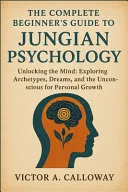
Victor A. Calloway’s *The Complete Beginner's Guide to Jungian Psychology* attempts to distill Carl Jung’s vast and often esoteric landscape into a coherent introductory text. The author succeeds admirably in making concepts like the collective unconscious and archetypes comprehensible, a feat not easily achieved. Calloway’s explanation of the shadow archetype, particularly its manifestation in projection, is one of the book’s clear strengths, offering practical avenues for self-reflection. However, the book occasionally falters by oversimplifying some of Jung's more nuanced ideas, risking a reductionist view of his complex theories. For instance, the treatment of the anima and animus, while clear, could benefit from further exploration of their dynamic interplay rather than static definition. The strength lies in its accessibility, but this accessibility sometimes comes at the cost of full theoretical depth. Ultimately, Calloway provides a solid, if sometimes superficial, entry point into Jungian thought.
📝 Description
75
### What It Is This volume offers a comprehensive introduction to the psychological framework developed by Carl Jung, presented for individuals new to the subject. It breaks down complex theoretical constructs into digestible components, focusing on practical applications for self-understanding. The book aims to demystify Jungian concepts, making them accessible for personal exploration and growth.
### Who It's For The guide is designed for curious minds and beginners seeking to understand the depths of the human psyche. It caters to individuals interested in psychology, self-discovery, and the symbolic language of dreams and the unconscious. Those new to Jungian thought or seeking a structured approach to his ideas will find this volume particularly useful.
### Historical Context Carl Jung's psychological theories emerged in the early 20th century, diverging from Freudian psychoanalysis. His work on archetypes and the collective unconscious offered a broader perspective on human motivation and spirituality. This book places Calloway's synthesis within that lineage, explaining how Jung's ideas provided an alternative to purely materialistic psychological frameworks prevalent at the time.
### Key Concepts The text systematically explores foundational Jungian concepts, including the ego, persona, shadow, anima/animus, and the self. It examines the function of archetypes as universal patterns of experience and behavior, the significance of dream analysis for accessing unconscious material, and the process of individuation as a path toward psychological wholeness.
💡 Why Read This Book?
• Gain practical methods for dream interpretation, learning to identify specific archetypal symbols that appear in your nocturnal narratives, as detailed in the dream analysis sections. • Understand the concept of the Persona, a key Jungian construct, and how its conscious adoption differs from the authentic self, providing tools for self-awareness beyond social masks. • Explore the foundational principles of individuation as presented by Jung, offering a structured pathway for psychological development and integration that is unique to his school of thought.
⭐ Reader Reviews
Honest opinions from readers who have explored this book.
❓ Frequently Asked Questions
What are archetypes according to Jungian psychology, and how does this book explain them?
Archetypes are universal, archaic patterns and images that derive from the collective unconscious. This book explains them as fundamental structures of the psyche that influence our perceptions, behaviors, and understanding of the world, providing accessible examples.
How does Victor A. Calloway's guide explain the unconscious mind in Jungian terms?
Calloway's guide presents the unconscious not just as a repository for repressed thoughts, but as a dynamic source of creativity and wisdom, elaborating on Jung's distinction between the personal and collective unconscious.
What is the 'shadow' in Jungian psychology, and how is it addressed in this beginner's guide?
The 'shadow' represents the repressed, unconscious aspects of the personality. The book explores it as a crucial element for personal integration, detailing how acknowledging and integrating one's shadow is vital for psychological wholeness.
Is this book suitable for someone completely new to psychology and Carl Jung's theories?
Yes, the book is explicitly designed for beginners. It systematically unpacks Jung's complex theories, making concepts like archetypes, dreams, and the collective unconscious understandable without prior knowledge of psychoanalysis.
What practical benefits can one expect from reading 'The Complete Beginner's Guide to Jungian Psychology'?
Readers can expect to develop a greater understanding of their own motivations, patterns of behavior, and inner life. The book provides tools for self-reflection, dream analysis, and personal growth through the lens of Jungian psychology.
When was Victor A. Calloway's guide first published?
Victor A. Calloway's 'The Complete Beginner's Guide to Jungian Psychology' was first published on September 21, 2025.
🔮 Key Themes & Symbolism
Archetypes and the Collective Unconscious
This section unpacks Jung's revolutionary concept of archetypes as universal psychic predispositions. It explains how these primordial patterns, inherited from our ancestors and residing in the collective unconscious, manifest in myths, symbols, and individual dreams. The book provides concrete examples of common archetypes, such as the Hero, the Mother, and the Wise Old Man, illustrating their pervasive influence on human behavior and perception.
The Dynamics of the Psyche
Here, the guide meticulously details the various components of the psyche as theorized by Jung. It covers the ego, the persona (our social mask), the shadow (our repressed darker side), and the anima/animus (the contrasexual aspect within). Understanding these dynamic interactions is presented as crucial for achieving psychological balance and integrating fragmented aspects of the self.
Dream Interpretation and Symbolism
This theme focuses on the significance of dreams as a direct line to the unconscious. The book guides readers through the principles of Jungian dream analysis, emphasizing that dreams are not random but compensatory messages from the psyche. It teaches how to identify symbolic language within dreams and relate it to waking life for insight and healing.
Individuation: The Path to Wholeness
The core Jungian process of individuation is presented as the lifelong journey toward psychological self-realization. This section explains how integrating conscious and unconscious elements, confronting the shadow, and developing a relationship with the Self leads to a more complete and authentic existence. It outlines the challenges and rewards inherent in this transformative process.
💬 Memorable Quotes
“The shadow contains not only darkness but also a vital spark of creativity.”
— This highlights Jung's view that our repressed qualities, often perceived as negative, are also the source of potential energy and innovation that can be integrated for personal growth.
“Archetypes are psychic organs, inherited structures of the mind.”
— This metaphor suggests that archetypes are as fundamental and innate to the human psyche as physical organs are to the body, shaping our experience in a predictable, albeit complex, manner.
“Dreams are the psyche's attempt to communicate essential truths.”
— This interpretation emphasizes the purposeful nature of dreams in Jungian psychology, viewing them as vital messages from the unconscious aimed at restoring balance and providing guidance.
“The persona is necessary but can become a dangerous mask if mistaken for the true self.”
— This points to the dual nature of the persona: a functional tool for social interaction that becomes problematic when it overshadows or replaces one's authentic identity.
“Individuation is the process of becoming who you truly are.”
— This concisely captures the essence of Jung's central concept, framing personal development as a journey of discovering and actualizing one's unique, authentic self.
🌙 Esoteric Significance
Tradition
Jungian psychology, while a distinct discipline, deeply intersects with various esoteric traditions, particularly Hermeticism, Gnosticism, and alchemy. Jung himself extensively studied these ancient systems, finding in them corroboration for his theories on archetypes and the individuation process. His concept of the 'Self' as the unifying totality of the psyche echoes alchemical notions of the prima materia and the philosopher's stone. The book bridges this esoteric lineage to modern psychological inquiry.
Symbolism
Key symbols in Jungian thought, extensively explored in this guide, include the Serpent (representing transformation and primordial wisdom, found in alchemical texts), the Mandala (a symbol of wholeness and the Self, used in various spiritual traditions), and the Shadow (representing the integration of the 'dark' or repressed aspects of the personality, a theme present in Gnostic dualism). These symbols are not mere decorations but active agents within the psyche.
Modern Relevance
Contemporary thinkers and practitioners in fields ranging from depth psychology and transpersonal psychology to archetypal astrology and mythology studies continue to draw heavily on Jung's work. His concepts of archetypes, the collective unconscious, and individuation provide a vital framework for understanding modern anxieties, cultural narratives, and the search for meaning in a secularized world. This book serves as a gateway to these ongoing explorations.
👥 Who Should Read This Book
• Aspiring psychologists and students of the human mind seeking a foundational understanding of Jungian theory beyond introductory Freudian concepts. • Individuals interested in self-discovery and personal growth who wish to explore the symbolic language of their dreams and unconscious patterns. • Researchers and enthusiasts of comparative mythology, spirituality, and esoteric traditions looking to connect ancient wisdom with modern psychological insights.
📜 Historical Context
Carl Jung's psychological theories, first articulated in the early 20th century, emerged as a significant counterpoint to the burgeoning field of psychoanalysis dominated by Sigmund Freud. While Freud focused on repressed sexuality, Jung expanded his scope to include the spiritual, mythological, and alchemical dimensions of the human psyche, proposing the existence of a collective unconscious populated by archetypes. This divergence led to a notable split between the two thinkers around 1913. Jung's work, particularly his exploration of archetypes and the collective unconscious, found fertile ground within esoteric circles and influenced movements such as depth psychology and later, transpersonal psychology. His contemporaries included figures like Alfred Adler, who also broke from Freud, and later, thinkers like Joseph Campbell, who extensively applied Jungian concepts to mythology. Jung's theories, though sometimes controversial, offered a richer, more symbolic framework for understanding the human condition than the prevailing medicalized approaches.
📔 Journal Prompts
Reflect on the Persona: How does your public presentation align with your inner experience?
Analyze a recurring dream symbol: What might the unconscious be communicating through this image?
Explore your Shadow: Identify one repressed trait and consider its potential positive expression.
Consider the Anima/Animus: How do these contrasexual aspects manifest in your relationships and internal world?
Map your Individuation journey: What steps have you taken towards psychological wholeness?
🗂️ Glossary
Archetype
Universal, archaic patterns and images that derive from the collective unconscious and manifest in human experience, behavior, and symbolic representation.
Collective Unconscious
A deeper layer of the unconscious psyche, shared by all humans, containing inherited archetypes and predispositions.
Ego
The center of consciousness; the part of the psyche that identifies with the self and is responsible for conscious thought and action.
Persona
The social mask or role an individual adopts to interact with the external world; the way one wishes to appear to others.
Shadow
The unconscious, repressed aspects of the personality, often perceived as negative or undesirable, but containing vital energy.
Anima/Animus
The contrasexual aspect of the psyche: the feminine archetype in men (anima) and the masculine archetype in women (animus).
Individuation
The lifelong psychological process of integrating conscious and unconscious elements to achieve wholeness and self-realization.

![Revelations of Egyptian Mysteries [electronic Resource]](/img/thumb/revelations-of-egyptian-mysteries-electronic-resource-robert-approximately-1812-1854-howard-284693.webp)