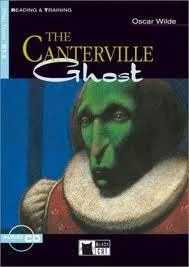
The Canterville Ghost
 82
82

The Canterville Ghost
Wilde’s "The Canterville Ghost" is less a spectral encounter and more a drawing-room comedy performed on a haunted stage. The sheer audacity of the Otis family in repackaging Sir Simon’s spectral theatrics into marketable commodities—like the "excellent" blood stain remover—is a stroke of genius. This story excels in its satirical portrayal of American commercialism trampling over ancient, albeit spectral, British heritage. However, the narrative’s charm occasionally falters in its later stages, where the spectral element feels somewhat sidelined in favor of moralistic pronouncements about forgiveness. The final resolution, while fitting Wilde's thematic aims, lacks some of the earlier story's sharp edges. Nevertheless, the novel remains a delightful and insightful commentary on cultural exchange and the nature of belief. It is a confection of wit, smartly dressed as a ghost story.
📝 Description
82
Oscar Wilde's 1887 story "The Canterville Ghost" satirizes British aristocracy through an American family's encounter with a ghost.
Published in 1887, Oscar Wilde's "The Canterville Ghost" begins with the pragmatic Otis family of America purchasing an English manor, Canterville Chase. The house is reputedly haunted by Sir Simon de Canterville, a ghost who has terrified inhabitants for centuries. However, the Otises, particularly the twins, react to Sir Simon's spectral antics with unyielding practicality. His attempts to frighten them, from clanking chains to bloodstains, are met with modern remedies like lubricating the chains and erasing the stains. This stark contrast between the spectral attempts at terror and the family's unflappable, often humorous, responses forms the core of the narrative. Wilde uses this premise to critique the outdated customs and perceived stuffiness of the British upper class by contrasting them with American directness and modernity. The story is a clever subversion of the typical ghost narrative, prioritizing social commentary and wit over genuine horror.
While "The Canterville Ghost" engages with the popular Victorian fascination with spiritualism and the paranormal, it does so with a satirical edge. The late 19th century saw a surge in interest in séances, mediums, and spectral phenomena, partly fueled by societies like the Society for Psychical Research. Wilde, however, uses the ghost trope not to explore genuine supernatural encounters, but to highlight the superficiality of societal beliefs and the rigidity of class structures. Sir Simon's inability to truly affect the modern, rational family underscores Wilde's skepticism towards both traditional supernatural fears and the aristocratic pretensions of his time.
💡 Why Read This Book?
• Gain an understanding of how Oscar Wilde subverted Victorian-era spiritualist fascinations by presenting a family, the Otises, who rationally debunk and even commercialize supernatural phenomena, challenging the era's widespread belief in ghosts. • Experience Wilde's distinctive satirical voice applied to cultural clashes, specifically contrasting the perceived materialism and pragmatism of Americans with the decaying traditions of the English aristocracy. • Explore the concept of forgiveness and redemption through the character of Sir Simon de Canterville, as the narrative’s conclusion offers a unique, non-traditional resolution to a haunting.
⭐ Reader Reviews
Honest opinions from readers who have explored this book.
❓ Frequently Asked Questions
When was Oscar Wilde's 'The Canterville Ghost' first published?
Oscar Wilde's "The Canterville Ghost" was first published in 1887. It appeared in *The Court and Literary Magazine*.
What is the main theme of 'The Canterville Ghost'?
The main theme is the clash between the old world and the new, particularly contrasting American pragmatism and materialism with antiquated British aristocracy and superstition, all through the lens of a ghost story.
Who are the main characters in 'The Canterville Ghost'?
The primary characters are the Otis family, who purchase Canterville Chase, and the resident ghost, Sir Simon de Canterville, along with his spectral victims.
How does 'The Canterville Ghost' differ from typical ghost stories?
Unlike typical ghost stories that aim to frighten, Wilde's work uses the ghost of Sir Simon as a vehicle for satire, with the American family humorously unfazed by his spectral antics.
What does the bloodstain in Canterville Chase symbolize?
The famous bloodstain, initially a symbol of Sir Simon's past crime and guilt, becomes a focal point for the Otis family's practical (and commercial) approach to the supernatural, representing the decay of old superstitions.
Is 'The Canterville Ghost' considered a horror story?
No, it is primarily considered a satirical comedy and a social commentary, rather than a horror story. While it features a ghost, the tone is lighthearted and ironic.
🔮 Key Themes & Symbolism
Cultural Clash and Satire
The narrative brilliantly satirizes the perceived differences between American and British cultures in the late 19th century. The American Otis family, characterized by their outspokenness, commercial mindset, and lack of deference to tradition, arrives at Canterville Chase, an ancient English estate steeped in history and superstition. Their rational, almost dismissive, approach to the resident ghost, Sir Simon de Canterville, directly undermines the very essence of his spectral existence. Wilde uses this juxtaposition to critique both the perceived vulgarity of American modernity and the decaying, perhaps obsolete, grandeur of the British aristocracy.
The Nature of Fear and Belief
Wilde plays with the conventions of the ghost story to question the nature of fear and belief. Sir Simon's elaborate attempts to terrify the family—wailing, clanking chains, and appearing as ghastly apparitions—are met with practical solutions: lubricant for his chains, disinfectant for the bloodstain, and a recipe for chicken broth. This subversion suggests that fear and the supernatural are often constructs that crumble under rational scrutiny or a lack of audience belief. The story implies that the power of the ghost is derived from the psychological state of those who witness it.
Redemption and Forgiveness
Beneath the sharp wit and social commentary lies a surprisingly tender exploration of redemption and forgiveness. Sir Simon, cursed to wander the earth for his past sins, is trapped by his inability to find rest. It is only when Virginia Otis, the family's sensitive daughter, shows him compassion and empathy—understanding his pain rather than fearing his specter—that he is finally able to find peace. This resolution suggests that true spiritual liberation comes not from fear or judgment, but from understanding and grace.
Modernity vs. Antiquity
The story is a microcosm of the tension between the modern age and the remnants of the past. Canterville Chase, with its history and its ghost, represents the old world, while the Otis family embodies the new, progressive era. The family’s very presence and their actions—modernizing the house, ignoring spectral warnings—represent the inevitable march of progress that can render ancient traditions and superstitions obsolete. Wilde examines how the material and practical aspects of modern life can overshadow and dismiss the spiritual and historical.
💬 Memorable Quotes
Direct passages from the work, attributed to the author.
“He had been a great criminal, and had murdered his wife.”
— This is the stark, factual explanation for Sir Simon's spectral condition, revealing the dark past that binds him to Canterville Chase and forms the basis of his curse.
“There is no such thing as a ghost.”
— This statement, likely from one of the Otis children or Mr. Otis himself, captures the family's rationalist perspective, directly challenging the existence of the supernatural entity they are experiencing.
“The ghost was dreadfully frightened.”
— This ironic statement perfectly captures the story's subversion of the ghost genre, where the supernatural entity, rather than the humans, experiences fear due to their unconventional reactions.
💡 Key Ideas
Editorial paraphrase of the work's core concepts — not direct quotes.
The moment he saw them, he knew that he had made a mistake.
This line captures the immediate realization by Sir Simon that his traditional methods of haunting will be utterly ineffective against the pragmatic, modern American family who have purchased his ancestral home.
The blood stain is a type of artistic effect.
This paraphrased concept highlights the Otis family's commercial and aesthetic interpretation of the spectral evidence, reducing a symbol of past horror to a mere decorative element.
🌙 Esoteric Significance
Tradition
While not explicitly aligned with a single esoteric tradition, "The Canterville Ghost" engages with themes common in Western esotericism, particularly those related to hauntings, karmic retribution, and spiritual liberation. The concept of a soul bound to a physical location due to unresolved earthly issues echoes elements found in certain folk magical traditions and discussions of reincarnation or residual energy. Wilde’s treatment, however, is predominantly secular and satirical, using these motifs to explore social critique rather than providing a guide to spiritual practice.
Symbolism
The most prominent symbol is the enduring bloodstain on the carpet, representing guilt, sin, and the indelible mark of past transgressions. Sir Simon's chains symbolize his bondage to his earthly crimes and his inability to move beyond them. The "terrible" apparition, which is consistently defanged by the Otises' practicality, symbolizes the erosion of traditional fears and superstitions in the face of modernity and rationalism. Virginia's compassion, which ultimately frees Sir Simon, symbolizes the esoteric principle that understanding and love can break even the strongest spiritual or karmic bonds.
Modern Relevance
Contemporary interest in "The Canterville Ghost" often stems from its commentary on cultural relativism and the persistent human fascination with the spectral. Modern practitioners of comparative mythology or cultural studies might draw parallels between Sir Simon's plight and archetypal figures of the restless dead found across various cultures. Furthermore, its ironic take on belief systems continues to resonate with thinkers who explore the psychology of fear, the power of narrative, and the way societies construct and deconstruct the supernatural.
👥 Who Should Read This Book
• Students of Victorian literature seeking witty social commentary that subverts genre expectations. • Readers interested in comparative cultural studies who wish to examine late 19th-century perceptions of American and British identities. • Enthusiasts of Oscar Wilde's sharp prose and ironic humor, looking for a shorter, accessible work that showcases his distinctive style.
📜 Historical Context
Published in 1887, "The Canterville Ghost" emerged during a period of fervent interest in spiritualism and the occult in Victorian England. Organizations like the Society for Psychical Research, founded in 1882, actively investigated paranormal phenomena, creating a cultural climate ripe for ghost stories. Oscar Wilde, however, chose to satirize these trends rather than engage with them earnestly. The story appeared in *The Court and Literary Magazine*, aligning Wilde with aesthetic movements that often challenged prevailing Victorian morality and taste. His contemporary, Arthur Conan Doyle, was also beginning his prolific career, though his focus leaned towards rational detection and, later, spiritualism. Wilde's work, with its witty dissection of class and cultural dynamics, offered a sharp contrast to more earnest gothic tales, positioning itself as a sophisticated commentary rather than a simple supernatural thriller.
📔 Journal Prompts
Sir Simon's spectral limitations and the Otis family's practical responses.
The symbolic meaning of the bloodstain and its removal.
Virginia Otis's act of compassion towards Sir Simon.
The contrast between the American family's worldview and the ancient manor's history.
Wilde's use of irony to critique societal norms.
🗂️ Glossary
Canterville Chase
The ancient English manor purchased by the American Otis family, serving as the primary setting and a symbol of decaying British aristocracy and history.
Sir Simon de Canterville
The resident ghost of Canterville Chase, bound to the estate due to his past sins, and the central figure around whom the story's satire revolves.
Otis Family
The pragmatic and modern American family who buys Canterville Chase, characterized by their lack of fear and their commercial approach to the supernatural.
Blood Stain
A recurring mark in the manor's drawing-room, representing past guilt and a focal point for the clash between spectral tradition and modern practicality.
Ghost Story Subversion
Wilde's technique of using the conventions of a ghost narrative to deliver social satire and humor, rather than to evoke fear or suspense.
American Pragmatism
The characteristic approach of the Otis family, emphasizing practicality, efficiency, and a rational, often commercial, view of situations, including the supernatural.
Victorian Spiritualism
The widespread belief and interest in communication with spirits and the paranormal prevalent in Victorian England, which Wilde playfully critiques.
🔮 Readers Also Liked
Browse all →







More by Oscar Wilde
All books →



More Free Occult Philosophy Books
View all →