The Book of Revelation

 84
84

The Book of Revelation
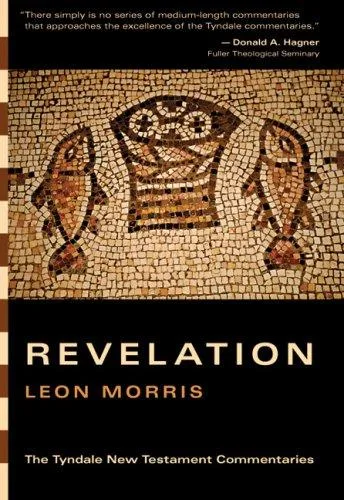
Leon Morris’s The Book of Revelation offers a compelling, albeit singular, lens through which to view the biblical text. Rather than presenting a scholarly debate, Morris positions himself as a guide through a labyrinth of esoteric symbolism. His strength lies in his consistent application of a specific interpretive framework, treating the visions of John of Patmos as a blueprint for spiritual actualization. The work particularly excels in its detailed unpacking of the Beast and the New Jerusalem, drawing parallels to alchemical processes and Gnostic cosmologies. However, the book’s limitation is its inherent exclusivity; readers unfamiliar with or resistant to esoteric or Gnostic premises may find the interpretations overly speculative or difficult to engage with. A passage detailing the "7 heads and 10 horns" of the Beast (Revelation 13:1) serves as a microcosm of this, where Morris suggests these are not literal entities but symbolic representations of corrupting forces within the psyche and society. Morris's approach is less about historical accuracy and more about unlocking hidden spiritual truths. Ultimately, The Book of Revelation by Leon Morris is a specialized text for initiates seeking a mystical reading of apocalyptic scripture.
📝 Description
84
Leon Morris's 2009 book interprets the Book of Revelation through an esoteric lens.
Published in 2009, Leon Morris's "The Book of Revelation" offers a reading of the biblical text that moves beyond standard theological explanations. Morris focuses on the deeper symbolic and mystical meanings within the apocalyptic narrative, seeking layers of understanding for those interested in its spiritual or occult dimensions. The work is aimed at readers engaged with the symbolic language of prophecy, particularly within esoteric traditions. It will appeal to students of Hermeticism, Gnosticism, and other mystical philosophies who approach religious texts as sources of hidden spiritual knowledge. Those who wish to connect the visions attributed to John of Patmos with broader ideas about cosmic patterns will find it valuable.
Morris's interpretation engages with the text's numerological aspects, the archetypal nature of its figures, and the cyclical patterns suggested by its prophecies. He treats Revelation as a symbolic map charting consciousness and spiritual development. The book emerges within a contemporary context where esoteric readings of religious literature have seen renewed interest, continuing a long history of mystical interpretation that stretches back centuries.
Morris's work follows a long tradition of mystical engagement with the Book of Revelation, a tradition that includes figures like Joachim of Fiore and later mystics. It positions itself within a contemporary interest in esoteric readings of religious texts, distinguishing itself from strictly academic or orthodox theological analyses. The book speaks to those who view biblical narratives not just as historical accounts but as repositories of encoded spiritual wisdom, connecting them to broader patterns of cosmic unfolding and consciousness.
💡 Why Read This Book?
• Gain a unique perspective on the symbolic language of Revelation, moving beyond traditional exegesis to understand its esoteric underpinnings, as exemplified by Morris's interpretation of the "New Jerusalem" as a state of perfected consciousness. • Explore the intricate numerology and archetypal figures within the text, such as the "Woman Clothed with the Sun" (Revelation 12:1), and grasp their potential significance in mystical traditions. • Understand how the visions described in Revelation, particularly the "Seven Seals" (Revelation 5-8), can be interpreted as stages of spiritual awakening or cosmic cycles, offering a different framework for personal growth.
⭐ Reader Reviews
Honest opinions from readers who have explored this book.
❓ Frequently Asked Questions
What is Leon Morris's primary approach to interpreting The Book of Revelation?
Leon Morris approaches The Book of Revelation through an esoteric and symbolic lens, aiming to uncover mystical meanings rather than solely historical or theological ones. He interprets the visions as representations of spiritual truths and cosmic processes.
When was Leon Morris's The Book of Revelation first published?
Leon Morris's The Book of Revelation was first published in 2009, positioning it as a contemporary work within the field of esoteric studies.
Does this book focus on the historical context of Revelation?
While acknowledging its biblical origins, the primary focus is not on the historical context of Revelation's writing. Instead, it emphasizes the symbolic and spiritual interpretations relevant to esoteric traditions.
What kind of esoteric traditions does this book draw upon?
The book draws upon and appeals to traditions such as Hermeticism and Gnosticism, viewing Revelation as a text containing encoded spiritual knowledge and maps of consciousness.
Are there specific symbols in Revelation that Morris analyzes?
Yes, Morris analyzes numerous symbols, including the Beast with its "7 heads and 10 horns" (Revelation 13:1), the "New Jerusalem" (Revelation 21), and the "Seven Seals" (Revelation 5-8), interpreting them through an esoteric framework.
Is this book suitable for beginners in biblical studies?
It is best suited for those with an existing interest in esoteric interpretations of religious texts. Beginners in biblical studies might find the symbolic and allegorical approach challenging without prior exposure to mystical traditions.
🔮 Key Themes & Symbolism
Apocalyptic Symbolism as Spiritual Map
Morris interprets the dramatic visions of The Book of Revelation not as literal predictions, but as a symbolic map of spiritual evolution and cosmic processes. He suggests that figures like the "Dragon" (Revelation 12:3) and the "Lamb" (Revelation 5:6) represent fundamental forces within the cosmos and the human psyche. The text encourages readers to see these apocalyptic events as metaphors for inner transformation and the perennial struggle between spiritual illumination and material illusion.
The New Jerusalem as Inner State
The depiction of the "New Jerusalem" in Revelation 21 is re-contextualized by Morris as an internal state of consciousness rather than a purely external, future city. This concept aligns with Gnostic and Hermetic ideas of achieving a perfected or divine state within. He explores the symbolic architecture and divine presence described in this vision as indicative of a realized spiritual reality accessible to the adept through inner work and understanding.
Numerology and Cosmic Order
Morris delves into the numerological significance embedded within The Book of Revelation, treating numbers like 7, 12, and 666 not as arbitrary figures but as keys to understanding cosmic order and its perversions. For example, the "Seven Seals" (Revelation 5-8) are viewed as stages of unveiling divine knowledge. This approach connects the text to ancient traditions that saw mathematics and geometry as fundamental to creation and spiritual insight.
The Beast and Counter-Forces
The archetypal "Beast" (Revelation 13) and its associated imagery are analyzed as representations of corrupting forces that oppose spiritual progress. Morris interprets the "7 heads and 10 horns" (Revelation 13:1) as symbolic of various manifestations of egoic delusion, societal control, or material attachment. The work suggests that understanding these counter-forces is crucial for navigating one's own spiritual path and recognizing illusions.
💬 Memorable Quotes
“The seven heads and ten horns of the Beast are not mere biological appendages but symbolic representations of corrupting powers.”
— This quote highlights Morris's method of reading Revelation symbolically. He moves beyond literal interpretations to find deeper, often psychological or spiritual, meanings in the text's imagery, identifying the 'Beast' as a representation of destructive forces.
“The New Jerusalem descends not from the sky, but from a perfected state of consciousness.”
— This paraphrase emphasizes the internal focus of Morris's interpretation. It reframes the eschatological vision of Revelation as an attainable inner reality, aligning with mystical and Gnostic concepts of spiritual realization.
“The "Woman Clothed with the Sun" (Revelation 12:1) embodies divine feminine wisdom and the soul's journey.”
— This interpretation assigns a specific archetypal meaning to a key figure in Revelation. It connects the biblical narrative to broader esoteric understandings of the divine feminine and the soul's path through trials and illumination.
“The Seven Seals (Revelation 5-8) represent stages of unfolding spiritual knowledge.”
— This paraphrase frames the 'Seven Seals' not as historical events, but as a process of spiritual awakening or gradual revelation of divine truths, relevant to esoteric paths of learning and initiation.
“Revelation is a blueprint for the transformation of consciousness.”
— This concise statement encapsulates the core thesis of Morris's work, presenting The Book of Revelation as a practical guide for inner change and spiritual development, rather than a prophetic prediction.
🌙 Esoteric Significance
Tradition
This work fits within the Western Esoteric Tradition, drawing heavily on Hermetic and Gnostic principles. It views The Book of Revelation as a highly symbolic text, akin to alchemical treatises, meant to be decoded for spiritual insight rather than accepted literally. Morris’s approach aligns with traditions that see biblical narratives as allegories for the soul’s journey and the unfolding of cosmic consciousness, departing from orthodox exegesis by prioritizing inner meaning over historical event.
Symbolism
Key symbols like the "Dragon" (Revelation 12:3) are interpreted as representing primal chaos or the forces of illusion that impede spiritual growth. The "New Jerusalem" (Revelation 21) is seen not as a physical city, but as the symbol of a perfected state of consciousness or the divine order realized within. The "Seven Seals" (Revelation 5-8) are treated as stages in the unveiling of hidden knowledge or cosmic cycles, all laden with numerological and archetypal significance.
Modern Relevance
Morris's interpretation of Revelation as a blueprint for consciousness transformation resonates with contemporary movements in New Age spirituality, Jungian psychology's exploration of archetypes, and modern Hermetic and Gnostic study groups. Thinkers and practitioners today who explore the symbolic depths of ancient texts for personal and collective spiritual evolution find value in this esoteric framework, seeking to understand the archetypal battles and resolutions presented in Revelation for modern application.
👥 Who Should Read This Book
• Students of Hermeticism and Gnosticism: Those familiar with these traditions will find Morris’s esoteric decoding of Revelation directly relevant to their studies, offering new layers of meaning to a foundational text. • Seekers of symbolic interpretation: Readers interested in understanding religious texts through allegory, numerology, and archetypal symbolism, rather than literal history, will appreciate this approach. • Comparative religion scholars: Researchers exploring the intersection of biblical texts with esoteric philosophies and mystical traditions will find this work a valuable case study in non-orthodox exegesis.
📜 Historical Context
Leon Morris's The Book of Revelation, published in 2009, entered a scholarly and popular landscape where esoteric interpretations of religious texts had gained traction. It follows in the lineage of mystical readings of Revelation that date back centuries, including those influenced by Joachim of Fiore’s eschatological systems and later by figures within occult traditions. The work positions itself against purely historical-critical or orthodox theological approaches, engaging instead with comparative religion and Hermetic philosophy. In the early 21st century, there was a significant resurgence of interest in ancient wisdom traditions, and Morris’s book taps into this current. While not directly engaging with specific contemporary scholars in its framing, it implicitly contrasts with the literalist interpretations prevalent in some evangelical circles and the purely academic analyses that often strip the text of its symbolic power for those seeking spiritual meaning.
📔 Journal Prompts
The symbolism of the "New Jerusalem" as an inner state: How does this concept challenge or affirm your understanding of spiritual goals?
Reflect on the "Dragon" (Revelation 12:3) as a representation of internal or external forces that hinder spiritual progress.
Consider the "Seven Seals" (Revelation 5-8) as potential stages in personal spiritual development.
Analyze the archetypal significance of the "Woman Clothed with the Sun" (Revelation 12:1) in your own spiritual narrative.
How might the "Beast" (Revelation 13) symbolize societal or psychological illusions you encounter?
🗂️ Glossary
Esoteric Interpretation
An approach to understanding texts or symbols that focuses on hidden, inner, or spiritual meanings, often accessible only to initiates or those with specific training, as opposed to literal or exoteric meanings.
Gnosticism
A diverse set of religious and philosophical movements characterized by a belief in a transcendent God, a lesser creator deity (demiurge), and the salvation of the human soul through secret knowledge (gnosis).
Hermeticism
A religious, philosophical, and esoteric tradition based on writings attributed to Hermes Trismegistus, emphasizing the interconnectedness of all things and the potential for human spiritual ascent.
Archetype
In psychology and mythology, a universal, inherited pattern of thought or image derived from the collective unconscious, such as the Hero, the Mother, or the Trickster.
New Jerusalem
A symbolic city described in Revelation 21, often interpreted esoterically as a state of divine perfection, cosmic order, or the realized spiritual consciousness of humanity.
The Beast
A symbolic figure in Revelation 13, often interpreted as representing corrupt worldly powers, anti-spiritual forces, or manifestations of ego and illusion that oppose divine order.
Seven Seals
A sequence of events or stages described in Revelation 5-8, typically interpreted esoterically as steps in the unfolding of divine knowledge, cosmic cycles, or spiritual initiation.