The Book of Hope
 73
73

The Book of Hope
The Book of Hope offers a refreshing antidote to the pervasive cynicism of our era. Jane Goodall's personal anecdotes, interwoven with Douglas Abrams's thoughtful structuring, create a compelling argument for sustained optimism. The strength of the book lies in its grounded approach, drawing hope not from wishful thinking but from observable actions and natural resilience. For instance, the detailed exploration of the "indomitable human spirit" through specific examples, like the work of grassroots activists, is particularly impactful. However, the book occasionally treads close to a more conventional self-help tone, which may not satisfy readers seeking deeper philosophical or esoteric inquiry. A limitation is the relative brevity of some sections, leaving one wishing for more extensive exploration of certain complex ideas. Ultimately, The Book of Hope succeeds in providing a gentle, yet firm, reminder of humanity's capacity for good and the enduring power of belief in a better future.
📝 Description
73
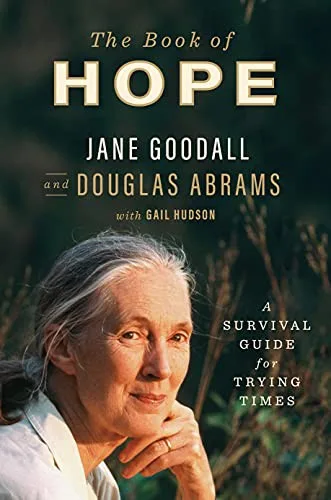
In 2021, Jane Goodall and Douglas Abrams released The Book of Hope as a series of conversations.
The Book of Hope is a collection of dialogues between primatologist Jane Goodall and writer Douglas Abrams. Published in 2021, it addresses the nature of hope during difficult times, drawing on their personal histories and philosophical thoughts. The book examines how optimism can be found and maintained even when despair seems widespread. It functions as an extended discussion, aiming to identify ways individuals and societies can continue to believe in a better future.
This book is for readers feeling helpless or pessimistic, especially those worried about global problems like environmental damage, social inequality, and political turmoil. It offers solace and practical advice for staying positive without empty reassurances. People interested in the connections between science, philosophy, and personal well-being will appreciate its reflective style. It is suitable for anyone questioning the possibility of positive change and seeking a way to build inner strength.
The Book of Hope engages with traditions that have long considered the human capacity for hope as a vital force. While not strictly a work of occultism, it touches upon a philosophical current that seeks to understand how belief and optimism can shape reality and individual endurance. It connects with a lineage of thought that emphasizes inner strength and a positive outlook as tools for navigating adversity, paralleling some spiritual and philosophical approaches that focus on mental fortitude and a forward-looking perspective as means of personal transformation and societal progress.
💡 Why Read This Book?
• You will learn to identify the "Four Reasons for Hope" as identified by Jane Goodall, providing a concrete framework for cultivating optimism even during difficult times, as discussed in the book's core sections. • You will gain an appreciation for the "indomitable human spirit" through specific, real-world examples presented, offering tangible inspiration beyond abstract concepts. • You will feel a renewed sense of agency by understanding the "power of young people" and their role in driving positive change, as highlighted through various initiatives mentioned in the text.
⭐ Reader Reviews
Honest opinions from readers who have explored this book.
❓ Frequently Asked Questions
What are Jane Goodall's "Four Reasons for Hope"?
Jane Goodall outlines four key reasons for hope: the indomitable human spirit, the power of young people, the unwavering support of the United Nations program, and the irrefutable hope found in nature. These form the central pillars of the book's optimistic outlook.
Who is Douglas Abrams and what is his role in The Book of Hope?
Douglas Abrams is the co-author and interviewer. He facilitates the conversation with Jane Goodall, structuring the book and drawing out her reflections and experiences to explore the theme of hope.
When was The Book of Hope first published?
The Book of Hope was first published in 2021, a period marked by significant global challenges and anxieties.
What is the primary focus of The Book of Hope?
The book's primary focus is on exploring the nature and sources of hope, particularly in the face of environmental and social crises, drawing on Jane Goodall's life and work.
Does the book offer practical advice for finding hope?
Yes, the book offers practical insights and inspiration through Goodall's personal experiences and her "Four Reasons for Hope," encouraging readers to find their own sources of optimism and agency.
What kind of tone does The Book of Hope adopt?
The book adopts a reflective, conversational, and ultimately optimistic tone, grounded in real-world observations and experiences rather than abstract theorizing.
🔮 Key Themes & Symbolism
The Indomitable Human Spirit
This theme explores the remarkable resilience and capacity for good inherent in humanity. The book highlights instances where individuals and communities have overcome immense adversity through courage, innovation, and compassion. It suggests that even in the darkest times, the human spirit possesses an innate drive to persevere and create positive change. This concept is central to Goodall's optimism, emphasizing that despite global challenges, humanity's potential for resilience and altruism remains a powerful force for good.
Hope Found in Nature
A core tenet of the book is the profound and irrefutable hope that can be drawn from the natural world. It details how the intricate ecosystems, the cycles of renewal, and the sheer tenacity of life on Earth offer a powerful counterpoint to human-induced despair. Goodall's extensive experience with chimpanzees and conservation underscores this, revealing how observing nature's resilience can inspire a belief in our own ability to recover and thrive, fostering a deeper connection and responsibility towards the environment.
The Power of Young People
The work emphasizes the critical role of younger generations in driving positive change and embodying hope for the future. It showcases how youth-led movements and initiatives are actively addressing global issues, demonstrating a passion and determination that can inspire older generations. The book suggests that empowering and listening to young people is essential for building a sustainable and hopeful world, highlighting their energy and innovative approaches to problem-solving.
Action and Agency
Beyond passive hope, the book stresses the importance of taking action and fostering a sense of personal agency. It argues that hope is not merely an emotion but is cultivated through meaningful engagement with the world. By focusing on what individuals can do, however small, to contribute to positive change—whether through conservation efforts, community building, or advocating for justice—readers are encouraged to move from despair to active participation in creating a better future.
💬 Memorable Quotes
Direct passages from the work, attributed to the author.
“The human brain is capable of incredible imagination and ingenuity. This allows us to solve problems and adapt.”
— This statement underscores the inherent potential within humans for creativity and problem-solving. It suggests that our intellectual capacity is a fundamental resource for overcoming challenges and fostering progress, forming a basis for optimism about our collective future.
“Nature is incredibly resilient. Even after devastation, life finds a way to return and flourish.”
— This highlights the restorative power of the natural world. It serves as a metaphor for hope, suggesting that just as ecosystems can recover, so too can human societies and individuals find renewal and overcome hardship.
“We must never underestimate the impact of one person's actions. Small efforts, when multiplied, can create significant change.”
— This emphasizes the importance of individual contribution and collective impact. It empowers readers by showing that their actions, no matter how seemingly insignificant, are vital components in the larger movement towards positive transformation.
“True hope is not blind optimism, but a belief in the possibility of a better future, coupled with the will to work for it.”
— This defines hope as an active, engaged state rather than passive wishful thinking. It connects belief in a positive outcome with the necessary effort and commitment required to achieve it, advocating for proactive engagement.
💡 Key Ideas
Editorial paraphrase of the work's core concepts — not direct quotes.
Children and young people are our greatest hope for the future. Their energy and passion can drive necessary change.
This quote points to the vital role of the next generation. It highlights their potential to effect meaningful change and serves as an inspiration, suggesting that investing in and empowering youth is crucial for a hopeful outlook.
🌙 Esoteric Significance
Tradition
While not strictly adhering to a single esoteric lineage, The Book of Hope appeals to traditions that emphasize inner resilience and connection to natural forces. Its focus on the "indomitable human spirit" echoes Gnostic and Hermetic ideas about the divine spark within humanity, capable of overcoming material limitations. The emphasis on nature's inherent wisdom and restorative power aligns with animistic and earth-centered spiritualities, suggesting a divinely ordered or sentient cosmos that offers guidance and hope.
Symbolism
The book utilizes the symbol of the chimpanzee, representing intelligence, social complexity, and our deep connection to the natural world, mirroring Goodall's life work. The "Four Reasons for Hope" function as symbolic pillars, representing foundational truths—the human spirit, youth, institutional support, and nature itself—that uphold a hopeful worldview. Nature, in its entirety, serves as a potent symbol of renewal, resilience, and the interconnectedness of all life, offering a constant reminder of potential and continuity.
Modern Relevance
The Book of Hope's emphasis on practical optimism and individual agency finds resonance in contemporary self-development and mindfulness movements. Its core message about environmental interconnectedness and the power of youth aligns with current eco-activist circles and intergenerational dialogue initiatives. Thinkers and practitioners focused on positive psychology, resilience training, and nature-based therapies often draw upon similar concepts of finding hope through action and connection to the natural world.
👥 Who Should Read This Book
• Individuals feeling overwhelmed by global crises: This book offers concrete reasons and examples to combat despair, providing a framework for maintaining optimism without ignoring reality. • Environmental activists and conservationists: Readers engaged in ecological work will find validation and renewed inspiration through Goodall's perspective on nature's resilience and the "indomitable human spirit." • Students of philosophy and ethics: Those interested in the nature of hope, human resilience, and ethical action in challenging times will appreciate the blend of personal reflection and broader societal implications.
📜 Historical Context
The Book of Hope, released in 2021, emerged during a period of profound global uncertainty, amplified by the COVID-19 pandemic and escalating climate crisis concerns. It entered a cultural landscape saturated with dystopian narratives and widespread anxiety, offering a counter-narrative focused on resilience and optimism. Its publication can be seen as a timely intervention, engaging with a long philosophical tradition of examining hope as a vital human capacity. The work implicitly contrasts with more fatalistic or nihilistic viewpoints that gained traction during this era. While not directly engaging in polemics, its emphasis on actionable hope and the power of nature implicitly challenges despair. It joins a lineage of works seeking to inspire perseverance, echoing sentiments found in existentialist thought and environmental activism, though its approach is more personal and less academic than, for example, Albert Camus's reflections on the absurd.
📔 Journal Prompts
The "indomitable human spirit" observed in nature:
Reflecting on the "power of young people" in driving change:
Identifying personal sources for the "irrefutable hope found in nature":
How can the "Four Reasons for Hope" be practically applied to current personal challenges?
What small action can I take today to embody hope and contribute to positive change?
🗂️ Glossary
Indomitable Human Spirit
The inherent resilience, courage, and capacity for good within people, enabling them to overcome adversity and strive for positive change even in difficult circumstances.
Four Reasons for Hope
A framework presented by Jane Goodall, comprising the indomitable human spirit, the power of young people, the support of the UN program, and the hope found in nature.
Agency
The capacity of individuals to act independently and make their own free choices; the feeling of being in control of one's own life and actions.
Resilience
The ability to recover quickly from difficulties; toughness. In this context, it refers to both individual and collective capacity to withstand and adapt to challenges.
Conservation
The protection, preservation, management, or restoration of natural environments and the ecological communities that inhabit them.
Primatologist
A scientist who studies primates, especially their behavior, social structures, and evolutionary history. Jane Goodall is a world-renowned primatologist.
Environmental Degradation
The deterioration of the environment through depletion of resources such as air, water, and soil; the destruction of ecosystems; and the extinction of wildlife.
🔮 Readers Also Liked
Browse all →









More Free Occult Philosophy Books
View all →