The Bhagavad Gita
 71
71

The Bhagavad Gita
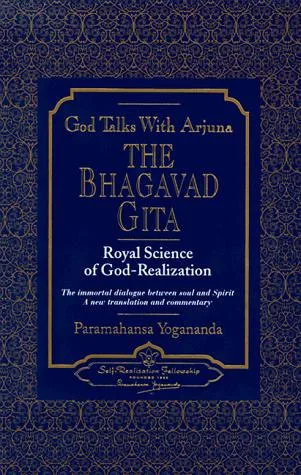
Paramhansa Yogananda's interpretation, as conveyed through Swami Kriyananda's translation, offers a distinct lens on the Bhagavad Gita. The emphasis on Kriya Yoga and the direct line of guru-disciple transmission lends a unique devotional and practical yoga-centric approach. The prose is clear, aiming for accessibility that might bypass some of the linguistic nuances found in more scholarly translations. One particularly striking aspect is the consistent framing of Arjuna's dilemma as a metaphor for the soul's struggle against its own lower nature. However, this specific interpretive framework, while valuable to adherents, may occasionally overshadow alternative philosophical readings of the text. The strength lies in its devotional focus; its limitation for some might be the singular interpretive path it champions. It is a version that speaks directly to the practitioner seeking the Gita's guidance through the specific lineage of Yogananda.
📝 Description
71
### What It Is
The Bhagavad Gita, originating from the ancient Indian epic the Mahabharata, is a philosophical dialogue centered on the battlefield of Kurukshetra. It presents the teachings of Lord Krishna to the warrior prince Arjuna, who faces a profound moral crisis before a great war. This text is not merely a religious scripture but a profound exploration of dharma (duty), karma (action and consequence), and the nature of the self.
### Who It's For
This version, translated by Swami Kriyananda based on Paramhansa Yogananda's interpretations, is for those seeking a modern, accessible rendering of a foundational Eastern text. It appeals to individuals interested in yoga philosophy, spiritual guidance, and the practical application of ancient wisdom to contemporary life. Those familiar with Yogananda's other works, such as "Autobiography of a Yogi," will find a familiar interpretive voice.
### Historical Context
The Bhagavad Gita likely took shape between the 5th and 2nd centuries BCE, a period of significant philosophical development in India. It emerged within the broader context of Vedic traditions and early Upanishadic thought, offering a synthesis of various spiritual and philosophical streams. Its integration into the Mahabharata solidified its canonical status, making it a cornerstone of Hindu philosophy and practice, influencing countless thinkers and movements across millennia.
### Key Concepts
Central to the Gita are the concepts of detachment from the fruits of action (karma yoga), devotion to a higher power (bhakti yoga), and the pursuit of knowledge (jnana yoga). It addresses the eternal struggle between the material and spiritual aspects of existence, the illusion of ego, and the path to liberation (moksha). The dialogue between Krishna and Arjuna serves as a framework for understanding one's duty in the world while striving for spiritual realization.
💡 Why Read This Book?
• Gain a practical understanding of Karma Yoga, the path of selfless action, as elucidated by Krishna to Arjuna in Chapter 2, enabling you to approach daily tasks with greater detachment and purpose. • Explore the concept of the Divine as presented through Krishna's cosmic form in Chapter 11, offering a devotional perspective that can deepen your sense of connection and awe. • Learn about the three primary paths to liberation—Karma, Bhakti, and Jnana Yoga—as detailed throughout the text, providing a multi-faceted approach to spiritual growth applicable to modern life.
⭐ Reader Reviews
Honest opinions from readers who have explored this book.
❓ Frequently Asked Questions
What is the Bhagavad Gita and where does it come from?
The Bhagavad Gita is a sacred Hindu scripture, essentially a philosophical dialogue within the larger epic, the Mahabharata. It features Lord Krishna instructing the warrior Arjuna on duty, action, and spiritual realization on the battlefield of Kurukshetra.
Who is Paramhansa Yogananda in relation to this translation?
Paramhansa Yogananda is the spiritual guide whose interpretations form the basis of this version. His disciple, Swami Kriyananda, rendered these interpretations into modern English prose, making the text accessible.
When was the Bhagavad Gita originally written?
While its exact date is debated, scholars generally place the composition of the Bhagavad Gita between the 5th and 2nd centuries BCE, integrating it into the Mahabharata epic.
What are the main philosophical concepts discussed in the Bhagavad Gita?
Key concepts include dharma (duty), karma (action and consequence), the nature of the soul, the paths of yoga (Karma, Bhakti, Jnana), and the pursuit of moksha (liberation) from the cycle of rebirth.
Is this translation suitable for beginners to Eastern philosophy?
Yes, this version, translated by Swami Kriyananda based on Yogananda's teachings, is designed for modern readers, offering a clear and accessible entry point into the Gita's profound teachings.
What is the significance of Krishna and Arjuna in the text?
Krishna acts as the divine teacher, imparting spiritual wisdom, while Arjuna represents the questioning soul grappling with moral dilemmas and existential uncertainty before a great conflict.
🔮 Key Themes & Symbolism
The Path of Action (Karma Yoga)
The Gita profoundly explores Karma Yoga, advocating for action performed without attachment to its results. This principle, central to Chapter 2, suggests that engaging fully in one's duties while relinquishing the expectation of reward is a primary means of spiritual purification. It's not about renouncing action, but transforming one's attitude towards it, seeing all work as an offering and a means to understand one's true nature beyond the ego's desires.
Devotion as Liberation (Bhakti Yoga)
Bhakti Yoga, the path of love and devotion, is presented as a powerful means to attain divine union. Krishna, as the Supreme Being, is the object of this devotion. Chapter 9, for instance, highlights that even those of lower birth can attain the highest spiritual state through unwavering devotion. This theme emphasizes surrender, faith, and a loving relationship with the Divine as a direct route to spiritual fulfillment and peace.
The Nature of the Self (Atman)
A core teaching concerns the eternal and unchanging nature of the self (Atman), distinct from the temporary physical body and the fluctuating mind. Krishna explains to Arjuna in Chapter 2 that the soul is unborn, immortal, and indestructible, merely passing through different bodies like changing clothes. Understanding this fundamental truth is presented as crucial for overcoming fear, sorrow, and attachment to the material world.
The Cosmic Vision
Chapter 11 offers a dramatic revelation of Krishna's universal, cosmic form (Vishvarupa). This terrifying yet awe-inspiring vision encompasses all of existence, time, and space. It serves to underscore Krishna's divine omnipotence and the ultimate reality he embodies. For Arjuna, witnessing this form is a pivotal moment, solidifying his understanding of Krishna's divinity and the interconnectedness of all things.
💬 Memorable Quotes
“You have a right to perform your prescribed duty, but you are not entitled to the fruits of your actions.”
— This iconic verse from Chapter 2 encapsulates the essence of Karma Yoga. It advises focusing on the correct execution of one's responsibilities without becoming attached to or anxious about the outcomes, thereby fostering inner peace and detachment.
“I am the gambling of the fraudulent, and the splendor of splendid things.”
— Found in Chapter 10, this verse illustrates Krishna's omnipresence by claiming manifestation in diverse, often contradictory, aspects of existence. It signifies the Divine's immanence within all phenomena, both auspicious and challenging.
“The wise see the same spirit in a knowledgeable Brahmin and a cow, an elephant, a dog, and a dog-eater.”
— This quote from Chapter 5 highlights the principle of equanimity and the recognition of the divine spark (Atman) in all beings, regardless of social standing or species, emphasizing spiritual equality.
“Perform action, O Arjuna, dwelling in Yoga, abandoning attachment, and be even-minded in success and failure.”
— Another key teaching from Chapter 2, this reinforces the practice of Yoga not just as physical postures but as a state of balanced consciousness while engaged in worldly duties, detached from the results.
“Those who worship Me with devotion, they are in Me, and I too am in them.”
— From Chapter 9, this verse articulates the core of Bhakti Yoga, the path of devotion. It expresses the reciprocal relationship between the devotee and the Divine, where love creates an intimate, indwelling connection.
🌙 Esoteric Significance
Tradition
While deeply rooted in Vedic and Hindu traditions, the Bhagavad Gita functions as a foundational text within various esoteric and spiritual movements globally. Its emphasis on inner transformation, the nature of consciousness, and the different paths to union with the Divine aligns with broader Hermetic principles of 'as above, so below' and the quest for self-knowledge. It provides a philosophical framework for understanding the interplay between the material world and higher spiritual realities, making it a significant text for comparative mysticism.
Symbolism
The battlefield of Kurukshetra symbolizes the human consciousness, the site of an internal struggle between higher and lower impulses. Arjuna represents the aspiring soul, overwhelmed by existential conflict and moral doubt. Krishna, the charioteer, embodies the Divine Guide or higher Self, providing wisdom to navigate these internal battles. The chariot itself can symbolize the human being, with senses, mind, and intellect controlled by the Self.
Modern Relevance
Contemporary spiritual teachers, yoga practitioners, and philosophers continue to draw heavily on the Gita's teachings. Its principles of mindfulness, detachment from outcomes, and the integration of spiritual life with daily responsibilities are highly relevant in modern secular and spiritual contexts. Thinkers in fields ranging from psychology to organizational leadership find value in its insights into motivation, ethics, and the pursuit of purpose beyond material gain.
👥 Who Should Read This Book
['• Students of comparative religion and philosophy seeking to understand a central text of Hinduism and its influence on Eastern thought.', '• Practitioners of yoga and meditation interested in the philosophical underpinnings of their disciplines, particularly the concepts of Karma Yoga and detachment.', '• Individuals grappling with moral dilemmas or life transitions who seek guidance on duty, purpose, and finding inner peace amidst conflict.']
📜 Historical Context
The Bhagavad Gita emerged within the vibrant philosophical landscape of ancient India, likely between the 5th and 2nd centuries BCE. This era saw intense intellectual ferment, building upon the foundational Vedic and Upanishadic traditions. It offered a synthesis of complex philosophical ideas, integrating concepts of duty (dharma), action (karma), knowledge (jnana), and devotion (bhakti) into a cohesive and accessible narrative. The Gita's inclusion within the massive Mahabharata epic ensured its widespread dissemination and acceptance. It provided a practical guide to spiritual living that resonated across different social strata, contrasting with more ascetic or purely ritualistic paths. Its influence became paramount, shaping Hindu theology and practice for millennia, and was later engaged with by Western thinkers like Arthur Schopenhauer, who recognized its profound philosophical depth.
📔 Journal Prompts
Arjuna's crisis on the battlefield: what inner conflicts does this symbolize for you?
The concept of Dharma: how does Krishna's counsel redefine your understanding of duty?
Krishna's teachings on the eternal nature of the soul: how does this perspective alter your view of impermanence?
The relationship between action (karma) and its results: reflect on a time you were attached to an outcome.
The qualities of a devotee described by Krishna: which aspect of Bhakti Yoga calls to you most strongly?
🗂️ Glossary
Dharma
One's duty, righteousness, or intrinsic nature. In the Gita, it refers to the appropriate action aligned with one's role and the cosmic order, crucial for spiritual progress.
Karma
Action, work, or deed, and its subsequent consequence. The law of cause and effect that binds beings to the cycle of birth and death (samsara).
Yoga
Literally 'union.' A discipline or path aimed at spiritual realization. The Gita outlines several paths, including Karma Yoga (action), Bhakti Yoga (devotion), and Jnana Yoga (knowledge).
Moksha
Liberation or release from the cycle of birth, death, and rebirth (samsara). The ultimate goal of spiritual practice in many Indian traditions.
Atman
The true Self, the eternal, unchanging spiritual essence within each individual, often equated with Brahman (the Ultimate Reality).
Brahman
The ultimate, unchanging reality or cosmic spirit that underlies all existence. The source and substance of the universe.
Samsara
The continuous cycle of birth, death, and rebirth, driven by karma and ignorance. Liberation (moksha) is release from this cycle.