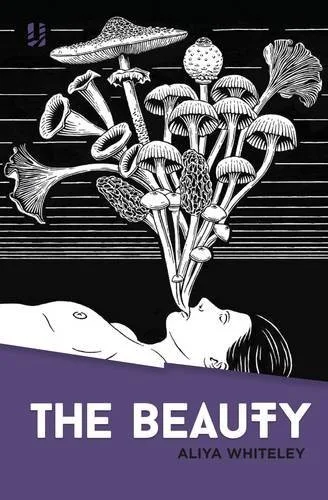
The Beauty
 81
81

The Beauty
Aliya Whiteley’s The Beauty presents a stark, almost crystalline examination of perception. Its strength lies in its unflinching commitment to an abstract, almost deconstructed form, mirroring the fractured nature of consciousness it seeks to portray. The book excels when it focuses on the subtle shifts in internal landscape, such as the passage describing the peculiar allure of decay. However, the deliberate sparseness, while thematic, can occasionally drift into a self-conscious minimalism that might alienate readers seeking more grounded anchors. The narrative’s resistance to conventional meaning-making is its most potent, and potentially most frustrating, characteristic. Ultimately, The Beauty is a challenging but rewarding text for those attuned to its unique frequency.
📝 Description
81
Aliya Whiteley's 2024 book, The Beauty, is a fragmented exploration of perception and subjective reality.
Published in 2024, The Beauty eschews traditional narrative arcs. Instead, Aliya Whiteley structures the work as a series of impressions and conceptual investigations. The text does not present a linear plot but invites readers into a more atmospheric and philosophical engagement with its themes.
This book is for those who find value in literary ambiguity and welcome prose that emphasizes mood and inquiry over explicit storytelling. Readers interested in the workings of the mind and the subjective experience of consciousness will connect with Whiteley's approach. Those expecting a conventional plot structure might find the narrative elusive.
Emerging in 2024, The Beauty aligns with a contemporary literary current that revisits speculative fiction and introspective essays. It echoes the tradition of authors like Ursula K. Le Guin, who often wove genre elements with significant social and philosophical commentary. Whiteley's unique voice offers a modern interpretation of this lineage, focusing on the internal processing of aesthetic and emotional experiences.
💡 Why Read This Book?
• Gain a nuanced understanding of subjective beauty, as explored through the book's focus on the perception of decay, a concept central to its philosophical underpinnings. • Experience a literary style that actively deconstructs narrative, offering a fresh perspective on how stories can be told beyond traditional plot structures, echoing experimental fiction of the late 20th century. • Explore the psychological impact of external stimuli, particularly how the environment shapes internal states, a theme Whiteley examines through evocative, impressionistic prose.
⭐ Reader Reviews
Honest opinions from readers who have explored this book.
❓ Frequently Asked Questions
What is the primary focus of Aliya Whiteley's 'The Beauty'?
The Beauty primarily focuses on the subjective nature of perception and the internal experience of beauty. It explores how individuals process and interpret their surroundings, often leading to unique and fragmented realities.
When was 'The Beauty' first published?
Aliya Whiteley's 'The Beauty' was first published in 2024, positioning it as a contemporary work engaging with modern literary and philosophical currents.
Does 'The Beauty' have a traditional plot structure?
No, 'The Beauty' eschews a traditional plot structure. Instead, it offers a series of impressions, atmospheric explorations, and conceptual inquiries, prioritizing thematic depth over linear narrative progression.
What kind of reader would appreciate 'The Beauty'?
Readers who enjoy experimental literature, psychological introspection, and prose that emphasizes atmosphere and philosophical exploration over conventional storytelling will find 'The Beauty' particularly rewarding.
Are there specific literary movements or authors that influenced 'The Beauty'?
While not explicitly stated, the book's experimental form and introspective focus align with contemporary trends in speculative fiction and echo the thematic depth found in authors like Ursula K. Le Guin.
What are the main themes explored in 'The Beauty'?
The main themes revolve around the nature of beauty, the subjectivity of experience, the psychological impact of the environment, and the construction of individual reality through perception.
🔮 Key Themes & Symbolism
Subjective Perception
The core of The Beauty lies in its investigation of how individual consciousness shapes reality. It examines the internal processing of external stimuli, positing that beauty is not an inherent quality but a construct of the observer. This is evident in the text's fragmented style, which mirrors the often disjointed nature of subjective experience, challenging the notion of a singular, objective truth and emphasizing the personal filters through which the world is perceived.
The Aesthetics of Decay
A recurring motif is the exploration of beauty found in overlooked or conventionally unattractive aspects of existence, such as decay. This theme challenges traditional aesthetic values, suggesting that profound beauty can be discovered in ruin, entropy, and the ephemeral. The text invites readers to reconsider their relationship with the transient nature of things, finding a unique aesthetic appeal in what is often associated with decline or loss.
Internal Landscapes
Whiteley crafts a narrative that prioritizes the inner world over external events. The book delves into the psychological states and emotional resonances that arise from an individual's interaction with their environment. It’s an exploration of how memory, feeling, and thought coalesce to form a unique interior landscape, often more potent and real to the individual than any external reality.
Fragmented Reality
The Beauty employs a deliberately fragmented structure to represent the often non-linear and incomplete nature of human experience and memory. This stylistic choice underscores the idea that reality itself is not a solid, unified entity but a mosaic of perceptions, sensations, and recollections. The work suggests that understanding comes not from a coherent whole, but from piecing together these disparate fragments.
💬 Memorable Quotes
“The light caught the dust motes, each a universe.”
— This line encapsulates the book's focus on finding significance in the minute and overlooked. It suggests that even the smallest, most ephemeral elements of existence contain profound depth and complexity, mirroring the larger theme of subjective perception revealing hidden worlds.
“She saw beauty in the slow unraveling.”
— This directly addresses the theme of finding aesthetic value in processes of decay and entropy. It challenges conventional notions of beauty, implying that a profound and unique appreciation can be found in the natural progression of decline and dissolution.
“The city was a pattern of absences.”
— This interpretation of an urban environment highlights how what is *not* present can be as significant as what is. It speaks to the subjective nature of observation, where meaning is often derived from voids and unfulfilled potentials rather than concrete presences.
“Each memory was a separate island.”
— This metaphor emphasizes the isolated and distinct nature of individual memories. It supports the broader theme of fragmented reality, suggesting that our past is not a continuous narrative but a collection of discrete experiences, each existing independently.
“The silence held a particular shape.”
— This evokes a sensory experience of an abstract concept. It suggests that even intangible elements like silence can possess a perceived form or quality, reinforcing the idea that our internal experience imbues the world with specific, often unique, characteristics.
🌙 Esoteric Significance
Tradition
While not overtly tied to a specific historical esoteric tradition like Hermeticism or Gnosticism, The Beauty engages with concepts that resonate with esoteric thought. Its focus on subjective perception and the construction of reality aligns with certain mystical philosophies that emphasize the mind's role in manifesting experience. The work can be seen as a contemporary exploration of the idea that the external world is a projection of the internal state, a concept present in various spiritual traditions.
Symbolism
The recurring motif of decay, for instance, can be interpreted esoterically as a symbol of transformation and the shedding of the old to make way for the new, echoing alchemical processes of dissolution and regeneration. Dust motes, often depicted as carrying universes, symbolize the infinite potential and hidden complexity within the seemingly mundane, a core tenet in many esoteric paths that seek the divine in the everyday.
Modern Relevance
Contemporary thinkers exploring consciousness studies, phenomenology, and speculative fiction often grapple with similar themes of subjective reality and the nature of perception. The Beauty’s approach to fragmented narrative and its focus on internal experience offer a literary parallel to modern psychological and philosophical inquiries into the self and its relationship with the external world.
👥 Who Should Read This Book
• Readers interested in experimental literature who seek to explore narratives that challenge conventional structures and prioritize thematic depth. • Individuals fascinated by philosophy of mind and phenomenology, looking for literary explorations of subjective experience and the construction of reality. • Those drawn to introspective works that examine beauty, decay, and the psychological impact of the environment on the individual psyche.
📜 Historical Context
Published in 2024, The Beauty arrives in an era where experimental literary forms and introspective narratives have found a significant audience, a trend perhaps influenced by the enduring legacy of authors like Italo Calvino. Whiteley's work engages with a contemporary literary landscape that values ambiguity and a departure from traditional storytelling. It follows a lineage of authors who have explored the subjective experience of reality, but it does so with a distinct, modern sensibility. The book's conceptual depth and stylistic choices position it within ongoing discussions about postmodernism's influence on contemporary fiction, particularly its questioning of grand narratives and emphasis on fragmented perspectives. Its reception is likely to be within circles that appreciate challenging prose and philosophical inquiry.
📔 Journal Prompts
The city as a pattern of absences: What voids shape your personal landscape?
Reflect on the beauty found in the slow unraveling of something familiar.
Consider the dust motes as universes: What overlooked details in your environment hold hidden significance?
Explore the concept of memories as separate islands. How do these islands connect or remain distinct?
Analyze the particular shape held by a silence you have experienced.
🗂️ Glossary
Subjective Perception
The philosophical concept that reality is perceived and interpreted through the individual's unique consciousness, senses, and experiences, rather than existing as an objective, external entity.
Aesthetics of Decay
An artistic and philosophical appreciation for the beauty found in processes of decay, entropy, ruin, and transience, challenging conventional standards of beauty.
Internal Landscapes
The complex inner world of an individual, encompassing thoughts, emotions, memories, and psychological states that shape their perception and experience of reality.
Fragmented Narrative
A literary technique characterized by a non-linear, disjointed, or incomplete storyline, often used to reflect the complexities of memory, consciousness, or a fractured reality.
Phenomenology
A philosophical approach that focuses on the study of consciousness and the objects of direct experience, emphasizing subjective experience as the starting point for understanding reality.
Entropy
In a general sense, the tendency of systems to move towards disorder and randomness; in literature, it can symbolize decline, chaos, or the natural processes of change.
Absences
In a literary context, refers to the significance found in what is missing or unstated within a narrative or description, shaping meaning through voids.