The beast in him

 80
80

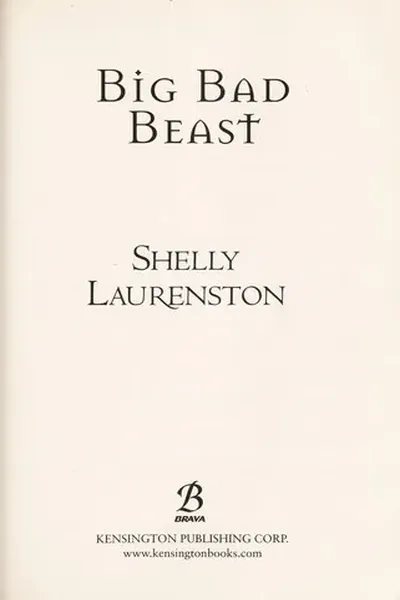
The beast in him
Laurenston's "The Beast in Him" presents a compelling if occasionally uneven exploration of internal conflict. The author excels at portraying the visceral struggle of characters battling their own primal instincts, a strength evident in the raw depiction of the protagonist's internal turmoil. However, the narrative sometimes falters in its pacing, particularly in the mid-section, where the external plot occasionally overshadows the crucial internal character development. A notable passage that exemplifies the book's strength is the scene where the protagonist confronts their reflection, seeing not a monster but a raw, unvarnished truth of their being. This moment captures the essence of the book's thematic core. While it doesn't reinvent the genre, "The Beast in Him" offers a potent character study for those drawn to the psychological dimensions of dark fantasy.
📝 Description
80
### What It Is "The Beast in Him" is a work that explores the primal urges and the societal constraints placed upon them. It examines the internal conflict between instinctual desires, often viewed as monstrous or untamed, and the demands of civilization. The narrative delves into how individuals grapple with these inherent drives, particularly when they manifest in ways that disrupt established norms.
### Who It's For This book is for readers interested in the psychological underpinnings of behavior and the exploration of the darker aspects of the human psyche. It appeals to those who question societal definitions of normalcy and are intrigued by characters wrestling with their own perceived monstrosity. It’s for individuals who appreciate narratives that confront taboo subjects with unflinching honesty.
### Historical Context Published in 2008, "The Beast in Him" emerged during a period where popular literature was increasingly engaging with supernatural and dark fantasy elements, often within the paranormal romance genre. This era saw authors like Laurell K. Hamilton and Charlaine Harris popularizing complex urban fantasy narratives. Laurenston's work contributes to this landscape by focusing on the internal, psychological "beast" rather than solely external monsters.
### Key Concepts The work centers on the concept of the "beast" as an internal metaphor for suppressed desires, uncontrolled impulses, and the inherent wildness within human beings. It questions whether this "beast" is inherently evil or simply a misunderstood aspect of existence. The narrative also touches upon themes of identity, self-acceptance, and the struggle to reconcile one's true nature with the roles society expects one to play. The duality of human nature is a persistent motif.
💡 Why Read This Book?
• Understand the psychological weight of suppressed desires, a core element explored through the protagonist's internal battle, offering a unique perspective on the 'beast within' metaphor. • Engage with the concept of primal urges versus societal conditioning, providing specific narrative examples that challenge conventional notions of monstrousness. • Experience a character-driven narrative that dissects identity and self-acceptance, particularly how the protagonist navigates their perceived wildness in the context of their 2008 publication.
⭐ Reader Reviews
Honest opinions from readers who have explored this book.
❓ Frequently Asked Questions
What is the primary theme of "The Beast in Him" by Shelly Laurenston?
The primary theme is the internal conflict between primal, instinctual urges, often symbolized as a 'beast,' and the constraints of societal norms and personal identity. It examines the struggle for self-acceptance when one's nature is perceived as wild or untamed.
When was "The Beast in Him" first published?
"The Beast in Him" was first published in 2008. This places it within a period of significant growth in paranormal and urban fantasy literature.
Does "The Beast in Him" involve supernatural elements?
While not explicitly detailing traditional mythical creatures, the book explores the concept of an internal 'beast,' representing primal instincts and wildness. This metaphorical approach aligns with supernatural and dark fantasy themes prevalent around its 2008 publication.
What kind of characters can I expect in "The Beast in Him"?
Readers can expect characters grappling with intense internal struggles, particularly those who feel their true nature is at odds with societal expectations. They often confront their own perceived monstrosity and the consequences of their urges.
Is "The Beast in Him" part of a series?
Yes, "The Beast in Him" is part of Shelly Laurenston's 'The Fury Series,' which often features complex characters dealing with their inherent natures and relationships.
What is the writing style of Shelly Laurenston in "The Beast in Him"?
Laurenston's style in "The Beast in Him" is characterized by its directness and focus on character psychology. It delves into the emotional and visceral experiences of her characters, often with a gritty, realistic portrayal of internal conflict.
🔮 Key Themes & Symbolism
The Internal Beast Metaphor
The central concept of the 'beast within' serves as a powerful metaphor for the untamed, instinctual aspects of human nature. This isn't necessarily a literal monster but the embodiment of suppressed desires, primal urges, and raw emotional power. The work explores how individuals perceive and interact with this inner wildness, questioning whether it is an inherent flaw or a vital part of one's identity. The narrative often depicts the struggle to control or integrate this 'beast,' highlighting the psychological toll and the potential for self-destruction or self-discovery.
Identity and Societal Masks
A significant theme is the conflict between an individual's authentic self and the persona they present to the world. Characters in "The Beast in Him" often feel alienated, believing their true nature is unacceptable to society. This leads to a profound exploration of identity, self-worth, and the pressure to conform. The book examines the masks people wear and the internal cost of hiding one's true self, questioning the validity of societal definitions of 'normalcy' versus personal truth.
Primal Urges vs. Restraint
The narrative directly confronts the tension between instinctual drives and the need for self-control and social order. It delves into the consequences of unchecked urges, often leading to chaos or personal suffering, but also questions the suppression of these drives. The work probes the nature of desire, aggression, and passion, suggesting that these forces, when understood and managed, can be powerful aspects of existence rather than purely destructive ones.
Acceptance of the Shadow Self
Related to the 'beast' concept, this theme focuses on the journey toward accepting the less desirable or 'darker' aspects of oneself. The book suggests that true integration and peace come not from eradicating these shadow elements but from acknowledging and understanding them. It challenges readers to consider their own 'shadow selves' and the potential for growth that lies in confronting rather than denying these hidden parts of their psyche.
💬 Memorable Quotes
“The beast in him wasn't a separate entity, but a deep, resonant hum of what he was when the world wasn't watching.”
— This interpretation suggests the 'beast' is not an external force or a distinct personality, but rather the fundamental, instinctual core of the individual that emerges when societal pressures are removed. It implies a natural, inherent wildness rather than an aberration.
“He fought the urge to let the wildness take over, knowing the cost would be more than just his reputation.”
— This highlights the internal battle between instinct and control. The 'wildness' represents primal desires or impulses, and the character understands that succumbing to them will incur significant personal consequences, extending beyond mere social disapproval.
“Society built cages for creatures like him, but the bars were always too weak to hold the true spirit.”
— This speaks to the inherent, uncontainable nature of the 'beast' or true self. It suggests that external structures and societal rules are ultimately insufficient to suppress or imprison the fundamental essence of an individual, implying an inevitable struggle or eventual breaking free.
“The reflection staring back was a stranger, yet terrifyingly familiar – the monster he refused to name.”
— This captures the moment of confrontation with the self, where the character sees their own repressed or feared aspects. The 'monster' is a projection of their inner turmoil and the parts of themselves they have actively denied or avoided acknowledging.
“Sometimes, the only way to tame the beast was to understand where it came from.”
— This proposes a path to managing or integrating difficult inner aspects. Instead of pure suppression, the emphasis is on comprehension and insight as the key to mastering one's primal urges or perceived flaws.
🌙 Esoteric Significance
Tradition
While "The Beast in Him" is primarily a work of contemporary fiction, its exploration of the 'beast within' can be loosely connected to ancient concepts of the shadow self found in Jungian psychology, which itself draws from Gnostic and Hermetic ideas about the duality of human nature. The narrative's focus on primal urges and the struggle for integration echoes Gnostic themes of the material world as a prison and the divine spark within the individual needing liberation from internal and external constraints.
Symbolism
The central symbol is the 'beast,' representing primal instincts, uncontrolled desire, or the shadow self. Its manifestation can symbolize repressed trauma, untamed passion, or the raw, untamed aspect of the psyche. Another motif is the idea of 'cages' or societal structures, symbolizing the external and internal limitations placed upon the individual's true nature, contrasting with the spirit's desire for freedom.
Modern Relevance
Contemporary readers interested in self-help and personal development, particularly those exploring shadow work or integrating primal energies, find resonance in Laurenston's work. Thinkers and practitioners within modern paganism, witchcraft, and certain schools of depth psychology continue to engage with narratives that explore the wildness within and the process of self-acceptance, seeing such stories as allegorical guides to understanding the multifaceted human psyche.
👥 Who Should Read This Book
• Readers interested in psychological explorations of dark fantasy and paranormal romance themes, particularly those drawn to the "beast within" metaphor and its implications. • Individuals seeking narratives that challenge societal norms around behavior and identity, offering characters who grapple with their primal urges and the concept of self-acceptance. • Fans of Shelly Laurenston's "The Fury Series" looking to deepen their understanding of the characters' internal conflicts and the thematic underpinnings of the series, especially concerning identity post-2008.
📜 Historical Context
Published in 2008, "The Beast in Him" arrived during a flourishing period for paranormal romance and urban fantasy. Authors like Charlaine Harris with her 'Southern Vampire Mysteries' and Laurell K. Hamilton were dominating bestseller lists, creating a robust market for supernatural-themed narratives. Laurenston's contribution fits within this trend, focusing on internal psychological conflict rather than external monster-of-the-week plots. The early 2000s saw a cultural fascination with the 'darker' aspects of romance and fantasy, with an increasing exploration of anti-heroes and morally ambiguous characters. While not directly engaging with academic discourse, the book tapped into a broader cultural conversation about identity, control, and the primal versus the civilized, mirroring themes explored in contemporary psychological thrillers and darker fantasy.
📔 Journal Prompts
The beast's resonance: Reflect on the primal urges the protagonist grapples with.
Societal cages: Consider the external pressures that attempt to confine the 'beast' in the narrative.
Integration of self: Explore how the protagonist's journey might lead to accepting their inner wildness.
The unnamed monster: Identify the aspects of the self that are often refused acknowledgment.
Cost of wildness: Analyze the consequences of succumbing to or suppressing primal instincts as depicted in the book.
🗂️ Glossary
The Beast
A metaphorical representation of primal instincts, untamed desires, raw aggression, or the 'shadow self' within an individual. It signifies the part of a person that is wild, instinctual, and often suppressed by societal norms or personal control.
Primal Urges
Fundamental, instinctual drives and impulses that are inherent to living beings, such as aggression, desire, fear, and the drive for survival. These are often contrasted with learned behaviors or societal expectations.
Societal Norms
The accepted behaviors, customs, and beliefs that are expected within a particular society or group. These often act as constraints on individual behavior, particularly on primal urges.
Shadow Self
A concept, particularly in Jungian psychology, referring to the unconscious aspects of the personality that the conscious ego does not identify in itself. It is often seen as the source of primal instincts and repressed desires.
Integration
In a psychological context, the process of bringing together different aspects of the personality, including the conscious and unconscious, the rational and the instinctual, into a cohesive whole.
Identity
The distinct personality of an individual, comprising their character, beliefs, values, and sense of self. The book explores how identity is shaped by internal nature and external pressures.
Wildness
The state of being untamed, uncontrolled, or natural. In the context of the book, it refers to the inherent, instinctual nature of a character that resists societal constraints.