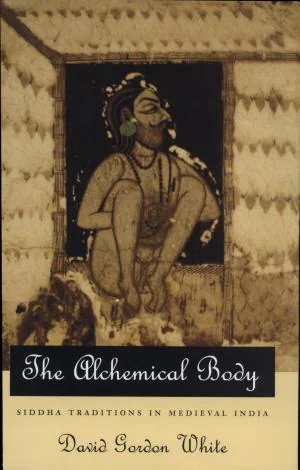
The Alchemical Body
 72
72

The Alchemical Body
David Gordon White's "The Alchemical Body" offers a rigorous academic examination of an often-overlooked aspect of Indian mysticism: the pursuit of physical immortality through the Siddha traditions. The book's strength lies in its detailed historical reconstruction and its willingness to engage with the more materialist, even visceral, aspects of these practices. White compellingly argues that for certain Indian mystics, the body was not merely a vessel for the soul but a project for alchemical transformation. A point of contention might be the book's dense academic prose, which, while precise, can occasionally obscure the sheer strangeness and power of the subject matter. For instance, White's discussion of the Siddhas' use of bodily substances in their alchemical formulas, while crucial, is presented with a scholarly detachment that might leave some readers wanting a more visceral connection to the practitioners' intent. Despite this, the work provides an indispensable foundation for understanding a significant, albeit peculiar, current within Indian esoteric thought.
📝 Description
72
### The Immortality Quest of the Siddhas David Gordon White's "The Alchemical Body," first published in 1996, meticulously traces the development of Indian mystical traditions focused on achieving physical immortality. Beginning around the 5th century A.D., various ascetics, who later adopted the title Siddhas, began experimenting with potent yogic and alchemical techniques. These practices aimed not at spiritual liberation in the conventional sense, but at the corporeal transformation and indefinite prolongation of life.
### Emergence of Specialized Orders Over several centuries, these Siddhas coalesced into distinct orders, each refining its unique methods for corporeal transformation. The work details the emergence of three primary Hindu Siddha lineages, each with its own specialized corpus of practices. These groups, often operating on the fringes of mainstream religious society, developed sophisticated systems of internal alchemy and ritual, drawing on a complex interplay of Tantric, yogic, and Ayurvedic principles.
### Historical and Philosophical Underpinnings White situates the Siddha movement within the broader landscape of Indian religious history, examining its relationship with more orthodox Brahmanical traditions and the burgeoning influence of Tantra. The book highlights how these mystics reinterpreted concepts of purity, sacrifice, and the divine body, often through a lens of material transformation rather than solely spiritual transcendence. The goal was not to shed the body, but to perfect and immortalize it.
### Core Concepts and Practices The "alchemical body" itself is presented as a complex symbol and a tangible goal. It refers to a transformed physical form, often imbued with supernatural qualities, achieved through arduous asceticism, ritual, and the manipulation of subtle energies. White explores the underlying philosophies that justified such radical bodily manipulation, including ideas about the body as a microcosm and the potential for alchemical processes to replicate cosmic creation within the self.
💡 Why Read This Book?
• You will learn about the specific yogic and alchemical techniques developed by the Siddhas, such as internal alchemy and subtle energy manipulation, as detailed by White's analysis of practices originating around the 5th century A.D. • You will gain a nuanced understanding of the historical context for these practices, differentiating them from mainstream Indian religious thought and tracing the emergence of three distinct Hindu Siddha orders. • You will explore the philosophical underpinnings of the Siddha quest for immortality, understanding how they viewed the body as a material substance to be perfected and perpetuated, rather than discarded.
⭐ Reader Reviews
Honest opinions from readers who have explored this book.
❓ Frequently Asked Questions
What is the historical period covered by 'The Alchemical Body'?
The book primarily focuses on the period beginning in the 5th century A.D. and extends for the next five to eight hundred years, detailing the rise and practices of various Indian Siddha orders.
Who were the Siddhas mentioned in the book?
The Siddhas were Indian mystics and ascetics who developed techniques for achieving physical immortality. The term was formerly reserved for demigods revered in Hindu and Buddhist traditions.
What does 'the alchemical body' refer to in David Gordon White's work?
It refers to a transformed physical form, perfected and immortalized through rigorous yogic and alchemical practices. It signifies a goal of corporeal transformation rather than spiritual transcendence alone.
What distinguishes the Siddha path from other Indian mystical traditions?
The Siddha path, as explored by White, emphasizes the indefinite prolongation and perfection of the physical body through material and energetic manipulation, diverging from traditions solely focused on spiritual liberation or renunciation.
Does the book discuss specific alchemical substances used by the Siddhas?
Yes, the work examines the Siddhas' use of internal alchemy and various substances, often derived from the body itself, as part of their complex methods for achieving immortality and transformation.
What is the academic discipline of David Gordon White's approach?
David Gordon White is a scholar of religious studies, specializing in Indian religions, Tantra, and esoteric traditions. His approach in 'The Alchemical Body' is historical and analytical.
🔮 Key Themes & Symbolism
The Immortal Body
The central theme is the Siddhas' pursuit of physical immortality, not as a metaphor for spiritual transcendence, but as a tangible, achievable state through alchemical and yogic practices. This involved transforming the existing physical form into a perfected, enduring vessel, often imbuing it with supernatural attributes and extending its lifespan indefinitely. This radical focus on corporeal permanence distinguishes the Siddha tradition from many other Indian ascetic movements.
Internal Alchemy
The work delves into the sophisticated practices of internal alchemy employed by the Siddhas. These techniques involved manipulating subtle energies within the body, often utilizing bodily fluids and processes as alchemical reagents. The goal was to transmute the practitioner's physical constitution, purify it, and render it resistant to decay and death, essentially creating a divine or semi-divine physical form.
Siddha Lineages
White meticulously details the historical emergence and divergence of three primary Hindu Siddha orders. Each lineage developed its own specialized body of techniques, philosophical justifications, and ritualistic practices aimed at achieving immortality. Understanding these distinct groups provides a nuanced view of the Siddha movement's internal diversity and evolution over centuries.
Body as Microcosm
A key philosophical concept explored is the notion of the body as a microcosm, reflecting the macrocosmic universe. The Siddhas believed that by mastering and transforming their own physical and energetic systems, they could achieve a form of cosmic mastery. This perspective justified their intense focus on bodily manipulation as a path to divine or semi-divine status.
💬 Memorable Quotes
“Siddhas began to innovate a body of techniques with which to render themselves immortal.”
— This foundational statement encapsulates the book's core subject: the active, technical pursuit of an extended, imperishable physical existence by specific groups of Indian mystics.
“These people called themselves Siddhas, a term formerly reserved for a class of demigods.”
— This highlights the aspirational and perhaps self-aggrandizing nature of the Siddhas, positioning themselves as possessing divine powers and seeking to attain a status akin to celestial beings through their practices.
“Over the following five to eight hundred years, three types of Hindu Siddha orders emerged.”
— This historical marker indicates the significant temporal scope and the structured development of the Siddha movement, emphasizing the formation of distinct schools and traditions over a long period.
“Each with its own specialized body of practice.”
— This phrase underscores the diversity within the Siddha movement, pointing to the unique methodologies and secret traditions that characterized each emerging order, requiring dedicated study to understand.
“The goal was not spiritual liberation in the conventional sense, but corporeal transformation and indefinite prolongation of life.”
— This interpretation clarifies a crucial distinction: the Siddhas' primary objective was the physical body's perfection and longevity, differing from ascetic traditions focused solely on escaping the cycle of rebirth.
🌙 Esoteric Significance
Tradition
The work falls within the academic study of Indian esoteric traditions, particularly Tantra and Hatha Yoga, which form the bedrock of Siddha practices. It departs from purely devotional or philosophical interpretations by focusing on the material and alchemical dimensions of these traditions. White's analysis emphasizes how Siddhas integrated yogic techniques with alchemical processes, creating a unique path focused on corporeal perfection and immortality.
Symbolism
Key symbols include the "alchemical body" itself, representing a perfected, immortal physical form achieved through internal transmutation. The use of bodily substances and fluids as alchemical reagents symbolizes the practitioner's willingness to engage with the grossest aspects of existence to achieve transcendence. The concept of the body as a microcosm, mirroring the cosmos, is also central, suggesting that mastery over the self leads to mastery over the universe.
Modern Relevance
Contemporary practitioners and scholars of Tantra, Yoga, and esoteric studies draw on White's work to understand the historical roots of practices related to energetic bodywork, subtle physiology, and advanced yogic disciplines. Thinkers exploring transhumanism or radical life extension might find historical parallels in the Siddhas' intense focus on biological immortality. The book continues to inform discussions on the material aspects of spiritual transformation.
👥 Who Should Read This Book
• Scholars of religious studies and comparative mysticism seeking a detailed historical account of Indian esoteric traditions focused on physical immortality. • Practitioners of Tantra and advanced Yoga interested in understanding the historical development and specific alchemical techniques of the Siddha orders. • Students of esoteric sciences interested in non-Western approaches to bodily transformation, longevity, and the manipulation of subtle energies.
📜 Historical Context
Published in 1996, David Gordon White's "The Alchemical Body" emerged during a period of increasing academic interest in the esoteric and marginalized traditions of South Asia. It engaged with scholarship on Tantra, Yoga, and Indian alchemy, often challenging more idealistic interpretations of these practices. The book situated the Siddha movement within a complex religious landscape, interacting with and sometimes diverging from orthodox Brahmanical traditions and popular devotional cults. While not a mainstream bestseller, it quickly became a reference point for scholars of religious studies and comparative mysticism, particularly those interested in the material dimensions of spiritual practice. Its detailed exploration of Siddha methods offered a counterpoint to contemporaneous Western esoteric movements, providing a rich, non-Western perspective on bodily transformation and longevity.
📔 Journal Prompts
The concept of the Siddhas' "alchemical body" as a project for perpetual existence.
Analysis of the three distinct Hindu Siddha orders and their unique practices.
The historical context of the Siddha movement beginning in the 5th century A.D.
Reflection on the Siddhas' reinterpretation of bodily purity and sacrifice.
The role of internal alchemy in achieving corporeal immortality.
🗂️ Glossary
Siddha
A class of accomplished mystics and ascetics in Indian traditions, particularly known for developing techniques aimed at achieving physical immortality and supernatural powers.
Internal Alchemy (Rasayana)
A set of practices within Indian traditions involving the use of bodily substances and subtle energies to purify, transform, and perfect the physical body, often with the goal of longevity or immortality.
Tantra
A complex body of esoteric traditions originating in India, characterized by ritual, meditation, and the use of the body and its energies as a means of spiritual realization.
Corporeal Transformation
The process of changing the physical body through specific practices, aiming to enhance its vitality, resilience, and lifespan, ultimately towards a state of immortality.
Microcosm
The philosophical concept that the human body or individual reflects the structure and principles of the larger universe (macrocosm).
Hatha Yoga
A branch of Yoga focusing on physical postures (asanas), breath control (pranayama), and purification techniques (shatkarmas) to prepare the body and mind for higher states of consciousness.
Demigod
In various mythologies, a being who is part divine and part human, or a lesser deity, often possessing extraordinary powers.