Teachings Of The Santera Gods The Spirit Of The Odu

 83
83

Teachings Of The Santera Gods The Spirit Of The Odu
Ócha'ni Lele’s "Teachings Of The Santera Gods" offers a structured entry into the profound cosmology of the Lukumi faith. The author’s methodical approach to the Odu, presenting them as both divination matrices and cosmic principles, is a significant contribution to accessible scholarship on this tradition. The strength lies in its clarity; it demystifies a complex system for the uninitiated without sacrificing the depth of the material. However, the book's primary limitation is its academic tone, which, while informative, can sometimes feel distant from the lived spiritual experience of practitioners. The section detailing the characteristics of Elegua, the messenger Orisha, provides a palpable sense of the deity's multifaceted nature, illustrating the text’s potential for vivid spiritual portraiture. It serves as a vital bridge between scholarship and practice, though it requires engagement from the reader to fully animate its teachings.
📝 Description
83
Ócha'ni Lele's 2010 work details the Orisha and Odu within the Lukumi tradition.
Teachings Of The Santera Gods The Spirit Of The Odu by Ócha'ni Lele offers a thorough look at the Orisha, the divine powers in the Lukumi tradition, often known as Santería. The book explains the Odu, which are cosmic laws and divination methods guiding existence and spiritual connections. It is a key text for understanding the complex worldview, the pantheon of deities, and the core philosophies of this Afro-Cuban religion.
The text explains how the Orisha act as links between people and Olodumare, the Supreme Being. It describes their unique traits, areas of influence, and associated stories. The Odu are central; they are more than just signs for divination; they represent universal forces and life's directions. Grasping the Odu is presented as vital for achieving spiritual harmony, direction, and foresight within the Lukumi system.
This book sits within the study of Afro-diasporic religions, specifically the Lukumi faith derived from Yoruba spiritual practices. It focuses on the Orisha, divine manifestations understood as intermediaries between humanity and the supreme creator. The Odu, the book's other major subject, are presented as cosmic principles and pathways of divination, crucial for understanding spiritual guidance and existence within this tradition. The work acknowledges the historical context of oral transmission and the modern effort to codify these teachings.
💡 Why Read This Book?
• Gain a foundational understanding of the Orisha and their roles within the Lukumi pantheon, moving beyond superficial portrayals to grasp their cosmic significance as presented in the text. • Learn about the Odu system, understanding them not just as divination tools but as cosmic laws governing spiritual and earthly existence, as detailed in the book's exposition. • Explore the historical and spiritual context of Afro-Cuban religions, appreciating the resilience and adaptation of Yoruba traditions in the diaspora, as touched upon in the 2010 publication context.
⭐ Reader Reviews
Honest opinions from readers who have explored this book.
❓ Frequently Asked Questions
What are the Odu in the context of Santería?
The Odu are the 256 principal "signs" or "paths" in Ifá divination, central to the Lukumi faith. They represent cosmic laws, life's challenges, and spiritual guidance, acting as a comprehensive system for understanding existence and fate.
Who is Ócha'ni Lele and what is his significance?
Ócha'ni Lele is the author of "Teachings Of The Santera Gods." His work is significant for its systematic presentation and accessibility of complex Lukumi spiritual principles, making this tradition more understandable to a broader audience.
How does this book relate to the Yoruba religion?
The book is deeply rooted in the Yoruba spiritual practices brought to the Americas. It explores the evolution and adaptation of these traditions within the Lukumi (Santería) faith, detailing deities and concepts that have parallels in West African cosmology.
What is the difference between Santería and Lukumi?
Lukumi is the name used by practitioners for the religion itself, derived from a West African language. Santería is a more widely known, sometimes pejorative, term that emerged during the syncretic period in Cuba, blending Yoruba deities with Catholic saints.
Is this book suitable for beginners in spiritual studies?
Yes, for those specifically interested in Afro-Caribbean religions and esoteric traditions, the book offers a structured introduction. However, prior familiarity with general religious studies or mythology might enhance comprehension of its specific concepts.
What is the role of the Orisha in this tradition?
The Orisha are divine manifestations or deities in the Lukumi pantheon, serving as intermediaries between humans and the supreme creator, Olodumare. Each Orisha governs specific aspects of life, nature, and human experience.
🔮 Key Themes & Symbolism
The Orisha Pantheon
This work meticulously details the pantheon of Orisha, the divine energies and personalities central to the Lukumi faith. It explores their individual characteristics, mythologies, and the specific domains of life and nature they govern. From Elegua, the opener of paths, to Oshun, the deity of love and rivers, the book maps out these powerful spiritual forces, presenting them not as abstract gods but as active participants in the cosmic order and human affairs. Understanding the Orisha is presented as fundamental to comprehending the Lukumi worldview.
The Odu as Cosmic Law
Central to the text is the concept of the Odu, the 256 divination signs that form the foundation of Ifá. Lele elaborates on how the Odu are far more than mere fortune-telling tools; they represent fundamental laws of the universe, archetypal life paths, and the complex interplay of destiny and free will. Each Odu carries specific teachings, proverbs, and rituals, offering guidance for navigating life's challenges and achieving spiritual balance. The book elucidates the profound philosophical implications embedded within each Odu sign.
Lukumi Cosmology and Ethics
The book offers a comprehensive overview of the Lukumi spiritual framework, rooted in Yoruba traditions. It outlines the relationship between Olodumare (the Supreme Being), the Orisha, and humanity, emphasizing a worldview where spiritual forces are intricately woven into the fabric of existence. Ethical considerations are implicitly and explicitly addressed through the wisdom contained within the Odu, guiding practitioners toward a life of balance, respect for the divine, and understanding of cosmic justice. The work serves as a gateway to this rich spiritual tradition.
Divination and Spiritual Guidance
A significant portion of the text is dedicated to the practice and philosophy of Ifá divination, mediated through the Odu. Lele explains how this sacred system provides a means for individuals to receive counsel from the spiritual realm, understand their life's purpose, and address obstacles. The book highlights the role of the Babalawo (father of secrets) or Iyanifa (mother of secrets) as interpreters of the Odu, facilitating communication between the human and divine. It underscores divination as a vital tool for spiritual growth and maintaining harmony.
💬 Memorable Quotes
Direct passages from the work, attributed to the author.
“The Odu are the laws of the universe.”
— This statement expresses the core philosophy of the Odu within the Lukumi tradition. It posits that these 256 paths are not merely signs for divination but fundamental principles that govern all existence, from the smallest particle to the grandest cosmic cycles.
“Each Orisha has a specific role and energy.”
— This highlights the organized nature of the Lukumi pantheon. It suggests that the divine forces represented by the Orisha are distinct and specialized, each influencing particular aspects of life, nature, and human endeavor, requiring understanding of their unique attributes.
“Ifá divination offers guidance for life's challenges.”
— This points to the practical application of the Odu system. It frames Ifá not just as a spiritual practice but as a functional methodology for problem-solving and working through the complexities of human experience with divine wisdom.
“Understanding the mythologies of the Orisha is key.”
— This emphasizes the importance of narrative in the Lukumi tradition. The stories (pataki) associated with each Orisha are seen as carriers of wisdom, ethical lessons, and explanations for the workings of the world.
“Balance is sought through adherence to cosmic order.”
— This reflects a core spiritual goal within the Lukumi faith. It suggests that spiritual well-being and harmony are achieved by aligning oneself with the principles and rhythms dictated by the Odu and the energies of the Orisha.
🌙 Esoteric Significance
Tradition
This work is firmly situated within the esoteric study of Afro-Caribbean religions, specifically the Lukumi tradition (often known as Santería), which is a direct descendant of the Yoruba spiritual system of West Africa. It departs from Western esoteric lineages like Hermeticism or Kabbalah by presenting a distinct cosmology and pantheon. However, like many esoteric systems, it emphasizes a structured understanding of divine forces, cosmic laws (the Odu), and pathways to spiritual enlightenment and balance.
Symbolism
Key symbols include the Orisha, who represent archetypal forces and natural phenomena (e.g., Oshun for rivers and love, Ogun for iron and labor). The Odu are paramount symbols, representing not just divination signs but the very structure of existence, fate, and divine law. Elekes (sacred beaded necklaces) are also significant, symbolizing the connection to specific Orisha and serving as protective amulets, visually representing the wearer's spiritual allegiance and protection.
Modern Relevance
Contemporary practitioners of Lukumi, scholars of African diaspora religions, and those exploring comparative spirituality draw significantly from works like this. It provides a foundational text for understanding the complex relationship between the Orisha, the Odu, and the practice of Ifá. Modern spiritual seekers interested in non-Western cosmologies and divinatory systems find its systematic approach valuable for comparative study and personal spiritual exploration.
👥 Who Should Read This Book
• Students of comparative religion and mythology interested in the specific cosmology and pantheon of the Lukumi faith, gaining a structured overview of Orisha and Odu principles. • Practitioners of Ifá or Lukumi seeking a reference text that systematically details the spiritual architecture and foundational concepts of their tradition, particularly concerning the Odu. • Esoteric researchers exploring African diaspora religions and their unique spiritual frameworks, benefiting from the detailed exposition of Yoruba-derived beliefs and practices.
📜 Historical Context
Published in 2010, Ócha'ni Lele's "Teachings Of The Santera Gods" emerged during a period of increasing academic and public interest in the diaspora religions stemming from West Africa. The Lukumi tradition, with its roots in the Yoruba spiritual system, faced historical challenges including suppression during colonial periods and subsequent syncretism with Catholicism in Cuba. The work stands as a modern attempt to codify and disseminate sacred knowledge that was historically transmitted orally, often within tight-knit communities. This effort contrasts with earlier, sometimes sensationalized, accounts of African-derived religions. While contemporaries like Maya Deren had explored Vodou and other traditions earlier, Lele's focus on the specific cosmology of Lukumi and the Odu provides a structured, detailed exploration that aims for clarity and depth, contributing to a growing body of literature seeking to present these traditions authentically.
📔 Journal Prompts
The role of Elegua as the opener of paths: how might this archetype manifest in daily decisions?
Reflect on the concept of the Odu as cosmic laws; identify one law you currently strive to embody.
Consider the distinct energies of two Orisha discussed; how do their domains intersect in human experience?
The relationship between Olodumare and the Orisha: what does this hierarchy suggest about divine order?
The ethics implied by the Odu: how can understanding fate inform present actions?
🗂️ Glossary
Orisha
Deities or divine forces within the Lukumi pantheon, originating from Yoruba spiritual traditions. Each Orisha governs specific aspects of nature, human life, and cosmic phenomena.
Odu
The 256 principal signs or paths used in Ifá divination. They represent cosmic laws, archetypal life patterns, and contain profound wisdom and guidance for practitioners.
Lukumi
The name used by practitioners for the Afro-Cuban religion derived from Yoruba traditions. It emphasizes the spiritual and cultural identity of its adherents.
Ifá
A complex divination system central to the Lukumi faith, based on the interpretation of the Odu. It is used to seek guidance, understand destiny, and resolve problems.
Olodumare
The supreme creator deity in Yoruba and Lukumi cosmology. Olodumare is considered the ultimate source of all existence, often seen as distant but all-powerful.
Pataki
Sacred stories or myths associated with the Orisha and the Odu. These narratives transmit wisdom, ethical teachings, and explain the origins of phenomena.
Babalawo
A priest in the Ifá divination system, also known as a 'father of secrets.' They are trained to interpret the Odu and guide supplicants.
🔮 Readers Also Liked
Browse all →









More by Ócha'ni Lele
All books →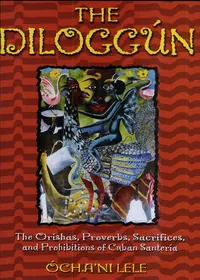





More Free Occult Philosophy Books
View all →