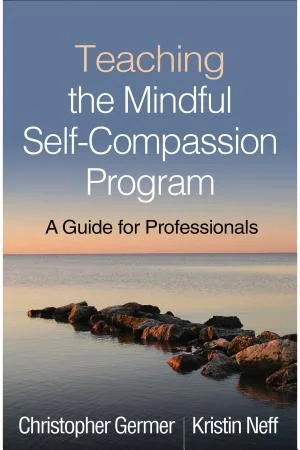
Teaching the Mindful Self-Compassion Program
 80
80

Teaching the Mindful Self-Compassion Program
Christopher Germer and Kristin Neff's "Teaching the Mindful Self-Compassion Program" functions as the definitive operational manual for a widely adopted therapeutic framework. The strength lies in its meticulous detail, guiding facilitators through every session, retreat day, and exercise with clear instructions and illustrative vignettes. One particularly effective section details how to address resistance to self-compassion, a common hurdle. However, the book's focus on pedagogy occasionally overshadows the deeper theoretical nuances that might benefit seasoned clinicians. While admirably practical, it sometimes feels more like a script than a guide to adaptive teaching. Ultimately, this is an indispensable, if somewhat dry, resource for anyone committed to delivering the MSC program effectively.
📝 Description
80
<p>### What the MSC Program Is</p><p>This volume offers a definitive framework for facilitating the Mindful Self-Compassion (MSC) program, a structured approach to emotional resilience. It details the curriculum for the core eight-session course and the intensive full-day retreat. The book elucidates the pedagogical underpinnings and theoretical foundations, drawing from empirical research and clinical practice. It serves as an operational manual, guiding instructors through each module with practical examples and detailed instructions.</p><p></p><p>### Who It's For</p><p>The intended audience includes mental health professionals, therapists, counselors, coaches, and educators seeking to integrate MSC principles into their practice. It is also valuable for individuals who have completed the MSC program and wish to deepen their understanding or potentially teach it themselves. The text assumes a foundational understanding of mindfulness and psychology, but provides sufficient detail for those new to facilitating group programs.</p><p></p><p>### Historical Context</p><p>Developed by Kristin Neff and Christopher Germer, the Mindful Self-Compassion program emerged in the early 21st century, building upon decades of research in mindfulness-based interventions and positive psychology. This book, first published in 2019, codifies the program's structure, which contrasts with earlier, less standardized approaches to teaching self-compassion. Its rise coincided with a growing academic and public interest in emotional regulation techniques, partly fueled by figures like Jon Kabat-Zinn's work on MBSR and a broader cultural shift towards mental wellness strategies.</p><p></p><p>### Key Concepts</p><p>The program centers on cultivating a balanced emotional response to suffering, characterized by kindness towards oneself (self-compassion), recognition of shared human experience (common humanity), and mindful awareness of difficult emotions (mindfulness). The book systematically presents exercises and guided meditations designed to foster these three core components. It emphasizes practical application, moving beyond theoretical understanding to embodied practice, enabling participants to develop an inner resource for navigating life's inevitable challenges.</p>
⭐ Reader Reviews
Honest opinions from readers who have explored this book.
❓ Frequently Asked Questions
What is the core difference between teaching Mindful Self-Compassion and other mindfulness programs?
The MSC program explicitly focuses on cultivating kindness and understanding towards oneself during times of suffering, integrating this with mindfulness and common humanity, whereas other mindfulness programs might focus solely on awareness without this specific compassionate orientation.
Who are the primary authors and developers of the Mindful Self-Compassion program?
The program was co-developed by Dr. Kristin Neff and Dr. Christopher Germer. Both are leading researchers and clinicians in the field of self-compassion.
What is the typical duration of the Mindful Self-Compassion program as taught from this guide?
The standard program consists of eight weekly sessions, typically lasting 2-2.5 hours each, often supplemented by a full-day retreat.
Does this book provide background research on self-compassion?
Yes, the book reviews relevant theory and research underpinning the Mindful Self-Compassion program, providing a foundation for understanding its effectiveness and principles.
What kind of practical tools does the book offer for facilitators?
It offers step-by-step guidance for facilitating each session, detailed exercises, guided meditations, and illustrative vignettes demonstrating how to teach the course effectively.
When was the first edition of 'Teaching the Mindful Self-Compassion Program' published?
The first edition of 'Teaching the Mindful Self-Compassion Program' was published on August 5, 2019.
🔮 Key Themes & Symbolism
Mindful Self-Kindness
This theme explores the core practice of meeting one's own suffering with warmth and understanding, rather than harsh self-criticism. The book details exercises designed to activate the mammalian caregiving system, fostering a sense of soothing and safety within. It moves beyond mere relaxation to actively cultivating an inner attitude of benevolent attention towards oneself, particularly during moments of perceived failure or inadequacy.
Common Humanity as Connection
This theme emphasizes the understanding that suffering, imperfection, and life's difficulties are universal human experiences. Rather than isolating individuals, recognizing this shared reality fosters a sense of belonging and connection. The program's pedagogy guides participants to see their struggles not as personal defects but as part of the collective human condition, thereby reducing feelings of isolation and shame.
Mindfulness of Difficult Emotions
Central to the MSC approach is the practice of acknowledging and being present with painful emotions without judgment or excessive reactivity. This theme involves learning techniques to observe feelings—such as sadness, anger, or fear—with balanced awareness. The goal is not to eliminate negative emotions but to change one's relationship to them, allowing for processing and integration rather than suppression or overwhelm.
Pedagogy of Compassion Training
This theme addresses the specific methods and principles for effectively teaching the MSC program. It outlines the structure of the sessions, the rationale behind each exercise, and guidance on facilitating group dynamics. The book emphasizes creating a safe and supportive learning environment where participants can practice new ways of relating to themselves and their experiences, moving from intellectual understanding to embodied change.
💬 Memorable Quotes
“The program’s unique pedagogy is designed to cultivate self-compassion in a way that is both experientially deep and accessible.”
— This statement highlights the intentional design of the MSC program, emphasizing that its teaching methods are crafted for profound personal impact while remaining easy to grasp and implement for participants.
“Vignettes illustrate not only how to teach the course but also how to respond to common participant challenges.”
— This signifies the practical, real-world focus of the manual, providing concrete examples of teaching scenarios and participant interactions to prepare instructors for diverse situations.
“MSC provides powerful tools for coping with life challenges and enhancing emotional well-being.”
— This encapsulates the fundamental benefit of the program: equipping individuals with practical strategies to navigate adversity and improve their overall emotional state.
“The course takes participants step by step through facilitating each of the eight sessions.”
— This emphasizes the structured and sequential nature of the MSC program, assuring facilitators that a clear, progressive path is laid out for delivering the curriculum.
“Relevant theory and research are reviewed to support the program’s methods.”
— This indicates that the program is grounded in evidence, providing instructors and participants with a solid understanding of the psychological principles behind the practices.
🌙 Esoteric Significance
Tradition
While not strictly adhering to a single ancient lineage, MSC draws heavily from Buddhist psychology, particularly concepts of loving-kindness (Metta) and equanimity. Its emphasis on cultivating inner resources for dealing with suffering aligns with contemplative practices aimed at transforming the mind. It represents a modern, secularized adaptation of these principles, making them accessible within a psychological framework rather than a religious one, thus bridging esoteric wisdom with contemporary therapeutic needs.
Symbolism
The primary symbolic act within MSC is the 'Self-Compassion Break,' a simple yet potent exercise. It symbolizes turning towards oneself with kindness during difficulty, akin to a mother comforting a child. The 'three components'—mindfulness, common humanity, and self-kindness—function as guiding principles or inner archetypes: the present, aware observer; the interconnected self within a larger community; and the nurturing, benevolent inner caregiver.
Modern Relevance
Contemporary thinkers and practitioners in positive psychology, acceptance and commitment therapy (ACT), and trauma-informed care increasingly integrate self-compassion principles. The work of Neff and Germer is frequently cited in research on emotional resilience, well-being, and therapeutic outcomes. Schools, workplaces, and healthcare systems are adopting MSC-informed approaches to foster healthier emotional environments and enhance coping mechanisms.
👥 Who Should Read This Book
['• Mental health professionals (therapists, counselors, psychologists) seeking to add a structured, evidence-based program for emotional regulation and resilience to their clinical toolkit.', '• Educators and coaches aiming to guide individuals in developing healthier self-attitudes and coping strategies for personal and professional challenges.', '• Individuals who have experienced the MSC program and wish to deepen their personal practice or explore the possibility of becoming facilitators.']
📜 Historical Context
The Mindful Self-Compassion (MSC) program emerged in the early 21st century, a period marked by increasing interest in evidence-based therapeutic interventions and the popularization of mindfulness. Co-developers Kristin Neff and Christopher Germer synthesized research from psychology, neuroscience, and contemplative traditions. This book, published in 2019, represents a formal codification of their work, building upon earlier mindfulness-based stress reduction (MBSR) and mindfulness-based cognitive therapy (MBCT) movements. While MBSR, pioneered by Jon Kabat-Zinn in the late 1970s, focused primarily on stress reduction through non-judgmental awareness, MSC explicitly adds the dimension of self-compassion, addressing emotional suffering more directly. The rise of MSC coincided with a broader cultural shift towards prioritizing mental wellness and emotional regulation techniques, moving such practices from niche contemplative circles into mainstream therapeutic and self-help domains.
📔 Journal Prompts
The practice of mindful self-kindness during moments of perceived failure.
Connecting personal struggles to the broader experience of common humanity.
Navigating difficult emotions through balanced, non-judgmental awareness.
The challenges and rewards of facilitating the MSC program's eight sessions.
Reflecting on the integration of mindfulness and self-compassion in daily life.
🗂️ Glossary
Mindfulness
The practice of paying attention in a particular way: on purpose, in the present moment, and non-judgmentally. It involves cultivating awareness of thoughts, feelings, bodily sensations, and the surrounding environment.
Self-Compassion
Treating oneself with the same kindness, care, and understanding that one would offer to a good friend, especially during times of suffering, failure, or inadequacy.
Common Humanity
The recognition that suffering, imperfection, and experiences of difficulty are part of the shared human condition, rather than isolating personal defects.
Mindful Self-Compassion (MSC) Program
A structured psycho-educational program developed by Kristin Neff and Christopher Germer, designed to teach participants how to develop greater self-compassion.
Vignettes
Short, illustrative stories or examples used within the teaching manual to demonstrate concepts, scenarios, and effective facilitation techniques.
Pedagogy
The method and practice of teaching, especially as an academic subject or theoretical concept. In MSC, it refers to the specific ways the program's content is delivered.
Emotional Well-being
A state of psychological health characterized by positive emotions, effective coping skills, resilience in the face of adversity, and a general sense of life satisfaction.