Talking to dragons

 82
82

Talking to dragons
Patricia C. Wrede's *Talking to Dragons* concludes the Enchanted Forest Chronicles with a mature, thoughtful narrative that feels less like a typical fantasy conclusion and more like a profound examination of societal constructs. The novel excels in its portrayal of Princess Cimorene’s continued growth, showcasing her pragmatic approach to ruling and her genuine attempts to bridge the gap between humans and dragons. A particularly effective moment is Cimorene’s diplomatic handling of the dragon council, where she uses logic and respect rather than force. However, the pacing occasionally falters in the middle sections, with some political machinations feeling slightly drawn out. Despite this minor quibble, the book offers a satisfying resolution that champions intelligence and empathy over brute strength. It’s a thoughtful end to a beloved series.
📝 Description
82
### What It Is Talking to Dragons, first published in 1985 by Patricia C. Wrede, is the concluding novel in her Enchanted Forest Chronicles. This work is often categorized within esoteric circles for its exploration of unconventional societal structures and the subversion of typical fantasy tropes. It presents a world where dragons are not merely beasts but intelligent beings with their own laws and customs, challenging the reader's preconceived notions of fantasy worlds and the nature of heroism.
### Who It's For This novel is particularly suited for readers who appreciate fantasy narratives that offer a deeper commentary on power, communication, and cultural understanding. It appeals to those who enjoy stories with strong, independent female protagonists who forge their own paths, rather than conforming to traditional roles. Readers interested in the deconstruction of fairy tale archetypes and the exploration of complex character motivations will find much to engage with.
### Historical Context Released in the mid-1980s, Talking to Dragons emerged during a period of evolving fantasy literature. While authors like Ursula K. Le Guin had already begun to explore more nuanced societal structures in fantasy, Wrede's approach offered a unique blend of accessible storytelling with a subtle critique of established hierarchies. The success of the Enchanted Forest Chronicles, including this final installment, demonstrated a growing audience appetite for fantasy that moved beyond simplistic good-versus-evil narratives.
### Key Concepts The book delves into the concept of 'civilized' versus 'barbarian' societies, questioning which label is truly applicable. It highlights the importance of communication and understanding between vastly different cultures, represented by humans and dragons. Furthermore, it explores the nature of magic not as a force to be wielded, but as an intrinsic part of the world, often misunderstood or feared by those who do not comprehend it. The narrative also touches upon the idea of self-determination and the right to choose one's own destiny, even against the expectations of powerful figures.
💡 Why Read This Book?
• Learn about pragmatic leadership by observing Princess Cimorene's diplomatic strategies with the dragons, demonstrating how to foster interspecies understanding. • Understand the subversion of classic fairy tale tropes, recognizing how *Talking to Dragons* reconfigures the 'princess' and 'dragon' archetypes established in earlier folklore. • Explore the concept of societal misrepresentation, grasping how the book challenges assumptions about 'civilized' versus 'wild' cultures through the human-dragon dynamic.
⭐ Reader Reviews
Honest opinions from readers who have explored this book.
❓ Frequently Asked Questions
Is Talking to Dragons suitable for young adults who have read the previous books in the series?
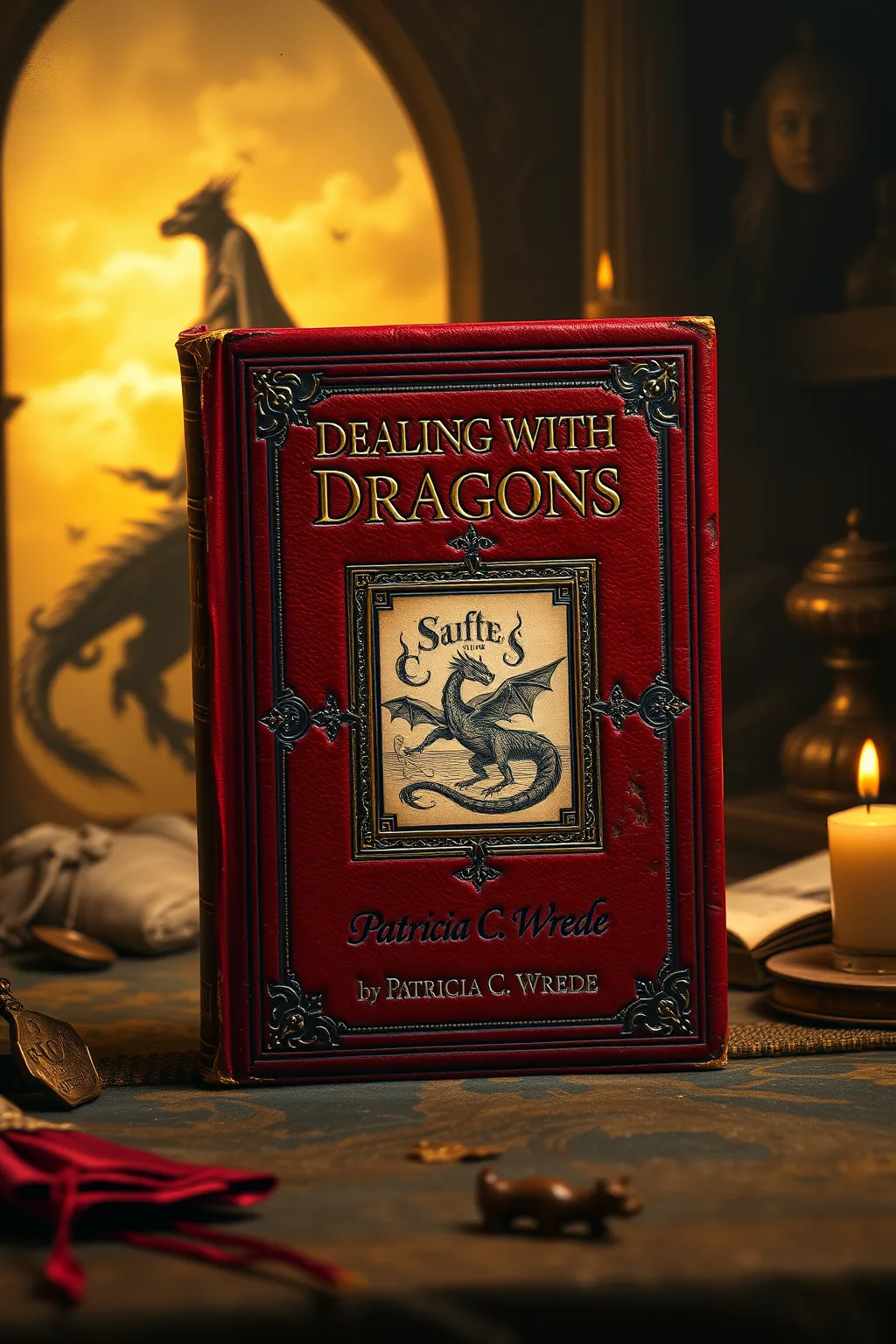
Absolutely. *Talking to Dragons*, published in 1985, provides a satisfying conclusion to the Enchanted Forest Chronicles, building on themes and characters established in earlier installments like *Dealing with Dragons*.
What makes the dragons in this book different from typical fantasy dragons?
The dragons in *Talking to Dragons* are depicted as intelligent, organized beings with their own laws and governance, akin to a sophisticated society, rather than mere beasts to be slain.
Does the book offer insights into diplomacy and negotiation?
Yes, Princess Cimorene frequently employs negotiation and diplomacy to resolve conflicts and establish understanding between humans and dragons, showcasing practical problem-solving skills.
Are there any specific magical systems or traditions explored in the book?
While not a traditional grimoire, the book explores magic as an inherent, often misunderstood, force within the world, particularly concerning the dragons' abilities and ancient enchantments.
How does this book address the concept of 'civilization'?
The novel critically examines what constitutes 'civilization' by presenting the dragons with a structured society and laws, prompting readers to question human assumptions about superiority.
What is the main theme of Patricia C. Wrede's Talking to Dragons?
A central theme is the importance of communication, understanding, and challenging preconceived notions between different cultures and species, as exemplified by Princess Cimorene's interactions.
🔮 Key Themes & Symbolism
Deconstructing Archetypes
Wrede actively dismantles traditional fantasy archetypes, particularly the damsel in distress and the monstrous dragon. Princess Cimorene is proactive, intelligent, and capable, while the dragons are presented as complex beings with established societies and laws. This subversion invites readers to reconsider established narratives and the binary thinking often present in folklore, suggesting that 'monsters' might simply be misunderstood or operate under different cultural frameworks. The work challenges the reader to look beyond superficial appearances and ingrained biases.
Interspecies Diplomacy
A significant focus is placed on the challenges and rewards of interspecies diplomacy. The novel illustrates how communication, mutual respect, and a willingness to understand different perspectives are crucial for resolving conflict between humans and dragons. Princess Cimorene's approach emphasizes negotiation and finding common ground, contrasting with more aggressive or fearful reactions. This theme underscores the idea that peaceful coexistence is achievable through genuine effort and open dialogue, even between beings with vastly different natures and histories.
Nature of Civilization
The book prompts a critical examination of what constitutes 'civilization.' By depicting the dragons as having a sophisticated social structure, laws, and customs, Wrede questions the human assumption of inherent superiority. The narrative implicitly asks whether true civilization lies in technological advancement, adherence to rigid rules, or the capacity for empathy and understanding. This theme encourages readers to reflect on their own societal norms and the potential biases embedded within them, suggesting that civilization is a fluid concept open to interpretation.
Self-Determination and Agency
Central to the narrative is the theme of self-determination. Princess Cimorene consistently seeks to control her own destiny, making choices that align with her values and aspirations rather than succumbing to external pressures or expectations. This is mirrored in the dragons' own desire for autonomy and the preservation of their way of life. The novel champions the idea that individuals and groups have the right to define themselves and pursue their own paths, even when those paths diverge from the norm or challenge established power structures.
💬 Memorable Quotes
“Princess Cimorene found that ruling was a great deal more complicated than she had imagined.”
— This observation highlights the gap between idealized expectations of leadership and the practical, often messy, realities of governance. It suggests that true leadership requires adaptability and a willingness to confront unforeseen complexities.
“The dragons were not beasts, but a people with laws, customs, and a long history.”
— This statement directly challenges the conventional fantasy trope of dragons as mindless monsters. It emphasizes their status as an intelligent, organized society deserving of respect and understanding, much like any human civilization.
“She learned that even the most dangerous creatures could be reasoned with, if one approached them correctly.”
— This paraphrased concept underscores the power of diplomacy and careful communication. It suggests that fear and aggression are often less effective than a thoughtful, respectful approach when dealing with perceived threats.
“The world was full of people who believed they knew what was best for everyone else.”
— This interpretation points to the pervasive nature of arrogance and the tendency for individuals or groups to impose their will or beliefs on others, a theme Cimorene actively confronts throughout her reign.
“Magic was not something to be feared, but a part of the world to be understood.”
— This sentiment reflects a more esoteric perspective on magic, viewing it not as an inherently dangerous or chaotic force, but as a natural element or principle that requires comprehension rather than simple acceptance or rejection.
🌙 Esoteric Significance
Tradition
While not explicitly aligned with a specific esoteric lineage such as Hermeticism or Gnosticism, *Talking to Dragons* shares thematic concerns with many such traditions. Its emphasis on understanding different 'races' or species, challenging anthropocentric views, and exploring the nature of authority and governance echoes Gnostic ideas of challenging false demiurges and seeking hidden knowledge. The dragons' ancient wisdom and connection to the land could also be seen as reflecting animistic or earth-based spiritual principles found in various folk traditions.
Symbolism
The dragons themselves serve as potent symbols. In many esoteric traditions, dragons represent primal forces, ancient wisdom, or the untamed subconscious. Here, Wrede recontextualizes them not as destructive beasts but as a structured society, symbolizing the potential for order and intelligence within the seemingly chaotic or alien. The concept of the 'King's Rules' for dragons can be seen as a symbolic representation of established cosmic or societal laws that govern existence, regardless of human comprehension.
Modern Relevance
Contemporary fantasy authors and readers interested in deconstructing tropes and exploring nuanced interspecies relationships draw inspiration from Wrede's work. Thinkers and practitioners exploring concepts of cultural relativism, non-violent communication, and challenging anthropocentrism find parallels in Cimorene's diplomatic approach. The novel's enduring appeal lies in its ability to foster critical thinking about societal structures and power dynamics, making it relevant to modern discussions on diversity, inclusion, and understanding the 'other.'
👥 Who Should Read This Book
• Young adult readers seeking fantasy narratives that challenge traditional gender roles and offer strong, independent female protagonists. • Fans of fairy tale retellings and deconstructions who appreciate clever subversions of classic tropes. • Readers interested in stories that explore themes of diplomacy, cultural understanding, and questioning societal norms through an accessible, engaging narrative.
📜 Historical Context
Patricia C. Wrede's *Talking to Dragons*, published in 1985, arrived at a moment when the fantasy genre was increasingly exploring more complex social and political themes, moving beyond the high fantasy epics of the preceding decades. Authors like Ursula K. Le Guin had already laid groundwork for nuanced world-building, but Wrede's approach offered a distinct, accessible critique of traditional power structures and fairy tale conventions. The Enchanted Forest Chronicles, of which this is the final book, gained significant traction, demonstrating a strong reader interest in narratives that subverted expectations. While not directly engaging with esoteric movements like Theosophy or Hermeticism in its content, the book's questioning of established norms and its portrayal of non-human intelligence resonated with readers seeking alternative perspectives often found in esoteric thought. Its reception was largely positive, contributing to a growing wave of feminist-influenced fantasy that empowered female protagonists and challenged patriarchal assumptions within the genre.
📔 Journal Prompts
The nature of dragon governance as presented in the book.
Princess Cimorene's methods for establishing communication with the dragons.
Reflect on the book's portrayal of 'civilization' versus 'wildness'.
The role of individual agency in challenging established expectations.
Consider the symbolic meaning of the dragons within the narrative's world.
🗂️ Glossary
Enchanted Forest Chronicles
The series of four books by Patricia C. Wrede, of which *Talking to Dragons* is the final installment, known for its humorous and subversive take on classic fairy tales.
Dragon Council
A governing body of dragons, depicted in the book as having established laws and procedures, reflecting a sophisticated societal structure rather than mere bestial instinct.
King's Rules
A set of laws or principles that govern the dragons' society, highlighting their organized nature and the importance of established order within their culture.
Subversion of Tropes
The literary technique of intentionally undermining or reinterpreting common narrative conventions, such as the damsel in distress or the evil dragon, as seen throughout the novel.
Anthropocentrism
The belief that human beings are the central or most significant entities in the universe. The book challenges this by presenting dragons as an equally valid, intelligent society.
Pragmatic Leadership
A leadership style focused on practical solutions and achievable goals, often involving negotiation and compromise, as demonstrated by Princess Cimorene's approach to ruling.
Cultural Relativism
The principle that an individual person's beliefs and activities should be understood by others in terms of that individual's own culture. The book implicitly encourages this view towards the dragons.