Taichi

 72
72

Taichi
Arthur T. Orawski's "Taichi" is a welcome addition for those who feel the common discourse on the subject lacks depth. While many texts address the physical mechanics or superficial health advantages, Orawski probes the energetic architecture. He articulates the concept of 'emptiness' (Xu) in relation to movement, suggesting it’s not a void but a state of potential readiness, a critical distinction often overlooked.
However, the prose can occasionally become dense, requiring a reader already familiar with esoteric terminology. For instance, the discussion on the subtle correspondences between bodily centers and cosmic principles, while illuminating, might leave newcomers adrift without prior grounding. The strength of the book lies in its rigorous, almost academic, approach to the metaphysical aspects of Taichi, treating it as a profound spiritual discipline. It serves as a valuable counterpoint to purely physical interpretations, offering a glimpse into the energetic science that underpins the art. Orawski presents Taichi as a potent path for internal alchemy, not just a form of exercise.
📝 Description
72
Arthur T. Orawski's 1992 book "Taichi" examines the practice as a system for cultivating internal energy.
Arthur T. Orawski's "Taichi" goes beyond the physical form to detail the practice as a method for developing internal energy and aligning mind and body. The book discusses subtle energetic flows and their impact on consciousness and well-being. It is written for practitioners who have moved past the basic movements and seek a deeper theoretical understanding of Taichi's energetic and philosophical roots.
Readers interested in the metaphysical aspects of martial and meditative arts will find connections to broader esoteric studies. The text elaborates on core principles like Qi, the interplay of Yin and Yang, and the significance of intention and awareness in movement. Orawski also addresses the Dantian as an energetic center and the relationship between breath control and cultivation.
Published in 1992, "Taichi" appeared during a period when Western esoteric circles showed increased interest in Eastern practices. Unlike many books that focused on health or martial applications, Orawski's work contributed to a more in-depth discussion. It positioned Taichi within a tradition of practices aimed at internal development, a perspective that gained ground alongside renewed engagement with classical Chinese philosophy and Taoist thought.
💡 Why Read This Book?
• Gain a structured understanding of Qi cultivation as presented in the book, moving beyond superficial notions of energy flow to grasp its role in energetic balance as detailed in Orawski's 1992 publication. • Explore the philosophical integration of Yin and Yang within Taichi movements, learning how these fundamental Taoist principles are practically applied in the dynamic forms described. • Understand the concept of 'emptiness' (Xu) as a state of potential and readiness in practice, a specific esoteric interpretation offered by Orawski that redefines the practitioner's internal state.
⭐ Reader Reviews
Honest opinions from readers who have explored this book.
❓ Frequently Asked Questions
What is the primary focus of Arthur T. Orawski's "Taichi"?
The book's primary focus is on Taichi as a sophisticated system for cultivating internal energy and achieving energetic equilibrium, moving beyond its perception as merely physical exercise.
When was Arthur T. Orawski's "Taichi" first published?
Arthur T. Orawski's "Taichi" was first published in 1992, a period marked by increasing Western interest in Eastern esoteric practices.
Does "Taichi" by Orawski discuss the concept of Qi?
Yes, the book elaborates on Qi (or Chi) as vital life force, explaining its circulation and cultivation through Taichi practice, a core element discussed throughout the text.
Is "Taichi" suitable for beginners?
The book is best suited for practitioners who have moved past the initial stages and seek a deeper theoretical understanding of Taichi's energetic and philosophical underpinnings.
What is the significance of the Dantian in Orawski's "Taichi"?
Orawski discusses the Dantian as a central energetic reservoir within the body, explaining its role in storing and circulating Qi, a key concept explored in the book.
What esoteric lineage does "Taichi" connect with?
The work connects with Taoist philosophy and practices aimed at internal development, framing Taichi within a lineage of disciplines focused on subtle energy and consciousness.
🔮 Key Themes & Symbolism
Qi Cultivation
The book presents Qi as the fundamental life force, central to the practice of Taichi. Orawski details how the deliberate movements and postures are designed not just for physical health but to facilitate the unimpeded flow and accumulation of Qi within the body. This energetic circulation is linked to overall vitality, mental clarity, and spiritual development, positioning Taichi as a method for internal energetic refinement and balance. The text explores techniques for sensing and directing Qi, making it accessible to practitioners seeking to deepen their energetic awareness beyond mere physical form.
Yin and Yang Dynamics
Orawski examines the interplay of Yin and Yang within the dynamic sequences of Taichi. The book illustrates how opposing yet complementary forces are expressed through the body's movements – the soft yielding of Yin balanced by the active expression of Yang. This philosophical concept is not treated abstractly but is shown to be embodied in the transitions between stillness and motion, expansion and contraction, softness and firmness. Understanding these dynamics is presented as crucial for achieving harmonious internal states and effective energetic expression in practice.
The Energetic Body
Central to Orawski's thesis is the concept of the energetic body, distinct from the purely physical form. The book posits that Taichi practice directly engages and refines this subtle anatomy, with the Dantian serving as a primary center. It explores how awareness directed towards these energetic centers and pathways can lead to profound shifts in consciousness and well-being. This perspective aligns Taichi with other esoteric traditions that map and work with internal energetic systems for personal transformation.
Emptiness and Stillness (Xu)
The book examines the esoteric interpretation of 'emptiness' or 'stillness' (Xu) within Taichi. Orawski suggests this state is not a void but a condition of pure potential, readiness, and receptivity. It is through cultivating this internal stillness, even amidst movement, that practitioners can achieve a profound connection to the present moment and harness their energetic potential. This concept is crucial for developing a meditative aspect of Taichi, fostering mental clarity and a non-reactive state of being.
💬 Memorable Quotes
Direct passages from the work, attributed to the author.
“Qi flows where intention leads.”
— This captures the book's assertion that conscious direction and mental focus are integral to energetic cultivation in Taichi, guiding the vital life force through the body.
“Emptiness is not absence, but potential.”
— This interpretation clarifies Orawski's view of 'Xu' (emptiness) not as a void but as a state of pure readiness and receptivity, crucial for responsive and effective practice.
“Balance is found in the dynamic interplay of opposites.”
— This reflects the book's exploration of Yin and Yang, suggesting that true equilibrium in Taichi and life is achieved not through static opposition but through the fluid interaction of complementary forces.
💡 Key Ideas
Editorial paraphrase of the work's core concepts — not direct quotes.
The stillness within movement is the source of power.
This paraphrased concept highlights the book's emphasis on finding a deep, internal quietude that underpins the dynamic practice of Taichi, suggesting true strength arises from this centered awareness.
The Dantian is the root of energetic generation.
This paraphrase emphasizes the book's focus on the Dantian as a key energetic center, portraying it as the primary locus for the creation and storage of vital energy.
🌙 Esoteric Significance
Tradition
This work is firmly rooted in the Taoist tradition, interpreting Taichi as a profound method for cultivating vital energy (Qi) and harmonizing the practitioner with natural principles. It aligns with the broader Hermetic aim of understanding the microcosm (human being) in relation to the macrocosm (universe). Orawski's approach emphasizes internal alchemy, a core concept in many esoteric lineages, suggesting that through disciplined practice, one can transform base energies into refined spiritual awareness, departing from purely secular interpretations of the art.
Symbolism
Key symbols explored include the Dantian, presented as the energetic core or 'cinnabar field' where Qi is gathered and transformed. The interplay of Yin and Yang is central, symbolizing the dynamic balance of opposing forces that must be integrated within the practitioner. Furthermore, the concept of 'emptiness' (Xu) symbolizes a state of pure potential and receptivity, crucial for both energetic flow and mental clarity, representing a profound internal stillness that paradoxically fuels effective action.
Modern Relevance
Contemporary practitioners of Qigong, Neidan (internal alchemy), and advanced Taichi forms often draw upon the foundational principles articulated in works like Orawski's. Thinkers exploring somatic psychology and embodied consciousness find value in its detailed examination of energy cultivation. The book's rigorous approach to the energetic body and its connection to consciousness provides a framework for modern esotericists and energy workers seeking to deepen their understanding of subtle anatomy and its applications beyond purely physical disciplines.
👥 Who Should Read This Book
• Practitioners of Taichi or Qigong seeking to move beyond form to understand the underlying energetic principles and philosophical depth, particularly those interested in Taoist energetic cultivation. • Students of Western Esotericism and comparative mysticism who wish to see how Eastern practices like Taichi can be integrated with concepts of internal alchemy and subtle body anatomy. • Researchers of body-mind practices and alternative health modalities interested in the historical and theoretical context of energy work as presented in a 1992 publication.
📜 Historical Context
Published in 1992, Arthur T. Orawski's "Taichi" entered a Western intellectual landscape increasingly receptive to Eastern philosophies, yet often with a superficial understanding. The late 20th century saw a surge in the popularity of practices like yoga and martial arts, frequently marketed for their physical benefits. However, Orawski's work emerged alongside a more scholarly and esoteric engagement with these traditions. It contrasted with purely Hatha Yoga or Karate texts, positioning Taichi within a lineage of internal alchemy and Taoist energetic practices. While contemporaries like Benjamin Hoff popularized Taoist concepts through "The Tao of Pooh," Orawski offered a more technical and philosophical exploration, aligning with the growing interest in Hermeticism and comparative mysticism that characterized the era. The book's reception was likely among dedicated practitioners and students of esoteric philosophy, seeking a deeper theoretical framework than was commonly available in mainstream publications.
📔 Journal Prompts
The concept of Qi as presented in the book and its perceived flow during your practice.
How the dynamic interplay of Yin and Yang manifests in a specific Taichi movement you practice.
Reflecting on the energetic significance of the Dantian as a center of cultivation.
Exploring the state of 'emptiness' (Xu) within your practice and its potential for readiness.
Connecting the principles of Taichi discussed by Orawski to your personal energetic balance.
🗂️ Glossary
Qi (Chi)
The fundamental vital life force or energy believed to permeate all things in the universe. In Taichi, its cultivation and circulation are paramount for health and spiritual development.
Dantian
Literally 'cinnabar field,' this is a concept in Taoism and Chinese medicine referring to energy centers in the body, typically located in the lower abdomen, considered crucial for Qi storage and cultivation.
Yin and Yang
The fundamental Taoist concept of dualistic, complementary forces whose dynamic balance underlies all existence. In Taichi, they are expressed through opposing qualities of movement and stillness, hardness and softness.
Xu (Emptiness/Stillness)
A state of profound inner quietude and receptivity, often described as a void, but understood in esoteric contexts as a field of pure potential and readiness, essential for energetic work.
Internal Alchemy (Neidan)
A Taoist tradition focused on cultivating the body's internal energies (Qi, Jing, Shen) to achieve spiritual immortality or enlightenment, often paralleled with external alchemical processes.
Energetic Body
The subtle, non-physical aspect of a being, composed of energies, channels, and centers (like chakras or Dantians), which is influenced by and influences the physical body and consciousness.
Forms
The sequences of choreographed movements that constitute the practice of Taichi, designed to cultivate Qi, balance Yin and Yang, and develop internal power.
🔮 Readers Also Liked
Browse all →









More by Arthur T. Orawski
All books →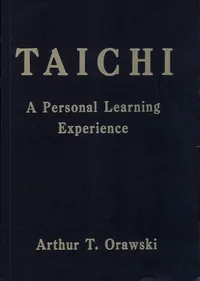
More Free Occult Philosophy Books
View all →