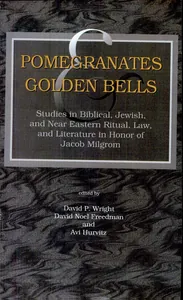
Studies in Levitical terminology

 71
71

Studies in Levitical terminology
Jacob Milgrom’s linguistic deep-dive into Leviticus is less a popular exposé and more a seasoned academic’s meticulous autopsy of sacred language. The book’s strength lies in its unwavering commitment to philological precision, untangling terms that have been flattened by centuries of translation. For instance, Milgrom’s careful distinction between various Hebrew words for "sin" or "offering" offers a far richer theological landscape than commonly perceived. However, this same rigor can be a barrier; the dense prose and specialized focus may alienate readers not already versed in biblical Hebrew or Semitic linguistics. The chapter on "purity" terminology, while illuminating, demands significant reader concentration. Ultimately, this is a vital resource for specialists, a scholarly scaffold for deeper Levitical study.
📝 Description
71
### What It Is Studies in Levitical Terminology, first published in 1970, is a foundational academic examination of the linguistic nuances within the Book of Leviticus. Jacob Milgrom, a prominent scholar in biblical studies, meticulously dissects the Hebrew terminology employed in this pivotal text of the Hebrew Bible. The work focuses on the precise meanings and contextual applications of words, aiming to clarify their significance within the legal, ritual, and narrative structures of Leviticus.
### Who It's For This book is essential for scholars of ancient Near Eastern languages, biblical exegesis, and comparative religion. It will also appeal to theologians and anyone seeking a rigorous, scholarly understanding of the foundational texts of Abrahamic religions. Students of Semitic languages will find its detailed linguistic analysis particularly valuable for comprehending the etymology and semantic range of key terms that have shaped religious discourse for millennia.
### Historical Context Published in 1970, Milgrom's study emerged during a period of intense scholarly re-evaluation of biblical texts, influenced by earlier linguistic and archaeological discoveries. It engaged with the ongoing critical scholarship of figures like Yehezkel Kaufmann and sought to refine understandings of Levitical law, often contrasted with the more narrative-driven books of the Pentateuch. The work contributed to a more textually-grounded approach to understanding ancient Israelite religion.
### Key Concepts The central concepts revolve around the precise interpretation of Levitical terms, revealing how specific word choices influenced the understanding of purity laws, sacrificial rites, and the divine-human relationship. Milgrom's analysis highlights the interconnectedness of language, ritual, and theological concepts, demonstrating how a deep understanding of individual terms unlocks broader meanings within the text.
💡 Why Read This Book?
• Gain a precise understanding of key Levitical terms like 'asham' and 'qorban', moving beyond generic translations to grasp their specific ritual and theological implications as analyzed by Milgrom. • Explore the linguistic foundations of ancient Israelite purity laws, learning how specific Hebrew vocabulary shaped concepts of ritual cleanness and uncleanness as detailed in the text. • Appreciate the scholarly methodology of biblical exegesis from the late 20th century, understanding how Milgrom's 1970 work contributed to a more textually-focused analysis of Leviticus.
⭐ Reader Reviews
Honest opinions from readers who have explored this book.
❓ Frequently Asked Questions
What is the primary focus of Jacob Milgrom's 'Studies in Levitical Terminology'?
The book meticulously examines the specific Hebrew terminology used in the Book of Leviticus, aiming to clarify the precise meanings and applications of words within the text's legal and ritual contexts.
When was 'Studies in Levitical Terminology' first published?
Jacob Milgrom's seminal work was first published in 1970, marking a significant contribution to biblical scholarship of that era.
Who would benefit most from reading this book?
Scholars of biblical studies, ancient Near Eastern languages, comparative religion, and theology will find this book invaluable for its detailed linguistic analysis.
Does the book discuss the concept of sacrifice in Leviticus?
Yes, the book's analysis of Levitical terminology inherently includes discussions on various terms related to sacrifices and offerings, clarifying their specific roles and meanings.
Is 'Studies in Levitical Terminology' accessible to a general audience?
While academically rigorous, the book offers profound insights for dedicated readers. However, its specialized linguistic focus makes it most accessible to those with a background in biblical studies or Semitic languages.
What is the significance of studying Levitical terminology?
Understanding Levitical terminology is crucial for accurately interpreting the laws, rituals, and theological concepts within the Book of Leviticus, which has profoundly influenced Abrahamic religions.
🔮 Key Themes & Symbolism
Precision of Ritual Language
The core of Milgrom's work lies in demonstrating how specific Hebrew terms, often translated generically, carried distinct meanings vital to Levitical law and practice. For example, differentiating between various Hebrew words for 'offering' reveals subtle variations in purpose and execution, impacting the understanding of ancient Israelite worship and their relationship with the divine. This focus on linguistic exactitude is crucial for any serious study of the text's original intent.
Purity and Impurity Lexicon
A significant portion of Leviticus deals with concepts of ritual purity and impurity. Milgrom meticulously analyzes the vocabulary associated with these states, showing how terms like 'tamei' (impure) and 'tahor' (pure) were not merely descriptive but functional within a complex system of cultic and social order. Understanding this specific lexicon is key to grasping the worldview underpinning Levitical regulations.
Theological Implications of Terminology
Beyond mere ritual mechanics, the chosen terminology in Leviticus carries profound theological weight. Milgrom's study implicitly argues that the specific words used to describe sin, atonement, and divine presence reflect a sophisticated understanding of covenant and mediation. The careful selection of words shapes the reader's perception of God's holiness and humanity's role in maintaining that relationship.
Comparative Semantic Analysis
Milgrom's approach often involves comparing Levitical terms with cognates in other ancient Near Eastern languages. This comparative analysis helps to illuminate the unique semantic field of Hebrew within its broader linguistic context. By understanding how similar concepts were expressed elsewhere, the distinctiveness and theological depth of the Levitical vocabulary can be better appreciated.
💬 Memorable Quotes
“The precise differentiation between various terms for sacrifice.”
— Milgrom's analysis highlights that terms like 'olah', 'minchah', and 'shelem' were not interchangeable, but denoted specific types of offerings with unique ritual functions and theological implications within the Levitical system.
“The nuanced meaning of words related to ritual purity.”
— The study emphasizes that concepts of 'taharah' (purity) and 'tum'ah' (impurity) in Leviticus were primarily ritualistic, not necessarily moral, and were defined by specific linguistic and cultic contexts.
“The etymological roots of key Levitical terms.”
— Milgrom traces the origins and development of specific Hebrew words, showing how their historical usage informs their meaning within the Book of Leviticus, providing a deeper layer of understanding.
“The significance of specific grammatical forms in Levitical legislation.”
— The work examines how grammatical structures and verb forms contribute to the imperative and conditional nature of Levitical laws, shaping the perceived obligation and consequence for adherence or transgression.
“The distinction between different forms of 'sin' and 'atonement'.”
— Milgrom's detailed examination reveals that Hebrew differentiates between various types of transgressions and the specific means of atonement required, moving beyond a singular concept of sin.
🌙 Esoteric Significance
Tradition
While 'Studies in Levitical Terminology' is primarily an academic work, its rigorous analysis of foundational religious texts places it adjacent to esoteric traditions that draw heavily on the symbolic and mystical interpretations of the Hebrew Bible. It serves as a scholarly anchor for those within Kabbalistic or Hermetic lineages seeking to understand the linguistic bedrock upon which deeper mystical allegories are often built. It provides a critical, demythologized foundation for later esoteric readings.
Symbolism
The terminology Milgrom dissects, such as 'qorban' (offering) or concepts of 'taharah' (purity), are rich with symbolic potential. In esoteric traditions, the precise Levitical offerings can be reinterpreted as symbolic acts of spiritual transformation or alignment with divine principles. The concepts of purity and impurity, beyond their literal cultic meaning, often symbolize states of spiritual clarity versus obfuscation or dissonance within the practitioner's inner landscape.
Modern Relevance
Contemporary scholars of biblical studies and comparative religion continue to cite Milgrom's work for its foundational linguistic analysis. Furthermore, modern practitioners of Kabbalah and esoteric Judaism may engage with his terminological clarifications to enrich their understanding of ancient rituals as symbolic pathways. His precise scholarship offers a critical lens for anyone seeking to move beyond superficial interpretations of biblical texts into their deeper semantic and theological layers.
👥 Who Should Read This Book
• Comparative Religion Scholars: Those examining the evolution of ritual and legalistic frameworks in ancient societies will find Milgrom's precise linguistic distinctions invaluable for accurate analysis. • Students of Biblical Hebrew: Individuals learning or refining their understanding of biblical Hebrew will benefit from the in-depth etymological and semantic exploration of key Levitical terms. • Esoteric Practitioners of Abrahamic Traditions: Those engaged in Kabbalah or other mystical interpretations of the Hebrew Bible can use this work to ground their symbolic readings in precise textual understanding.
📜 Historical Context
Jacob Milgrom's 'Studies in Levitical Terminology', published in 1970, emerged from a post-World War II academic environment where critical biblical scholarship was flourishing. This era saw significant advancements in understanding ancient Near Eastern languages and cultures, which informed new approaches to the Hebrew Bible. Milgrom's work built upon the legacy of scholars like Yehezkel Kaufmann, who championed a more historical and textually-grounded understanding of Israelite religion, often challenging earlier documentary hypotheses. While not directly engaging in polemics with specific contemporary authors in this particular study, Milgrom's meticulous philological method represented a significant contribution to the ongoing scholarly conversation about the development of Levitical law and its theological underpinnings, distinguishing itself from more speculative or ideologically driven interpretations prevalent in earlier periods.
📔 Journal Prompts
The precise definition of 'asham' as distinct from other sacrificial terms.
The implications of specific Hebrew words for ritual impurity on the concept of 'holiness'.
How Milgrom's 1970 analysis of Levitical terms informs contemporary understandings of biblical law.
The semantic range of 'tahor' within the context of Levitical purity regulations.
The theological weight carried by the specific terminology used for divine-human interaction in Leviticus.
🗂️ Glossary
Leviticus
The third book of the Hebrew Bible (Old Testament), containing laws and instructions concerning Israel's covenant relationship with God, particularly focusing on priests, sacrifices, and purity rituals.
Terminology
The body of terms used in a particular science, art, or subject; the set of words or expressions used in a specialized field, such as biblical studies or linguistics.
Philology
The study of language in oral and written historical sources; it is an examination of literary and linguistic text, combining literary criticism with the history of the language.
Exegesis
Critical explanation or interpretation of a text, especially of the Bible, aiming to understand its original meaning and context.
Qorban
A general Hebrew term for an offering or sacrifice brought to the Jerusalem Temple, encompassing various types of gifts to God.
Taharah / Tum'ah
Hebrew terms referring to ritual purity ('taharah') and ritual impurity ('tum'ah'), central concepts in Leviticus governing the maintenance of sacred boundaries and access to the divine.
Semantics
The branch of linguistics and logic concerned with meaning. It focuses on the relationship between signifiers—like words, phrases, signs, and symbols—and what they stand for.









![Vedanta Philosophy Self-knowledge [atma-jnana]](/img/thumb/vedanta-philosophy-self-knowledge-atma-jnana-swami-abhedananda-114980.webp)