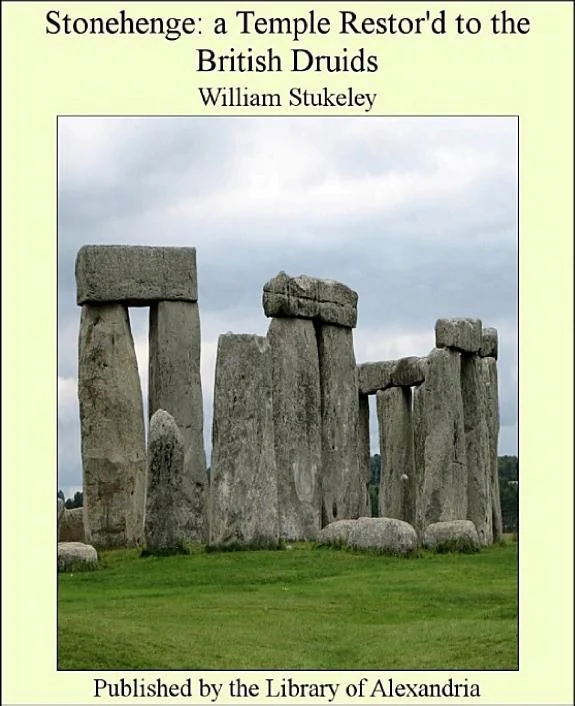
Stonehenge: a Temple Restor'd to the British Druids
 72
72

Stonehenge: a Temple Restor'd to the British Druids
William Stukeley's "Stonehenge: a Temple Restor'd to the British Druids" is less a historical document and more a fascinating artifact of early modern antiquarianism. Stukeley, writing in 1740, doesn't just describe Stonehenge; he reconstructs its entire spiritual and functional life, projecting a sophisticated Druidic priesthood onto the Salisbury Plain. His conviction that the monument served as an astronomical observatory and a sacred site for these ancient priests is presented with an almost theological fervor. The strength of the book lies in its earnest attempt to imbue a mysterious ruin with meaning, linking it to a perceived indigenous British spirituality. However, its limitation is the sheer speculative leap from observation to the detailed religious practices he describes, often lacking rigorous archaeological evidence by modern standards. The passage detailing the supposed Druidic rituals performed during the solstices, while imaginative, highlights how much of Stukeley's argument relies on a romanticized vision of the Druids rather than concrete proof. The work is a crucial insight into how the 18th century grappled with its own deep past.
📝 Description
72
### What It Is Stonehenge: a Temple Restor'd to the British Druids is William Stukeley's seminal 1740 work, presenting his influential theories on the ancient monument. Stukeley, a prominent antiquarian and physician, argued that Stonehenge was not merely a ruin but a sophisticated temple constructed and utilized by the ancient British Druids. This text lays out his detailed observations, architectural analyses, and historical interpretations, proposing a grand, sacred purpose for the megalithic site.
### Who It's For This book is essential reading for anyone interested in the history of archaeology, Druidic traditions, and early interpretations of Britain's prehistoric past. It appeals to scholars of ancient history, students of esoteric traditions, and enthusiasts of megalithic structures who wish to understand a foundational perspective on Stonehenge. Readers seeking to explore the evolution of thought regarding ancient sites will find it particularly valuable.
### Historical Context Published in 1740, Stukeley's work emerged during a period of intense antiquarian interest in Britain's Roman and pre-Roman past. The Enlightenment fostered a desire to understand national origins through empirical study and reasoned speculation. Stukeley was a contemporary of other notable antiquarians like Roger Gale and John Horsley, and his theories about Druidic connections to ancient sites were part of a broader intellectual current seeking to uncover a native, pre-Christian British heritage. His work offered a significant counterpoint to purely classical or biblical explanations for such monumental structures.
### Key Concepts Stukeley's central thesis is the identification of Stonehenge as a Druidic temple, intricately designed for astronomical observation and religious ceremony. He posits that the monument's alignment with solstices and equinoxes was intentional, serving the spiritual and calendrical needs of the Druids. The work details specific architectural features, proposing their functions within this ritualistic framework, and connects the Druids to a continuous line of ancient wisdom stretching back to the biblical figures of Abraham and Joseph.
💡 Why Read This Book?
• Gain insight into the 18th-century understanding of Stonehenge, specifically Stukeley's 1740 theory that it was a Druidic temple, offering a historical perspective on monument interpretation. • Explore the concept of Stonehenge as an astronomical observatory, a key idea Stukeley championed, demonstrating early attempts to link ancient structures with celestial events. • Understand the historical association of the Druids with megalithic sites, a theme Stukeley heavily promoted, providing context for later Neodruidic movements and esoteric interpretations.
⭐ Reader Reviews
Honest opinions from readers who have explored this book.
❓ Frequently Asked Questions
Who was William Stukeley and what was his contribution to Stonehenge studies?
William Stukeley was an 18th-century English antiquarian and physician. In his 1740 work, he was one of the first to propose that Stonehenge was a temple built and used by the British Druids, and that its structure was aligned with astronomical events like the solstices.
When was 'Stonehenge: a Temple Restor'd to the British Druids' first published?
The original publication date for William Stukeley's 'Stonehenge: a Temple Restor'd to the British Druids' was 1740.
What is the main argument presented in Stukeley's book about Stonehenge?
Stukeley's primary argument is that Stonehenge served as a sophisticated temple for the ancient British Druids, designed with precise astronomical alignments for religious ceremonies and calendrical purposes.
What historical period does Stukeley's work reflect?
Stukeley's book reflects the intellectual climate of the 18th century, a period of burgeoning antiquarianism and Enlightenment thought that sought to understand Britain's prehistoric past through observation and reasoned speculation.
Does Stukeley connect the Druids to other ancient cultures?
Yes, Stukeley controversially extended his theories to suggest the British Druids were part of an ancient, continuous line of wisdom, tracing their lineage back to biblical figures such as Abraham and Joseph.
What is the significance of the Druids in Stukeley's interpretation?
In Stukeley's interpretation, the Druids are presented as learned priests and astronomers who possessed advanced knowledge of architecture and celestial movements, using Stonehenge as their primary ritualistic and observational center.
🔮 Key Themes & Symbolism
Druidic Temple Theory
Stukeley's central hypothesis posits Stonehenge not as a mere ruin, but as a meticulously designed temple for the ancient British Druids. He elaborates on its function as a place of worship, astronomical observation, and ritual, particularly focusing on solstice alignments. This interpretation shaped subsequent discussions about the monument's purpose and the nature of Druidic practices, casting them as sophisticated and divinely inspired rather than primitive.
Megalithic Astronomy
A core element of Stukeley's thesis is the intentional astronomical alignment of Stonehenge. He meticulously details how the monument's layout corresponds with the sunrise on the summer and winter solstices, arguing this was crucial for Druidic calendrical and religious functions. This focus on celestial mechanics within ancient architecture highlights a prevailing interest in the scientific capabilities of prehistoric peoples.
Ancient British Wisdom
Stukeley extends his interpretation by linking the Druids to a lineage of ancient wisdom, suggesting a continuity from patriarchal figures like Abraham and Joseph. This concept frames the Druids not as isolated priests but as inheritors of a primeval, sacred knowledge. The book explores this idea of an unbroken tradition of spiritual and scientific understanding preserved by the Druidic order.
Antiquarian Methodology
The work exemplifies 18th-century antiquarian methodology, characterized by detailed observation, drawing, and speculative reconstruction. Stukeley's approach, while lacking modern archaeological rigor, involved careful measurements and comparisons with other sites and texts to build his case. It provides a valuable look into the early development of historical and archaeological inquiry into Britain's deep past.
💬 Memorable Quotes
“The Druids were the keepers of the ancient patriarchal religion, and the builders of Stonehenge.”
— This statement encapsulates Stukeley's core argument, presenting the Druids not just as inhabitants of ancient Britain but as the direct architects and custodians of its most significant sacred site, linking them to a continuous line of religious tradition.
“The great stones of Stonehenge are so plac'd, as to represent the principal doctrines of the Druids.”
— This interpretation suggests that the physical structure of Stonehenge held symbolic meaning directly tied to Druidic theology and philosophy, implying a deliberate and sophisticated design intended to convey spiritual truths through its architecture.
“The temple's alignment with the solstice sunrise was essential for their calendrical and spiritual practices.”
— This paraphrased concept highlights Stukeley's emphasis on the astronomical function of Stonehenge, asserting that its orientation towards the solstice sunrise was not accidental but a fundamental aspect of its use by the Druids for tracking time and performing rituals.
“The Druids were a learned and philosophical order, akin to the ancient Magi or Brahmins.”
— This interpretation positions the Druids within a global context of ancient priestly and philosophical traditions, suggesting they possessed a comparable level of intellectual and spiritual development as seen in other revered ancient cultures.
“Stonehenge is a grand edifice, a temple restored to its original purpose.”
— This sentiment reflects Stukeley's conviction that he was uncovering the true, intended function of Stonehenge, moving beyond the perception of it as a mere pile of stones to revealing its profound religious and architectural significance as a sacred space.
🌙 Esoteric Significance
Tradition
Stukeley's work is foundational to modern esoteric interpretations of Druidry, placing it within a lineage of ancient wisdom traditions. Though not strictly Hermetic or Kabbalistic, his theories about Druidic knowledge of astronomy and sacred geometry align with the broader Western Esoteric tradition's interest in lost ancient sciences and spiritual hierarchies. He presents the Druids as custodians of primeval truths, a concept echoed in later occult movements seeking to reconnect with primal spiritual sources.
Symbolism
The primary symbolism explored is Stonehenge itself, interpreted as a macrocosm reflecting celestial order and a microcosm of Druidic cosmology. The specific alignments, particularly with the solstices, symbolize the cyclical nature of life, death, and rebirth, and the Druids' mastery over time through astronomical observation. The monumental stones are seen as conduits of earth energy and divine power, embodying a sacred architecture designed for profound ritualistic communion.
Modern Relevance
Stukeley's theories continue to inform contemporary Neodruidic practices and esoteric interpretations of ancient sites. Thinkers and practitioners interested in geomancy, ley lines, and the spiritual significance of megalithic landscapes often draw upon his foundational ideas, even if critically. His work provides a historical touchstone for modern efforts to revive and reinterpret Druidic spirituality and its connection to the earth and cosmos.
👥 Who Should Read This Book
• Students of ancient British history and archaeology seeking to understand the evolution of thought regarding Stonehenge, particularly the influential 18th-century perspectives. • Practitioners and scholars of Neodruidry and Western Esotericism interested in the historical roots of modern Druidic beliefs and their association with sacred sites. • Enthusiasts of comparative mythology and ancient religions looking to explore early interpretations of indigenous spiritual traditions and their connection to monumental architecture.
📜 Historical Context
William Stukeley's "Stonehenge: a Temple Restor'd to the British Druids" emerged in 1740, a period ripe with antiquarian fervor during Britain's Enlightenment. This era saw scholars like Roger Gale and John Horsley meticulously documenting and debating the nation's ancient past. Stukeley’s work was a significant contribution to the burgeoning field of British archaeology, offering a distinctly native interpretation that stood apart from those that prioritized classical or biblical origins for monumental structures. His strong assertion of Druidic connections to sites like Stonehenge was part of a broader intellectual movement to establish a pre-Roman, indigenous British heritage. While other antiquarians focused on Roman Britain or broader European connections, Stukeley championed a uniquely Celtic and spiritual narrative for the island's earliest monuments, a perspective that profoundly influenced later esoteric and Neodruidic thought.
📔 Journal Prompts
The Druidic temple theory and its astronomical alignments as presented by Stukeley.
Stukeley's concept of an unbroken line of ancient wisdom from patriarchal figures to the Druids.
The significance of solstice observations in Stukeley's reconstruction of Druidic ritual.
Reflecting on the role of the Druids as custodians of primeval truths.
How Stukeley's interpretation of Stonehenge as a sacred edifice shapes modern views of ancient sites.
🗂️ Glossary
Druids
In Stukeley's interpretation, the priestly and learned class of ancient Britain, believed to be custodians of sacred knowledge, skilled in astronomy, and responsible for religious ceremonies at sites like Stonehenge.
Temple Restor'd
Refers to Stukeley's aim to reveal the original, intended sacred function of Stonehenge, arguing it was not a ruin but a functioning temple, and that his work was 'restoring' this understanding.
Solstice Alignments
The precise orientation of ancient structures, such as Stonehenge, with the sunrise or sunset on the summer and winter solstices, which Stukeley believed was a key feature of Druidic astronomical and religious practice.
Megalithic
Pertaining to structures built using large stones, such as Stonehenge. Stukeley analyzed the placement and scale of these stones to support his theories about their builders' capabilities.
Antiquarian
An expert or student of antiquities, particularly those of the classical or ancient period. Stukeley was a prominent figure in 18th-century British antiquarianism.
Patriarchal Religion
A religious system or belief originating from early male religious leaders or figures. Stukeley linked the Druids to a supposed ancient patriarchal tradition.
Primeval Truths
Fundamental, original truths believed to have been known from the earliest times. Stukeley suggested the Druids preserved and transmitted these truths.