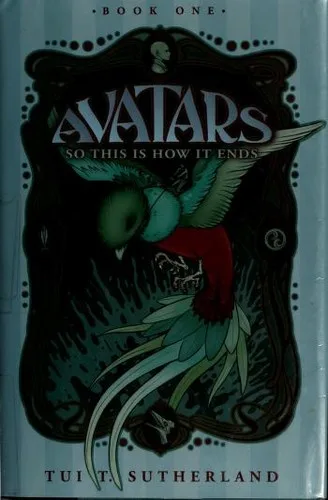
So This is How it Ends
 79
79

So This is How it Ends
Tui T. Sutherland’s 2006 publication, So This is How it Ends, presents a world teetering on the brink of collapse, forcing its inhabitants into a stark examination of their existence. The strength of the work lies in its unflinching portrayal of consequence; the narrative does not shy away from the grim realities its characters face. A particularly potent section involves the societal breakdown following the 'Great Silence,' illustrating how quickly established orders can crumble when fundamental assumptions are shattered. However, the book occasionally falters in its pacing, with certain character arcs feeling somewhat underdeveloped amidst the grander, world-altering events. Despite this, the exploration of 'recalibration' offers a compelling, albeit bleak, perspective on societal renewal. Ultimately, So This is How it Ends is a somber but effective allegory for periods of profound societal change.
📝 Description
79
Tui T. Sutherland's 2006 novel, So This is How it Ends, uses allegory to examine societal structures.
So This is How it Ends, published in 2006, presents a narrative that grapples with existential themes through its characters' predicaments. The work examines the consequences of choices and the nature of endings, not as definitive conclusions, but as points of transformation. It situates itself within a literary tradition that uses allegory to examine societal structures and individual agency.
This book is suited for readers who appreciate narratives that blend philosophical inquiry with accessible storytelling. Individuals interested in exploring themes of fate versus free will, the impact of collective belief systems, and the cyclical nature of conflict will find material for contemplation. It appeals to those who seek literature that prompts introspection rather than offering simple resolutions.
Emerging in 2006, So This is How it Ends arrived during a period of burgeoning interest in speculative fiction that engaged with social and ethical questions. While not directly aligned with the established dystopian narratives of authors like George Orwell or Aldous Huxley, it shares a lineage of using fictional worlds to critique prevailing societal norms. The year 2006 also saw continued discourse around the ethical implications of burgeoning technologies, a backdrop that subtly informs explorations of societal control and individual response found within such works.
The narrative centers on the concept of 'recalibration,' a process by which societal structures and individual identities are fundamentally altered following periods of crisis. It also examines the 'echo effect,' where past actions and beliefs continue to shape present realities, often in unforeseen ways. The text further posits a form of collective consciousness, suggesting that shared intent can influence tangible outcomes, a theme that echoes ideas found in certain schools of esoteric thought.
💡 Why Read This Book?
• You will learn how the concept of 'recalibration' offers a framework for understanding societal collapse and rebirth, moving beyond simple disaster narratives, as depicted in the aftermath of the 'Great Silence.' • You will feel the weight of consequence as the book demonstrates the 'echo effect,' where past decisions demonstrably shape future realities for characters and their communities. • You will gain insight into the power of collective belief through the narrative's exploration of shared intent, a concept central to understanding the societal shifts described in the book.
⭐ Reader Reviews
Honest opinions from readers who have explored this book.
❓ Frequently Asked Questions
What is the primary theme of So This is How it Ends?
The primary theme revolves around societal collapse and transformation, exploring how individuals and communities cope with existential crises and the concept of 'recalibration' after profound disruption.
When was So This is How it Ends first published?
So This is How it Ends was first published in 2006.
Does the book offer a hopeful outlook?
While the book confronts bleak scenarios, its exploration of 'recalibration' suggests the possibility of change and renewal, though often through a lens of hardship and consequence.
What is the 'echo effect' mentioned in the book?
The 'echo effect' refers to the enduring influence of past actions and beliefs on present circumstances, demonstrating how historical events continue to shape the current reality for the characters.
Who is the author of So This is How it Ends?
The author is Tui T. Sutherland, who first published this work in 2006.
Is the book allegorical?
Yes, the book functions as an allegory, using its narrative and characters to explore broader philosophical and societal themes concerning endings, change, and collective consciousness.
🔮 Key Themes & Symbolism
Societal Collapse and Renewal
The narrative meticulously details the unraveling of societal structures, particularly following the event known as the 'Great Silence.' It doesn't merely depict destruction but focuses on the arduous process of 'recalibration' that follows. This involves examining how individuals and groups adapt, rebuild, and redefine their existence in the face of absolute loss. The work suggests that endings are not final but catalysts for profound, often painful, transformation, prompting readers to consider the resilience of human society and the potential for new beginnings.
The Echo Effect of Past Actions
A central tenet explored is the 'echo effect,' the idea that past decisions, societal norms, and individual choices continue to exert influence long after they occur. The book illustrates how historical patterns and ingrained beliefs, even those considered obsolete, can resurface and impact the present, often in ways that perpetuate conflict or hinder progress. This theme serves as a stark reminder of collective responsibility and the interconnectedness of time, urging contemplation on how history shapes contemporary realities.
Collective Consciousness and Intent
So This is How it Ends delves into the concept of a shared consciousness, proposing that the unified intent or belief of a group can manifest tangible changes in the world. This aspect of the narrative touches upon esoteric ideas of sympathetic magic and the power of focused will. It questions the boundaries between individual agency and collective destiny, suggesting that shared psychological states can precipitate or influence external events, thereby impacting the trajectory of societal 'recalibration'.
The Nature of Endings
Rather than presenting endings as absolute conclusions, the book frames them as transitional phases. The title itself suggests a cyclical understanding of existence, where one end precipitates a new beginning. Through the characters' struggles, the work examines the human tendency to fear finality while simultaneously highlighting its necessity for growth and evolution. It challenges conventional notions of closure, proposing that endings are integral to the ongoing process of becoming.
💬 Memorable Quotes
“The echoes of what was are louder than any new song.”
— This statement encapsulates the 'echo effect,' suggesting that the weight of past events and ingrained societal patterns often overshadows the possibility of genuine change or novel beginnings.
“Silence was not an end, but a space for recalibration.”
— This interpretation of the 'Great Silence' highlights the book's central theme: that periods of profound disruption, while devastating, can serve as necessary precursors to societal and personal transformation.
“They forgot the shape of the world because they forgot the shape of their own hands.”
— This observation implies a disconnect between individual experience and broader societal understanding, suggesting that a loss of fundamental self-awareness can lead to a distorted perception of reality.
“What is built on fear will always crumble under its own weight.”
— This aphorism speaks to the inherent instability of systems founded on coercion or apprehension, contrasting them with structures built on more solid, perhaps collective, foundations.
“Every end is just a different kind of beginning, dressed in mourning clothes.”
— This poetic sentiment reinforces the cyclical view of existence presented in the work, framing endings not as definitive conclusions but as necessary, albeit sorrowful, precursors to new phases.
🌙 Esoteric Significance
Tradition
While not explicitly tied to a single esoteric lineage, So This is How it Ends engages with themes resonant in Gnostic and Hermetic thought, particularly concerning cyclical destruction and rebirth, and the nature of societal illusion. The concept of 'recalibration' can be seen as a secularized form of spiritual transformation or awakening, where societal structures mirror the individual's journey toward gnosis or higher understanding. It departs from traditional dogma by grounding these concepts in a narrative of collective, rather than purely individual, spiritual evolution.
Symbolism
The 'Great Silence' functions as a potent symbol of the apokalypsis, a revealing or uncovering that strips away societal artifice, forcing a confrontation with fundamental truths. The recurring motif of 'echoes' symbolizes the inescapable influence of past karma or collective memory, a concept central to many Eastern and Western esoteric traditions. The act of 'recalibration' itself can be viewed as a symbolic shedding of the old self or societal form to allow for a new, potentially more enlightened, existence.
Modern Relevance
Contemporary thinkers exploring concepts of societal resilience, post-apocalyptic studies, and collective trauma find echoes of Sutherland's work. The narrative’s focus on how shared beliefs and past actions shape the future aligns with modern discussions in fields like social psychology and the study of collective behavior. Practitioners of emergent spiritualities that emphasize interconnectedness and the power of focused intention may also draw parallels with the book's portrayal of collective consciousness influencing tangible outcomes.
👥 Who Should Read This Book
• Students of comparative mythology and eschatology: Those seeking to understand modern allegorical interpretations of apocalyptic narratives and cyclical cosmologies will find a unique perspective. • Readers interested in philosophical fiction: Individuals drawn to narratives that explore existential questions about fate, free will, and the nature of societal structures will appreciate the book's thematic depth. • Speculative fiction enthusiasts: Readers who enjoy science fiction and fantasy that tackles profound social and psychological themes, rather than focusing solely on technological advancement or adventure, will find this compelling.
📜 Historical Context
Published in 2006, Tui T. Sutherland’s So This is How it Ends emerged within a literary landscape increasingly interested in speculative fiction that examined societal structures and existential questions. While it predates the full surge of YA dystopian popularity that would define much of the 2010s, it shares thematic concerns with works that explore societal breakdown and survival. In 2006, authors like Margaret Atwood continued to explore similar themes in her existing body of work, and the broader cultural conversation was influenced by ongoing geopolitical events and anxieties about the future. The book’s exploration of collective consciousness and societal transformation places it alongside contemporary philosophical discussions regarding globalization and interconnectedness, though it operates primarily as an allegorical narrative rather than a direct commentary on specific events of the early 21st century.
📔 Journal Prompts
The 'Great Silence' as a catalyst for recalibration.
Reflecting on the 'echo effect' in personal history.
The power of collective intent in shaping outcomes.
Interpreting the symbolism of endings in your own life.
Mapping the societal structures that necessitate 'recalibration'.
🗂️ Glossary
Recalibration
A fundamental process of restructuring and re-evaluation that occurs after a period of societal collapse or profound disruption, leading to the formation of new norms, beliefs, and social orders.
Great Silence
The cataclysmic event that precipitates the societal breakdown in the narrative, serving as a catalyst for the subsequent 'recalibration' of the world and its inhabitants.
Echo Effect
The concept that past actions, historical events, and ingrained societal patterns continue to exert influence on present circumstances, shaping outcomes in often unforeseen ways.
Collective Consciousness
A shared psychological state or unified intent among a group of people, which the narrative suggests can have a tangible impact on external reality and societal events.
Endings as Beginnings
The philosophical perspective that terminal events are not absolute conclusions but transitional phases, inherently leading to new states of existence or societal forms.
Societal Illusion
The notion that many established social norms, beliefs, and structures are artificial constructs that can obscure deeper truths or hinder genuine progress.
Allegory
A narrative that functions on a literal and symbolic level, using characters and events to represent abstract ideas or moral qualities, serving as a vehicle for philosophical exploration.