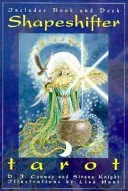
Shapeshifter Tarot
 72
72

Shapeshifter Tarot


Deanna J. Conway, Sirona Knight, and Lisa Hunt's Shapeshifter Tarot offers a refreshing departure from more common esoteric systems. Its strength lies in its deep grounding in European paganism and shamanic principles, providing a potent alternative to decks focused on Egyptian or Kabbalistic frameworks. The artwork by Lisa Hunt is particularly evocative, rendering the animal spirits and nature deities with a palpable energy that complements the text. However, the deck's specificity can also be its limitation; readers unfamiliar with European folk traditions might find some card interpretations require significant study. The concept of the 'Shapeshifter' itself, as a bridge between human consciousness and the wild, is powerfully realized in the card for The Fool, depicting a figure actively merging with a wolf, embodying instinctual transformation. This deck is a valuable, albeit demanding, tool for those seeking to reconnect with primal energies.
📝 Description
72
### What It Is Shapeshifter Tarot is a deck and accompanying book first published in 1998, presenting a unique approach to divination through the lens of European paganism and shamanism. It aims to bridge the mystical and the magical, drawing inspiration from nature's inherent energies. The kit contains 81 full-color cards, offering a visual exploration of these themes.
### Who It's For This tarot is suited for practitioners interested in shamanic journeys, nature-based spirituality, and European folk traditions. It appeals to those seeking a tarot system that moves beyond conventional symbolism, grounding its interpretations in ancient European roots. Individuals drawn to animism and the concept of the sacred in the natural world will find particular resonance.
### Historical Context Emerging in 1998, Shapeshifter Tarot arrived during a period of renewed interest in earth-based spiritualities and Neo-Paganism. This era saw a proliferation of tarot decks seeking to connect with diverse mythologies and traditions, moving away from the Rider-Waite-Smith system's dominance. The work of authors like Marion Zimmer Bradley, whose novel *The Mists of Avalon* (1982) popularized Arthurian pagan themes, created fertile ground for such explorations.
### Key Concepts The deck centers on the interconnectedness of the human and natural world, viewing transformations and cycles through a shamanic and pagan framework. Concepts of spirit guides, animal totems, and elemental forces are central, encouraging readers to see themselves as part of a larger, animate cosmos. The esoteric meanings are tied to the mythology and magical practices of pre-Christian Europe.
💡 Why Read This Book?
• Gain a unique perspective on tarot by exploring the shamanic and pagan traditions of Europe, as detailed in the book's explanations of mythological and magical roots. • Understand the esoteric meanings of 81 full-color cards, specifically how they relate to nature-based spirituality and animistic principles, as presented by Conway, Knight, and Hunt. • Connect with primal energies through the deck's focus on animal spirits and transformation, drawing on concepts integral to European folk magic since its 1998 publication.
⭐ Reader Reviews
Honest opinions from readers who have explored this book.
❓ Frequently Asked Questions
What is the core philosophy behind the Shapeshifter Tarot deck?
The Shapeshifter Tarot is rooted in European paganism and shamanism, emphasizing the mystical and magical aspects of nature. It views the world through an animistic lens, seeing inherent spirit in all things and encouraging a connection to primal energies and transformation.
Who are the authors and artist of the Shapeshifter Tarot?
The deck and book are authored by Deanna J. Conway and Sirona Knight, with illustrations by Lisa Hunt. The work was first published in 1998.
What does the Shapeshifter Tarot kit include?
The complete kit includes 81 full-color tarot cards and a comprehensive book. The book provides detailed instructions for card use, alongside in-depth explanations of their esoteric meanings and mythological origins.
How does this deck differ from traditional tarot like Rider-Waite?
Unlike decks focused on Kabbalah or Western ceremonial magic, Shapeshifter Tarot draws heavily from European folk traditions, shamanic practices, and nature-based spirituality. Its symbolism is deeply connected to the natural world and pre-Christian European mythologies.
Is the Shapeshifter Tarot suitable for beginners?
While the deck is accessible, its unique thematic focus on European paganism and shamanism may require dedicated study. Beginners interested in these specific traditions will find it rewarding, but those seeking purely traditional tarot meanings might find it challenging initially.
What kind of visual style can I expect from the cards?
Lisa Hunt's artwork for the Shapeshifter Tarot is described as evocative and full-color. It aims to visually represent the deck's themes of nature, shamanism, and the mystical connection between humans and the natural world.
🔮 Key Themes & Symbolism
European Pagan & Shamanic Roots
This deck grounds its interpretations in the spiritual practices and mythologies of pre-Christian Europe, emphasizing shamanic journeying and animistic beliefs. It moves away from common esoteric lineages to focus on earth-based magic, animal spirits, and the sacredness of the natural world. The work explicitly links card meanings to these ancient traditions, offering a distinct interpretive framework for divination.
Nature as a Spiritual Force
Central to Shapeshifter Tarot is the concept of nature as an active, sentient force. The cards explore the cyclical rhythms of the earth, the elemental energies, and the profound connections between human consciousness and the wider ecosystem. This perspective encourages readers to find spiritual guidance and wisdom directly within the natural world, seeing transformation and growth mirrored in natural processes.
Transformation and Animal Spirits
The theme of shapeshifting is integral, representing the fluidity of identity and the ability to embody different aspects of consciousness. This is often expressed through animal spirits, which serve as guides and archetypes, embodying specific energies and lessons. The deck invites users to understand their own transformative potential by engaging with the wisdom and power attributed to these totemic creatures.
Mystical and Magical Balance
Shapeshifter Tarot seeks to harmonize the mystical (the realm of spirit and intuition) with the magical (the active manipulation of energies). It suggests that by understanding the inherent magic within nature and the self, one can achieve a balanced spiritual practice. The deck provides tools for both contemplation and practical application of esoteric principles derived from its specific thematic focus.
💬 Memorable Quotes
“The deck balances the mystical and magical aspects of nature.”
— This statement encapsulates the core aim of Shapeshifter Tarot: to integrate spiritual intuition with practical, energetic work, both drawn from the living world around us.
“Based on European paganism and shamanism.”
— This highlights the deck's distinct foundation, setting it apart from systems rooted in Kabbalah or Eastern philosophies, and signaling its specific mythological and folkloric influences.
“81 full-color cards and a book.”
— This practical description points to the comprehensive nature of the kit, emphasizing the visual component of the cards alongside the detailed textual explanations provided.
“Detailed explanations on how to use the cards.”
— This promises a user-friendly approach, suggesting that the accompanying book offers not just meanings but also guidance on practical application and interpretation techniques.
“Full esoteric meanings, and mythological and magical roots.”
— This indicates the depth of information available, promising users access to the symbolic layers of the cards, their historical context, and their connection to magical traditions.
🌙 Esoteric Significance
Tradition
Shapeshifter Tarot aligns with contemporary Western Esotericism's exploration of diverse traditions, particularly those focusing on nature-based spirituality and animism. While not strictly Hermetic or Kabbalistic, it engages with the broader Hermetic principle of 'As Above, So Below' by emphasizing the mirroring of cosmic energies within the natural world and the human psyche. It draws from shamanic traditions globally but specifically anchors its symbolism in European pagan folklore, offering a localized expression of universal esoteric themes.
Symbolism
Key symbols include animal spirits, such as the wolf and the raven, which function as totemic guides and embodiments of primal instincts and wisdom within European shamanic traditions. The concept of the 'Shapeshifter' itself represents transformation and the fluid boundary between the human and the wild, a potent metaphor for spiritual evolution. Elemental forces and natural landscapes also feature prominently, symbolizing the foundational energies and sacred spaces central to pagan cosmologies.
Modern Relevance
Contemporary practitioners of Eco-Paganism, animistic witchcraft, and nature-based spirituality often draw upon decks like Shapeshifter Tarot for their direct connection to the earth and its cycles. Thinkers exploring embodied cognition and the integration of psychological and spiritual growth through connection with the non-human world find resonance here. Its focus on transformation through primal energies remains relevant for those seeking alternatives to highly intellectualized or dogmatic spiritual paths.
👥 Who Should Read This Book
• Aspiring practitioners of European paganism and shamanism seeking a divination tool that aligns with their chosen spiritual path. • Tarot enthusiasts interested in exploring alternative systems beyond the Rider-Waite-Smith, particularly those fascinated by nature-based spirituality and folklore. • Individuals drawn to animistic worldviews and seeking to deepen their connection with animal spirits and the sacredness of the natural world.
📜 Historical Context
The publication of Shapeshifter Tarot in 1998 coincided with a surge in Neo-Paganism and a growing desire for spiritual tools that reflected diverse cultural and mythological traditions. This era saw a proliferation of tarot decks moving beyond the dominant Rider-Waite-Smith model, seeking to incorporate elements from Celtic, Norse, and other European folk traditions. Authors like Philip Carr-Gomm, active in the Pagan Federation, were also exploring shamanic practices within a contemporary Western context. Shapeshifter Tarot responded to this burgeoning interest by offering a framework explicitly rooted in European paganism and shamanism, distinct from the more common Kabbalistic or Theosophical influences found in other decks of the time. Its focus on nature-based spirituality and animism provided an alternative to ceremonial magic or esoteric systems perceived as more abstract.
📔 Journal Prompts
Reflect on the 'Shapeshifter' archetype and its presence in your life.
Consider the European pagan symbolism of the Owl card and its message for your current situation.
Map the natural cycles represented in the deck to your own personal rhythms.
Explore the relationship between the human figure and the animal spirit in the 'Bear' card.
Meditate on the elemental forces as depicted in the deck's landscape cards.
🗂️ Glossary
Shamanism
A spiritual practice characterized by the ability to journey into altered states of consciousness to access the spirit world, often for healing, guidance, or divination, typically involving spirit allies like animals.
Paganism
A broad term for indigenous, nature-based religious traditions, often polytheistic, that predated the rise of major monotheistic religions, particularly in Europe. Modern Paganism encompasses various revivals and adaptations of these ancient beliefs.
Animism
The belief that all natural objects, phenomena, and the universe itself possess an animating spirit or soul, fostering a sense of interconnectedness and respect for the natural world.
Totem
A spirit being, often an animal, believed to have a special protective relationship with an individual, family, or group, serving as a spiritual guide or symbol of identity.
Esoteric
Relating to knowledge or practices intended for or understood by only a small number of people with a specialized background or interest, often pertaining to spiritual or mystical subjects.
Mythological Roots
The foundational stories, legends, and deities from ancient cultures that inform the symbolic meanings and archetypes within spiritual or divinatory systems.
Magical Roots
The historical and traditional practices, rituals, and beliefs associated with the manipulation of perceived energies for specific aims, often intertwined with folklore and folk magic.