Shang di de zhi wen

 82
82

Shang di de zhi wen
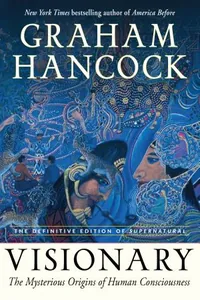
Graham Hancock’s 2016 publication, *Shang di de zhi wen*, continues his persistent challenge to established timelines of human civilization. The book’s strength lies in its ambitious synthesis of disparate fields—geology, archaeology, mythology, and archaeoastronomy—to construct a compelling narrative of a lost global high culture. Hancock’s detailed examination of sites like Göbekli Tepe and his correlation of ancient myths with celestial events are particularly persuasive. However, the work’s primary limitation is its reliance on interpreting evidence through the lens of its central hypothesis, sometimes leading to assertions that outpace the consensus of the scientific community. A particularly striking section discusses the recurring motif of a "great flood" across global mythologies, which Hancock links directly to the Younger Dryas cataclysm. While provocative, the definitive proof of a singular, advanced precursor civilization remains elusive. Ultimately, *Shang di de zhi wen* serves as a potent call to reconsider our understanding of the deep past, even if its conclusions invite further debate.
📝 Description
82
### What It Is
Shang di de zhi wen, published in 2016 by Graham Hancock, presents a controversial re-examination of human prehistory. The work posits that a sophisticated global civilization existed far earlier than mainstream archaeology accepts, a civilization wiped out by a cataclysmic event approximately 12,800 years ago. Hancock draws on evidence from geology, astronomy, and archaeology to support his thesis.
### Who It's For
This book is for readers who question established historical narratives and are intrigued by the possibility of advanced ancient societies. It appeals to those interested in subjects like the Younger Dryas impact hypothesis, ancient megalithic structures, and alternative interpretations of human origins. Those who enjoy detailed research and are open to speculative but evidence-based arguments will find it compelling.
### Historical Context
Hancock's work emerges from a lineage of researchers challenging orthodox views on prehistory, building upon ideas explored by figures like Ignatius Donnelly in his 1882 work *Atlantis: The Antediluvian World*. The book's central argument aligns with the Younger Dryas impact hypothesis, a scientific theory that gained traction in the late 2000s, proposing a cosmic impact event triggered widespread environmental changes around 12,800 years ago.
### Key Concepts
The core concept is the existence of a forgotten global civilization predating known history, which survived a cataclysmic event around 12,800 years ago. Hancock argues that remnants of this civilization's knowledge and technology are discernible in ancient myths, megalithic sites like Göbekli Tepe (dated to around 9600 BCE), and astronomical alignments found worldwide. He suggests this lost knowledge influenced subsequent human development.
💡 Why Read This Book?
• Gain a new perspective on human origins by exploring Graham Hancock's evidence for a sophisticated global civilization that predates established historical timelines, particularly focusing on the implications of the Younger Dryas event around 12,800 BCE. • Understand how ancient myths and megalithic structures worldwide might serve as fragmented records of a lost epoch, as detailed in Hancock's analysis of sites like Göbekli Tepe. • Evaluate the Younger Dryas impact hypothesis, a central tenet of the book, and its proposed role in the extinction of megafauna and the collapse of this hypothetical advanced society.
⭐ Reader Reviews
Honest opinions from readers who have explored this book.
❓ Frequently Asked Questions
What is the main argument of Shang di de zhi wen?
The book's central thesis is that a highly advanced global civilization existed thousands of years before conventionally accepted timelines, which was destroyed by a cataclysm around 12,800 years ago, leaving behind fragmented knowledge.
What evidence does Graham Hancock present for a lost civilization?
Hancock cites evidence from geology (e.g., impact layers from the Younger Dryas), archaeology (e.g., megalithic sites like Göbekli Tepe), archaeoastronomy (e.g., astronomical alignments), and comparative mythology (e.g., flood myths).
What is the Younger Dryas event and why is it important to the book?
The Younger Dryas was a period of rapid cooling around 12,800 years ago. Hancock proposes it was caused by a cosmic impact, which he links to the destruction of the hypothetical ancient civilization.
Are Graham Hancock's theories accepted by mainstream archaeology?
No, Hancock's theories are generally considered fringe by mainstream archaeology and geology, which emphasize a more gradual development of human civilization without a single, advanced precursor society.
Where does the title 'Shang di de zhi wen' come from?
The title translates from Chinese as 'Questions to Shangdi,' referring to the ancient Chinese supreme deity. This reflects the book's inquiry into fundamental questions about humanity's past.
What are some of the key sites discussed in relation to the lost civilization?
Key sites include Göbekli Tepe in Turkey, ancient Egyptian structures, and various megalithic monuments worldwide, which Hancock argues show a level of sophistication beyond their accepted construction dates.
🔮 Key Themes & Symbolism
The Younger Dryas Cataclysm
The book posits that a catastrophic event, likely a comet impact, occurred around 12,800 years ago, marking the end of the Younger Dryas period. This cataclysm is presented as the destroyer of a sophisticated global civilization, causing widespread destruction, flooding, and a drastic climate shift that plunged the Earth into a prolonged ice age. Hancock details geological evidence such as nanodiamonds and meltglass found in ice cores, which he interprets as byproducts of this impact event, fundamentally reshaping the planet and erasing much of human history.
A Forgotten Global Civilization
Central to Hancock's argument is the existence of an advanced, worldwide civilization that predates the Younger Dryas event. This society, he suggests, possessed sophisticated knowledge of astronomy, engineering, and architecture, evidenced by the enigmatic megalithic structures found across the globe. These sites, often exhibiting precise astronomical alignments and advanced stonework (like Göbekli Tepe, dated to 9600 BCE), are presented not as primitive beginnings but as remnants of a much older, more advanced cultural legacy that survived the cataclysm in fragmented forms.
Mythology as Historical Record
Hancock interprets widespread flood myths and creation stories from disparate cultures—from Sumerian epics to Native American legends—as collective memories of a global cataclysm. He argues that these narratives are not mere allegories but distorted historical accounts of the destruction of the pre-Younger Dryas civilization and the subsequent struggle for survival and rebuilding. The recurring themes of watery destruction and the emergence of new knowledge from the chaos are seen as echoes of a literal past event.
Archaeoastronomy and Ancient Wisdom
The book explores the sophisticated astronomical knowledge embedded in ancient sites worldwide. Hancock suggests that structures like the Giza pyramids and Stonehenge were not just monuments but complex observatories and calendrical devices, demonstrating an understanding of celestial cycles far beyond what is typically attributed to early civilizations. This advanced astronomical wisdom is presented as a key element of the lost civilization, passed down through esoteric traditions after the cataclysm.
💬 Memorable Quotes
“The Younger Dryas impact hypothesis proposes a cosmic event around 12,800 years ago.”
— This statement encapsulates the scientific theory that forms the bedrock of Hancock's argument for a lost civilization, suggesting a dramatic, externally-induced end to a prehistoric golden age.
“Göbekli Tepe predates the accepted timeline for complex societies.”
— This highlights a key piece of archaeological evidence Hancock uses, pointing to a site with advanced construction and symbolism that challenges conventional understandings of when sophisticated human culture emerged.
“Flood myths are scattered across cultures as echoes of a global catastrophe.”
— This interpretation suggests that the prevalence of deluge narratives worldwide is not coincidental but reflects a shared, literal memory of the cataclysm that ended the ancient advanced civilization.
“Ancient structures often display precise astronomical alignments.”
— This refers to the observation that many megalithic and ancient sites are oriented to celestial events, implying a sophisticated understanding of astronomy possessed by the builders, which Hancock attributes to a lost culture.
“We are the inheritors of a forgotten past.”
— This evocative phrase summarizes Hancock's central message: that contemporary humanity is unknowingly built upon the ruins and fragmented knowledge of a far older, advanced civilization.
🌙 Esoteric Significance
Tradition
While not strictly adhering to a single esoteric lineage, Hancock's work draws heavily on the Gnostic and Hermetic traditions' concept of lost primordial wisdom and cyclical cataclysms. The idea of a fallen, advanced civilization echoes Gnostic myths of spiritual descent and the Theosophical concept of Root Races. It presents a secularized version of ancient apocalyptic narratives, suggesting a hidden history of humanity that requires esoteric interpretation rather than conventional scientific study.
Symbolism
The book frequently references the serpent or dragon motif found in global mythologies, often symbolizing cosmic chaos, cyclical destruction, and the potential for renewal. Another recurring symbol is the 'tree of life' or cosmic tree, representing the connection between the earthly realm and higher cosmic knowledge, often depicted as being shattered or diminished by cataclysm. The prevalence of water and flood imagery also serves as a potent symbol of purification and the obliteration of the old world order.
Modern Relevance
Hancock's work continues to influence contemporary discussions in alternative history circles, archaeoastronomy, and consciousness studies. Thinkers and researchers exploring ancient astronaut theories, earth mysteries, and the potential for suppressed historical knowledge often cite him. His ideas provide a framework for understanding modern phenomena like crop circles or unexplained ancient artifacts as potential lingering evidence of advanced prehistoric cultures, keeping the dialogue about lost civilizations alive.
👥 Who Should Read This Book
• Amateur historians and enthusiasts of ancient mysteries seeking alternative perspectives on human origins and the possibility of lost civilizations. • Readers interested in the Younger Dryas impact hypothesis and its geological and archaeological implications for prehistoric societies. • Those who enjoy speculative research that challenges conventional timelines and encourages critical examination of established historical narratives.
📜 Historical Context
Published in 2016, *Shang di de zhi wen* arrived during a period of heightened interest in the Younger Dryas impact hypothesis, a theory first seriously proposed in the late 2000s. This hypothesis, suggesting a cosmic impact caused widespread devastation around 12,800 years ago, offered a potential scientific framework for Hancock's long-held ideas about a lost global civilization. His work builds upon earlier speculative histories like Ignatius Donnelly's *Atlantis: The Antediluvian World* (1882), but grounds its claims in more recent geological and archaeological findings. The intellectual climate was marked by a tension between traditional archaeological consensus, which favored gradual human development, and a growing public fascination with alternative prehistories. While the scientific community largely remained skeptical of a singular impact event, Hancock's arguments found an eager audience among those questioning established narratives.
📔 Journal Prompts
The symbolic meaning of flood narratives across cultures.
Evidence for advanced knowledge in prehistoric sites like Göbekli Tepe.
The implications of the Younger Dryas cataclysm for human civilization.
Connections between ancient myths and astronomical observations.
How the concept of a 'lost golden age' influences modern thought.
🗂️ Glossary
Younger Dryas
A period of significant and rapid cooling that occurred approximately 12,800 to 11,500 years ago. Hancock links this climate event to a hypothesized cosmic impact.
Göbekli Tepe
An archaeological site in Turkey featuring massive carved stone pillars, dating back to around 9600 BCE. Hancock argues it represents evidence of a sophisticated civilization far older than previously thought.
Archaeoastronomy
The interdisciplinary study of how past cultures understood astronomical phenomena and how they used celestial cycles in their structures and beliefs.
Megalithic Sites
Ancient structures constructed from large stones, such as Stonehenge or the pyramids. Hancock suggests many display advanced engineering and astronomical knowledge.
Flood Myths
Narratives found in numerous cultures describing a great deluge that wipes out humanity, often with a select few surviving to repopulate the Earth. Hancock interprets these as historical accounts.
Yucatan Peninsula Impact Evidence
Geological findings in the Yucatan region, including nanodiamonds and meltglass, proposed as evidence for a cosmic impact event around 12,800 years ago.
Shangdi
An ancient Chinese supreme deity, often translated as 'Heavenly Emperor.' The title 'Shang di de zhi wen' translates to 'Questions to Shangdi.'