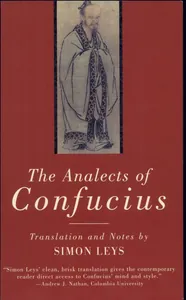
Sayings of Confucius

 73
73

Sayings of Confucius
The Sayings of Confucius offers a direct conduit to the ethical and social philosophy that shaped East Asian civilizations for millennia. Its strength lies in its aphoristic clarity; simple pronouncements often carry layers of meaning for contemplation. For instance, the recurring emphasis on learning from the past and present, as in "If a man has not learned to learn, he will never learn to live," provides a practical, ongoing directive. However, the work's fragmented nature, a collection of disparate conversations, can sometimes leave the reader searching for a more cohesive philosophical system. While the text is a foundational ethical guide, its application to modern, complex global challenges requires significant interpretive effort. Nevertheless, its focus on personal integrity and social harmony remains a potent, if challenging, call to action.
📝 Description
73
### What It Is Sayings of Confucius presents a compilation of aphorisms, dialogues, and ethical teachings attributed to the Chinese philosopher Kong Fuzi (551–479 BCE). The work is not a systematic treatise but a collection of recorded conversations and pronouncements concerning personal conduct, governance, education, and social relationships. It offers a framework for moral cultivation and harmonious living within a community and state.
### Who It's For This text is essential for scholars of ancient philosophy, particularly those interested in Confucianism and its enduring influence on East Asian thought and governance. It appeals to individuals seeking practical wisdom on ethical living, leadership principles, and the cultivation of virtue. Those exploring comparative religion or seeking foundational texts in Eastern philosophical traditions will find its direct pronouncements valuable.
### Historical Context Compiled by Confucius's disciples and their followers, the Sayings emerged during the turbulent Spring and Autumn period (771–476 BCE) in Chinese history. This era was marked by political fragmentation and the decline of central authority, prompting Confucius to seek ways to restore social order and moral rectitude. His teachings emphasized righteousness (yi), benevolence (ren), propriety (li), and wisdom (zhi), aiming to create a stable society through personal virtue and ethical governance. The Analects, as it is also known, became a cornerstone of Chinese education and civil service examinations for centuries.
### Key Concepts The core of the Sayings revolves around the concept of *ren* (benevolence, humaneness), the ideal moral quality of an individual. It also emphasizes *li* (rites, propriety), the proper way to conduct oneself in social interactions and rituals, which guides the expression of *ren*. Filial piety (*xiao*) is presented as a fundamental virtue, extending from family relationships to loyalty in broader society. The ideal person, the *junzi* (gentleman, noble person), is one who embodies these virtues and strives for continuous self-improvement.
💡 Why Read This Book?
• Gain practical guidance on cultivating personal virtue, directly from Confucius's recorded conversations, offering actionable principles for self-improvement that transcend simple platitudes. • Understand the foundational concept of *ren* (benevolence), a cornerstone of Confucian ethics, and its practical implications for interpersonal relationships and societal harmony. • Explore the importance of *li* (rites and propriety) as a framework for social order and ethical conduct, learning how ritualistic behavior can foster genuine respect and connection.
⭐ Reader Reviews
Honest opinions from readers who have explored this book.
❓ Frequently Asked Questions
When was Confucius alive?
Confucius lived during the Spring and Autumn period of Chinese history, from 551 to 479 BCE. His teachings and the compilation of his sayings profoundly influenced subsequent dynasties.
What is the primary goal of the Sayings of Confucius?
The primary goal is to guide individuals toward moral cultivation and ethical living, fostering a harmonious society through personal virtue, proper conduct, and good governance.
Is this book a biography of Confucius?
No, the Sayings of Confucius is not a biography. It is a collection of his recorded sayings, dialogues, and anecdotes, compiled by his disciples, focusing on his philosophical and ethical teachings.
What is the concept of 'Junzi' mentioned in the Sayings?
'Junzi' refers to the ideal person or 'noble person' in Confucian philosophy. It denotes an individual who embodies virtues like benevolence, righteousness, and propriety, striving for continuous self-improvement.
How did the Sayings of Confucius influence Chinese society?
The Sayings became a central text for education and civil service examinations for over two millennia, shaping ethical norms, social structures, and political philosophy throughout East Asia.
Are there specific rituals Confucius discusses?
Yes, the text frequently refers to *li*, which encompasses rituals, ceremonies, and proper social etiquette. These are presented not merely as empty forms but as expressions of sincere virtue and social order.
🔮 Key Themes & Symbolism
The Cultivation of Ren (Benevolence)
Central to Confucian thought, *ren* signifies humaneness, benevolence, and the highest moral virtue. The Sayings explore *ren* not as an abstract ideal but as a practical disposition cultivated through daily actions, empathy, and sincere regard for others. It is the foundation upon which all other virtues are built, transforming personal character and fostering harmonious social relationships. The text emphasizes that *ren* is learned and practiced, not innate, requiring constant effort and self-reflection to embody fully in one's interactions and responsibilities.
The Role of Li (Rites and Propriety)
The Sayings consistently highlight the significance of *li*, often translated as rites, rituals, or propriety. This concept refers to the established social norms, etiquette, and ceremonial practices that structure human interaction and maintain social order. Confucius viewed *li* as the outward expression of inner virtue (*ren*), essential for channeling emotions and actions appropriately. Adherence to *li* is seen as crucial for establishing respect, demonstrating sincerity, and fostering a well-ordered society, from family life to state affairs.
The Ideal of the Junzi (Noble Person)
The *junzi*, or noble person, is the exemplar of Confucian virtue. The Sayings describe the *junzi* as one who is morally cultivated, acts with righteousness (*yi*), practices benevolence (*ren*), and adheres to propriety (*li*). This ideal is attainable through diligent self-study and moral reflection, rather than through birth or external status. The *junzi* is characterized by their unwavering commitment to ethical principles, their ability to learn from both success and failure, and their dedication to improving themselves and contributing to the welfare of society.
Filial Piety and Social Harmony
Filial piety (*xiao*) is presented as the root of *ren* and a fundamental virtue. The Sayings emphasize the deep respect and obedience owed to parents and elders, extending this principle to loyalty towards rulers and the state. This hierarchical structure, rooted in familial bonds, is seen as the basis for broader social harmony and effective governance. By fulfilling one's duties within the family, individuals learn the discipline and respect necessary to contribute to a stable and well-functioning society.
💬 Memorable Quotes
“The Master said, 'Learning without thought is labor lost; thought without learning is perilous.'”
— This aphorism highlights the essential balance between acquiring knowledge and critical reflection. True understanding requires both absorbing information and actively processing it, preventing the mind from becoming either passive or misguided.
“The Master said, 'Do not do to others what you would not have them do to you.'”
— This is a foundational principle of reciprocity, often called the Golden Rule. It emphasizes empathy and consideration for others' feelings, forming the basis of ethical interaction and social responsibility.
“The Master said, 'A youth, when at home, should be filial; when abroad, respectful to his elders; diligent in his duties; trustworthy; and should abound in love for the people, but be intimate with the benevolent.'”
— This encapsulates the comprehensive ethical training advocated by Confucius, extending from familial duties to broader social engagement. It outlines a path for character development that ensures responsible and virtuous conduct in all aspects of life.
“The Master said, 'He who acts with a hundred aims in view fails to achieve even one.'”
— This proverb underscores the importance of focus and clarity of purpose. Trying to pursue too many goals simultaneously leads to inefficiency and failure, advocating for concentrated effort on a primary objective.
“The Master said, 'By nature, men are nearly alike; by practice, they get to be wide apart.'”
— This statement points to the crucial role of upbringing, education, and deliberate practice in shaping an individual's character and abilities. While innate potential might be similar, environmental influences and personal choices create significant differences.
🌙 Esoteric Significance
Tradition
While not typically classified within Western esoteric traditions like Hermeticism or Kabbalah, Confucianism's emphasis on self-cultivation, ethical perfection, and the alignment of individual virtue with cosmic order shares thematic parallels with certain Eastern spiritual philosophies. Its focus on the practical application of virtue in daily life and governance can be seen as a form of 'practical mysticism' or a path to achieving harmony with the Tao (the Way), an concept explored in Taoism, a related Chinese philosophical system.
Symbolism
Key symbolic elements include the *junzi* (noble person), representing the ideal of perfected humanity achieved through ethical practice. The concept of *li* (rites) symbolizes the structured order and propriety that govern social interactions, acting as external frameworks for inner virtue. The recurring motif of learning and self-improvement symbolizes the continuous journey of moral development, akin to an alchemical transformation of the self towards a higher state of being.
Modern Relevance
Contemporary thinkers and practitioners in fields ranging from ethics and political philosophy to psychology and organizational leadership continue to draw upon the Sayings. Its principles of good governance, emphasis on education, and the cultivation of character remain relevant for discussions on leadership ethics and societal well-being. Various modern interpretations explore its application in global ethics and cross-cultural understanding, demonstrating its enduring influence beyond its original historical context.
👥 Who Should Read This Book
• Students of Eastern Philosophy and Comparative Religion: Gain direct access to a foundational text that has shaped East Asian thought, ethics, and governance for over two thousand years. • Aspiring Leaders and Ethical Practitioners: Discover time-tested principles for personal integrity, virtuous leadership, and fostering social harmony through practical guidance on conduct and responsibility. • Individuals Seeking Self-Improvement: Explore Confucian methods for moral cultivation and character development, learning how to embody virtues like benevolence and propriety in everyday life.
📜 Historical Context
The Sayings of Confucius emerged from the intellectual ferment of China's Spring and Autumn period (771–476 BCE), a time of political fragmentation and social upheaval following the decline of the Zhou Dynasty. Confucius (Kong Fuzi) lived from 551 to 479 BCE, a period rife with warfare among feudal states. His teachings offered a philosophical response to this chaos, emphasizing the restoration of social order through moral cultivation, ethical governance, and the revival of ancient rites. He sought to re-establish virtue in leadership, contrasting his ideals with the pragmatism of other schools like Legalism, which favored strict laws and punishments. His disciples compiled his pronouncements into the Analects, which later became a foundational text for Confucianism, profoundly influencing Chinese education, civil service, and societal norms for over two millennia. The philosopher Mozi, a contemporary critic, engaged with and challenged some of Confucian ideas.
📔 Journal Prompts
The concept of *ren* as described by Confucius: How can you actively practice benevolence in your daily interactions today?
Reflect on the importance of *li* (rites and propriety): Identify one social convention you follow and consider its underlying purpose.
The ideal of the *junzi*: In what specific situation this week can you strive to embody the qualities of a noble person?
Filial piety (*xiao*): Consider the extension of respect from family to broader societal roles.
Confucius's emphasis on learning and reflection: How can you integrate 'learning without thought' and 'thought without learning' more effectively?
🗂️ Glossary
Ren (仁)
Often translated as benevolence, humaneness, or goodness. It is the core virtue in Confucianism, representing the ideal moral quality of an individual and the foundation of ethical conduct.
Li (禮)
Refers to rites, ceremonies, etiquette, and propriety. It encompasses the established social norms and customs that guide human behavior and maintain social order, serving as the outward expression of *ren*.
Junzi (君子)
Literally 'son of a ruler,' it denotes the ideal person or 'noble person' in Confucian philosophy. The *junzi* is morally cultivated, ethical, and dedicated to self-improvement and the welfare of society.
Xiao (孝)
Filial piety; the virtue of respect for one's parents, elders, and ancestors. It is considered the root of *ren* and a fundamental principle for social harmony.
Yi (義)
Righteousness or justice. It signifies acting in accordance with what is morally right and appropriate, often contrasted with personal gain or expediency.
Spring and Autumn period
A period in Chinese history (771–476 BCE) characterized by political fragmentation, warfare among feudal states, and intellectual flourishing, during which Confucius lived and taught.
Kong Fuzi
The given name of Confucius, meaning 'Master Kong'. He was a Chinese philosopher and politician whose teachings formed the basis of Confucianism.