Roverandom
 72
72

Roverandom
Celeste Moreau, Esoteric Library
Roverandom presents a curious duality: a charming children's fantasy by a titan of modern mythology, made accessible through extensive scholarly work. The story itself, a delightful romp concerning a dog's magical misadventure, showcases Tolkien's innate ability to craft engaging narratives for the young. Its charm lies in its directness and whimsical logic, a refreshing counterpoint to his more complex mythopoeic endeavors. The annotations by Scull and Hammond are the true stars of this edition, offering a scholarly deep dive into the story's origins and Tolkien's creative impulses. They meticulously trace linguistic roots and contextualize the narrative within Tolkien's broader work and personal life. However, the sheer volume of academic material, while invaluable to scholars, might prove overwhelming for a reader seeking only the simple pleasure of the tale. The juxtaposition of a lighthearted children's story with dense critical analysis creates a reading experience that is both illuminating and occasionally ponderous. A singular passage that exemplifies this is the explanation of the word 'rover' itself, a seemingly simple term that Tolkien imbues with layers of meaning and etymological exploration.
Read more ↓
This edition is a valuable, if dense, scholarly exploration of a minor Tolkien work.
📝 Description
72
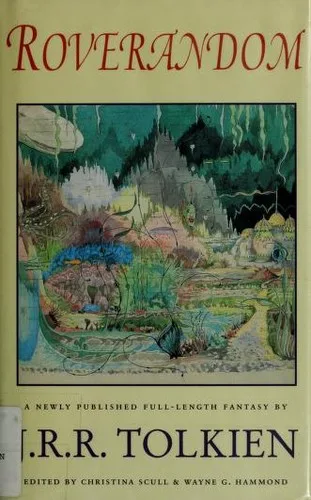
### What It Is Roverandom is a children's story penned by J.R.R. Tolkien, originally conceived in 1939 for his son Michael. It follows the whimsical adventures of a small dog named Rover, who is transformed into a toy by a wizard and must journey to the moon and back to reclaim his true form. This edition, first published in 2017, is meticulously edited and annotated by Christina Scull and Wayne G. Hammond, providing extensive scholarly apparatus.
### Who It's For This book is primarily for enthusiasts of J.R.R. Tolkien's literary world, particularly those interested in his less widely known works and the genesis of his creative process. It will appeal to readers who appreciate charming, imaginative tales for younger audiences but also to scholars seeking deeper insights into Tolkien's background and stylistic development. Collectors of rare editions and those interested in the history of children's literature will also find value.
### Historical Context Conceived during a period of significant global upheaval, Roverandom emerged from Tolkien's personal life, a stark contrast to the epic narratives he is renowned for. The story's creation in 1939 predates the full impact of World War II on Britain, yet the underlying themes of transformation and a quest for return can be seen through a lens of displacement. Its eventual publication in 2017, decades after its writing, highlights a growing interest in the entirety of Tolkien's output, moving beyond the established legendarium.
### Key Concepts The narrative revolves around themes of enchantment and disenchantment, the nature of identity, and the transformative power of magic. Rover's journey is a metaphorical exploration of loss and recovery, where his physical form is altered, challenging his sense of self. The story also touches upon the concept of wishes and their often-unforeseen consequences, a common motif in fairy tales and folklore. The wizard's role as both antagonist and catalyst underscores the dual nature of magical intervention.
💡 Why Read This Book?
• Understand the origins of Tolkien's storytelling beyond Middle-earth, learning about his personal connection to the tale conceived in 1939 for his son Michael. • Explore the symbolic journey of transformation and identity recovery through Rover's adventure, a concept that echoes in many esoteric narratives. • Appreciate the scholarly depth provided by Christina Scull and Wayne G. Hammond's annotations, offering unique insights into Tolkien's linguistic play and creative process.
⭐ Reader Reviews
Honest opinions from readers who have explored this book.
❓ Frequently Asked Questions
When was J.R.R. Tolkien's story Roverandom originally written?
J.R.R. Tolkien originally wrote Roverandom in 1939. It was conceived as a story for his son, Michael, and remained unpublished for many decades.
Who are the editors of the 2017 edition of Roverandom?
The 2017 edition of Roverandom was edited and annotated by Christina Scull and Wayne G. Hammond, renowned Tolkien scholars.
What is the main plot of Roverandom?
The main plot follows a dog named Rover who is turned into a toy by a wizard and must embark on a fantastical journey to retrieve his original form.
Is Roverandom considered part of Tolkien's Middle-earth legendarium?
No, Roverandom is a standalone children's story and is not directly connected to the mythology and history of Middle-earth that Tolkien is famous for.
What kind of insights do the annotations in Roverandom provide?
The annotations by Scull and Hammond offer detailed linguistic analysis, explore Tolkien's personal motivations for writing the story, and contextualize it within his wider literary output.
What age group is Roverandom intended for?
While written for a child (Tolkien's son Michael), the 2017 edition with extensive scholarly notes is best suited for adult fans of Tolkien and literary scholars.
🔮 Key Themes & Symbolism
Transformation and Identity
The core of Roverandom lies in the protagonist's altered state. Rover, a dog, is magically transformed into a toy. This physical change prompts a profound crisis of identity, forcing him to confront what it means to be himself when his form is no longer recognizable. This theme of metamorphosis, a common element in alchemical and folkloric traditions, explores the essence of selfhood beyond superficial appearance. The journey back to his true form is not just a physical quest but an internal affirmation of his original identity against magical artifice.
The Nature of Magic and Wishes
Magic in Roverandom is depicted as a powerful, often capricious force, wielded by wizards with varying intentions. The wizard's enchantment that turns Rover into a toy serves as a catalyst for the adventure, highlighting how magical interventions can disrupt the natural order and lead to unforeseen consequences. The narrative implicitly examines the desire for wishes and the potential pitfalls associated with them, a motif found across numerous mythologies and fairy tales where magical boons often come with hidden costs or require significant effort to control.
Journey and Return
Rover's quest to the moon and back is a classic narrative archetype of the journey and return. This structure is prevalent in myths and spiritual traditions, symbolizing a process of initiation, trial, and eventual reintegration. The arduous travel, facing various magical obstacles and allies, mirrors spiritual pilgrimages or shamanic journeys. The ultimate goal is not merely regaining his dog form but completing a cycle of experience that solidifies his identity and proves his resilience against the forces that sought to change him permanently.
💬 Memorable Quotes
“The wizard, who was a very powerful wizard, did not like dogs.”
— This simple statement establishes the antagonist's motivation and the central conflict. It immediately sets a tone of whimsical opposition, typical of children's tales where clear-cut characters drive the plot forward.
“Rover was turned into a toy.”
— This is the pivotal moment of transformation, initiating Rover's extraordinary adventure. It signifies a drastic alteration of his being, moving him from the natural world into a realm of magical manipulation and quest.
“He had to go to the Moon to get his tail back.”
— This highlights the fantastical and illogical nature of the quest, a hallmark of children's fantasy. The destination, the Moon, is imbued with mythic and symbolic weight, suggesting a journey to a realm far removed from ordinary experience.
“His name was Rover, and he was a dog.”
— A foundational statement defining the protagonist's identity at the outset. This directness grounds the character before his magical dismemberment, emphasizing the core self that he seeks to reclaim.
“It was a very long way to the Moon.”
— This phrase underscores the immense challenge and scale of Rover's task. It frames the subsequent adventure as a significant undertaking, requiring bravery and perseverance against considerable odds.
🌙 Esoteric Significance
Tradition
While not overtly aligned with a specific esoteric tradition, Roverandom touches upon universal themes found in Hermeticism and folklore. The concept of transformation and the quest for the true self mirrors alchemical processes of purification and transmutation. The wizard's power and the magical alteration of Rover’s form can be seen through a lens of sympathetic magic or enchantment, where external forces drastically alter one’s state of being, requiring a journey to restore balance and integrity.
Symbolism
The primary symbol is Rover himself, representing the innocent, pure consciousness or essence that becomes entangled or altered by external forces (the wizard's magic). His journey to the Moon symbolizes a quest for higher understanding or a return to a primal, perhaps celestial, origin. The loss of his tail can be interpreted as a symbolic loss of vital energy or connection to his true nature, which he must recover to regain wholeness.
Modern Relevance
Contemporary discussions on identity, especially in the context of digital avatars or altered states of consciousness, find echoes in Rover's plight. The story's exploration of what constitutes 'self' when physical form is changed is relevant to philosophical debates. Furthermore, the detailed annotations by Scull and Hammond provide a model for textual analysis that can be applied to other works, drawing connections between authorial intent, linguistic roots, and thematic development in a manner appreciated by modern literary and mythological scholars.
👥 Who Should Read This Book
• Aspiring children's authors and storytellers interested in the foundational elements of narrative craft and whimsical invention. • Tolkien scholars and enthusiasts eager to explore a lesser-known work and gain deeper insights through extensive academic commentary. • Readers who appreciate fairy tales and folklore, particularly those exploring themes of magical transformation and identity quests.
📜 Historical Context
Conceived in 1939, Roverandom emerged from J.R.R. Tolkien's personal life, a stark contrast to the burgeoning epic of Middle-earth he was developing. The story's creation occurred during a period of rising international tension, just as Britain was preparing for war, yet it represents an intimate, domestic creative impulse. Unlike the grand mythopoeic work that would define his legacy, Roverandom is a relatively lighthearted children's tale, reflecting a different facet of Tolkien's imagination. Its eventual publication in 2017, facilitated by the meticulous work of editors Christina Scull and Wayne G. Hammond, speaks to a modern scholarly and popular interest in the totality of Tolkien’s literary output. This interest extends beyond the canonical works, seeking to understand the author's entire creative landscape. While Tolkien was contemporary with authors like C.S. Lewis, whose Narnia chronicles also explored fantastical realms for children, Roverandom stands apart in its direct lineage from Tolkien's own family life and linguistic experiments.
📔 Journal Prompts
Rover's transformation into a toy, and the wizard's motivation.
The symbolic significance of journeying to the Moon.
The nature of Rover's identity before and after the enchantment.
The role of the wizard as both antagonist and catalyst.
Reclaiming one's true form after magical alteration.
🗂️ Glossary
Rover
The protagonist of the story, a small dog who is magically transformed into a toy and embarks on a quest to regain his original form.
Wizard
The magical practitioner responsible for transforming Rover into a toy, acting as the primary antagonist and catalyst for the story's central adventure.
Transformation
The magical process by which Rover's physical state is altered from a dog to a toy, serving as the core event that drives the narrative and themes of identity.
Toy
Rover's altered form, representing a state of inanimate existence and a loss of his natural dog characteristics, necessitating his quest.
Moon
The destination of Rover's quest, a mythical and distant location where he must travel to find a way to reverse the wizard's enchantment.
Annotations
The extensive scholarly notes provided by editors Christina Scull and Wayne G. Hammond, detailing the story's origins, linguistic context, and Tolkien's creative process.
1939
The year J.R.R. Tolkien originally wrote Roverandom, providing a specific historical anchor for the story's conception during a period of personal and global significance.