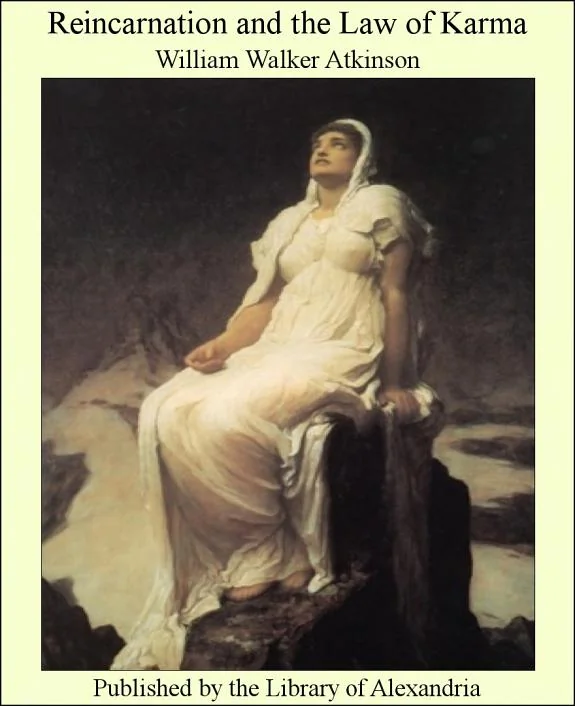
Reincarnation and the Law of Karma
 77
77

Reincarnation and the Law of Karma
Atkinson’s "Reincarnation and the Law of Karma" offers a remarkably cogent, if somewhat dated, exposition on its titular subjects. The author’s strength lies in his methodical breakdown of complex metaphysical ideas into digestible principles, a hallmark of his New Thought background. He successfully frames karma not as a punitive force but as a universal law of consequence, integral to the evolutionary process of the soul through successive lives. A notable passage articulates karma as the "necessary equilibrium" of actions, which, while not a direct quote, captures the essence of his argument for its inherent fairness. However, the work’s limitation is its reliance on a rationalist framework that sometimes feels detached from the deeper spiritual implications or the lived experience of suffering that karma often seeks to explain. The prose, while clear, lacks the evocative power found in more mystically oriented texts. Ultimately, Atkinson provides a clear, intellectual scaffolding for understanding reincarnation and karma, best suited for those approaching the subjects from a philosophical or logical standpoint.
📝 Description
77
### What It Is William Walker Atkinson’s "Reincarnation and the Law of Karma" presents a foundational exploration of two interconnected concepts central to many esoteric and Eastern philosophical traditions. Originally published in 1936, the work dissects the principles of rebirth and the immutable force of cause and effect, arguing for their logical and spiritual necessity. Atkinson, a prolific writer on New Thought and occult subjects, approaches these ideas with a systematic, almost scientific, rigor, aiming to demystify them for a Western audience.
### Who It's For This book is intended for individuals seeking a clear, structured understanding of reincarnation and karma beyond simplistic interpretations. It will appeal to students of comparative religion, philosophy, and esoteric studies who wish to examine the mechanisms and implications of these concepts. Those interested in the historical development of occult thought in the early 20th century, particularly the New Thought movement, will find Atkinson’s perspective valuable. It is not for those seeking sensationalized accounts or purely anecdotal evidence.
### Historical Context Published in 1936, "Reincarnation and the Law of Karma" emerged during a period of intense interest in Eastern philosophies and spiritualism in the West. Theosophy, championed by Helena Blavatsky, had already popularized concepts like karma and reincarnation. Atkinson’s work, however, often filtered these ideas through the lens of New Thought, emphasizing mental and spiritual laws that could be understood and applied by the individual. This era saw a surge in popular literature attempting to reconcile Western rationalism with Eastern mysticism, a space Atkinson actively occupied.
### Key Concepts The core of Atkinson's argument rests on the idea that both reincarnation and karma are not arbitrary judgments but natural laws operating with perfect justice and consistency. He posits reincarnation as a process of soul evolution, where each life offers lessons and opportunities for growth, dictated by the karmic debts and achievements of previous existences. Karma is presented not as fate, but as the consequence of volitional actions, thoughts, and intentions, shaping future experiences. The work emphasizes the individual's agency within this framework, suggesting that understanding these laws empowers one to consciously influence their future.
💡 Why Read This Book?
• You will learn how William Walker Atkinson, writing in 1936, systematically presented reincarnation as soul evolution driven by karmic consequence, offering a structured alternative to purely religious or fatalistic views. • You will gain a clearer understanding of karma as a principle of natural law and consequence, as articulated by Atkinson’s New Thought perspective, rather than mere punishment or reward. • You will grasp Atkinson's interpretation of the soul's journey through multiple lives as a mechanism for learning and growth, a concept he details in his structured approach to esoteric philosophy.
⭐ Reader Reviews
Honest opinions from readers who have explored this book.
❓ Frequently Asked Questions
When was William Walker Atkinson's "Reincarnation and the Law of Karma" first published?
William Walker Atkinson's "Reincarnation and the Law of Karma" was first published in 1936, reflecting the growing interest in Eastern philosophies and esoteric concepts within Western thought during that era.
What is the main argument of "Reincarnation and the Law of Karma"?
The book argues that reincarnation and karma are natural, logical laws governing spiritual evolution, emphasizing cause and effect in shaping future experiences and soul development.
How does Atkinson define Karma in this book?
Atkinson defines karma as the law of cause and effect, stemming from volitional actions, thoughts, and intentions, which dictates the conditions and lessons encountered in future lives.
Is this book suitable for beginners interested in reincarnation?
Yes, the book offers a systematic and rational approach, making it suitable for beginners who prefer a structured, philosophical explanation of reincarnation and karma.
What is the connection between reincarnation and karma according to Atkinson?
Atkinson posits reincarnation as the stage upon which the law of karma plays out, with each life offering opportunities to learn from past actions and accumulate merit or demerit.
What philosophical movement influenced Atkinson's writing on these topics?
Atkinson's writing, including this book, was significantly influenced by the New Thought movement, which emphasized the power of thought and mental laws in shaping reality.
🔮 Key Themes & Symbolism
The Evolutionary Purpose of Reincarnation
Atkinson posits reincarnation not as a mere cycle of return, but as a fundamental mechanism for the soul's progressive development. Each lifetime serves as a distinct classroom, presenting specific challenges and opportunities tailored to the soul's current stage of understanding and karmic balance. The work suggests that the cumulative experiences across multiple lives refine consciousness, leading towards eventual spiritual mastery. This perspective frames rebirth as an essential component of a grand, unfolding cosmic education, where lessons are learned incrementally through varied earthly sojourns.
Karma as Natural Law
Central to Atkinson’s thesis is the portrayal of karma as an impartial, inherent law of the universe, akin to gravity. It is not a system of divine judgment but a precise principle of cause and effect, where every action, thought, and intention generates corresponding consequences. The book emphasizes that this law operates with perfect equity, ensuring that individuals ultimately experience the fruits of their own deeds. Understanding karma, in this view, empowers individuals to consciously shape their future by aligning their actions with universal principles of harmony and balance.
The Interplay of Free Will and Destiny
While presenting karma and reincarnation as governing principles, Atkinson’s work also strongly advocates for the power of individual free will. He argues that while past actions create karmic tendencies and predispositions, the present moment offers the opportunity to make choices that can modify or transcend these influences. The book suggests that conscious awareness and deliberate effort are key to navigating the karmic stream effectively, allowing individuals to actively participate in their spiritual evolution rather than being passive recipients of fate.
The Mental Basis of Karmic Manifestation
Drawing from New Thought principles, Atkinson highlights the critical role of mental states in the manifestation of karmic outcomes. He posits that one's thoughts, beliefs, and attitudes are potent forces that shape experiences, both in the current life and in future rebirths. This perspective suggests that cultivating positive, constructive mental habits is essential for generating favorable karma and facilitating spiritual progress. The internal landscape of the mind is thus presented as the primary arena where karmic seeds are sown and reaped.
💬 Memorable Quotes
“The law of cause and effect is the foundation stone of the universe.”
— This statement encapsulates Atkinson's view of karma not as a mystical decree, but as a fundamental, observable principle governing all existence, implying its scientific and logical nature.
“Each life is a lesson, and the soul returns until the lesson is learned.”
— This paraphrased concept reflects Atkinson's perspective on reincarnation as an educational process. Each existence provides necessary experiences for the soul's growth and enlightenment.
“What we sow, we shall reap, not only in this life but in lives to come.”
— This interpretation highlights Atkinson's linkage of current actions to future consequences across multiple lifetimes, emphasizing the continuity of the karmic cycle.
“The mind is the loom, and we weave the fabric of our future lives.”
— This metaphor illustrates Atkinson's belief in the power of thought and intention (the 'mind') to shape one's destiny (the 'fabric'), particularly concerning future incarnations.
“Karma is not punishment, but the natural consequence of action.”
— This paraphrased concept is central to Atkinson's demystification of karma, presenting it as an impersonal law of balance rather than a system of reward or retribution.
🌙 Esoteric Significance
Tradition
Atkinson’s work sits within the broader Western esoteric tradition, particularly influenced by 19th and early 20th-century Theosophy and the New Thought movement. While Theosophy often presented reincarnation and karma within a complex cosmological framework inherited from Eastern religions, Atkinson's approach is more direct and psychologically focused. He emphasizes the psychological mechanisms and logical underpinnings, aiming for a rational understanding rather than a purely devotional or mythological one, making it accessible to those seeking a more philosophical or practical application of these principles.
Symbolism
While not heavily reliant on overt symbolism in the manner of Hermetic texts, Atkinson’s work implicitly uses the concept of the 'soul's journey' as a symbolic representation of spiritual evolution. The 'lesson' learned in each life acts as a motif for overcoming ignorance and achieving higher consciousness. The 'law' itself, presented as impartial and universal, functions symbolically as the underlying order of the cosmos, suggesting that understanding and aligning with this order leads to harmony and liberation.
Modern Relevance
Atkinson’s clear, logical exposition of karma and reincarnation continues to inform contemporary discussions within self-help, New Age spirituality, and comparative religious studies. Modern proponents of mindfulness, positive psychology, and personal development echo his emphasis on personal responsibility and the power of thought in shaping one's reality. His work provides a foundational text for those exploring concepts of spiritual evolution and the ethical implications of actions within a framework that transcends simple doctrines.
👥 Who Should Read This Book
• Students of comparative religion and philosophy seeking a structured, early 20th-century Western interpretation of Eastern concepts like karma and reincarnation. • New Thought practitioners or enthusiasts interested in William Walker Atkinson's foundational writings on mental laws and spiritual evolution. • Individuals exploring the historical development of esoteric thought and its popularization in the West during the first half of the 20th century.
📜 Historical Context
Published in 1936, "Reincarnation and the Law of Karma" arrived during a period of significant Western engagement with Eastern spiritual concepts, largely propelled by movements like Theosophy, founded by Helena Blavatsky in 1875. Atkinson’s work, however, often distinguished itself by filtering these ideas through the lens of New Thought, a popular American spiritual movement emphasizing mental healing and the power of positive thinking. While figures like Annie Besant continued Blavatsky's Theosophical legacy, Atkinson’s approach was more systematic and rationalistic, seeking to establish karma and reincarnation as logical laws. This era also saw widespread interest in spiritualism and psychical research. The reception of such works was generally enthusiastic within esoteric circles, though mainstream academia often viewed them with skepticism, considering them outside the purview of empirical study.
📔 Journal Prompts
The karmic consequences of a specific past action.
The lessons the soul might be learning in your current life circumstances.
How the concept of reincarnation informs your view of personal growth.
Reconciling free will with the predetermined aspects of karma.
The mental states that cultivate positive karmic outcomes.
🗂️ Glossary
Reincarnation
The doctrine or belief that the soul, after the death of the physical body, begins a new life in a new body. It is seen as a process for spiritual evolution and learning.
Karma
A principle of cosmic causation, often translated as 'action' or 'deed.' It refers to the law that every action, thought, or intention generates consequences that influence future experiences and lives.
Law of Cause and Effect
The universal principle stating that every event has a preceding cause, and that these causes inevitably produce effects. In this context, it is synonymous with the law of karma.
Soul Evolution
The concept that the spiritual essence of an individual progresses through various stages of development and refinement over multiple lifetimes, driven by experience and learning.
New Thought
A spiritual movement originating in the 19th century that emphasizes the power of thought and belief in shaping reality and achieving health, wealth, and spiritual enlightenment.
Volitional Action
An action performed consciously and intentionally by an individual. Atkinson emphasizes that volitional actions are the primary drivers of karmic consequence.
Spiritual Equilibrium
A state of balance and harmony achieved through understanding and living in accordance with universal laws, such as karma. It implies a resolution of karmic debts and a progression in spiritual development.