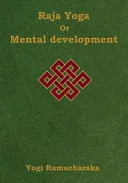
Raja Yoga Or Mental Development: A Series of Lessons in Raja Yoga (Large Print Edition)
 84
84

Raja Yoga Or Mental Development: A Series of Lessons in Raja Yoga (Large Print Edition)
Yogi Ramacharaka's "Raja Yoga Or Mental Development" offers a lucid, if somewhat dated, exposition on the mental disciplines of Raja Yoga. The strength lies in its systematic presentation of concepts that, while ancient, are framed in a manner accessible to early 20th-century Western readers. The detailed breakdown of the eight limbs of Yoga, particularly focusing on the internal practices like Dharana (concentration) and Dhyana (meditation), provides a clear roadmap. However, the prose, while clear, occasionally leans towards a didactic tone that might feel overly instructive to contemporary practitioners accustomed to more nuanced or experiential accounts. A passage discussing the control of Prana through mental focus, while conceptually sound within the yogic framework, could benefit from more contemporary scientific or philosophical grounding to bridge the gap for skeptical readers. Overall, it serves as a valuable historical document and a solid introduction to the mental aspects of Raja Yoga.
📝 Description
84
### What It Is Raja Yoga Or Mental Development presents a foundational exploration of Raja Yoga, a path of "royal yoga" focused on mental control and spiritual realization. Unlike Hatha Yoga's emphasis on physical postures, Raja Yoga delves into the intricacies of the mind, offering systematic techniques for concentration, meditation, and self-mastery. The text aims to provide a practical guide for developing mental faculties, understanding consciousness, and achieving a higher state of awareness through disciplined mental exercise.
### Who It's For This work is designed for individuals seeking a structured approach to mental and spiritual development that predates modern psychological frameworks. It will appeal to students of Eastern philosophies, particularly those interested in the practical application of Yoga beyond physical asana. Readers looking for a clear, step-by-step method to enhance focus, cultivate inner peace, and explore the nature of consciousness will find value here. It is also suitable for those curious about the historical roots of mind-control and meditation practices.
### Historical Context Written by Yogi Ramacharaka, the teachings presented in Raja Yoga Or Mental Development emerged from a rich Indian philosophical tradition stretching back millennia. The book's first publication in the early 20th century coincided with a growing Western interest in Eastern spirituality, partly fueled by figures like Swami Vivekananda, who famously addressed the Parliament of Religions in Chicago in 1893. This period saw a surge in esoteric societies and a desire to understand spiritual practices through a more systematic lens, often drawing parallels with nascent Western psychology.
### Key Concepts The core concepts revolve around the systematic training of the mind. This includes understanding the different states of consciousness, the nature of thought, and the power of will. The book details methods for developing concentration, moving from external objects to internal awareness, and ultimately achieving a state of samadhi or profound meditative absorption. It emphasizes that mental development is not merely academic but a practical discipline leading to inner transformation and a deeper understanding of the self.
💡 Why Read This Book?
• Gain a foundational understanding of Raja Yoga's mental disciplines, learning systematic techniques for concentration and meditation directly from early 20th-century Western interpretations of Indian philosophy. • Explore the concept of Prana and its relation to mental energy, as detailed in the book's sections on yogic breathing and mental control, offering a unique perspective on vital force. • Understand the historical bridge between ancient Indian yogic thought and early Western esoteric movements, particularly through the book's context around its initial publication and reception.
⭐ Reader Reviews
Honest opinions from readers who have explored this book.
❓ Frequently Asked Questions
What is Raja Yoga according to Yogi Ramacharaka?
According to Yogi Ramacharaka in Raja Yoga Or Mental Development, Raja Yoga is the 'royal path' focused on mental development and control. It emphasizes systematic techniques for concentration, meditation, and achieving higher states of consciousness, distinguishing it from physical yoga practices.
How does Raja Yoga Or Mental Development differ from Hatha Yoga?
This book differentiates Raja Yoga from Hatha Yoga by focusing on mental and spiritual disciplines rather than primarily on physical postures (asanas) and breathing exercises (pranayama). While it acknowledges these, its core instruction concerns the cultivation of the mind.
When was Raja Yoga Or Mental Development first published?
While the specific first publication date is not in the provided text, the book's author, Yogi Ramacharaka, was active in the early 20th century, with many of his works first appearing around the 1900s, reflecting a period of intense Western interest in Indian philosophy.
What are the key benefits of practicing Raja Yoga as described in the book?
The book suggests benefits include enhanced concentration, increased willpower, deeper self-understanding, improved mental clarity, and the attainment of inner peace through systematic mental training and meditation techniques.
Is this book suitable for absolute beginners in yoga?
Yes, the book is structured as a series of lessons intended for those new to Raja Yoga's specific mental disciplines. It provides a progressive approach to understanding and practicing the techniques described.
What is the 'mental development' aspect of Raja Yoga?
The 'mental development' refers to the deliberate cultivation of mental faculties such as concentration, memory, imagination, and will. It involves understanding the mind's workings and applying techniques to refine its power and achieve greater control.
🔮 Key Themes & Symbolism
Mental Discipline and Control
The central theme is the systematic cultivation of mental faculties. Yogi Ramacharaka posits that the mind, like any other faculty, can be trained through disciplined practice. This involves understanding the nature of thought, developing unwavering concentration (Dharana), and progressing towards deep meditation (Dhyana). The book provides exercises aimed at strengthening willpower and directing mental energy, presenting these as the 'royal' path to self-mastery and spiritual insight, distinct from purely physical yogic methods.
The Nature of Consciousness
Ramacharaka explores the layered nature of consciousness, moving beyond the waking state to consider deeper levels of awareness attainable through yogic practices. The text discusses the interplay between the personal mind (manas) and higher consciousness, suggesting that through Raja Yoga, one can achieve a more profound understanding of the self and its connection to the universal. This exploration aims to demystify subjective experience and offer a framework for its systematic investigation.
Practical Application of Yoga
This work emphasizes the practical, actionable aspects of Raja Yoga. It is not merely theoretical philosophy but a guide to 'mental development.' The lessons are structured to be followed sequentially, building from basic concentration exercises to more advanced states of meditative absorption. The book translates complex yogic principles into accessible techniques for the Western reader, focusing on tangible results in terms of mental acuity and inner calm.
The Path to Enlightenment
Raja Yoga is presented as a direct path to spiritual realization or enlightenment. By mastering the mind, practitioners are said to overcome limitations imposed by ego and illusion, leading to a state of liberation. The book outlines how the stages of Raja Yoga, culminating in Samadhi, facilitate this transformative process, enabling the individual to perceive reality more clearly and live in accordance with higher principles.
💬 Memorable Quotes
“The world is a book, and those who do not travel read only a page.”
— This metaphorical statement suggests that experiencing different cultures, places, and ideas is essential for a complete understanding of life, akin to reading an entire book rather than just a single page.
“Thought is the force that moves the world.”
— This highlights the power of mental activity and intention. It implies that all creation and change, whether personal or societal, originates from the realm of thought and ideas.
“Concentration is the key that unlocks the door of the mind.”
— This emphasizes the crucial role of focused attention. It presents concentration not just as a skill, but as the essential tool required to access deeper mental states and hidden potentials.
“The Yogi seeks to know himself.”
— This encapsulates the introspective nature of Raja Yoga. The ultimate goal is self-realization, achieved through disciplined self-observation and understanding the true nature of one's being.
“Will is the rudder of the mind.”
— This likens willpower to a steering mechanism, suggesting that conscious intention and determination are what guide and direct mental processes effectively.
🌙 Esoteric Significance
Tradition
This work aligns with the broader Hindu philosophical tradition of Yoga, specifically Raja Yoga as codified by Patanjali in the Yoga Sutras. However, Yogi Ramacharaka's presentation is filtered through an early 20th-century Western lens, making it accessible to a non-Indian audience. It shares common ground with the Hermetic principle of 'As above, so below,' applying mental control on the inner plane to influence the outer experience. It can be seen as a bridge between Eastern esoteric philosophy and nascent Western interest in mind sciences and practical spirituality.
Symbolism
While the text focuses heavily on practical mental techniques, subtle symbolism is present. The concept of 'Prana' (vital life force) acts as a symbolic representation of the subtle energies that the mind can influence and direct. The progression through the 'limbs' of Raja Yoga, from Yama (ethical restraints) to Samadhi (absorption), can be viewed as a symbolic journey from the mundane to the divine, a structured ascent of consciousness.
Modern Relevance
Modern mindfulness and meditation practices, particularly those emphasizing concentration and cognitive training, echo the techniques presented by Ramacharaka. Thinkers and practitioners in positive psychology, neuroplasticity research, and secularized meditation movements often engage with principles of mental discipline and focused awareness that are foundational to Raja Yoga. The book's emphasis on the mind's power remains relevant for anyone exploring consciousness, self-mastery, and well-being.
👥 Who Should Read This Book
• Students of early 20th-century esoteric thought seeking to understand the popularization of Indian philosophies in the West. • Individuals interested in the mental and meditative aspects of Yoga, looking for structured lessons beyond physical postures. • Seekers of practical techniques for developing concentration, willpower, and self-awareness through disciplined mental exercises.
📜 Historical Context
Yogi Ramacharaka's "Raja Yoga Or Mental Development" emerged during a period of intense Western fascination with Indian spiritual traditions, particularly following the 1893 Parliament of Religions in Chicago where Swami Vivekananda introduced Vedanta and Yoga to a broad audience. The early 20th century saw a proliferation of esoteric literature and societies, seeking systematic methods for personal and spiritual growth. Ramacharaka’s work contributed to this trend by presenting Raja Yoga, the "royal path" of mental discipline, in a structured, didactic format. It arrived at a time when Western psychology was also beginning to explore the mind, though from a materialist perspective. This book offered an alternative, ancient framework for understanding consciousness and mental development, contrasting with the prevailing scientific and philosophical currents. Its accessible style aimed to bridge the cultural and philosophical gap, making complex yogic concepts available to a Western readership eager for self-improvement and spiritual knowledge.
📔 Journal Prompts
The concept of Prana as a subtle energy influencing the mind.
The systematic progression through the eight limbs of Raja Yoga.
The distinction between waking consciousness and deeper states.
The role of will in directing thought.
The practice of Dharana (concentration) on an object.
🗂️ Glossary
Raja Yoga
The 'royal yoga,' a branch of Yoga focused on mental discipline, concentration, meditation, and control of the mind to achieve spiritual realization or self-mastery.
Prana
The vital life force or energy that permeates the universe and sustains all living beings. In Raja Yoga, control over Prana is often linked to mental control.
Dharana
The sixth limb of Raja Yoga, referring to the practice of concentration, or the fixing of the mind onto a single point or object.
Dhyana
The seventh limb of Raja Yoga, following Dharana, representing deep meditation or contemplation, where the mind remains steadily focused.
Samadhi
The eighth and final limb of Raja Yoga, signifying a state of profound meditative absorption or enlightenment, where the distinction between the meditator and the object of meditation dissolves.
Manas
In yogic philosophy, often refers to the lower mind or intellect, responsible for reasoning, sensing, and processing sensory data.
Will
The faculty of conscious and deliberate choice; the power to decide or act according to one's own determination, considered a key element to be developed in Raja Yoga.