Qigong Illustrated
 78
78

Qigong Illustrated
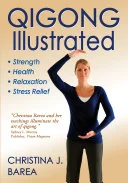
Christina J. Barea’s *Qigong Illustrated*, first published in 2011, offers a welcome clarity to a practice often shrouded in mystique. Its strength lies in its direct, visual approach, presenting full-color photo sequences that demystify movements like the Daoist Five. This is not an abstract treatise but a functional guide. However, while the illustrations are excellent, the accompanying text sometimes feels a bit dry, lacking the deeper philosophical underpinnings that might fully contextualize the movements within their Daoist or Buddhist roots. For instance, the section on the Eight Silk Brocade, while technically accurate, could benefit from more explanation of the energetic pathways each movement is intended to influence. Nevertheless, for its intended purpose of providing clear, actionable instruction, the book succeeds admirably, making qigong accessible to those who learn best through visual demonstration.
📝 Description
78
### What Qigong Illustrated Is
This volume serves as a practical manual for understanding and performing qigong, the ancient Chinese system of movement, breathing, and meditation. It moves beyond theoretical explanations to offer a hands-on approach. The book details specific exercises and traditional routines, making the complex art of qigong accessible to a wider audience seeking to cultivate their vital energy, or 'qi'.
### Who Can Benefit from This Guide
Qigong Illustrated is designed for individuals interested in self-healing, stress reduction, and enhancing physical vitality. It caters to beginners unfamiliar with qigong practices, as well as intermediate practitioners looking to refine their technique. Those seeking a holistic approach to wellness, incorporating mind-body integration, will find its systematic presentation particularly useful.
### The Origins and Evolution of Qigong
While qigong boasts a history stretching back millennia in China, its modern popularization owes much to works like this, which distill its essence for contemporary practitioners. This book emerges in an era where Eastern contemplative and movement practices have gained global traction, bridging traditional knowledge with accessible instruction for a Western audience seeking balance and health.
### Core Principles Presented
The work centers on the three essential components of qigong: regulating the body, regulating the breath, and regulating the mind. It illustrates how the harmonious interplay of these elements facilitates the smooth flow of qi throughout the body, addressing physical ailments and promoting mental clarity. Specific routines are presented to target these regulatory aspects.
💡 Why Read This Book?
• Gain practical instruction on fundamental qigong forms like the Daoist Five, with detailed photographic sequences to guide your practice, as presented in the book's early chapters. • Learn to integrate body, breath, and mind through specific exercises designed to regulate these three essential components, a core tenet illustrated throughout the routines. • Understand the fundamental concept of 'qi' and how its cultivation through specific movements, such as those in the Eight Silk Brocade, can contribute to physical and mental well-being, as explained in the book's foundational sections.
⭐ Reader Reviews
Honest opinions from readers who have explored this book.
❓ Frequently Asked Questions
What specific qigong routines are detailed in Qigong Illustrated?
The book provides step-by-step instructions for several traditional routines, including the Daoist Five, the Eight Silk Brocade, and Turning and Winding the Belt Vessel, accompanied by full-color photo sequences.
Is Qigong Illustrated suitable for absolute beginners?
Yes, the book is structured as a step-by-step guide with detailed instructions and visual aids, making it accessible for individuals new to qigong practices.
What are the three essential components of qigong as presented in the book?
Qigong Illustrated centers on regulating the body, regulating the breath, and regulating the mind as the three fundamental pillars for effective qigong practice.
When was Qigong Illustrated first published?
The book was first published in 2011, offering a contemporary guide to this ancient practice.
Does the book explain the healing power of qi?
Yes, the original blurb highlights that the book aims to help readers discover the incredible healing power of qi, suggesting its therapeutic benefits are a key focus.
What kind of visual aids does Qigong Illustrated use?
The book utilizes detailed, full-color photo sequences to illustrate the most effective movements, exercises, and traditional routines.
🔮 Key Themes & Symbolism
Body-Mind Regulation
The core of qigong practice, as detailed in this guide, lies in the synchronized regulation of three fundamental aspects: the physical body, the breath, and the mind. By learning to control and harmonize these elements, practitioners can influence the flow of vital energy, or qi. The book illustrates how specific postures and movements directly address bodily alignment and tension, while controlled breathing techniques quiet the mind, leading to a state of integrated awareness and enhanced internal balance. This holistic approach is presented as key to unlocking qigong's therapeutic potential.
Cultivation of Qi
Central to qigong is the concept of 'qi,' often translated as vital energy or life force. Qigong Illustrated explains that through diligent practice of its prescribed movements and breathing exercises, individuals can cultivate and strengthen this internal energy. The book details how qi circulates throughout the body along specific energetic pathways. By facilitating its smooth and abundant flow, practitioners aim to promote health, vitality, and resilience, addressing imbalances that may manifest as physical or mental discomfort.
Traditional Routines
The book offers practical instruction on established qigong forms, providing a tangible entry point into the practice. Routines such as the Daoist Five and the Eight Silk Brocade are presented with meticulous detail, including step-by-step photo sequences. These are not merely exercises but structured sequences designed to achieve specific energetic and physical benefits. By mastering these traditional sets, practitioners engage with centuries of accumulated wisdom on cultivating health and longevity through systematic movement and breathwork.
Accessible Practice
Designed for a broad audience, Qigong Illustrated aims to demystify qigong, making its benefits attainable for those unfamiliar with its origins. The use of full-color photographs and clear, concise instructions breaks down complex movements into manageable steps. This accessibility is crucial for encouraging consistent practice, allowing individuals to integrate qigong into their daily lives for stress reduction and overall well-being, bridging the gap between ancient traditions and modern life.
💬 Memorable Quotes
“Strengthen your body. Strengthen your mind.”
— This concise statement encapsulates the dual benefit of qigong practice: physical conditioning and mental clarity. It highlights the holistic nature of the discipline, suggesting that improvements in one area invariably support the other, leading to overall enhanced well-being.
“Each year, millions of people worldwide discover qigong and the incredible healing power of qi.”
— This observation underscores the growing global recognition of qigong's therapeutic potential. It suggests that the practice offers tangible benefits for health and vitality, drawing an increasing number of adherents seeking its restorative effects.
“Qigong Illustrated is a step-by-step guide complete with detailed instructions and full-color photo sequences.”
— This highlights the book's primary value proposition: its clarity and visual nature. It promises a user-friendly manual that simplifies complex movements, making the practice accessible even for those with no prior experience.
“Centered on the three essential components of qigong...”
— This points to the foundational structure of the practice as presented in the book. By focusing on regulating the body, breath, and mind, the guide offers a systematic framework for understanding and engaging with qigong principles.
“including Daoist Five, Eight Silk Brocade, and Turning and Winding the Belt Vessel.”
— This lists specific, named qigong routines covered in the book, giving potential readers concrete examples of the practical content they can expect to learn and practice.
🌙 Esoteric Significance
Tradition
Qigong is deeply embedded within the Daoist tradition, a primary lineage of Chinese esoteric thought and practice. It aligns with Daoist principles of cultivating balance, harmonizing with the natural flow of the universe (the Dao), and fostering longevity. This work fits within the broader spectrum of Daoist cultivation practices, which include alchemy, internal energy work, and meditation. It departs from more overtly mystical or philosophical texts by focusing on the physical and energetic mechanics of qi cultivation, making it a practical gateway into Daoist concepts of health and vitality.
Symbolism
While *Qigong Illustrated* emphasizes practical application, the movements themselves carry symbolic weight within the Daoist framework. For example, the 'Eight Silk Brocade' routines are named for their supposed ability to improve the health and flexibility of the 'silks' – the tendons and ligaments – which are associated with the Wood element and the Liver organ. The concept of 'qi' itself is a fundamental symbol of vital force, akin to the *prana* in Indian traditions, representing the animating principle of all existence that practitioners seek to consciously direct and enhance.
Modern Relevance
Contemporary practitioners of holistic health, embodied cognition, and contemplative sciences frequently draw upon qigong principles. Schools and individuals teaching modern qigong forms, often adapted for Western audiences, utilize the foundational knowledge presented in works like Barea's. It informs practices aiming for stress reduction, chronic pain management, and improved physical function. Furthermore, its emphasis on internal energy cultivation resonates with modern energy healing modalities and somatic psychology approaches that explore the body's inherent capacity for self-regulation and healing.
👥 Who Should Read This Book
• Individuals seeking a clear, visual introduction to qigong for health and stress management, who prefer step-by-step photographic guidance over abstract theory. • Practitioners of complementary therapies or movement arts, such as yoga or Tai Chi, interested in expanding their repertoire with specific Chinese energetic cultivation techniques. • Students of traditional Chinese medicine or Daoist philosophy looking for a practical, hands-on manual to complement their theoretical studies of qi and its energetic pathways.
📜 Historical Context
Published in 2011, *Qigong Illustrated* arrived during a period of significant global interest in mind-body practices originating from Asia. While qigong itself has roots stretching back millennia in China, its popularization in the West accelerated through the late 20th and early 21st centuries, facilitated by accessible instructional materials. This era saw a confluence of interest from both the wellness movement, seeking natural health solutions, and esoteric circles exploring energetic cultivation. Qigong's accessible nature, compared to more complex martial arts or meditation systems, made it a prime candidate for widespread adoption. It gained traction alongside yoga and Tai Chi, often discussed in parallel by authors like Mantak Chia, who was already a prominent figure in promoting Daoist internal arts. The book's emergence reflects a broader cultural trend toward holistic health and a desire to reconnect with ancient wisdom traditions for modern well-being, finding an audience eager for practical, visually-supported guidance.
📔 Journal Prompts
Reflect on the initial description of regulating the body, breath, and mind; how might harmonizing these three aspects impact your daily life?
Consider the 'Eight Silk Brocade' routine; what physical or energetic benefits do you anticipate from practicing such a sequence?
Analyze the core concept of 'qi' as presented; how does this differ from or align with your current understanding of vital energy?
Explore the visual instructions for a specific movement; how does the photographic sequencing aid your comprehension and potential practice?
Meditate on the idea of strengthening both body and mind simultaneously; what personal experiences does this dual focus evoke?
🗂️ Glossary
Qigong
An ancient Chinese practice involving coordinated body posture and movement, breathing, and meditation used for health, spirituality, and martial arts training. It aims to cultivate and balance qi (vital energy).
Qi
A fundamental concept in Chinese philosophy and medicine, often translated as vital energy, life force, or breath. It is believed to animate all living things and can be cultivated and directed through practices like qigong.
Daoist Five
A specific set of qigong exercises derived from Daoist traditions, often focusing on movements associated with the five elements (Wood, Fire, Earth, Metal, Water) and their corresponding organs.
Eight Silk Brocade
A well-known set of eight qigong exercises, considered foundational, that involve gentle movements designed to stretch tendons, strengthen the body, and improve the flow of qi.
Turning and Winding the Belt Vessel
A qigong exercise focused on rotating the torso and mobilizing the energy pathway associated with the Belt Vessel meridian, which encircles the body.
Regulating the Body
The physical component of qigong practice, involving proper posture, alignment, and controlled movements to facilitate the free flow of qi and release physical tension.
Regulating the Breath
The respiratory component of qigong, emphasizing deep, slow, and coordinated breathing patterns that work in harmony with movement to calm the mind and enhance energy circulation.