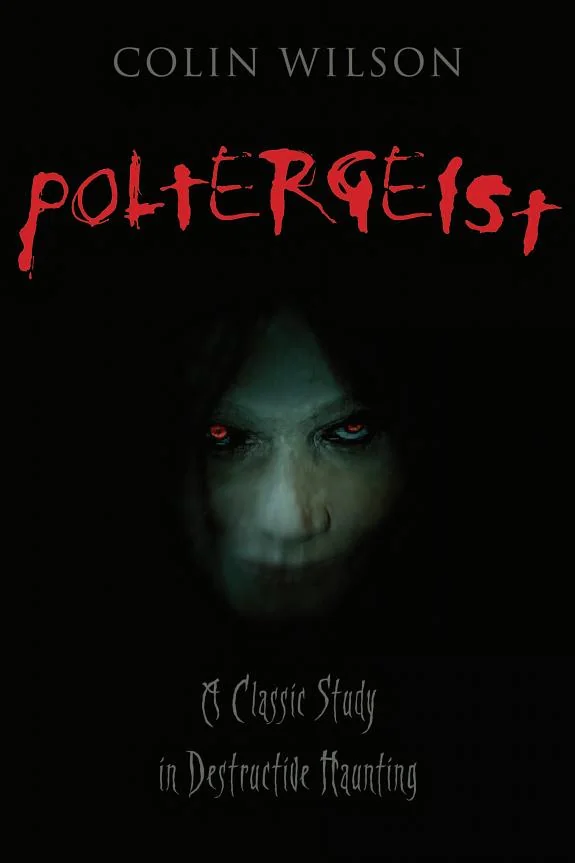
Poltergeist
 84
84

Poltergeist
Colin Wilson's approach to the poltergeist phenomenon in his 2010 work is characteristically bold, seeking a unifying theory for what many dismiss as mere superstition. He excels at presenting a vast array of case studies, from the Enfield Poltergeist to less publicized but equally disturbing accounts, demonstrating a consistent pattern of seemingly random, destructive energy. Wilson's strength lies in his ability to connect these events to psychological states, particularly adolescent turmoil, positing the individual as an unconscious 'generator' of the phenomena. A limitation, however, is that the theory, while compelling, can sometimes feel asserted rather than definitively proven, leaving the reader to bridge the final gap of certainty. The examination of the 1970s 'Mona Ginger' case, for instance, vividly illustrates the raw power and chaotic nature Wilson attributes to these events. Ultimately, Wilson offers a robust framework for understanding poltergeists as expressions of hidden human potential, even if the mechanism remains elusive.
📝 Description
84
### What It Is Poltergeists are not mere figments of folklore; Colin Wilson presents them as tangible, often violent, manifestations of psychic energy. This work investigates the observable phenomena associated with these hauntings, detailing instances of objects moving, unexplained noises, and physical disturbances. Wilson moves beyond simple cataloging to examine the underlying psychological and energetic dynamics at play.
### Who It's For This book is for serious students of the paranormal, investigators of unexplained phenomena, and those intrigued by the boundaries of human consciousness. It appeals to readers who appreciate rigorous examination of evidence, even when dealing with subjects often relegated to superstition. Those interested in the psychological underpinnings of hauntings will find particular value.
### Historical Context Wilson's exploration of poltergeists builds upon a long history of documented disturbances, tracing a lineage from early modern hauntings to the more scientifically observed cases of the 20th century. The book situates the phenomenon within the broader landscape of parapsychology, a field gaining academic traction throughout the mid-to-late 20th century, often facing skepticism from mainstream science.
### Key Concepts The central concept is the 'agent,' the often adolescent or emotionally charged individual around whom poltergeist activity coalesces. Wilson posits that these agents unconsciously project psychic energy, which then manifests as physical disturbances. The book also explores the idea of 'residual energy' and the potential for these manifestations to be echoes of intense emotional states rather than direct psychic projection.
💡 Why Read This Book?
• Learn how Colin Wilson theorizes adolescent emotional states can manifest as physical disturbances, a concept explored through detailed case studies like those involving the "agent" phenomenon. • Understand the historical trajectory of poltergeist investigations, referencing specific documented cases from the 20th century that Wilson analyzes for patterns. • Grasp the concept of "psychic energy projection" as a potential cause for unexplained phenomena, moving beyond supernatural explanations to a more psychologically grounded perspective.
⭐ Reader Reviews
Honest opinions from readers who have explored this book.
❓ Frequently Asked Questions
What is the primary theory behind poltergeist activity in Colin Wilson's book?
Colin Wilson primarily posits that poltergeist phenomena are manifestations of unconscious psychic energy projected by an 'agent,' often an emotionally turbulent individual, particularly adolescents. This energy creates physical disturbances and unexplained events.
Are there specific historical cases of poltergeists discussed?
Yes, the book examines numerous historical cases, including detailed analyses of well-known events and lesser-known but equally compelling accounts of unexplained disturbances and object manipulation.
Does Colin Wilson link poltergeists to psychological states?
Absolutely. A core tenet of Wilson's theory is the connection between intense psychological states, especially those involving stress or repressed emotions, and the generation of poltergeist activity.
What is an 'agent' in the context of poltergeist phenomena?
An 'agent' refers to the individual, frequently a teenager, who is believed to be the unconscious source of the poltergeist activity. Their emotional turmoil or psychic energy is seen as the catalyst for the disturbances.
What kind of phenomena are described as poltergeist activity?
The book details a range of phenomena including unexplained noises, moving objects, spontaneous fires, physical assaults like pinching or hair-pulling, and materializations of objects or liquids.
When was Colin Wilson's book 'Poltergeist' first published?
Colin Wilson's book 'Poltergeist' was first published on November 8, 2010, contributing to the ongoing discourse on paranormal phenomena.
🔮 Key Themes & Symbolism
The Agent Phenomenon
Wilson centers his theory on the 'agent,' an individual, often young, who unconsciously projects psychic energy causing poltergeist activity. This isn't about malicious spirits but a powerful, yet uncontrolled, output of human consciousness. The book details how adolescent angst or intense emotional states can trigger these disruptive manifestations, moving the focus from external entities to internal psychological dynamics. Case studies illustrate how the activity often centers around this individual, acting as a psychic lightning rod for disruptive forces.
Psychic Energy and Manifestation
This theme explores how raw psychic energy, particularly when amplified by emotional stress, can interact with the physical world. Wilson examines the evidence for spontaneous phenomena like moving objects, levitation, and unexplained noises as direct results of this energy projection. The work suggests a bridge between the mind and matter, where intense human experience can literally shape or disturb its immediate environment, presenting a challenge to conventional physics.
Historical Case Studies
Wilson meticulously examines documented poltergeist cases throughout history, from early modern accounts to 20th-century investigations. By analyzing patterns across these diverse events, he builds his argument for a consistent underlying mechanism. These detailed narratives serve not just as evidence but as explorations of human interaction with the uncanny, revealing recurring themes and signatures of the phenomenon across different eras and cultures.
Psychology of Hauntings
Moving beyond supernatural explanations, Wilson delves into the psychological underpinnings of poltergeist activity. He proposes that these events are often expressions of repressed emotions, psychological crises, or the immense, untapped potential of the human mind. The book suggests that understanding the agent's internal world is key to understanding the external manifestations, framing hauntings as complex psychological dramas played out in physical space.
💬 Memorable Quotes
“Invisible tormentors slapping and pinching and pulling hair.”
— This vivid description captures the physical and invasive nature of poltergeist activity, highlighting the personal and often distressing experiences reported by witnesses, suggesting a direct, tangible interaction with unseen forces.
“These are the hallmarks of the poltergeist phenomenon.”
— This statement serves as a definitional anchor, summarizing the key observable characteristics of poltergeist events that Wilson proceeds to analyze and theorize about throughout the book.
“In this classic book on destructive hauntings, Colin Wilson, renowned authority on the paranormal, examines the evidence and develops a definitive theory.”
— This blurb-like statement positions Wilson as a leading expert and frames the book's purpose: a systematic investigation and theoretical framework for understanding aggressive hauntings based on empirical evidence.
“Crashing noises and disembodied voices, coming from nowhere and everywhere at once.”
— This quote effectively conveys the disorienting and pervasive nature of poltergeist disturbances, emphasizing their seemingly inexplicable origin and the sense of omnipresent, yet invisible, activity.
“Pools of water materializing out of thin air, pots and pans and knives and knick-knacks flying through the room.”
— These specific examples illustrate the dramatic and often chaotic physical manifestations associated with poltergeists, showcasing the disruptive potential and the wide range of objects that can be affected.
🌙 Esoteric Significance
Tradition
Wilson's work on poltergeists can be situated within the broader tradition of psychical research and Western esotericism, particularly its 20th-century manifestations. While not strictly adhering to a single lineage like Kabbalah or Hermeticism, his exploration of psychic energy and consciousness aligns with theosophical and broader New Age concepts of mind-over-matter and subtle energies. He departs from purely spiritualist interpretations by emphasizing psychological and energetic dynamics rooted in the individual, reflecting a more modern, often secularized, approach to the paranormal.
Symbolism
The poltergeist phenomenon itself can be seen as a symbol of repressed psychological energy or societal disruption breaking through into the mundane. Objects being thrown or moved symbolize the unconscious mind's chaotic influence on the external world, disrupting order and control. The spontaneous fires or materializations can represent uncontrolled creative or destructive psychic force, a powerful but untamed aspect of human consciousness attempting to express itself.
Modern Relevance
Wilson's theories continue to influence contemporary discussions on anomalous phenomena, particularly within communities exploring consciousness studies and fringe science. His emphasis on the 'agent' and the psychological roots of poltergeists resonates with modern therapeutic approaches that explore psychosomatic manifestations and the power of the subconscious. Thinkers in fields like transpersonal psychology and researchers into psi phenomena may still draw upon his case studies and theoretical frameworks.
👥 Who Should Read This Book
• Investigators of unexplained phenomena seeking to understand theoretical frameworks beyond simple ghost hunting. • Students of parapsychology interested in Colin Wilson's extensive research and his theories on psychic energy projection. • Readers fascinated by the intersection of psychology and the paranormal, particularly those intrigued by the concept of the 'agent' in hauntings.
📜 Historical Context
Published in 2010, Colin Wilson's 'Poltergeist' arrived at a time when parapsychology continued to navigate the fringes of academic respectability. The late 20th century had seen increased documentation of phenomena like the reported activity at the Enfield house in the late 1970s, which provided fertile ground for researchers. Wilson's work engaged with a tradition of paranormal investigation that included figures like Harry Price, who investigated the Borley Rectory. While mainstream science often remained skeptical, Wilson's approach sought to integrate psychological theories, drawing parallels with the work of figures like Carl Jung, who explored the collective unconscious. The book's reception likely appealed to an existing readership interested in esoteric subjects, a field that always maintained a parallel existence to more orthodox scientific inquiry, often fueled by popular culture's fascination with the supernatural.
📔 Journal Prompts
The 'agent' phenomenon and its connection to adolescent emotional states.
Manifestations of psychic energy in poltergeist activity.
Comparative analysis of historical poltergeist case studies.
The psychological underpinnings of unexplained physical disturbances.
Theories of consciousness and matter interaction in paranormal events.
🗂️ Glossary
Poltergeist
A type of haunting characterized by physical disturbances such as loud noises, moving objects, and physical interactions, often attributed to an unseen entity or, in Wilson's theory, a human agent.
Agent
In the context of poltergeist phenomena, the individual, often an adolescent, believed to be the unconscious source of the disruptive energy and activity.
Psychic Energy Projection
The concept that human consciousness, particularly under emotional stress, can generate and project energy that influences or manipulates the physical environment.
Destructive Haunting
A classification of hauntings specifically involving physical damage, aggression, or violent manifestations, as opposed to more passive phenomena like apparitions.
Residual Energy
A theoretical concept suggesting that intense emotional events can leave an energetic imprint on a location, which may manifest as recurring phenomena.
Parapsychology
The study of alleged psychic phenomena and other paranormal claims, including telepathy, precognition, and psychokinesis, often outside the mainstream scientific consensus.
Anomalous Phenomena
Events or occurrences that deviate from established scientific laws or norms, often encompassing a wide range of unexplained experiences including paranormal activity.