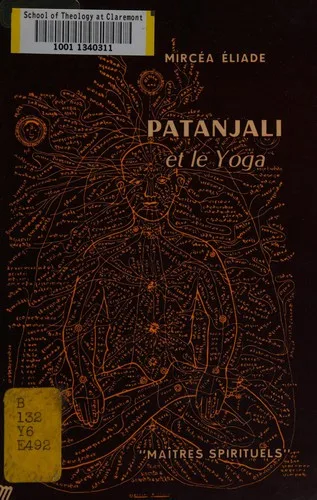
Patañjali et le Yoga
 79
79

Patañjali et le Yoga
Mircea Eliade's Patañjali et le Yoga is a formidable scholarly undertaking, offering a dense, historically grounded interpretation of the Yoga Sutras. Eliade's strength lies in situating Patañjali's system within the broader tapestry of Indian religious thought, moving past simplistic modern Yoga paradigms. He compellingly argues for understanding Yoga as a complex soteriological system rather than mere physical exercise. A limitation, however, is the book's academic density, which can make it less accessible to those without a background in Sanskrit studies or comparative religion. The detailed exegesis of the kleshas, for instance, while illuminating, requires sustained attention. Eliade’s work provides essential context for anyone seeking the philosophical bedrock of Yoga. It stands as a crucial, albeit challenging, academic resource.
📝 Description
79
Mircea Eliade published Patañjali et le Yoga in 1984, examining the Yoga Sutras.
Mircea Eliade's Patañjali et le Yoga offers a scholarly examination of the Yoga Sutras, a core text of Yoga philosophy. Eliade, known for his studies on religious history and shamanism, provides a detailed analysis that goes beyond common interpretations. This book is not a practical manual for postures or meditation; instead, it is an academic study focused on the philosophical and historical foundations of classical Yoga.
Eliade places the Sutras within the wider context of Indian intellectual traditions. The work is best suited for academics, graduate students, and serious practitioners of Yoga and Indian philosophy who desire a deep, historical perspective on Patañjali's work. Those interested in the intellectual history of Indian asceticism and contemplative practices will find it valuable, especially if they appreciate close textual analysis. A background in Sanskrit or Indian philosophical concepts will help readers fully grasp Eliade's arguments.
Published in 1984, this book appeared during a time of increased Western academic interest in Eastern religions. Eliade's work distinguished the philosophical origins of Yoga from later, often Western adaptations. His prior scholarship on shamanism and archaic religions offered a distinct viewpoint for understanding Indian ascetic traditions. This period also saw other scholars like Georg Feuerstein engage with Yoga texts, though Eliade's focus remained on historical and phenomenological analysis.
💡 Why Read This Book?
• Understand the philosophical depth of the Yoga Sutras beyond modern postural practice, grasping concepts like the 'kleshas' that obstruct liberation, as detailed in Eliade's historical analysis. • Gain insight into the 1984 intellectual landscape surrounding Yoga studies, appreciating how Mircea Eliade distinguished classical Yoga from its later adaptations. • Explore the concept of 'samadhi' not just as concentration, but as a specific stage in a soteriological path, as outlined by Eliade's scholarly examination of Patañjali's system.
⭐ Reader Reviews
Honest opinions from readers who have explored this book.
❓ Frequently Asked Questions
What is the primary focus of Mircea Eliade's "Patañjali et le Yoga"?
The book is a scholarly examination of Patañjali's Yoga Sutras, focusing on its philosophical, historical, and religious context within ancient India, rather than a practical guide to Yoga postures.
Who is Mircea Eliade and why is his perspective on Yoga significant?
Mircea Eliade was a prominent historian of religions known for his work on shamanism and archaic societies. His perspective is significant for bringing a rigorous academic and comparative religious studies approach to Yoga's origins.
Does "Patañjali et le Yoga" discuss modern Yoga practices?
No, Eliade's work predates much of the global popularization of modern Yoga. It focuses exclusively on the classical Yoga tradition as presented in Patañjali's Sutras and its historical milieu.
What is the 'citta' as discussed in Eliade's analysis of Patañjali?
'Citta' refers to the mind or consciousness in Patañjali's Yoga philosophy, understood as the seat of perception, cognition, and volition, which the practitioner seeks to purify and control.
When was "Patañjali et le Yoga" originally published?
Mircea Eliade's "Patañjali et le Yoga" was first published in 1984, offering a scholarly perspective during a period of increasing Western engagement with Eastern philosophies.
Is this book suitable for beginners interested in learning Yoga postures?
This book is not suitable for beginners seeking instruction on Yoga postures (asanas). It is an academic text intended for those with an interest in the philosophical and historical dimensions of Yoga.
🔮 Key Themes & Symbolism
The Philosophical Core of Yoga
Eliade meticulously unpacks the philosophical system embedded within Patañjali's Yoga Sutras, emphasizing its goal of 'kaivalya' or liberation. He distinguishes this profound spiritual aim from the physical disciplines often associated with Yoga today. The work explores how the Sutras conceptualize the mind ('citta') and its modifications, positing that through rigorous practice and detachment, one can transcend the limitations of ordinary consciousness and achieve a state of pure being. This focus on the ultimate cessation of suffering and ignorance is central to Eliade's interpretation.
Historical Context of Asceticism
A significant contribution of Eliade's work is its placement of Patañjali's Yoga within the broader historical currents of Indian asceticism and contemplative traditions. Published in 1984, it reflects a scholarly effort to understand the origins and evolution of these practices. Eliade examines how Yoga interacted with and diverged from other schools of thought prevalent in ancient India, such as Samkhya and Vedanta. This historical grounding helps readers appreciate Yoga not as an isolated system but as a product of a complex intellectual and spiritual landscape.
The Nature of Samadhi
Eliade dedicates considerable attention to the various states of meditative absorption ('samadhi') described by Patañjali. He differentiates between lower and higher forms of samadhi, moving beyond simple concentration exercises. For Eliade, these states are crucial steps on the path to liberation, involving a progressive refinement of consciousness and detachment from sensory experience. The book analyzes the subtle distinctions between these absorptive states and their role in overcoming the 'kleshas' or afflictions that bind the individual.
Critique of Popular Interpretations
While not explicitly stated as a polemic, Eliade's scholarly approach implicitly critiques the popularization and often superficial understanding of Yoga that emerged in the 20th century. By focusing intently on the textual and historical origins of Patañjali's system, he provides a counterpoint to interpretations that prioritize physical postures or generalized wellness. His work underscores the esoteric and philosophical depth of classical Yoga, urging readers to engage with its original intent and sophisticated metaphysical framework.
💬 Memorable Quotes
Direct passages from the work, attributed to the author.
“The goal of Yoga is 'kaivalya'.”
— This concise statement captures the ultimate aim of Patañjali's system: absolute liberation or isolation of consciousness from the material world and mental fluctuations.
“The 'kleshas' are the primary obstacles to spiritual progress.”
— Eliade highlights these five afflictions – ignorance, egoism, attachment, aversion, and the fear of death – as the root causes of suffering and the focus of Yoga's transformative practices.
“Understanding the 'citta' is crucial for controlling the mind.”
— This refers to the mind-stuff or consciousness itself, which Patañjali's Yoga aims to discipline and purify through specific techniques to achieve clarity and detachment.
“Samadhi represents stages of profound meditative absorption.”
— Eliade interprets these states not as mere relaxation but as advanced levels of consciousness achieved through dedicated practice, leading towards liberation.
“Yoga is a soteriological path.”
— This emphasizes that Yoga, in its classical form as presented by Patañjali, is fundamentally a system aimed at salvation or spiritual liberation from the cycle of existence.
🌙 Esoteric Significance
Tradition
Eliade's work engages with the classical Yoga tradition, a lineage deeply rooted in Indian Brahmanical thought and ascetic practices. While not strictly an esoteric text in the Western sense (like Kabbalah or Hermeticism), it explores a system that aims at profound transformation of consciousness and liberation from worldly existence, aligning with esoteric goals of spiritual attainment. Eliade positions Patañjali's Yoga as a sophisticated philosophical and contemplative path within the broader spectrum of Indian religious history, distinct from magical or devotional cults.
Symbolism
Within the Yoga Sutras, key symbolic concepts revolve around the 'citta' (mind-stuff), often depicted as a mirror that can either reflect truth or become clouded by 'kleshas' (afflictions). The goal of 'kaivalya' (isolation/liberation) is symbolic of the pure, unbound state of consciousness. Eliade analyzes the progression through stages of 'samadhi' as symbolic steps towards this ultimate realization, where the yogi distinguishes between the seer and the seen, transcending ordinary identification with the phenomenal world.
Modern Relevance
Contemporary scholars of religion and philosophy continue to draw upon Eliade's meticulous historical and textual analyses of Yoga. His work provides a critical counterpoint to the widespread Western popularization of Yoga, reminding practitioners and academics alike of its deep philosophical roots and soteriological aims. Thinkers exploring consciousness studies, comparative mysticism, and the history of contemplative practices still reference Eliade's contributions to understanding the classical Yoga tradition as a profound path of self-realization.
👥 Who Should Read This Book
• Advanced students of Indian philosophy and religious studies seeking a scholarly interpretation of the Yoga Sutras, moving beyond popular notions. • Researchers of comparative mysticism and contemplative traditions interested in the historical development of ascetic practices in South Asia. • Dedicated Yoga practitioners wishing to deepen their theoretical understanding of Yoga's philosophical underpinnings, including concepts like 'kaivalya' and the 'kleshas'.
📜 Historical Context
Mircea Eliade's "Patañjali et le Yoga," published in 1984, emerged during a significant period of scholarly re-evaluation of Eastern religious traditions. Following World War II and into the late 20th century, Western academia saw a surge in the study of comparative religion, with a particular focus on Indian philosophies and practices. Eliade, already a prominent figure for his works on shamanism and the history of religions, brought his rigorous, phenomenological approach to bear on the Yoga Sutras. This era saw continued engagement with Indian thought, though often in dialogue with or sometimes in contrast to earlier, more mystical interpretations. For instance, scholars like Agehananda Bharati were also active in discussing Yoga and Indian culture, though often with a more anthropological lens. Eliade's work sought to anchor the Yoga Sutras in their specific Brahmanical and ascetic context, differentiating it from the burgeoning, often secularized, Western adaptations of Yoga that were beginning to gain traction.
📔 Journal Prompts
Patañjali's concept of 'citta' and its modifications.
The role of 'kaivalya' as the ultimate aim of Yoga.
Eliade's historical contextualization of the Yoga Sutras.
The nature and impact of the five 'kleshas'.
The progression through stages of 'samadhi'.
🗂️ Glossary
Yoga Sutras
A foundational text of classical Yoga philosophy, traditionally attributed to the sage Patañjali, outlining the principles and practices for achieving liberation.
Patañjali
The sage traditionally credited with compiling the Yoga Sutras, a key figure in the development of Yoga philosophy in ancient India.
Citta
In Yoga philosophy, the mind or consciousness; the aggregate of mental functions including perception, cognition, and volition, which is the object of yogic discipline.
Kleshas
The afflictions or obstacles to spiritual progress in Yoga philosophy: ignorance (avidya), egoism (asmita), attachment (raga), aversion (dvesha), and the fear of death (abhinivesha).
Samadhi
A state of profound meditative absorption or concentration, considered a key stage in the yogic path towards liberation, with various levels described.
Kaivalya
The ultimate goal of Yoga; liberation, absolute freedom, or isolation of consciousness from the material world and mental fluctuations.
Asana
Literally 'seat' or 'posture'; in classical Yoga, refers to a steady and comfortable posture for meditation, distinct from the elaborate physical poses of modern Hatha Yoga.
🔮 Readers Also Liked
Browse all →









More by Mircea Eliade
All books →





More Free Occult Philosophy Books
View all →