Our Dark Incantations
 80
80

Our Dark Incantations
Wanda Hellmund's *Our Dark Incantations* attempts to marry the familiar tropes of magical academia with a darker, more sinister undercurrent. The premise of Mira Winters, a disillusioned ex-healer thrust into Demonology, is promising. Hellmund excels in depicting Mira's internal conflict, particularly her struggle with the incurable scar that initially drove her to healing magic. The murder mystery woven into the university's fabric provides a solid plot engine, although it occasionally overshadows the more nuanced exploration of demonic pacts and forbidden lore. A particular strength lies in the depiction of Mira's reluctant partnership, which crackles with believable tension. However, the sheer volume of plot threads—Mira's personal journey, the murder investigation, and the burgeoning demonic studies—sometimes feels overstuffed, leaving certain magical concepts underdeveloped. The work's ambition is clear, but its execution occasionally falters under its own weight. Ultimately, *Our Dark Incantations* offers a compelling, if slightly crowded, entry into the dark academic fantasy genre.
📝 Description
80
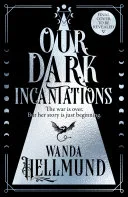
Wanda Hellmund's 2026 novel, Our Dark Incantations, follows an ex-healer's unwanted entry into demonology.
Mira Winters, a former healer scarred by war, finds her life rerouted when she enrolls in the Demonology department at Ivercrest University. This unexpected path moves her away from her original intentions and sets the stage for a complex story. The novel appeals to readers who appreciate dark fantasy elements woven with significant occult themes. It is particularly suited for those interested in the forbidden aspects of magic, accidental plunges into supernatural mysteries, and characters who confront past trauma and unforeseen futures. Those who enjoy fantasy narratives set within academic institutions, especially when high stakes are involved, will find this book engaging.
The setting reflects a world still dealing with the aftermath of conflict. The academic study of demonology within the story points to an engagement with occult traditions that saw increased interest in the late 19th and early 20th centuries. The narrative introduces ideas about the contrast between healing and destructive magic, the moral questions surrounding the use of dark arts, and how different magical fields connect. The university environment itself serves as a smaller model for examining academic views of the occult, contrasting theoretical learning with real, often perilous, application.
The novel engages with occult traditions that gained attention in the late 19th and early 20th centuries, a period marked by figures like Aleister Crowley and the burgeoning field of comparative religion. By situating demonology within an academic framework, Hellmund's work reflects a contemporary interest in formally studying esoteric practices. This approach contrasts theoretical knowledge of the occult with its practical, and potentially dangerous, manifestations, mirroring historical debates within occult societies about the nature and application of magical knowledge.
💡 Why Read This Book?
• Gain insight into the thematic tension between healing and destructive magic as explored through Mira Winters' initial goal of curing her scar versus her current Demonology studies. • Experience the atmosphere of Ivercrest University's Demonology department, a unique setting that grounds supernatural events in an academic context, mirroring late 19th-century occult studies. • Understand the narrative's exploration of accidental involvement in dark magic and murder investigations, offering a specific plot structure that deviates from typical chosen-one narratives.
⭐ Reader Reviews
Honest opinions from readers who have explored this book.
❓ Frequently Asked Questions
What is the central conflict Mira Winters faces in Our Dark Incantations?
Mira, an ex-healer, is forced into studying Demonology at Ivercrest University due to a mistake. Her primary conflict involves mastering dark magic against her will while dealing with an incurable scar and a campus murder.
What kind of magic is explored in Our Dark Incantations?
The book focuses on Demonology, including wicked spells and the study of demonic entities. It contrasts this with Mira's initial training in healing magic, exploring the ethical boundaries between different magical disciplines.
Is Our Dark Incantations a standalone novel or part of a series?
While the blurb suggests an ongoing narrative with 'devastating ripples,' information on whether *Our Dark Incantations* is part of a series is not yet available, as it was first published in 2026.
What is the significance of Mira's scar in the story?
Mira's incurable scar is a pivotal element driving her initial pursuit of healing magic. Its presence represents her past trauma and becomes a constant reminder of what she lost, influencing her reluctant journey into darker arts.
What role does Ivercrest University play in the narrative?
Ivercrest University serves as the primary setting and a character in itself. It's where Mira is enrolled in the 'wrong' department and becomes entangled in a murder investigation, highlighting the juxtaposition of academia and dark magic.
What themes are explored in Wanda Hellmund's Our Dark Incantations?
The novel explores themes of trauma, destiny versus choice, the corrupting nature of power, and the blurred lines between good and evil, particularly through the lens of forbidden magic and its consequences.
🔮 Key Themes & Symbolism
The Corrosive Nature of Forbidden Knowledge
The narrative critically examines how the pursuit of forbidden knowledge, specifically in Demonology, impacts individuals. Mira's reluctant engagement with wicked spells highlights the internal struggle between self-preservation and the seductive allure of power. The book suggests that such knowledge, particularly when acquired accidentally or under duress, can irrevocably alter one's path, mirroring historical anxieties surrounding occult texts and their potential to destabilize the practitioner and their surroundings.
Trauma and the Rejection of Purpose
Mira Winters' character arc is deeply rooted in her trauma from a past war, leading to her abandonment of healing magic. The 'incurable scar' serves as a physical manifestation of this unresolved pain. Her forced enrollment in Demonology creates a profound irony, pushing her away from her original calling and into the very forces she might fear, exploring how past wounds can redirect one's destiny in unexpected and perilous ways.
Academic Occultism vs. Lived Practice
Ivercrest University's Demonology department serves as a crucible for contrasting theoretical occultism with practical, dangerous application. The novel questions the efficacy and safety of studying dark arts within an academic framework, especially when contrasted with the immediate, life-threatening consequences of campus murders and demonic influence. This reflects historical debates surrounding the formalization of esoteric knowledge in the late 19th century.
Accidental Journeys and Unforeseen Destinies
The plot hinges on Mira's accidental enrollment in the wrong department, a catalyst for her dark incantations. This narrative device explores the theme of fate versus free will, suggesting that destiny can be shaped by unforeseen circumstances and missteps. Her journey into demonology, initially unintended, forces her to confront her own capabilities and the potential for darkness within, challenging conventional narratives of chosen heroes.
💬 Memorable Quotes
“She swore off magic, yet found herself deep in its most forbidden texts.”
— This highlights Mira's central irony: her past trauma led her to reject magic, only for fate to thrust her into its darkest corners, forcing a confrontation with her own resolve and the nature of power.
“The scar remained, a constant, incurable reminder.”
— This emphasizes the physical manifestation of Mira's trauma. It serves as a symbolic anchor for her past pain and a driving force behind her initial desire for healing, contrasting sharply with her present circumstances.
“Demonology wasn't healing; it was understanding the rot.”
— This paraphrase captures the shift in Mira's perspective. It suggests her new studies are not about mending but about dissecting the darker aspects of existence, a grim but necessary pursuit for survival.
“Paired with the wrong partner for the wrong kind of magic.”
— This points to the chaotic and perhaps fated nature of Mira's experience at Ivercrest. Her assigned partnership symbolizes the incorrect path she's been forced onto, compounding her disorientation and danger.
“The murder investigation bled into every lesson.”
— This indicates the pervasive nature of the central conflict. The investigation isn't a side plot but an integral element that affects Mira's magical studies and personal safety at the university.
🌙 Esoteric Significance
Tradition
The work draws implicitly from Western Esotericism, particularly traditions that engage with demonic entities and darker magical practices, which have roots in grimoires and certain interpretations of Kabbalah. It departs from purely spiritual or Gnostic aims, focusing instead on the practical, often dangerous, application of such arts within a structured, albeit flawed, academic environment.
Symbolism
The 'incurable scar' serves as a potent symbol of unresolved trauma and the indelible mark of past experiences, a recurring motif in narratives of personal transformation. 'Wicked spells' represent the forbidden knowledge and power sought by practitioners, embodying the allure and peril of engaging with darker forces. The 'wrong department' symbolizes a deviation from one's intended path, highlighting themes of fate and the consequences of missteps.
Modern Relevance
Contemporary practitioners and scholars of modern occultism, particularly those interested in demonolatry or the academic study of magic, may find resonance in *Our Dark Incantations*. Its exploration of the ethical quandaries and practical dangers associated with dark magic reflects ongoing discussions within communities exploring traditions like Thelema or Chaos Magick, examining the boundaries of magical practice in the 21st century.
👥 Who Should Read This Book
• Students of dark fantasy and occult fiction seeking narratives that blend academic settings with forbidden magic and supernatural mysteries. • Readers interested in character-driven stories that explore trauma, redemption, and the consequences of wielding dark power. • Enthusiasts of esoteric lore who appreciate fictional explorations of demonology and the ethical complexities inherent in magical study.
📜 Historical Context
Wanda Hellmund's *Our Dark Incantations*, published in 2026, arrives in a literary landscape that continues to explore the intersection of the occult and speculative fiction, a fascination that surged in the late 19th and early 20th centuries. This period saw figures like Helena Blavatsky and the Theosophical Society popularizing esoteric concepts, while occultists like Aleister Crowley published extensively on ceremonial magic. The novel's premise of a university department dedicated to Demonology echoes the academic interest in comparative religion and folklore that began to legitimize the study of previously fringe spiritual practices. While Hellmund’s work is fiction, it engages with the popular imagination shaped by these historical movements. The specific reception of *Our Dark Incantations* remains to be seen, but it likely finds an audience among those interested in modern interpretations of historical occult traditions, particularly in contrast to the more mainstream fantasy genre.
📔 Journal Prompts
Mira's incurable scar as a catalyst for her unwanted journey into Demonology.
The ethical implications of studying wicked spells within Ivercrest University's structure.
Reflections on the 'wrong partner' and its symbolic significance in Mira's predicament.
The narrative's portrayal of how a murder investigation can disrupt academic pursuits.
Personal interpretation of the balance between healing magic and understanding 'the rot'.
🗂️ Glossary
Ivercrest University
The fictional academic institution where the protagonist, Mira Winters, is enrolled in the Demonology department, serving as the central setting for the novel's events.
Ex-healer
A former practitioner of healing magic, referring to Mira Winters, who abandoned her previous path due to trauma sustained during a war.
Demonology
The study of demons and related entities, presented in the novel as an academic discipline at Ivercrest University, involving the learning of spells and lore.
Wicked spells
Refers to the specific type of dark or forbidden magic taught within the Demonology department, distinct from Mira's previous healing practices.
Incurable scar
A significant physical mark on Mira Winters, representing past trauma and acting as a primary motivation for her initial pursuit of healing magic.
Campus murder investigation
A central plot element in the novel, involving the investigation of a death at Ivercrest University that becomes intertwined with Mira's magical studies.
The dark
A broad term used in the blurb referring to forbidden magic, demonic forces, or the perilous path Mira is forced to tread.