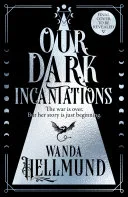
Our Dark Incantations
 83
83

Our Dark Incantations
Wanda Hellmund's Our Dark Incantations presents a compelling, if occasionally predictable, exploration of post-war magical society. The premise of Ivermore University as a forced peace-building initiative is strong, and Mira Winters’s journey from seeking personal healing to confronting societal divisions is the narrative’s anchor. Hellmund excels at depicting the simmering resentments between Casters and Wielders, making the university setting feel charged with unspoken tension. A particular strength lies in the depiction of Mira’s internal conflict as she’s thrust into the Dark Magic faculty, forcing her to re-evaluate her biases. However, the narrative sometimes leans into familiar tropes of the “assigned to the enemy” trope without fully subverting expectations. The concept of the “war scar” is a potent, if somewhat underdeveloped, symbol of trauma. Ultimately, Our Dark Incantations offers a solid, character-focused fantasy narrative that, while not entirely reinventing the wheel, provides an engaging look at prejudice and the arduous path to reconciliation.
📝 Description
83
Wanda Hellmund's 2027 novel, Our Dark Incantations, centers on a magically scarred Caster forced into the Dark Magic department.
Our Dark Incantations is set in the fractured world of Ivermore University of Magic, years after a war between Casters and Wielders. The story follows Mira Winters, a young Caster recovering from a war-inflicted "magical scar." Her expected quiet healing within the White Magic faculty is disrupted when she is assigned to the Dark Magic department, a part of the Wielder faction. This unexpected placement forces her into proximity with those she considers enemies, sparking conflict and challenging her beliefs about magic and morality.
The novel situates its events in a post-war period, with the lingering animosity between Casters and Wielders forming the backdrop. Ivermore University of Magic acts as a microcosm of this societal tension, with its educational structure attempting to bridge the divide. The narrative suggests a world where magical abilities are categorized and potentially used as weapons, reflecting anxieties about division and the dual role of education in fostering peace or perpetuating conflict. Mira's journey becomes a personal exploration of these larger societal issues.
This novel engages with themes often found in modern esoteric fiction, particularly those exploring the duality of power and the potential for corruption within systems of magic. The stark division between "Casters" and "Wielders" and the concept of a "magical scar" suggest a focus on the impact of trauma and societal conflict on individual magical aptitude, a common trope in occult narratives. The setting within a magical university also echoes a tradition of stories where structured learning of the arcane can lead to both enlightenment and danger, reflecting an interest in the disciplined, yet perilous, path of magical development.
💡 Why Read This Book?
• Gain insight into the complex dynamics of post-conflict societies through the lens of the "Casters" and "Wielders" factions, understanding how institutions like Ivermore University attempt to foster peace. • Explore the personal impact of war trauma, specifically through Mira Winters's "war scar," and witness how confronting prejudice can lead to self-discovery. • Understand the symbolic representation of "White Magic" versus "Dark Magic" within a structured academic setting, questioning societal categorizations of power and morality.
⭐ Reader Reviews
Honest opinions from readers who have explored this book.
❓ Frequently Asked Questions
What is the primary conflict in Our Dark Incantations?
The primary conflict stems from the lingering animosity between the "Caster" and "Wielder" factions after a devastating war. This tension is amplified when Mira Winters, a Caster seeking healing, is assigned to the Dark Magic department, forcing her to interact with Wielders at Ivermore University.
What is a 'war scar' in the context of the book?
A 'war scar' is a physical manifestation of magical trauma experienced during the war between Casters and Wielders. Mira Winters, the protagonist, seeks to have hers removed, symbolizing her desire to heal from the conflict's impact.
What is Ivermore University of Magic?
Ivermore University of Magic is a fictional institution established to promote peace and reconciliation following a war between Casters and Wielders. It serves as a central setting where characters from opposing factions must interact and learn together.
Who are the Casters and Wielders?
Casters and Wielders are the two primary factions of magic users in the book's world, who were recently at war. Their differing magical practices and the animosity between them form the core societal and personal conflicts explored in the narrative.
When was Our Dark Incantations first published?
Our Dark Incantations by Wanda Hellmund was first published on February 1, 2027, establishing its contemporary fictional setting.
Does the book offer a clear good vs. evil narrative?
No, the book appears to explore the moral ambiguities of magic and conflict. The assignment of Mira to the "Dark Magic" faculty and her interactions with Wielders suggest a narrative that questions simplistic good versus evil distinctions.
🔮 Key Themes & Symbolism
Post-War Reconciliation
The narrative centers on the challenging process of rebuilding society after a devastating conflict between Casters and Wielders. Ivermore University of Magic is presented as an attempt to foster understanding, but the underlying tensions and prejudices remain palpable. The book explores whether formal education and proximity can truly heal deep societal rifts or if ingrained animosity will persist.
Trauma and Healing
Mira Winters's "war scar" serves as a central metaphor for the lasting psychological and physical wounds inflicted by conflict. Her quest for healing, initially focused on eradicating this mark, evolves into a broader confrontation with the trauma she and others have endured. The novel examines different approaches to healing, from magical remedies to confronting societal divisions.
Identity and Prejudice
The sharp division between Casters and Wielders, and the faculty divisions of White and Dark Magic, highlight themes of identity formation and prejudice. Mira's forced immersion in the Wielder-dominated Dark Magic department challenges her ingrained biases and forces her to question the labels society imposes. The work explores how prejudice is learned and how it can be unlearned.
The Nature of Magic
Our Dark Incantations presents a world where magic is categorized, potentially leading to a moralistic interpretation of "White" versus "Dark" magic. However, Mira's experiences suggest that these distinctions might be artificial or that the true nature of magic lies beyond simple categorization, potentially in its application and intent rather than its inherent quality.
💬 Memorable Quotes
“She hoped in the Faculty of White Magic to remove her war scar, but then she was assigned to Dark Magic and the Wielders!”
— This statement encapsulates the central irony and conflict of the protagonist's situation. It highlights the unexpected turn of events that thrusts Mira into the very environment she sought to avoid, setting the stage for her personal growth and confrontation with prejudice.
“Welcome to Ivermore University of Magic. After the bitter war between Casters and Wielders, the university reopens its gates to foster peace.”
— This sets the foundational premise of the novel: a post-war setting where an institution attempts to mend societal divisions. It establishes the historical context of conflict and the aspirational goal of peace through education.
“There, she was completely at a loss, and she was assigned to...”
— This fragment suggests Mira's initial state of helplessness and disorientation upon being placed in an unfamiliar and potentially hostile environment. It emphasizes her vulnerability and the challenges she faces within the Dark Magic faculty.
“Mira Winters, a young Caster, sees this as her chance for healing, so she can finally turn her back on the magical world.”
— This reveals Mira's initial motivation: not to engage with magic or her community, but to escape it entirely after the trauma of war. Her desire for a clean break is immediately complicated by her assignment, forcing her into the world she wished to leave.
“She hopes to remove her war scar in the Faculty of White Magic.”
— This highlights Mira's specific goal related to physical and emotional healing. The 'war scar' is a tangible representation of the conflict's impact, and her desire to remove it reflects a longing for normalcy and an end to suffering.
🌙 Esoteric Significance
Tradition
While not explicitly tied to a single historical esoteric tradition like Hermeticism or Gnosticism, Our Dark Incantations engages with themes common in modern esoteric fiction. The division into "White Magic" and "Dark Magic" echoes historical debates within Western esotericism regarding the ethics and applications of magical arts. The concept of a "war scar" as a magical affliction and the quest for its removal can be interpreted through the lens of spiritual purification or the overcoming of material/karmic burdens.
Symbolism
The "war scar" functions as a potent symbol of unresolved trauma and the indelible marks left by conflict, both personal and societal. The dichotomy of "White Magic" versus "Dark Magic" represents a common, yet often problematized, symbolic division of magical forces, potentially exploring the idea that power itself is neutral and its morality lies in intent and application. Ivermore University, as a setting, symbolizes the potential for structured environments to either exacerbate or mitigate societal divisions.
Modern Relevance
Contemporary esoteric practitioners and authors often grapple with how to frame magical systems in ways that avoid simplistic moralizing. Our Dark Incantations speaks to this by placing characters in situations that challenge preconceived notions of "good" and "evil" magic. Readers interested in modern fantasy that explores the psychological impact of conflict and the potential for understanding across divides will find resonance, reflecting current discourse on trauma-informed approaches and social justice within speculative genres.
👥 Who Should Read This Book
• Students of speculative fiction exploring themes of post-conflict societies and institutional reconciliation, particularly those interested in how fictional worlds grapple with prejudice. • Readers drawn to character-driven narratives focusing on personal growth and the challenging journey of overcoming ingrained biases and trauma. • Fans of magic academy settings who appreciate a darker, more complex take on magical education and the societal implications of power structures.
📜 Historical Context
Wanda Hellmund's Our Dark Incantations, first published in 2027, emerged in a speculative fiction landscape increasingly interested in exploring the aftermath of conflict and the complexities of societal healing. Set against the backdrop of a world recovering from a war between "Casters" and "Wielders," the novel posits Ivermore University of Magic as a site for forced reconciliation. This fictional institution mirrors real-world attempts at peace-building through education, often fraught with lingering resentments. While not directly engaging with historical magical traditions, the narrative’s internal lore positions "White Magic" and "Dark Magic" as distinct, potentially adversarial, fields. The work implicitly critiques the binary thinking that often follows conflict, suggesting that true peace requires confronting rather than ignoring perceived enemies. Its reception, if any significant contemporary reviews or academic discussions existed by 2027, would likely focus on its exploration of prejudice within a magical framework.
📔 Journal Prompts
Mira Winters's 'war scar' represents deeper societal and personal trauma. Reflect on the symbolic meaning of such scars.
Consider the implications of assigning Mira, a Caster, to the Dark Magic faculty alongside Wielders. What does this forced proximity reveal?
Analyze the effectiveness of Ivermore University's mission to foster peace through mandatory co-education of former adversaries.
Explore the potential subversion of the 'White Magic' vs. 'Dark Magic' dichotomy presented in the narrative.
Reflect on the initial desire to 'turn her back on the magical world' versus the eventual engagement with conflict and prejudice.
🗂️ Glossary
Casters
One of the two primary factions of magic users in the novel's world, who were recently in conflict with the Wielders.
Wielders
The opposing faction to Casters, involved in a significant war prior to the novel's events. Their magical practices and societal role are central to the conflict.
Ivermore University of Magic
A fictional institution established after a war between Casters and Wielders, intended to promote peace and understanding through magical education.
War Scar
A physical manifestation of magical trauma resulting from the conflict between Casters and Wielders. The protagonist, Mira Winters, seeks to remove hers.
White Magic
A faculty or category of magic at Ivermore University, contrasted with Dark Magic. It represents a perceived positive or benign form of magical practice.
Dark Magic
A faculty or category of magic at Ivermore University, often associated with Wielders in the narrative. It represents a potentially feared or misunderstood form of magical practice.
Faculty of White Magic
The academic department Mira Winters initially hoped to join for healing, representing a desired path of peaceful magical study.