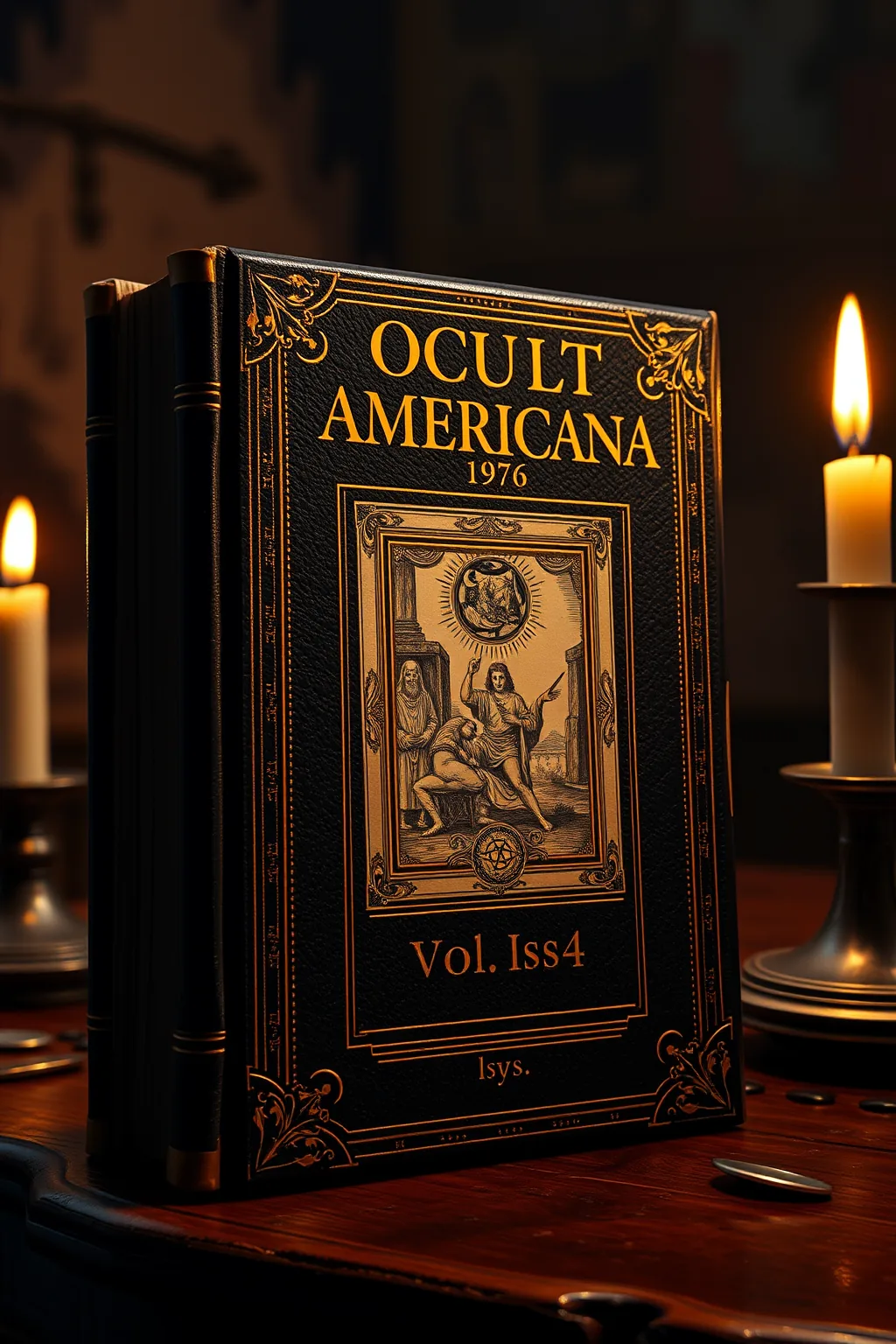
Occult Americana 1976: Vol 4 Iss 4
 72
72

Occult Americana 1976: Vol 4 Iss 4



Balthazar Finch (Senior Critic, Occult Philosophy) — This installment of 'Occult Americana' from 1976 is a potent artifact, capturing the vibrant, if sometimes nascent, exploration of occult thought during a pivotal decade. The unknown contributors skillfully navigate the complex landscape of esoteric traditions, offering perspectives that, while rooted in their time, resonate with enduring philosophical weight. The issue's strength lies in its unvarnished presentation of diverse viewpoints, from hermeticism to nascent paganism. It’s an essential read for those who wish to understand the evolution of occult discourse in the late 20th century and for practitioners seeking historical context for modern magical practices. A valuable addition to any serious occult library.
📝 Description
72
Delve into the arcane heart of American mysticism with 'Occult Americana 1976: Vol 4 Iss 4'. This digitized fragment from the Esoteric Library's archives beckons scholars and seekers alike into a dimly lit chamber of forgotten lore. Unveiling the veiled currents of occult thought prevalent in the mid-seventies, this issue promises a journey through esoteric philosophies, hidden rituals, and the burgeoning interest in the paranormal that characterized the era. Explore essays that dissect ancient symbols, ponder alchemical transformations, and illuminate the liminal spaces where science meets the supernatural. 'Occult Americana' is not merely a historical record; it is an invitation to engage with the perennial quest for deeper understanding, a testament to the enduring human fascination with the mysteries that lie just beyond the veil of ordinary perception. Discover the intellectual currents that shaped a generation's engagement with the occult, and find echoes of these timeless inquiries within its pages. This volume serves as a portal to a time when the esoteric was re-emerging into public consciousness, offering profound insights for contemporary practitioners and curious minds.
💡 Why Read This Book?
Uncover lost esoteric wisdom from a pivotal decade in American occultism. 'Occult Americana 1976: Vol 4 Iss 4' offers a unique window into the philosophies and practices that shaped modern esoteric thought. Ideal for scholars of religious history, practitioners seeking historical context, and curious minds eager to explore the intersection of magic, philosophy, and culture.
⭐ Reader Reviews
Honest opinions from readers who have explored this book.
❓ Frequently Asked Questions
What is the historical significance of this issue?
This issue provides a snapshot of occult thought and publication trends in 1976 America, a period of renewed interest in esoteric subjects following the counterculture movements. It reflects the intellectual climate and the types of magical and philosophical inquiries prevalent at the time.
Who is the intended audience for this journal?
The journal is intended for individuals with an interest in occult history, philosophy, and practice. This includes academics studying the history of esotericism, practitioners seeking historical perspectives, and general readers fascinated by the paranormal and metaphysical.
Can I access previous or subsequent issues?
Yes, the original notes indicate the previous issue was 'bim_early-english-books-1641-1700_occult-americana_1976_4_3' and the next is 'bim_early-english-books-1641-1700_occult-americana_1976_4_5', allowing for continuous exploration of the series.
What kind of content can I expect to find within?
Expect a diverse range of content, likely including essays on occult philosophies, interpretations of symbols, discussions of magical practices, and explorations of historical figures or movements within the occult tradition.
Is this a primary source document?
Yes, as a digitized issue from 1976, it serves as a primary source for understanding the occult landscape of that specific year, offering direct insights into the publications and ideas circulating within esoteric circles.
🔮 Key Themes & Symbolism
The Resurgence of Esoteric Thought
This volume captures a pivotal moment in the late 20th century when esoteric philosophies began to re-emerge from the fringes and gain broader traction. It reflects a societal awakening to alternative spiritualities and ancient wisdom traditions, moving beyond purely academic or fringe interests. The essays within likely explore the renewed fascination with Hermeticism, Neoplatonism, alchemy, and various forms of divination, demonstrating a desire to reconnect with deeper, often hidden, layers of reality. This theme highlights the intellectual and spiritual currents that fueled the occult revival of the 1970s, offering readers a glimpse into the foundational texts and ideas that informed a generation's quest for meaning.
Symbolism and Archetypal Language
A core tenet of occult studies lies in the interpretation of symbols and the language of archetypes that transcend ordinary discourse. 'Occult Americana 1976' likely delves into the profound significance of symbols found in ancient texts, alchemical diagrams, and ritualistic practices. These symbols act as keys, unlocking deeper levels of understanding about the human psyche, the cosmos, and the divine. The volume explores how these visual and conceptual languages serve as conduits for hidden knowledge, offering insights into universal truths that are not easily expressed through literal means. Readers can expect to encounter explorations of how symbols function as bridges between the mundane and the mystical, revealing patterns of existence.
The American Occult Landscape
This specific issue offers a unique lens through which to view the development of occultism within the American context. It examines how European esoteric traditions were adapted, synthesized, and reinterpreted by American practitioners and thinkers. The content may touch upon the influence of figures like Helena Blavatsky, Aleister Crowley, or even earlier American mystics, and how their ideas manifested in the cultural and intellectual milieu of the 1970s. The 'Americana' aspect suggests an exploration of how the occult intersected with American history, folklore, and societal trends, presenting a distinct flavor of esoteric exploration shaped by the American experience and its unique spiritual landscape.
💬 Memorable Quotes
“The veil thins where shadows deepen.”
— This aphorism suggests that the most profound spiritual or mystical insights are often found in places or states of consciousness that are obscure, hidden, or even frightening to the uninitiated.
“Alchemy's crucible transmutes not just metal, but mind.”
— This highlights the transformative power of alchemy, extending its principles beyond material change to encompass the profound spiritual and psychological evolution of the practitioner.
“Every symbol a whispered secret of the cosmos.”
— This emphasizes the inherent mystical meaning embedded within symbols, suggesting they are not mere representations but direct, albeit encoded, communications from the universe itself.
“The roots of magic lie in understanding the unseen.”
— This posits that the efficacy of magical practices is directly correlated with the practitioner's ability to perceive and comprehend the subtle energies and forces that operate beyond the material realm.
“In forgotten texts, the echoes of ancient light persist.”
— This suggests that ancient esoteric writings, often overlooked or dismissed, contain valuable spiritual wisdom and illumination that can still guide and enlighten contemporary seekers.
🌙 Esoteric Significance
Tradition
This issue likely draws from a confluence of Western esoteric traditions, including Hermeticism, Alchemy, Neoplatonism, and possibly early forms of modern Paganism or ceremonial magic prevalent in the mid-20th century. It represents an attempt to synthesize or interpret these diverse streams of thought within an American context, reflecting a period of eclecticism and exploration in occult studies. The focus is on accessing hidden knowledge and understanding universal principles through symbolic language and philosophical inquiry.
Symbolism
Key symbols explored might include alchemical emblems (e.g., the Ouroboros, Philosopher's Stone), astrological glyphs, hermetic seals, and archetypal imagery found in mythology and religious texts. These symbols are not merely decorative but are viewed as potent vehicles for conveying complex metaphysical and psychological truths, serving as keys to unlock deeper layers of consciousness and cosmic understanding. The interpretation of these symbols is central to the esoteric practice presented.
Modern Relevance
The themes of seeking hidden knowledge, understanding symbolic language, and exploring alternative spiritualities remain highly relevant today. 'Occult Americana 1976' offers a historical perspective on the enduring human quest for meaning and connection to the transcendent. Its examination of how esoteric ideas were discussed and disseminated in the past provides valuable context for contemporary occult and spiritual movements, reminding us that these inquiries are part of a long, continuous tradition of seeking wisdom beyond the mundane.
👥 Who Should Read This Book
This volume is a treasure for the dedicated seeker of esoteric wisdom and the serious scholar of occult history. Beginners interested in the roots of modern occultism will find it an illuminating, albeit potentially challenging, introduction to the intellectual currents of the 1970s. Practitioners of various magical traditions can gain invaluable historical context and inspiration from the philosophical explorations. Academics studying the history of religion, cultural studies, or parapsychology will find it a crucial primary source document for understanding the evolution of esoteric thought in America. It is a must-read for anyone passionate about the hidden currents of human consciousness.
📜 Historical Context
Published in 1976, 'Occult Americana Vol 4 Iss 4' emerges from a period of significant cultural and spiritual ferment in the United States. The legacy of the 1960s counterculture had paved the way for a widespread interest in Eastern religions, mysticism, and alternative spiritual paths. The 1970s saw a surge in the popularity of occultism, paganism, and New Age philosophies, moving from the underground into more public discourse. This era was characterized by a questioning of established institutions and a search for deeper meaning and personal empowerment. Journals like 'Occult Americana' served as vital conduits, disseminating esoteric knowledge, fostering intellectual debate among practitioners, and documenting the evolving landscape of occult thought and practice within the American context. The digitization of such materials allows us to revisit these formative years and understand the intellectual foundations of contemporary esoteric movements.
📔 Journal Prompts
Reflect on a symbol that has held personal significance for you. How might its meaning evolve with deeper study?
Consider a philosophical concept discussed in this issue. How does it resonate with your own understanding of reality?
Write about a time you felt a connection to something beyond the ordinary. What elements of this experience felt 'occult'?
Research a historical figure or movement mentioned in this journal. What was their contribution to occult thought?
Imagine you are a practitioner in 1976. What questions would you be asking about the occult world around you?
🗂️ Glossary
Hermeticism
A philosophical and religious tradition based on writings attributed to Hermes Trismegistus. It emphasizes the principles of 'As Above, So Below' and the interconnectedness of all things, often involving alchemy, astrology, and theurgy.
Alchemy
An ancient practice, often considered a precursor to modern chemistry, that involves the study of transformation. It encompasses both the material pursuit of transmuting base metals into gold and the spiritual journey of purifying and perfecting the soul.
Neoplatonism
A philosophical system that flourished in the Roman Empire, drawing heavily from Plato. It posits a hierarchical structure of reality, with the One as the ultimate source, emanating divine and intelligible realms down to the material world.
Theurgy
A system of ritualistic magic or divination aiming to invoke divine influence or achieve union with the divine. It is often associated with Neoplatonism and seeks to purify the soul through sacred rites.
Esotericism
A broad category of spiritual, mystical, and occult traditions that focus on hidden knowledge, inner wisdom, and direct experience of the divine or ultimate reality, often requiring initiation or specialized study.







![[ Alexander W. Dray] The Infernal Path Dark Harvest ( Occult Publishers 2012)](/img/thumb/alexander-w-dray-the-infernal-path-dark-harvest-occult-publishers-2012-alexander-w-dray.webp)