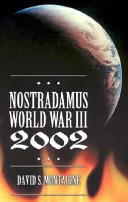
Nostradamus, World War III, 2002
 82
82

Nostradamus, World War III, 2002
Montaigne's "Nostradamus, World War III, 2002" presents a compelling case for re-examining the seer's quatrains in light of contemporary events. The author’s strength lies in his meticulous effort to link specific prophecies to documented historical occurrences, such as the fall of the Soviet Union, lending a degree of plausibility to his interpretations. However, the primary limitation is the inherent subjectivity of prophetic exegesis; the connections drawn, while intricate, remain speculative. A particularly striking passage details Montaigne's interpretation of quatrains possibly referring to the geopolitical shifts involving Britain and the United States around the turn of the millennium. Ultimately, the book offers a thought-provoking, albeit unproven, perspective on how one might read the future through the lens of the past.
📝 Description
82
### What It Is David Montaigne's "Nostradamus, World War III, 2002" offers an examination of the 16th-century seer's prophecies, specifically focusing on interpretations related to a potential global conflict commencing in the early 21st century. Published in 2002, the work revisits Michel de Nostradamus's quatrains, aligning them with then-current geopolitical events and historical precedents. Montaigne’s analysis attempts to connect past predictions, such as those concerning the French Revolution and World War II, to contemporary anxieties surrounding international relations and potential large-scale warfare.
### Who It's For This book targets individuals interested in prophetic literature, particularly those who study or are fascinated by Nostradamus's enduring legacy. It will appeal to readers seeking to understand how ancient prophecies might relate to modern global affairs and to those who analyze historical patterns for future insights. Those with an interest in esotericism, geopolitical analysis through a prophetic lens, and the history of prophecy will find Montaigne's approach engaging.
### Historical Context The early 2000s marked a period of significant global tension, following events like the September 11th attacks and ongoing conflicts in the Middle East. This atmosphere fueled interest in predictive texts. Nostradamus's prophecies have historically seen renewed attention during times of crisis. Montaigne’s work emerges within this tradition, aiming to interpret the seer’s cryptic verses against a backdrop of a world grappling with new forms of warfare and shifting political landscapes. The book was published during a time when online forums and esoteric communities were actively debating end-times scenarios and the validity of ancient prophecies.
### Key Concepts Montaigne's analysis centers on interpreting Nostradamus's quatrains, viewing them as coded predictions of specific historical events. The work emphasizes the concept of historical recurrence, suggesting that patterns identified in past prophecies, like those pertaining to World War II, can illuminate future events. A core focus is the interpretation of verses that Montaigne links to a potential Third World War, with a specific temporal anchor in 2002. The book also explores the geographical and political alignments Nostradamus may have alluded to, particularly concerning Britain and the United States.
💡 Why Read This Book?
• Understand how David Montaigne interprets Nostradamus's quatrains concerning World War III, focusing on the year 2002 as a potential starting point, offering a specific lens on geopolitical anxieties of the early 2000s. • Explore the concept of historical recurrence as applied to prophecy, examining how Montaigne links past predictions like those for World War II to his analysis of future conflicts. • Gain insight into potential prophetic interpretations regarding the roles of Britain and the United States in global events, as presented through Montaigne’s specific readings of Nostradamus's verses.
⭐ Reader Reviews
Honest opinions from readers who have explored this book.
❓ Frequently Asked Questions
Did Nostradamus predict World War III?
David Montaigne's book "Nostradamus, World War III, 2002" argues that the seer's prophecies contain references to a Third World War. Montaigne interprets specific quatrains, suggesting a potential commencement date around 2002, aligning them with historical patterns and contemporary geopolitical events of the early 21st century.
What historical events did Nostradamus supposedly predict?
According to Montaigne and other interpreters, Nostradamus's prophecies are believed to have foreseen events such as the French Revolution, World War II, and the dissolution of the Soviet Union. The book focuses on how these past interpretations inform the reading of future predictions.
What is the main focus of David Montaigne's book?
The primary focus is Montaigne's interpretation of Nostradamus's quatrains concerning a potential World War III, with a specific emphasis on the year 2002. The work examines how these prophecies might relate to contemporary international relations, particularly involving Britain and the United States.
When was 'Nostradamus, World War III, 2002' first published?
The book "Nostradamus, World War III, 2002" by David Montaigne was first published in 2002, aligning with the prophetic timeframe it discusses.
Who was Michel de Nostradamus?
Michel de Nostradamus was a 16th-century French physician and reputed seer, famous for his book "Les Prophéties." It contains collections of quatrains, or four-line poems, which many believe foretell future world events.
How does the book connect prophecy to current events?
Montaigne connects prophecy to current events by analyzing Nostradamus's verses through the lens of historical patterns and geopolitical developments. He posits that events like the fall of the Soviet Union and the potential for future conflicts, like WWIII starting in 2002, are foretold in the quatrains.
🔮 Key Themes & Symbolism
Prophetic Interpretation Methods
The work centers on the methodology of interpreting Nostradamus's cryptic quatrains. Montaigne attempts to establish a framework for understanding these verses, not as random poetic utterances, but as coded predictions of specific historical moments. This involves examining linguistic patterns, symbolic language, and recurring motifs within the prophecies, seeking to align them with verifiable events such as the French Revolution and the fall of the Soviet Union to build a case for their predictive power.
Geopolitical Foresight
A significant theme is the book's engagement with geopolitical foresight through prophetic texts. Montaigne focuses on interpretations suggesting a major global conflict, World War III, potentially originating around 2002. The analysis scrutinizes verses that might allude to specific nations, particularly Britain and the United States, and their roles in future international crises, offering a framework for understanding contemporary global anxieties through a predictive, esoteric lens.
Historical Recurrence and Cycles
The concept of historical recurrence forms a crucial pillar of Montaigne's argument. The book suggests that history operates in cycles, and Nostradamus's prophecies are seen as markers of these cyclical patterns. By demonstrating how certain quatrains accurately reflected past events like World War II, Montaigne builds a rationale for believing that other prophecies, especially those concerning future conflicts, also hold predictive weight, implying a deterministic or cyclical flow of history.
The Turn of the Millennium
The temporal setting of the book, published in 2002, imbues it with a specific significance related to the anxieties and expectations surrounding the turn of the millennium. Montaigne uses this period as a focal point, interpreting prophecies that he believes point to significant global shifts and conflicts beginning around this time. The work taps into the widespread fascination with what the new century might hold, viewed through the lens of ancient prophecy.
💬 Memorable Quotes
“History compels us to take a serious look at his prediction of a Third World War starting in 2002.”
— This statement encapsulates the book's central thesis, framing the analysis of Nostradamus's prophecies not as mere speculation but as a necessary response to historical evidence and contemporary concerns about global conflict.
“Author David Montaigne interprets the prophecies of Nostradamus, focusing on what is happening now and what will happen in the near future.”
— This highlights Montaigne's approach: bridging the gap between ancient text and immediate reality. The interpretation emphasizes the book's intent to provide contemporary relevance and predictive insight into unfolding global events.
“Michel de Nostradamus foresaw future world events, including the French Revolution, World War II, the fall of the Soviet Union, and the end of the Cold War.”
— This assertion establishes Nostradamus's purported accuracy based on past events, serving as foundational evidence for Montaigne's subsequent interpretations of future prophecies, particularly concerning WWIII.
“The book examines quatrains potentially related to Britain and the United States.”
— This indicates a specific focus within Montaigne's broader analysis, suggesting that the prophecies are not just abstract predictions but may contain specific geopolitical indicators relevant to major Western powers.
“Over four centuries ago, the French physician Michel de Nostradamus foretold future world events.”
— This sets the stage by emphasizing the historical distance and the enduring nature of Nostradamus's work, framing the book as an investigation into ancient foresight relevant to modern times.
🌙 Esoteric Significance
Tradition
Montaigne's work draws heavily from the Western esoteric tradition, specifically the lineage of prophetic interpretation that has followed Michel de Nostradamus for centuries. While Nostradamus himself drew on astrological, Kabbalistic, and possibly Hermetic influences, Montaigne's contribution lies in applying these interpretive frameworks to contemporary geopolitical events. The book operates within a sub-tradition focused on decoding historical prophecies for future warnings and guidance, rather than initiating new esoteric doctrines.
Symbolism
Key symbols in Montaigne's interpretation often derive directly from Nostradamus's quatrains. These can include symbolic representations of nations (e.g., geographical allusions or animal metaphors), celestial events (astrological portents), and archetypal figures (kings, leaders, or harbingers of conflict). Montaigne likely interprets these symbols not in a purely mystical sense, but as coded references to specific historical actors, political alliances, or catastrophic events, such as the 'great war' or 'fire from the sky.'
Modern Relevance
The work remains relevant to contemporary thinkers and practitioners interested in geopolitical prognostication through esoteric means. It speaks to a continued fascination with prophecy as a tool for understanding societal shifts and potential crises. Modern esoteric communities, particularly those focused on historical prophecy and divination, may reference Montaigne's analysis when discussing potential future conflicts or interpreting current events through the lens of Nostradamus's enduring verses.
👥 Who Should Read This Book
• Students of historical prophecy: Those interested in how past predictions are interpreted in light of subsequent events, particularly regarding major conflicts like World War II and potential future wars. • Esoteric researchers: Individuals exploring the legacy of Nostradamus and the methods used to decode his quatrains, especially concerning geopolitical interpretations. • Readers concerned with early 21st-century global anxieties: Those seeking to understand how prophetic literature was engaged with during the period surrounding 2002 and its focus on potential large-scale conflicts.
📜 Historical Context
Published in 2002, David Montaigne's "Nostradamus, World War III, 2002" emerged during a period of heightened global anxiety, particularly following the September 11th attacks in 2001. The early 21st century was characterized by a resurgence of interest in apocalyptic and prophetic literature, as societies grappled with new forms of terrorism and geopolitical instability. Nostradamus's prophecies, which had historically gained traction during times of crisis, became a focal point for interpretations seeking to understand and predict future conflicts. Montaigne's work fits within this tradition, directly addressing anxieties about a potential World War III with a specific temporal anchor in 2002. While not a mainstream academic pursuit, the study of prophecy and esotericism found a dedicated audience in online communities and specialized publications. The book's reception likely aligned with the broader public's engagement with end-times narratives and the perceived validity of ancient seers in deciphering modern chaos, a fascination also explored by authors like Stephen Skinner in his works on divination.
📔 Journal Prompts
Nostradamus's predictions for World War III starting in 2002: What patterns do you observe?
The concept of historical recurrence in Montaigne's interpretation: How does it shape your view of prophecy?
Geopolitical foresight: How do you assess the role of Britain and the United States in potential future conflicts?
Interpreting quatrains: What challenges arise when applying ancient verses to modern events?
The fall of the Soviet Union: How might this event inform the interpretation of future prophecies?
🗂️ Glossary
Quatrain
A stanza or poem consisting of four lines. In the context of Nostradamus, these are four-line verses used to record his prophecies, often cryptic and open to multiple interpretations.
Prophecy
A prediction of what will happen in the future, often attributed to divine inspiration or extraordinary insight. Nostradamus's work is a collection of prophecies concerning world events.
Historical Recurrence
The idea that historical events or patterns tend to repeat themselves over time. Montaigne uses this concept to argue that Nostradamus's predictions for future events are valid because they align with past patterns.
Geopolitical
Relating to politics, especially international relations, as influenced by geographical factors. Montaigne's analysis focuses on the geopolitical implications of Nostradamus's prophecies.
Fall of the Soviet Union
The dissolution of the Union of Soviet Socialist Republics (USSR) in December 1991. This event is often cited by interpreters as one of Nostradamus's accurately predicted historical moments.
French Revolution
A period of far-reaching social and political upheaval in France and its colonies beginning in 1789. It is frequently referenced as a key prediction within Nostradamus's work.
World War II
A global war that lasted from 1939 to 1945, involving the vast majority of the world's countries. Montaigne uses Nostradamus's supposed predictions for this conflict as a basis for interpreting future events.