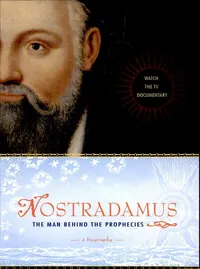
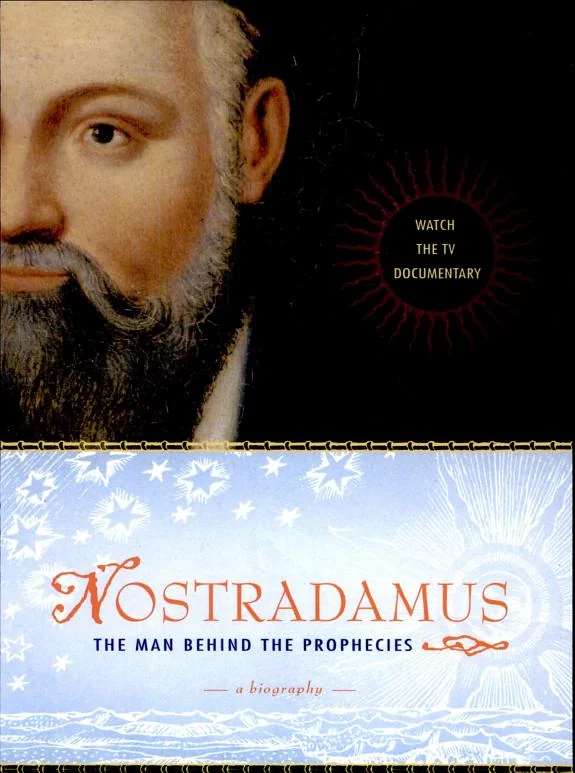
Nostradamus
 76
76

Nostradamus
Ian Wilson's "Nostradamus" presents a necessary corrective to the often-fantastical claims surrounding the 16th-century seer. Wilson meticulously dissects the historical evidence, offering a grounded perspective on Nostradamus's life and work. A particular strength lies in his careful differentiation between Nostradamus's original writings and the layers of interpretation added over centuries, especially concerning the "Great Cataclysm" narratives. However, the book occasionally leans towards a dismissiveness that might alienate those already invested in the mystical dimensions of prophecy. While Wilson effectively debunks sensationalist claims, his analysis of the psychological or cultural impetus for prophecy itself could be more deeply explored. The author's focused approach on historical veracity, while commendable, sometimes overshadows the enduring power these prophecies have held for believers seeking meaning in chaotic times. Ultimately, Wilson provides an essential, scholarly reappraisal for anyone seeking the historical foundations of Nostradamus's enduring legend.
📝 Description
76
Ian Wilson's 2002 book critically examines Nostradamus, separating the man from the myth.
Ian Wilson's "Nostradamus" provides a rigorous look at Michel de Nostredame, the 16th-century physician and astrologer. Wilson traces the origins of Nostradamus's famous "Centuries," showing how they developed from his earlier astrological almanacs and classical texts. He carefully distinguishes Nostradamus's actual writings from the vast array of interpretations that accumulated over centuries, especially after major world events. The book aims to situate Nostradamus within the intellectual environment of the Renaissance, a period marked by both scientific curiosity and continued belief in astrology. Wilson highlights the specific structure of Nostradamus's quatrains and their connection to the almanacs published during his lifetime.
This work is for readers interested in the historical context of prophecy and its cultural impact. It appeals to those who approach esoteric figures with a critical eye, wanting to understand their historical reality rather than sensationalized accounts. Individuals curious about how history, belief systems, and the interpretation of ambiguous texts intersect will find this study valuable. Wilson's approach offers a counterpoint to less critical biographies and popular interpretations that often overshadow the historical figure.
This book engages with the enduring fascination surrounding Nostradamus, a figure who has become a touchstone in popular esotericism. While many popular accounts focus on his supposed predictive accuracy, Wilson grounds his analysis in historical scholarship. He situates Nostradamus within the Renaissance, a time when astrology and divination were common intellectual pursuits, even among those also engaging with emerging scientific ideas. The book contrasts with later, often uncritical, interpretations that arose during periods of societal stress, seeking instead to understand the man and his work within his specific historical and intellectual milieu.
💡 Why Read This Book?
• Gain a fact-based understanding of Nostradamus's historical context, moving beyond popular myth to examine the creation of his "quatrains" and their origins in 16th-century astrological almanacs, a grounding absent in purely speculative works. • Learn to critically assess prophetic literature by understanding how Ian Wilson distinguishes between Nostradamus's original 1555 "Centuries" and later, often unfounded, interpretations, offering a framework for analyzing similar texts. • Appreciate the complex relationship between historical fact and enduring belief as Wilson explores the Renaissance intellectual climate, revealing how figures like Nostradamus fit into a world grappling with both nascent science and deeply ingrained mystical traditions.
⭐ Reader Reviews
Honest opinions from readers who have explored this book.
❓ Frequently Asked Questions
What historical period does Ian Wilson's "Nostradamus" primarily focus on?
Ian Wilson's "Nostradamus" primarily focuses on the 16th century, the period during which Michel de Nostredame lived and composed his prophecies, detailing the Renaissance context of his work.
Does the book discuss the famous "Great Cataclysm" prophecies attributed to Nostradamus?
Yes, the book discusses the "Great Cataclysm" prophecies, with Ian Wilson critically examining these later interpretations and distinguishing them from Nostradamus's original writings.
What is the author's stance on the accuracy of Nostradamus's predictions?
Ian Wilson adopts a skeptical and critical stance, focusing on historical accuracy and deconstructing sensationalist claims, rather than validating the predictive power of Nostradamus's quatrains.
Are Nostradamus's astrological methods explained in the book?
The book explores the role of astrology in Nostradamus's worldview and the methods he employed for prognostication, contextualizing his work within the scientific and mystical understanding of the Renaissance.
What does "quatrain" refer to in the context of Nostradamus's work?
A "quatrain" refers to the four-line verses that constitute the primary form of Nostradamus's prophecies, as presented in his "Centuries."
When was Ian Wilson's "Nostradamus" first published?
Ian Wilson's "Nostradamus" was first published in 2002, offering a contemporary scholarly perspective on the historical figure and his prophetic writings.
🔮 Key Themes & Symbolism
The Genesis of the Centuries
Wilson meticulously traces the origins of Nostradamus's famous "Centuries," arguing they were not divinely inspired pronouncements but rather evolved from practical astrological almanacs published during his lifetime. He highlights the influence of classical texts and Renaissance astrological practices, suggesting Nostradamus synthesized existing knowledge rather than receiving unique prophetic insight. This theme challenges the notion of spontaneous prophecy, grounding it in the intellectual and vocational realities of the 16th century.
Deconstructing Prophetic Interpretation
A central focus is the analysis of how Nostradamus's cryptic "quatrains" have been interpreted and reinterpreted over centuries. Wilson critically examines the tendency to retroactively apply prophecies to historical events, particularly the sensational "Great Cataclysm" narratives. He demonstrates how later additions and misreadings have shaped the popular image of Nostradamus, often obscuring the historical figure and his original intentions.
Nostradamus in the Renaissance Milieu
The book situates Michel de Nostredame within the complex intellectual landscape of the Renaissance. Wilson explores the coexistence of emerging scientific thought and persistent belief in astrology, magic, and divination. By examining Nostradamus alongside contemporaries and within the broader cultural context, the work illustrates how prophetic traditions interacted with the era's evolving understanding of the cosmos and human destiny.
The Apothecary and the Seer
Wilson investigates the dual nature of Nostradamus as both a practicing physician and a prognosticator. The book explores how his medical knowledge and the demands of his profession might have informed his writings. This theme highlights the practical grounding of his life, contrasting with the mystical aura that has since enveloped him, and examines how his role as an apothecary likely influenced his production of almanacs and prophecies.
💬 Memorable Quotes
“The quatrains were not originally intended as prophecies of doom, but as a form of astrological prognostication.”
— This interpretation highlights Wilson's central argument that Nostradamus's verses stemmed from contemporary astrological practices, contrasting with later interpretations that emphasize apocalyptic predictions.
“Nostradamus's "Centuries" likely evolved from his annual almanacs.”
— This paraphrased concept suggests Wilson views the "Centuries" as a development of Nostradamus's published almanacs, implying a more grounded, less spontaneously prophetic origin for the famous verses.
“Many prophecies attributed to Nostradamus were written long after his death.”
— This statement reflects Wilson's critical approach, pointing out the historical inaccuracies and later fabrications that have become associated with Nostradamus's legacy.
“The "Great Cataclysm" narrative is a later accretion, not an original theme.”
— This interpretation underscores Wilson's effort to strip away centuries of embellishment, focusing on the historical core of Nostradamus's work and distinguishing it from popular apocalyptic interpretations.
“Nostradamus was a product of his Renaissance environment, blending science and mysticism.”
— This paraphrased concept emphasizes Wilson's contextualization of Nostradamus within the 16th century, acknowledging the era's unique blend of scientific inquiry and deeply ingrained mystical beliefs.
🌙 Esoteric Significance
Tradition
Wilson's work engages with the Western esoteric tradition, specifically its long-standing fascination with prophecy and divination. While not strictly adhering to a single lineage like Hermeticism or Kabbalah, it examines a figure whose writings have been incorporated into various occult interpretations. The book departs from traditional esoteric approaches by prioritizing historical and textual criticism over mystical exegesis, offering a secularized view of prophecy's origins.
Symbolism
The "quatrains" themselves function as a primary symbolic motif, their enigmatic nature inviting a vast array of interpretations. Wilson discusses the symbolic weight given to astrological conjunctions and celestial events in Nostradamus's framework, which were understood within the Renaissance as direct influences on human affairs. He also addresses the recurring, albeit later interpreted, symbolism of apocalyptic imagery and cataclysmic events, which have become potent symbols of impending doom in popular consciousness.
Modern Relevance
Despite its critical stance, Wilson's book remains relevant for understanding the enduring appeal of prophetic figures in contemporary society. It informs discussions within New Age movements and conspiracy theory circles by providing a historical counterpoint. Modern practitioners of divination or comparative religious studies might reference Wilson's work to ground their understanding of historical prognosticators and the cultural mechanisms that elevate certain figures to prophetic status.
👥 Who Should Read This Book
• Students of Renaissance history seeking to understand the intellectual and cultural context of 16th-century France, gaining insight into the era's blend of science and occult beliefs. • Skeptics and critical thinkers interested in debunking popular myths, learning how to analyze historical claims and differentiate between original texts and later interpretations. • Researchers of esoteric traditions looking for a scholarly examination of a key figure in prophetic literature, understanding the historical evolution of Nostradamus's legacy beyond sensationalism.
📜 Historical Context
Published in 2002, Ian Wilson's "Nostradamus" arrived amidst a resurgence of interest in the 16th-century seer, fueled by both popular culture and digital dissemination of esoteric ideas. The work directly challenged the prevalent, often uncritical, interpretations that had gained traction throughout the 20th century, particularly following World War II and during periods of global anxiety. Wilson's scholarly approach contrasted sharply with earlier hagiographies and speculative analyses. He situated Nostradamus firmly within the intellectual currents of the Renaissance, a period characterized by a complex interplay between burgeoning scientific inquiry and deeply entrenched mystical traditions. While contemporaries like Paracelsus explored alchemy and natural philosophy, Nostradamus focused on a unique form of cryptic verse. The book engages with a long scholarly tradition, yet its critical stance, especially concerning the "Great Cataclysm" prophecies, sought to correct the historical record for a contemporary audience.
📔 Journal Prompts
Nostradamus's use of "quatrains" and their potential for multiple interpretations.
The influence of Renaissance astrology on Nostradamus's prognostications.
Comparing the historical "almanacs" with later "Centuries" interpretations.
The cultural factors that contribute to the enduring appeal of prophetic figures.
Deconstructing a specific "Great Cataclysm" prophecy's historical context versus its modern application.
🗂️ Glossary
Quatrain
A verse composed of four lines, the standard format for Nostradamus's prophecies in his "Centuries."
Centuries
The collection of approximately 942 quatrains written by Nostradamus, organized into ten "centuries" (books of 100 verses each).
Almanac
A yearly publication containing astrological predictions, calendars, and weather forecasts; Nostradamus published several of these during his lifetime.
Prognostication
The act of foretelling future events, often based on astrological observations or other divinatory methods.
Great Cataclysm
A term often used in popular culture to describe apocalyptic prophecies attributed to Nostradamus, which Ian Wilson argues are later interpretations.
Renaissance
The period in European history, roughly from the 14th to the 17th century, marked by a revival of classical art, architecture, and literature, and a burgeoning of scientific inquiry.
Astrology
The study of the movements and relative positions of celestial bodies interpreted as having an influence on human affairs and the natural world.