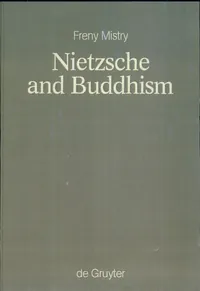
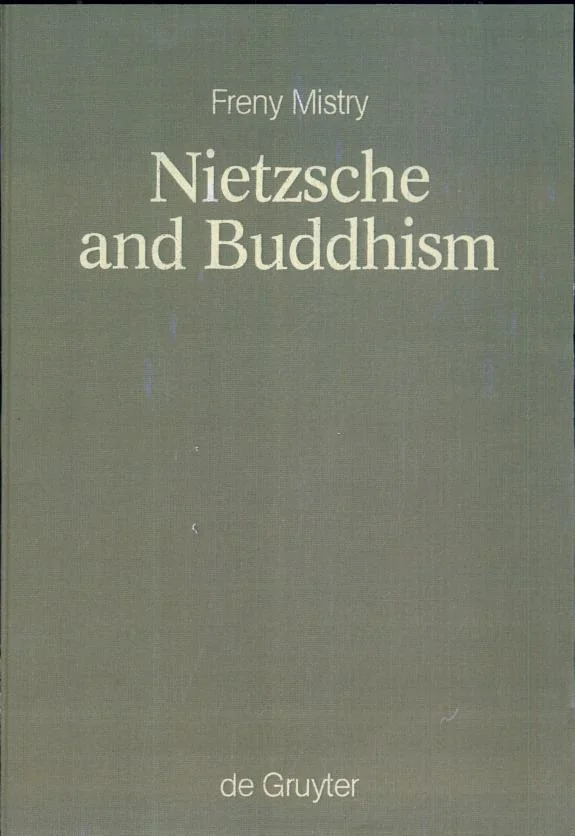
Nietzsche and Buddhism
 79
79

Nietzsche and Buddhism
Freny Mistry's Nietzsche and Buddhism offers a welcome, if sometimes overly academic, exploration of parallels between two monumental figures in philosophical history. The book’s strength lies in its methodical approach, carefully dissecting complex ideas from both Nietzsche and Buddhist thought without resorting to facile comparisons. Mistry’s examination of Nietzsche's concept of the will to power against Buddhist concepts of non-attachment is particularly illuminating. However, the prose can occasionally feel dense, making some of the more intricate arguments challenging for the casual reader. A passage discussing Nietzsche's critique of pity alongside Buddhist compassion, for instance, could have benefited from more direct, relatable examples. Ultimately, this is a rigorous academic study for those already conversant with both thinkers, providing a solid foundation for further personal inquiry.
📝 Description
79
### What It Is Nietzsche and Buddhism, first published in 2011 by Freny Mistry, offers a comparative analysis of two seemingly disparate philosophical systems: the existential thought of Friedrich Nietzsche and the teachings of Siddhartha Gautama, the Buddha. The book does not aim to establish a direct historical link but rather to explore potential conceptual overlaps and divergences.
### Who It's For This work is intended for readers interested in comparative philosophy, particularly those who engage with existentialism and Eastern religious traditions. It will appeal to scholars, graduate students, and advanced independent researchers seeking a nuanced examination of how Nietzsche's critiques of Western morality and his concepts like the *Übermensch* might be viewed alongside Buddhist doctrines of emptiness (*śūnyatā*) and non-self (*anatta*).
### Historical Context The early 21st century saw a growing academic and public interest in interdisciplinary studies that bridged Western philosophy and Eastern thought. Mistry's work emerged in a landscape where scholars were increasingly exploring the potential for dialogue between figures like Nietzsche, who critiqued traditional metaphysics and religion, and Buddhism, which offers a path to liberation through understanding the nature of suffering and reality.
### Key Concepts The book examines core tenets of both Nietzschean philosophy and Buddhism. From Nietzsche, it touches upon his critique of slave morality, the concept of eternal recurrence, and the affirmation of life. From Buddhism, it considers the Four Noble Truths, the Eightfold Path, impermanence (*anicca*), and the nature of the ego. The central thesis revolves around investigating whether Nietzsche's affirmation of earthly life and his proposed overcoming of nihilism find any parallels or contrasts within the Buddhist pursuit of enlightenment and release from suffering.
💡 Why Read This Book?
• Gain a unique perspective on Nietzsche's critique of Western morality by examining it through the lens of Buddhist ethics, as explored in Mistry's analysis of *slave morality* versus *compassion*. • Understand how the Buddhist concept of *śūnyatā* (emptiness) might offer a different framework for addressing existential nihilism than Nietzsche's proposed *Übermensch*. • Discover potential conceptual dialogues between Nietzsche's affirmation of life and Buddhist teachings on impermanence (*anicca*), as detailed in the comparative sections of the book.
⭐ Reader Reviews
Honest opinions from readers who have explored this book.
❓ Frequently Asked Questions
What is the primary goal of Freny Mistry's Nietzsche and Buddhism?
The book aims to explore conceptual overlaps and divergences between Friedrich Nietzsche's existential philosophy and the teachings of Siddhartha Gautama, the Buddha, without asserting a direct historical lineage between them.
Does the book claim Nietzsche was influenced by Buddhism?
No, Mistry's work focuses on philosophical comparison rather than historical influence. It examines how their ideas on morality, suffering, and existence might relate.
Who would benefit most from reading Nietzsche and Buddhism?
Academics, students, and advanced readers interested in comparative philosophy, existentialism, Eastern thought, and the potential dialogues between Western and Buddhist ethics.
What specific Nietzschean concepts are discussed?
Key concepts include the critique of slave morality, the *Übermensch*, the will to power, and eternal recurrence.
What core Buddhist ideas are analyzed in relation to Nietzsche?
The book examines the Four Noble Truths, the Eightfold Path, *śūnyatā* (emptiness), *anatta* (non-self), and *anicca* (impermanence).
When was Nietzsche and Buddhism first published?
Freny Mistry's Nietzsche and Buddhism was first published in 2011.
🔮 Key Themes & Symbolism
Morality and Will
This theme investigates the contrasting perspectives on morality presented by Nietzsche and Buddhism. Nietzsche's critique of 'slave morality' and his concept of the 'will to power' are juxtaposed with Buddhist ethics, which emphasize compassion, non-attachment, and the cessation of suffering. Mistry explores how the affirmation of life in Nietzsche's philosophy might be understood in relation to the Buddhist path, which seeks liberation from the cycle of existence through understanding impermanence and the nature of the self.
The Self and Existence
The book delves into the Buddhist doctrine of *anatta* (non-self) and its potential dialogue with Nietzsche's exploration of the individual's struggle against nihilism and the creation of meaning. While Nietzsche posits the *Übermensch* as an ideal of self-overcoming and affirmation, Buddhism proposes the dissolution of the ego as a path to enlightenment. This section probes the implications of these divergent views on personal identity and the nature of reality.
Suffering and Affirmation
A central focus is the comparison between Nietzsche's embrace of life's suffering as a necessary component of greatness and the Buddhist Four Noble Truths, which identify suffering (*dukkha*) as a fundamental aspect of existence to be understood and overcome. Mistry examines whether Nietzsche's eternal recurrence, a thought experiment demanding total life affirmation, finds any resonance or stark opposition within the Buddhist framework of liberation from suffering and the cycle of rebirth.
Nihilism and Liberation
The work addresses how both Nietzsche and Buddhism grapple with the potential collapse of traditional values and the ensuing sense of meaninglessness. Nietzsche's response involves the revaluation of all values and the creation of new ones, while Buddhism offers a path to liberation from suffering through wisdom and ethical conduct. This theme explores the different strategies proposed by each system for navigating a world devoid of inherent, preordained purpose.
💬 Memorable Quotes
“The comparative analysis of Nietzsche's critique of pity and Buddhist compassion.”
— This highlights a key area of divergence, where Nietzsche might see pity as a weakness stemming from reactive morality, while Buddhism elevates compassion as a fundamental virtue leading to liberation.
“Exploring the notion of 'becoming' in Nietzsche against Buddhist impermanence (*anicca*).”
— This points to how both traditions engage with flux and change, though Nietzsche emphasizes dynamic self-creation and Buddhism focuses on the illusory nature of fixed existence.
“The concept of the *Übermensch* as a potential counterpoint to the attainment of Nirvana.”
— This frames a core tension: is the ultimate human ideal the self-created, life-affirming individual or the enlightened being released from the cycle of existence?
“Juxtaposing Nietzsche's 'will to power' with Buddhist non-attachment.”
— This probes the fundamental drives or aims within each system: striving and dominance versus detachment and equanimity.
“Nietzsche's affirmation of earthly existence versus Buddhist detachment from the cycle of rebirth.”
— This captures a major philosophical divide concerning the ultimate goal and value of human life and consciousness.
🌙 Esoteric Significance
Tradition
While not strictly adhering to a single esoteric lineage, Mistry's work engages with themes that resonate across various traditions, particularly those concerned with self-transformation and the critique of conventional reality. It touches upon existentialist philosophy, which, while secular, often explores spiritual or metaphysical questions about meaning and being, and contrasts these with Buddhist philosophy, a major world religion with profound contemplative and soteriological dimensions.
Symbolism
The book implicitly engages with symbols of transformation and overcoming. Nietzsche's *Übermensch* can be seen as a symbol of radical self-creation and the affirmation of life's challenges. In contrast, Buddhist symbolism often centers on the lotus flower (purity arising from mud), the Dharma wheel (the path to liberation), and the empty vessel (representing emptiness and non-self), all pointing towards release from mundane suffering and the illusory nature of the ego.
Modern Relevance
Contemporary thinkers and practitioners in fields like transpersonal psychology, consciousness studies, and comparative spirituality find value in Mistry's work. It provides a framework for understanding how Western existentialist responses to meaninglessness can be productively compared with Buddhist paths to liberation, offering alternative perspectives for individuals seeking personal growth and a deeper understanding of the human condition in a secularizing world.
👥 Who Should Read This Book
• Advanced students of philosophy and comparative religion seeking rigorous textual analysis of Nietzsche and Buddhist thought. • Independent researchers interested in the potential dialogues between Western existentialism and Eastern contemplative traditions. • Readers grappling with questions of meaning, morality, and the self who are open to exploring philosophical perspectives beyond their usual academic or spiritual frameworks.
📜 Historical Context
Freny Mistry's Nietzsche and Buddhism, published in 2011, emerged during a period of sustained academic interest in cross-cultural philosophical dialogues. The late 20th and early 21st centuries witnessed a growing number of scholars, such as Graham Parkes and David Loy, who actively engaged in comparing Western thinkers with Buddhist traditions. This intellectual climate encouraged examinations of figures like Nietzsche, whose radical critiques of Western metaphysics and morality offered fertile ground for comparison with Eastern philosophies that also questioned conventional understandings of self and reality. While Nietzsche himself had limited direct engagement with Eastern thought, his posthumously published notes show a curiosity about Indian philosophy. Mistry's work contributes to this ongoing conversation, building upon earlier comparative studies and offering a detailed analysis that navigated the complex conceptual terrain, avoiding simplistic equivalences and respecting the distinct philosophical projects of both Nietzsche and Buddhism.
📔 Journal Prompts
The concept of *anatta* (non-self) in relation to Nietzsche's individualistic ideals.
Nietzsche's critique of 'slave morality' and Buddhist ethical frameworks.
Reflections on the Buddhist Four Noble Truths and Nietzsche's affirmation of life's suffering.
How does the Buddhist concept of *śūnyatā* (emptiness) challenge or align with Nietzsche's project of value creation?
Consider the *Übermensch* and its relation to the Buddhist goal of enlightenment.
🗂️ Glossary
*Übermensch*
A concept from Friedrich Nietzsche, often translated as 'overman' or 'superman,' representing an ideal state of human existence characterized by self-mastery, the affirmation of life, and the creation of one's own values.
*Śūnyatā*
A central concept in Mahayana Buddhism, usually translated as 'emptiness' or 'voidness,' referring to the lack of inherent existence or self-nature in all phenomena.
*Anatta*
A core doctrine in Buddhism, meaning 'non-self' or 'no-soul,' asserting that there is no permanent, unchanging self or essence in individuals or phenomena.
*Anicca*
A fundamental Buddhist teaching meaning 'impermanence' or 'transience,' the idea that all conditioned things are in a constant state of flux and change.
Will to Power
A key concept in Nietzsche's philosophy, describing the fundamental drive or force that underlies all existence, characterized by striving, overcoming, and self-enhancement.
Four Noble Truths
The foundational teachings of Buddhism, outlining the nature of suffering (*dukkha*), its origin, its cessation, and the path to its cessation (the Eightfold Path).
Slave Morality
In Nietzsche's philosophy, a system of values created by the weak or oppressed, often characterized by resentment towards the strong and an emphasis on humility, pity, and equality.