Necroscope
 77
77

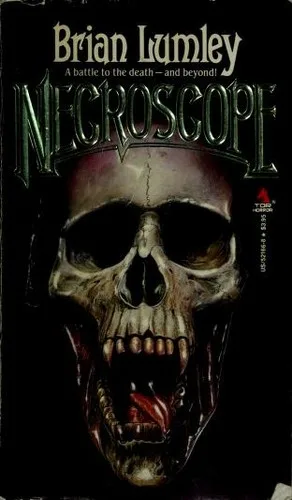
Necroscope
Brian Lumley’s Necroscope, arriving in 1988, offers a chillingly unique take on vampire lore, anchored by the compelling psychic abilities of Harry Keogh. The novel excels in its inventive depiction of the Wamphyri, presenting them as a formidable, ancient race with distinct biological and hierarchical structures that feel genuinely alien and terrifying. Lumley’s prose is direct, efficient, and effectively builds a sense of pervasive dread. However, the sheer scope of the narrative, particularly in establishing the Wamphyri's origins and the global conflict they instigate, can occasionally feel overwhelming, with certain plot threads rushing towards their conclusion. The passage detailing Harry’s initial, accidental confrontation with the Wamphyri’s influence, establishing the stakes and his unique connection to the dead, remains a potent illustration of the book’s strengths. Necroscope stands as a formidable entry in supernatural horror, distinguished by its original mythology and its protagonist’s extraordinary capabilities.
📝 Description
77
### What It Is Necroscope, first published in 1988 by Brian Lumley, operates within the horror and supernatural fiction genres, though its exploration of psychic abilities and the boundaries of life and death lends it an esoteric dimension. The narrative centers on Harry Keogh, a man with the unique ability to communicate with the dead, a power that draws him into a clandestine war between two ancient, powerful vampire factions. This is not merely a tale of monstrous creatures; it delves into the nature of consciousness, the afterlife, and the hidden currents of power that exist beyond ordinary perception.
### Who It's For This novel will appeal to readers who appreciate supernatural thrillers that move beyond simple jump scares, favoring instead psychological depth and intricate world-building. Those interested in the concept of necromancy as a literal ability, rather than a purely magical one, will find fertile ground here. It is suited for individuals who enjoy narratives featuring protagonists with extraordinary, often burdensome, psychic gifts and who are not averse to graphic violence and mature themes. Fans of cosmic horror or existential dread woven into character-driven plots may also find themselves drawn to Lumley’s work.
### Historical Context Published in 1988, Necroscope emerged during a period where the horror genre was experiencing a resurgence, with authors like Stephen King and Clive Barker achieving widespread popularity. Lumley's work, however, carved its own niche by focusing on a more complex, mythologically-inflected vampire lore, diverging from the more gothic or romantic interpretations prevalent at the time. The novel’s intricate plotting and the introduction of the Wamphyri, a distinct and terrifying lineage of vampires, offered a fresh perspective on a classic horror archetype, engaging with themes of ancient evil and psychic warfare that were gaining traction in speculative fiction.
### Key Concepts The core of Necroscope lies in its unique interpretation of vampirism and psychic phenomena. The Wamphyri are presented not as undead beings in the traditional sense, but as a parasitic, ancient race with a distinct biology and hierarchy, originating from an off-world presence. Harry Keogh's "easymane" ability to speak with the dead is the central tenet, serving as his primary tool for investigation and survival. The narrative also explores the concept of psychic projection and the idea that consciousness can persist and interact beyond the physical body, a concept that forms the bedrock of both the protagonist’s abilities and the antagonists’ power.
💡 Why Read This Book?
• Gain an understanding of Lumley's distinct Wamphyri mythology, which redefines vampire origins beyond traditional folklore, offering a unique perspective on ancient predatory races first detailed in the early chapters. • Experience the narrative through Harry Keogh's "easymane" ability, exploring how communication with the deceased shapes a protagonist's perception and actions in confronting existential threats. • Engage with a complex supernatural conflict that began in 1988, featuring psychic warfare and ancient rivalries that provide a distinct alternative to contemporary supernatural fiction tropes.
⭐ Reader Reviews
Honest opinions from readers who have explored this book.
❓ Frequently Asked Questions
What is the origin of the Wamphyri in Necroscope?
The Wamphyri are presented as an ancient, parasitic race originating from an off-world presence, rather than traditional vampires. Their distinct biology and hierarchy are central to the conflict established early in the 1988 novel.
What makes Harry Keogh's abilities unique?
Harry possesses the "easymane" ability, allowing him to communicate with the dead. This direct interaction with departed consciousness is his primary tool for understanding and combating the Wamphyri.
Is Necroscope part of a series?
Yes, Necroscope is the first novel in a long-running series by Brian Lumley, detailing Harry Keogh's ongoing battle against the Wamphyri and exploring the wider supernatural world.
What is the tone of Necroscope?
The tone is predominantly dark, suspenseful, and often brutal. It balances elements of horror, supernatural thriller, and existential dread, focusing on psychological tension and the grim consequences of psychic abilities.
When was Necroscope first published?
Necroscope was first published in 1988, positioning it within a dynamic period for horror and supernatural fiction.
Are there specific psychic powers explored besides necromancy?
While necromancy (communication with the dead) is central, the novel also touches upon psychic projection and the manipulation of consciousness, particularly as wielded by the Wamphyri.
🔮 Key Themes & Symbolism
The Nature of Consciousness
Necroscope posits that consciousness persists beyond physical death, capable of interaction and influence. Harry Keogh's "easymane" ability to converse with the dead directly challenges conventional notions of mortality. This theme extends to the Wamphyri, whose existence and power are deeply intertwined with the manipulation and consumption of life force and psychic energy. The narrative explores how this persistent consciousness can be a source of knowledge, a weapon, or a haunting presence, blurring the lines between life, death, and the spectral realm as established in the book's early explorations of Keogh's gifts.
Ancient Predatory Races
The Wamphyri represent a unique take on the vampire archetype, depicted as an ancient, alien, and highly evolved predatory species. Unlike traditional vampires, their origins are extraterrestrial, and their existence is predicated on a parasitic relationship with humanity, feeding not just on blood but on psychic energy. Lumley meticulously crafts their hierarchy, biology, and motivations, presenting them as a formidable existential threat. The novel details their long history of manipulation and dominance, setting them apart from more romanticized or gothic interpretations of the undead.
The Burden of Psychic Gifts
Harry Keogh’s ability to communicate with the dead is not presented as a simple superpower but as a profound and often isolating burden. This gift draws him into a dangerous conflict he might otherwise avoid and forces him to confront the grim realities of both the living and the dead. The narrative examines the psychological toll of such an ability, the constant exposure to lingering spirits, and the responsibility that comes with wielding such unique power. His struggle highlights the personal cost of extraordinary perception in a world largely unaware of the hidden forces at play.
Concealed Worlds and Warfare
Beneath the veneer of ordinary reality, Necroscope reveals a hidden world of ancient entities and ongoing conflict. The Wamphyri operate in secrecy, manipulating human events for centuries, while Harry Keogh becomes a reluctant warrior in a clandestine war. The novel explores the concept of hidden dimensions or planes of existence that intersect with our own, particularly through the psychic connections Harry makes. This hidden warfare, initiated by the Wamphyri’s arrival, suggests that significant historical events may have been influenced by forces unseen by the general populace.
💬 Memorable Quotes
“He could hear the dead.”
— This concise statement encapsulates Harry Keogh's defining characteristic: his 'easymane' ability to communicate with deceased individuals. It immediately establishes the supernatural premise and the unique nature of his perception, setting the stage for his involvement in the conflict.
“The Wamphyri were not of this Earth.”
— This phrase signifies the novel's departure from traditional vampire lore. It introduces the alien, ancient, and fundamentally other nature of the antagonists, emphasizing their biological distinctiveness and extraterrestrial origins.
“Death was merely a doorway.”
— This interpretation highlights the book's central theme regarding consciousness after death. It suggests that mortality is not an end but a transition, and that the spectral realm is accessible and interactive for those with the proper abilities.
“He walked between worlds.”
— This describes Harry Keogh's unique position as an individual who bridges the gap between the living and the dead. It underscores his liminal existence and his role as an intermediary in the supernatural conflict.
“Their hunger was ancient and insatiable.”
— This refers to the Wamphyri's primal need, which extends beyond mere bloodlust to encompass psychic energy and dominance. It emphasizes the deep-rooted, persistent nature of their predatory instinct and their threat to humanity.
🌙 Esoteric Significance
Tradition
Necroscope engages with themes resonant in esoteric traditions that explore the nature of consciousness beyond the physical form, particularly necromancy and spirit communication, though it frames these within a science-fiction-tinged horror context rather than a strictly occult one. It departs from traditional Western Hermeticism or Kabbalah by presenting these abilities through a narrative lens of alien biology and psychic warfare. The concept of life force and its manipulation echoes vitalist philosophies found in various mystical schools, but Lumley's approach is more grounded in a narrative of conflict and survival than spiritual enlightenment.
Symbolism
The primary symbol is Harry Keogh himself, representing the bridge between the living and the dead, a liminal figure tasked with confronting horrors that transcend ordinary understanding. The Wamphyri, as an ancient, parasitic race from beyond Earth, symbolize an existential, cosmic threat that preys on humanity's vital and psychic energies. Their off-world origin suggests a primal, alien darkness, distinct from the terrestrial evils often depicted, embodying a predatory force that operates on a scale far beyond individual human lives.
Modern Relevance
Contemporary horror and dark fantasy authors continue to draw inspiration from Lumley's inventive approach to vampire lore and psychic abilities. The concept of 'hidden wars' waged by ancient, non-human entities beneath the surface of reality remains a fertile ground for storytelling. Furthermore, the exploration of consciousness surviving death, albeit through a fictional lens, touches upon enduring questions about the afterlife and spirit communication that still intrigue practitioners and thinkers in various metaphysical and esoteric circles today.
👥 Who Should Read This Book
• Fans of intricate supernatural thrillers who appreciate detailed myth-making, particularly those interested in unique vampire origins beyond traditional folklore. • Readers drawn to protagonists with extraordinary psychic abilities, exploring the personal cost and narrative implications of wielding powers like necromancy. • Those interested in exploring darker themes of ancient evils, alien predation, and the concept of hidden worlds existing alongside our own reality.
📜 Historical Context
Brian Lumley's Necroscope, published in 1988, emerged during a vibrant period for horror literature, with authors like Stephen King dominating the bestseller lists. While King often explored contemporary American anxieties, Lumley carved a distinct path by introducing a complex, alien vampire mythology. The Wamphyri, presented as an ancient, off-world parasitic race, offered a stark contrast to the more gothic or romanticized vampires prevalent in earlier decades, drawing comparisons to the cosmic horror themes explored by H.P. Lovecraft but grounded in a more direct, visceral narrative. The novel’s reception was strong within the genre, appreciated for its originality and intricate world-building. It stood apart from the more psychological or supernatural horror of contemporaries like Clive Barker, focusing instead on a detailed, almost biological, reimagining of monstrous entities and their millennia-long conflict with humanity, a narrative scope that few authors dared to tackle with such detail.
📔 Journal Prompts
Harry Keogh's 'easymane' ability and its implications for understanding consciousness.
The nature of the Wamphyri's ancient hunger and its extraterrestrial origins.
Reflecting on the burden of psychic gifts as depicted through Harry Keogh.
The concept of concealed warfare between supernatural entities.
Exploring the symbolic representation of death as a 'doorway' within the narrative.
🗂️ Glossary
Wamphyri
An ancient, parasitic, off-world race of beings who feed on the life force and psychic energy of humans, presented as a unique interpretation of the vampire archetype in Necroscope.
Easymane
The specific term used to describe Harry Keogh's psychic ability to communicate with the dead, allowing him to perceive and interact with spirits and lingering consciousness.
Psychic Projection
The ability, demonstrated by both Harry and the Wamphyri, to project one's consciousness or awareness beyond the physical body, enabling interaction with other minds or planes of existence.
Faustian Bargain
While not explicitly named, the narrative often implies characters making deals with dark forces or accepting dangerous powers with severe consequences, echoing this archetypal theme.
Wampyr
A singular member of the Wamphyri race, referring to an individual entity within their ancient, predatory lineage.
The Drift
A conceptual space or dimension through which consciousness can travel, often associated with the dead or psychic communication, central to the mechanics of the Wamphyri's existence and Harry's abilities.
Necromancy
In the context of Necroscope, this refers to Harry Keogh's ability to speak with and understand the dead, a form of spirit communication rather than traditional spellcasting.