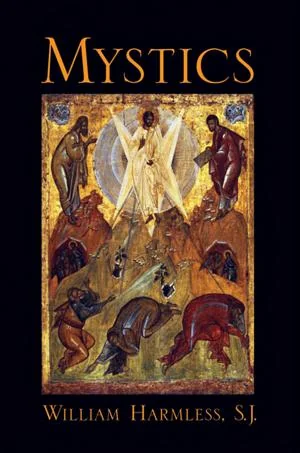
Mystics
 83
83

Mystics
William Harmless's *Mystics* provides a welcome, methodologically sound approach to a subject often mired in vague pronouncements. By grounding his study in six specific Christian mystics—from the early desert father Evagrius Ponticus to the 20th-century figure Thomas Merton—Harmless offers concrete examples rather than generalized theories. His strength lies in the detailed textual analysis, particularly when examining the writings of figures like Meister Eckhart, where he carefully unpacks complex theological and experiential language. A limitation, however, is the book's sometimes dense academic prose, which may present a barrier for readers new to scholarly theological discourse. The section on Hildegard of Bingen, while informative, could have benefited from a more explicit exploration of her visionary cosmology beyond its theological implications. Nevertheless, *Mystics* stands as a valuable academic resource for understanding the historical and textual dimensions of Christian spiritual traditions.
📝 Description
83
### What It Is William Harmless's *Mystics*, first published in 2008, offers a scholarly introduction to the academic study of mystical experiences and writings. It moves beyond abstract theory by employing a detailed case-study approach. The book meticulously examines the lives and works of six significant Christian mystics, providing a grounded exploration of their contributions to spiritual thought and practice.
### Who It's For This volume is intended for students and scholars of religious studies, theology, and history, particularly those interested in Christian mysticism. It will also appeal to individuals seeking a rigorous, academic understanding of mystical traditions, moving beyond anecdotal accounts to engage with primary source material and scholarly analysis. Readers should possess a foundational knowledge of Christian history and theology.
### Historical Context Harmless's work emerged in an era of renewed academic interest in medieval and early modern religious figures. The early 2000s saw continued scholarly engagement with figures like Bernard of Clairvaux and Hildegard of Bingen, building upon earlier foundational work by scholars such as Evelyn Underhill. Harmless positions his study within the tradition of theological and historical analysis, contrasting it with purely psychological or philosophical interpretations of mystical phenomena.
### Key Concepts The book centers on the concept of the 'mystical path' as understood through the lived experiences and textual output of key figures. Harmless investigates the interplay between spiritual experience, theological formulation, and the practical expression of faith. Central to his method is the detailed analysis of individual mystics, allowing for a nuanced understanding of their unique contributions and shared spiritual language.
💡 Why Read This Book?
• Gain a scholarly framework for understanding mystical experiences by examining Harmless's case studies of figures like Bernard of Clairvaux, moving beyond subjective interpretations to historical and textual analysis. • Understand the distinct theological and experiential contributions of six major Christian mystics, including Hildegard of Bingen and Meister Eckhart, through detailed examination of their lives and writings. • Appreciate the scholarly methodology for studying mysticism, as Harmless utilizes a specific case-study approach, contrasting with purely psychological or abstract theological explanations.
⭐ Reader Reviews
Honest opinions from readers who have explored this book.
❓ Frequently Asked Questions
What is the primary focus of William Harmless's *Mystics*?
The book focuses on the scholarly study of mysticism through a case-study method, examining the lives and writings of six major Christian mystics to understand their contributions to spiritual thought.
Which Christian mystics are featured in *Mystics*?
The featured mystics are Thomas Merton, Bernard of Clairvaux, Hildegard of Bingen, Bonaventure, Meister Eckhart, and Evagrius Ponticus.
What is the publication date of William Harmless's *Mystics*?
The book was first published in 2008.
Does *Mystics* present mysticism as purely psychological or theological abstraction?
No, Harmless explicitly aims to present mysticism through concrete examples and detailed examinations, moving away from abstract theories to focus on the lived experiences and writings of specific individuals.
What academic discipline does *Mystics* primarily belong to?
The book is primarily situated within the academic disciplines of religious studies, theology, and history, offering a scholarly perspective on Christian mysticism.
What is the author's background mentioned in relation to the book?
William Harmless is identified as S.J. (a Jesuit priest), indicating a background within Catholic theological and spiritual traditions, which informs his scholarly approach.
🔮 Key Themes & Symbolism
The Mystical Path as Lived Experience
Harmless's work emphasizes that mysticism is not solely an intellectual pursuit but a deeply lived experience. Through detailed analyses of figures like Bernard of Clairvaux and Meister Eckhart, he illustrates how profound spiritual encounters shape theological understanding and daily life. The book explores the practical dimensions of the mystical path, demonstrating how these experiences manifest in writings, actions, and the broader spiritual legacy of each individual examined.
Textual Analysis of Mystical Writings
A core component of *Mystics* involves the rigorous examination of primary texts produced by the selected mystics. Harmless scrutinizes the language, concepts, and theological frameworks employed by individuals such as Hildegard of Bingen and Bonaventure. This focus on the written word allows for a scholarly deconstruction of mystical expression, revealing the intellectual and spiritual underpinnings of their insights and visions.
Case Studies of Christian Mystics
The book's unique methodology centers on in-depth case studies of six influential Christian mystics. By dedicating significant attention to each figure, from the early Evagrius Ponticus to the modern Thomas Merton, Harmless provides a nuanced portrait of diverse mystical traditions within Christianity. This approach allows for comparative insights while respecting the individual trajectory and unique contributions of each mystic studied.
Bridging Experience and Theology
Harmless seeks to bridge the gap between extraordinary spiritual experiences and their articulation within theological systems. He demonstrates how mystics like Meister Eckhart synthesized profound personal encounters with established doctrines, often pushing the boundaries of contemporary thought. The work illustrates the dynamic interplay where experience informs theology, and theology provides a framework for understanding and expressing mystical encounters.
💬 Memorable Quotes
“Harmless presents mysticism not as abstract theory but through detailed examinations of six major Christian mystics.”
— This statement highlights the book's core methodology: moving beyond generalized concepts to grounded, specific analyses of individuals like Hildegard of Bingen and Meister Eckhart.
“The study explores both mystics' extraordinary lives and their no-less-extraordinary writings.”
— This emphasizes Harmless's dual focus on the biographical context and the textual output of figures such as Bernard of Clairvaux, recognizing the interconnectedness of life and expression.
“Focus on examining six key Christian mystics: Thomas Merton, Bernard of Clairvaux, Hildegard of Bingen, Bonaventure, Meister Eckhart, and Evagrius Ponticus.”
— This pinpoints the specific figures whose lives and works form the backbone of the book's scholarly investigation into Christian mystical traditions.
“The work avoids presenting mysticism as a subtle web of psychological or theological abstractions.”
— This clarifies the book's objective to offer a more concrete, historically and textually grounded understanding of mysticism, contrasting with purely theoretical or clinical approaches.
“William Harmless, S.J., introduces readers to the scholarly study of mysticism.”
— This establishes the author's credentials and the book's primary aim: to provide an academically rigorous foundation for understanding the field of mystical studies.
🌙 Esoteric Significance
Tradition
While firmly rooted in Christian theology and history, *Mystics* engages with themes common in esoteric traditions, particularly the pursuit of direct spiritual experience and the exploration of altered states of consciousness. The book's focus on figures like Evagrius Ponticus touches upon early Christian contemplative practices that influenced later Gnostic and Hermetic thought. Harmless's scholarly approach grounds these explorations within their historical and theological context, offering a bridge for those interested in esoteric studies to understand the historical underpinnings of mystical practice.
Symbolism
The work implicitly engages with symbolism through its exploration of mystical visions and theological language. For instance, the writings of Hildegard of Bingen are rich with symbolic imagery drawn from nature and the cosmos, interpreted within a divine framework. Similarly, the theological constructs developed by Meister Eckhart, though abstract, function as symbolic representations of ultimate reality and the soul's journey towards God, echoing symbolic language found in Hermetic and Neoplatonic traditions.
Modern Relevance
Contemporary spiritual seekers and scholars of comparative religion find value in Harmless's rigorous examination of historical mystics. Modern contemplative movements and mindfulness practices, while secularized, often draw inspiration from the historical wellspring of Christian contemplative traditions studied here. Thinkers exploring the intersection of psychology and spirituality, or those investigating the historical roots of altered states of consciousness, can find foundational insights in the detailed analyses of figures like Thomas Merton and Bernard of Clairvaux.
👥 Who Should Read This Book
• Students of theology and religious studies: Gain a structured, academic understanding of Christian mysticism through detailed case studies of key figures and their writings. • Scholars of Western esotericism: Understand the historical and theological roots of mystical traditions that have influenced later esoteric movements, particularly through figures like Evagrius Ponticus. • Individuals seeking a deeper comprehension of Christian spirituality: Explore the lives and profound spiritual insights of influential figures like Meister Eckhart and Hildegard of Bingen beyond devotional hagiography.
📜 Historical Context
Published in 2008, William Harmless's *Mystics* arrived during a period of sustained academic interest in the history of Christian spirituality. The late 20th and early 21st centuries saw scholars like Bernard McGinn and Caroline Walker Bynum significantly shape the discourse on medieval mysticism. Harmless's work builds upon this foundation, offering a specific case-study approach that distinguishes itself from broader historical surveys or purely theological interpretations prevalent at the time. While figures like Meister Eckhart and Hildegard of Bingen had long been subjects of study, Harmless's focus on their writings and lives through a Jesuit lens provided a particular theological perspective, contrasting with more secular or phenomenological analyses. The book engaged with the ongoing scholarly debate about the nature of mystical experience and its expression within established religious frameworks.
📔 Journal Prompts
The case-study approach to mysticism employed for Bernard of Clairvaux and others: how does this method illuminate your understanding?
Meister Eckhart's synthesis of experience and theology: reflect on the tension between direct spiritual encounters and structured doctrine.
Hildegard of Bingen's visionary writings: consider the role of symbolic language in conveying profound spiritual truths.
The concept of the mystical path as presented through Evagrius Ponticus: what are the practical implications for spiritual discipline?
Thomas Merton's engagement with contemplation in the 20th century: how does his experience relate to contemporary spiritual seeking?
🗂️ Glossary
Mysticism
The direct, intuitive knowledge of or union with the divine or ultimate reality, often characterized by profound spiritual experiences and altered states of consciousness.
Case Study
An intensive, in-depth analysis of a specific individual, group, or event, used here to examine the lives and works of individual mystics.
Theology
The systematic study of the nature of the divine and, more broadly, of religious belief. In this context, it refers to the theological doctrines and frameworks within which mystics operated.
Contemplation
A form of deep, reflective prayer or meditation focused on spiritual matters, often aiming for union with the divine or a profound understanding of spiritual truths.
Visionary Experience
A type of mystical experience involving seeing symbolic or divine imagery, often interpreted as direct communication or revelation from a spiritual source.
Asceticism
Severe self-discipline and avoidance of all forms of indulgence, typically for religious reasons. Often associated with the practices of early mystics like Evagrius Ponticus.
S.J.
Abbreviation for the Society of Jesus, a male religious order within the Catholic Church, commonly known as Jesuits. Indicates the author's religious affiliation.