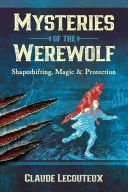
Mysteries of the Werewolf
 71
71

Mysteries of the Werewolf
Claude Lecouteux's "Mysteries of the Werewolf" provides a broad, almost ethnographic survey of lycanthropy across global folklore. The book excels in its extensive cataloging of diverse narratives, from early Greek accounts to Siberian and East Asian shapeshifting traditions. Lecouteux’s strength lies in presenting these varied myths without imposing a singular, anachronistic interpretation. However, the work occasionally feels more like a compilation than a deeply analytical text, particularly when discussing the historical trials of accused werewolves. While it lists trial records, the psychological or societal underpinnings driving these accusations receive less attention than the sheer volume of tales. The exploration of how one becomes a werewolf, through pacts or magic, is detailed but could benefit from more comparative analysis across cultures. It is a valuable resource for folklorists and students of comparative mythology seeking breadth.
📝 Description
71
### What It Is ### Who It's For ### Historical Context ### Key Concepts
💡 Why Read This Book?
• Gain insight into the varied origins and cultural expressions of werewolf legends, from ancient Greece to China, as detailed in Lecouteux's extensive research. • Understand the historical methods of werewolf transformation, identification, and banishment discussed in the text, offering practical lore from medieval Europe. • Explore the societal impact of werewolf beliefs through examination of medieval trial records, revealing the fears and accusations prevalent in that era.
⭐ Reader Reviews
Honest opinions from readers who have explored this book.
❓ Frequently Asked Questions
What geographical regions does 'Mysteries of the Werewolf' cover?
The book examines werewolf tales from early Greece, Scandinavia, France, Germany, Eastern Europe, China, and Japan, offering a wide-ranging global perspective on shapeshifting myths.
How does Lecouteux explain the origin of werewolves in the book?
Lecouteux explores various explanations for becoming a werewolf, including pacts with the devil, the use of magic and spells, and inherited curses, drawing from diverse folkloric traditions.
Are there real historical accounts of werewolf trials in the book?
Yes, the book includes records from medieval European trials where individuals were accused and tried on suspicion of being werewolves, providing a glimpse into historical persecutions.
Does the book only discuss European werewolf legends?
No, while European traditions are covered extensively, 'Mysteries of the Werewolf' also looks at shapeshifting creatures like were-tigers in Asia and other non-European legends.
When was 'Mysteries of the Werewolf' first published?
The original publication date for Claude Lecouteux's 'Mysteries of the Werewolf' was July 27, 2021.
What kinds of shapeshifting creatures are discussed besides werewolves?
The work examines legends of other shapeshifting creatures such as were-tigers, were-jackals, and were-caribou, expanding the scope beyond traditional lycanthropy.
🔮 Key Themes & Symbolism
Global Shapeshifter Traditions
This work meticulously compiles werewolf and shapeshifter lore from an astonishingly diverse array of cultures. Beyond the familiar European werewolf, Lecouteux investigates traditions in Scandinavia, Eastern Europe, China, and Japan, detailing creatures like were-tigers and were-jackals. The exploration reveals common archetypes of transformation and the beast within, but also highlights unique cultural interpretations of these primal fears and fascinations. It presents a panoramic view of humanity's long-standing engagement with the concept of beings capable of assuming animal forms.
The Mechanics of Transformation
Lecouteux delves into the varied folkloric explanations for how individuals become werewolves or other shapeshifters. These include explicit magical pacts, often with malevolent entities like the Devil, the casting of specific spells, or the inheritance of a cursed bloodline. The book examines the ritualistic or accidental means by which such transformations are said to occur, offering a glimpse into the belief systems that provided frameworks for understanding these terrifying phenomena across different societies and historical periods.
Werewolf Trials and Persecution
A significant portion of the book is dedicated to the historical reality of individuals being tried for lycanthropy, particularly in medieval Europe. Lecouteux presents records from these trials, illustrating the societal anxieties and belief in tangible demonic influence that led to accusations and convictions. This section underscores the dangerous intersection of folklore, religious dogma, and legal proceedings, showing how tales of the supernatural could manifest in very real human suffering and persecution.
Identification, Escape, and Extermination
The lore surrounding werewolves extends beyond their origin and nature to include methods of dealing with them. Lecouteux explores the traditional means by which these creatures were identified, the protective measures people employed to escape their attacks, and the various rituals or weapons believed effective in their extermination. This practical, albeit folkloric, aspect of werewolf belief reveals a deeply ingrained desire to understand and control perceived supernatural threats.
💬 Memorable Quotes
“The work examines werewolf tales from early Greece, Scandinavia, France, Germany, Eastern Europe, China, and Japan.”
— This statement highlights the book's extensive geographical and cultural scope, moving beyond typical Western-centric views of lycanthropy to include diverse global traditions.
“People become werewolves through pacts with the devil, magic, and spells.”
— This concise summary points to the book's exploration of the magical and diabolical means by which transformation was believed to occur in various folklore systems.
“Includes the trial records from medieval Europe for individuals tried on suspicion of being werewolves.”
— This indicates the inclusion of historical legal documents, offering a tangible connection between folkloric belief and real-world accusations and persecutions.
“Legends of other shapeshifting creatures such as were-tigers, were-jackals, and were-caribou are explored.”
— This demonstrates the book's broader interest in the phenomenon of shapeshifting, extending beyond the singular figure of the European werewolf to a wider range of therianthropic myths.
“The book explores ways to identify, escape, and do away with werewolves.”
— This points to the practical, albeit mythical, advice and lore contained within the text concerning how to confront and neutralize the perceived threat of werewolves.
🌙 Esoteric Significance
Tradition
While not explicitly tied to a single esoteric lineage like Hermeticism or Kabbalah, "Mysteries of the Werewolf" engages with the primal archetypes and shadow aspects that are fundamental to many Western esoteric traditions. It explores the concept of the 'animus' or 'animal self' that lies dormant or active within the human psyche, a theme resonant in Jungian psychology and various occult philosophies. The book's examination of transformation, pacts, and the boundaries between human and animal can be seen as a folkloric exploration of concepts like the spiritual adept's potential for astral projection or the darker consequences of forbidden magical practices.
Symbolism
The werewolf itself is a potent symbol of the dual nature of humanity – the rational mind versus the primal, instinctual beast. The act of transformation symbolizes the loss of control, the succumbing to base desires, or the intrusion of chaotic forces. Pacts with the devil represent the ultimate corruption of the soul through forbidden knowledge or power-seeking. The medieval trials, conversely, symbolize the societal attempt to purge perceived 'otherness' and maintain rigid social and religious order against perceived threats, whether real or imagined.
Modern Relevance
Contemporary thinkers and practitioners in fields like Jungian psychology, comparative mythology, and even certain strands of modern paganism and occultism, continue to draw upon the rich tapestry of werewolf lore that Lecouteux compiles. The archetypal struggle between the civilized human and the wild beast remains a powerful metaphor for internal conflicts and societal issues. Modern explorations of animism, shamanism, and the concept of the 'wild woman' or 'wild man' echo the themes of shapeshifting and the integration of our animalistic nature, making this historical and folkloric study relevant to contemporary discussions on identity and the human condition.
👥 Who Should Read This Book
• Folklore enthusiasts and comparative mythology students seeking a broad overview of werewolf and shapeshifter legends across diverse cultures. • Researchers interested in historical beliefs about magic, demonic pacts, and witchcraft, particularly those examining medieval European trial records. • Readers with an interest in the psychology of fear, societal anxieties, and the archetypal representation of the 'other' in myth and legend.
📜 Historical Context
Claude Lecouteux's "Mysteries of the Werewolf" arrives in 2021, a period marked by renewed academic and popular interest in folklore, mythology, and the darker aspects of human history. It builds upon a long tradition of scholarship on lycanthropy, engaging with the works of earlier folklorists and historians who documented and analyzed these beliefs. The book's focus on specific trial records from medieval Europe, a period rife with superstition and the persecution of perceived witches and sorcerers, situates it within broader studies of medieval anxieties and belief systems. While not a direct contemporary of figures like the Brothers Grimm or Émile Durkheim, Lecouteux's work implicitly participates in the ongoing scholarly conversation about how societies construct and react to the monstrous, often in dialogue with anthropological theories of magic and ritual, and psychoanalytic interpretations of the unconscious.
📔 Journal Prompts
The phenomenon of werewolf transformation across cultures.
The symbolic meaning of the pact with the devil in lycanthropic lore.
Historical werewolf trials and their implications for understanding medieval society.
Comparison of were-tiger legends with European werewolf myths.
Methods of identifying and banishing werewolves as depicted in folklore.
🗂️ Glossary
Lycanthropy
The condition or practice of transformation into a wolf, either by oneself or by another. It encompasses both mythological and psychological interpretations of shapeshifting.
Shapeshifting
The ability to alter one's physical form to assume the appearance of another creature, commonly depicted in folklore and mythology across various cultures.
Therianthropy
A broader term encompassing the mythological or supernatural transformation of one person into another animal, or the ability to take on the form of an animal.
Pact with the Devil
In folklore and theology, an agreement made between an individual and the Devil, often in exchange for supernatural powers, knowledge, or worldly gain.
Medieval Trials
Legal proceedings held in medieval Europe where individuals were accused and judged for crimes related to witchcraft, sorcery, or supernatural pacts, including lycanthropy.
Were-tiger
A shapeshifting creature from Asian folklore, particularly Southeast Asian legends, possessing the ability to transform between human and tiger forms.
Were-jackal
A legendary creature from Middle Eastern and North African folklore, capable of transforming between human and jackal forms, often associated with trickery or malevolence.